Belonging is a fundamental human need that drives our desire to connect with others, form relationships, and feel part of a group or community. When individuals feel a sense of belonging, they experience greater levels of happiness, life satisfaction, and overall well-being. This need is equally important in the workplace, where employees who feel a sense of belonging are more engaged, productive, and committed to their organization. In this blog post, we will explore the relationship between belonging and employee well-being, with a specific focus on addressing burnout and promoting resilience in the workplace.

The Importance of Belonging in Employee Well-being

Our recent Wellbeing: The Indisputable Superpower research report has shown that employees who feel a sense of belonging in their workplace experience higher levels of well-being and job satisfaction. When individuals feel connected to their colleagues and the organization as a whole, they are more likely to be engaged in their work, feel valued and respected, and have a positive outlook on their future within the company. In contrast, employees who do not feel a sense of belonging are more likely to experience stress, anxiety, and burnout, which can negatively impact their overall well-being.

Understanding Burnout: Causes and Consequences

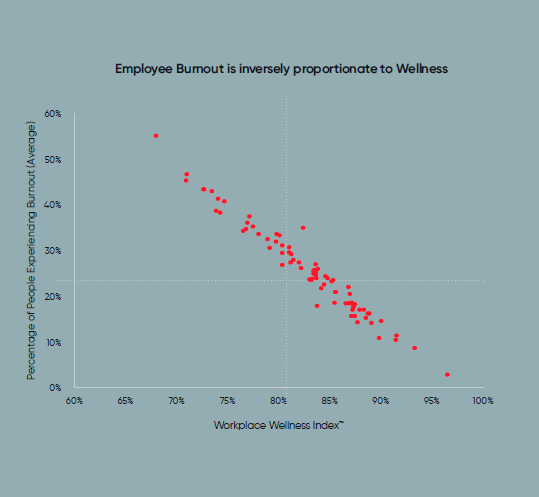
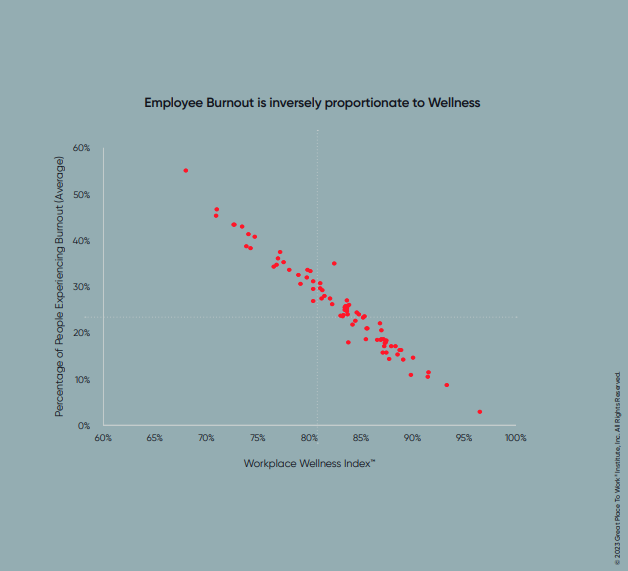
Burnout is a growing concern in today’s fast-paced, high-pressure work environments. Burnout is a state of emotional, physical, and mental exhaustion caused by prolonged exposure to job-related stressors. Our report shows that only 15% of employees experience burnout in companies in the top-quartile as compared to 39% in the bottom-quartile. The causes of burnout can be multifactorial, including excessive workload, lack of control over work, poor work-life balance, and interpersonal conflict with colleagues. The consequences of burnout can be significant, including reduced work performance, decreased job satisfaction, and increased absenteeism.
employee burnout stats
How Belonging Can Help Address Burnout

Workplace wellness is inversely proportionate to employee burnout, as top quartile companies with increased workplace wellness saw a decrease in burnout, while bottom quartile companies with decreased workplace wellness saw an increase in burnout. Belonging can play a critical role in addressing burnout in the workplace. When employees feel a sense of connection and belonging with their colleagues and the organization, they are more likely to experience positive emotions, which can counteract the negative effects of stress and burnout.

Additionally, belonging can provide a sense of support and encouragement, helping employees to cope with the demands of their job more effectively. This support can come in the form of social support, emotional support, or practical support, such as assistance with workload management.

Promoting Resilience Through Belonging

Resilience refers to an individual’s ability to bounce back from adversity and cope with stress in a positive way. Resilience is a critical component of employee well-being, as it enables individuals to manage the demands of their job more effectively and maintain a positive outlook on their work. Belonging can play a crucial role in promoting resilience in the workplace by providing a sense of social support and creating a positive work environment.
generation and milennials diagram

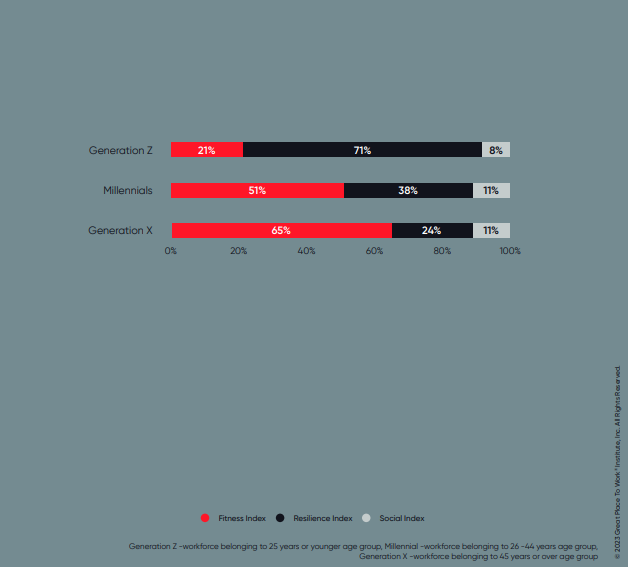
The data on Wellbeing Indicator™ in our report demonstrate differentiated trends on Resilience and Fitness Index whereas similar trends are observed on Social Index across all age cohorts. Gen X and Millennials value fitness, while Gen Z values resilience the most. Interestingly, post the Covid 19 pandemic social networking and connectedness were valued the least across all generations. By fostering a culture of belonging, organizations can help employees to build the skills and resources they need to cope with stress and maintain their well-being over time.

Strategies for Fostering Belonging in the Workplace

There are several strategies that organizations can employ to foster a sense of belonging in the workplace. First, organizations can encourage social connections between employees by providing opportunities for team-building activities, social events, and informal gatherings. These activities can help to break down barriers between colleagues, foster positive relationships, and create a sense of camaraderie.

Second, organizations can promote inclusivity and diversity in the workplace by creating a culture of respect and appreciation for individual differences. This can be achieved through diversity training, creating employee resource groups, and actively recruiting diverse candidates for job openings.

Third, organizations can provide opportunities for employee input and involvement in decision-making processes. By involving employees in the decision-making process, organizations can create a sense of ownership and investment in the company’s success, which can help to foster a sense of belonging.

Overcoming Barriers to Belonging: Addressing Bias and Exclusion

Despite the importance of belonging in employee wellbeing, there may be barriers that prevent individuals from feeling a sense of belonging in the workplace. One such barrier is bias and exclusion, which can manifest in various forms, including discrimination based on gender, race, ethnicity, sexual orientation, and disability. To overcome these barriers, organizations must take proactive steps to address bias and promote inclusivity.

One approach is to provide training and education on bias and discrimination to all employees, including managers and executives. This training can help individuals become more aware of their biases and take steps to overcome them. Additionally, organizations can create policies and procedures that promote inclusivity, such as hiring and promotion practices that prioritize diversity and create a zero-tolerance policy for discrimination.

Building a Culture of Belonging for Long-term Employee Wellbeing

Fostering a culture of belonging is a long-term process that requires ongoing effort and commitment from organizations. One approach is to create a culture that values employee well-being as a core priority. This can be achieved by providing resources and support for mental and physical health, promoting work-life balance, and prioritizing employee development and growth. 

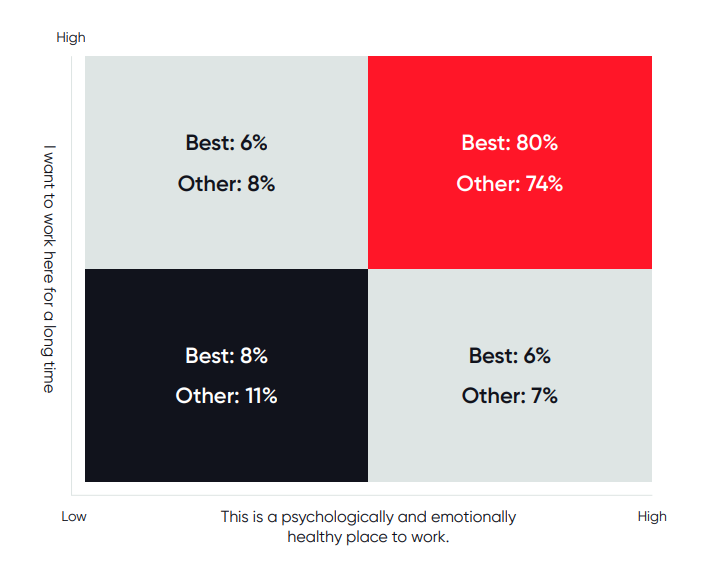
Additionally, organizations can create a culture of transparency and open communication, where employees feel comfortable sharing their ideas, concerns, and feedback. By creating a safe and supportive environment, organizations can foster trust and build strong relationships between employees and the company. 80% of employees at the best workplaces feel like they can work at their current job for a longer period and are willing to put in extra effort to complete their tasks than 74% of employees at the other workplaces.
psychologically and emotionally health place to work image
Measuring the Impact of Belonging on Employee Well-being and Business Outcomes

To truly understand the impact of belonging on employee well-being and business outcomes, organizations must measure and track their efforts. This can be achieved through various methods, including employee surveys, focus groups, and performance metrics.

By collecting data on employee well-being, engagement, and retention, organizations can gain insights into the effectiveness of their belonging initiatives and identify areas for improvement. Additionally, organizations can track business outcomes, such as productivity, innovation, and customer satisfaction, to understand how belonging impacts the overall success of the company.

Conclusion

Belonging is a fundamental human need that plays a critical role in employee well-being and organizational success. By fostering a culture of belonging, organizations can address burnout, promote resilience, and create a positive work environment that supports employee well-being. By overcoming barriers to belonging, promoting inclusivity, and measuring the impact of belonging initiatives, organizations can build a strong foundation for long-term employee well-being and business success.
Loneliness is a deeply personal experience that can affect individuals from all walks of life. However, it is observed that certain factors contribute more to the loneliness crisis in India. Rapid urbanization and the rise of nuclear families have led to a decrease in social support networks. Additionally, long working hours, high competition, and the relentless pursuit of success often leave individuals feeling alienated and disconnected.

The Workplace Impact

The workplace, where individuals spend a significant portion of their waking hours, plays a crucial role in shaping their overall well-being. A lonely and unsupportive work environment can have severe consequences, such as decreased job satisfaction, reduced productivity, and increased stress levels. Moreover, loneliness can lead to mental health issues like anxiety and depression, further exacerbating the problem.

Creating a Connected Work Environment

To address the loneliness crisis and foster a connected work environment, organizations need to implement strategies that prioritize employee well-being. Here are some effective approaches:

The Role of Leadership

Leaders within organizations play a crucial role in addressing the loneliness crisis. By prioritizing employee well-being and setting an example, leaders can create a positive work environment. Here’s how leaders can contribute:

The Power of Collaboration

The loneliness crisis cannot be solved by organizations alone. Collaborative efforts between businesses, government bodies, and community organizations are crucial to bridging the gap and combating loneliness in India. Here are some collaborative initiatives that can make a significant impact:

The loneliness crisis in India is a pressing issue that requires the collective efforts of organizations, leaders, and society as a whole. By earning a Great Place To Work® Certification™, workplaces can bridge this gap and combat loneliness.

Together, we can create environments where individuals feel connected, supported, and empowered to thrive both personally and professionally. Let us unite our workplaces and build a future where no one feels alone.

The level of an employee’s involvement in their work and motivation to put out their best effort is referred to as employee engagement. The amount of employee involvement inside a company is measured using a variety of surveys. These surveys often include a series of questions aimed at determining how employees feel about their jobs, their managers, their coworkers, and the company overall. The information received from these surveys may be used to pinpoint areas where the company is doing a good job of including its workers as well as those where work needs to be done to improve things.

Because they offer insightful information on the level of employee engagement inside a business, employee engagement surveys are important for engagement and change. They can assist in identifying areas where workers are disengaged and where improvements are needed to increase engagement. This is crucial since motivated workers are more likely to be productive, stay with their company longer, and suffer from burnout or mental health problems. A culture of participation can also contribute to the development of a productive workplace that is advantageous to both workers and the business.

Improving company culture using an employee engagement survey

A major advantage of using an employee engagement survey is the ability to enhance the culture of a company. When it comes to defining an organization and influencing employee behavior, company culture refers to the common values, attitudes, and beliefs that exist inside it. Employee engagement can be significantly influenced by a company’s culture, which can also contribute to the development of a favorable workplace atmosphere that draws and keeps top talent.

Employee engagement surveys can help identify areas where the organization’s culture is strong and where it needs improvement. For example, if the survey results show that employees feel a strong sense of belonging and connection to their colleagues, but feel that their manager doesn’t provide enough feedback, the organization can work to improve communication and feedback channels between managers and employees. By making targeted changes based on survey data, organizations can create a more engaged and positive work environment that promotes a strong company culture.

Following are some interesting steps you can implement within your organization to conducting an employee engagement survey that kickstarts change:

  • Set clear objectives: Before conducting an employee engagement survey, it’s essential to have a clear understanding of what you hope to achieve. What specific areas of employee engagement are you hoping to measure? What are your goals for the survey results? By setting clear objectives, you can ensure that your survey is focused and targeted towards the areas that matter most to your organization.
  • Choose the right survey tool: There are many employee engagement survey tools available, and it’s important to choose one that fits your organization’s needs. Look for a tool that offers a range of question types and customization options, so you can tailor the survey to your organization’s specific needs.
  • Secure support from important leaders in your organization: To get the most out of your employee engagement survey, it’s important to have buy-in from key leaders within your organization. This includes executives, managers, and team leaders. Make sure they understand the importance of the survey and are committed to taking action based on the results.
  • Communicate the launch of the survey effectively: Launching an employee engagement survey requires effective communication to ensure that employees understand the purpose of the survey and are motivated to participate. This can include email reminders, social media posts, and in-person meetings. Make sure employees know that their participation is valued and will be used to make meaningful changes within the organization.
  • Analyze the results: Once the survey is complete, it’s time to analyze the results. Look for trends and patterns in the data, and identify areas where employees are particularly engaged or disengaged. Use the data to create a clear picture of the current state of employee engagement within your organization.
  • Develop an action plan: Based on the survey results, develop an action plan to address areas of low engagement and build on areas of strength. This may include changes to company policies or procedures, providing training and development opportunities for employees, or improving communication channels between managers and employees. Be sure to involve key stakeholders in the development of the action plan and set clear timelines and metrics to track progress.
  • Implement changes: Once the action plan has been developed, it’s time to implement changes. Be sure to communicate any changes to employees and provide support and training as needed. Monitor progress and adjust the plan as necessary to ensure that changes are having the desired impact on employee engagement.
  • Follow up with another survey: Conducting a follow-up survey several months after implementing changes can help measure progress and identify areas that still need improvement. Use the data gathered from the follow-up survey to continue refining and improving the action plan.

Employee engagement surveys are a very powerful tool for enhancing corporate culture and fostering a supportive workplace. Organizations can conduct successful surveys that offer insightful information about the level of employee engagement and pinpoint areas for development by following the instructions provided in this blog. Companies can develop an engagement culture that is advantageous to both the employees and the company by acting on survey results and making adjustments.

So, are you ready to take your workplace to the next level? The Great Place To Work® Trust IndexTM Survey is your key to unlocking the potential of your team and transforming your organization into a thriving, high-performance workplace. With just a few clicks, you can now gain valuable insights into your employee’s experience and start making positive changes that will drive engagement, retention, and growth for your organization.

Labor Day serves as a reminder to reflect on the impact of workplace culture on employees. Workplace culture significantly influences employee satisfaction, motivation, and engagement.
However, various factors can impact workplace culture and employee well-being, and one issue that is often overlooked is workaholism, which can have significant negative consequences.

Creating a healthier workplace culture requires prioritizing work-life balance, promoting breaks and time off, and offering resources that support employee physical and mental health. Therefore, to cultivate a positive workplace culture, it’s essential to encourage a healthy work-life balance and ensure that employees have access to resources that support their well-being.

But before we dive into how employers can help employees with workaholism, let’s get a deeper look into the problem.

What is Workaholism?

Workaholism is the compulsive need to work excessively, which can negatively affect personal life, health, and relationships. It can also have negative consequences for workplace culture, leading to higher stress levels, lower morale, and decreased job satisfaction.

The Effects of Workaholism

Workaholism can severely affect individuals, including burnout, physical and mental health problems, and damaged personal relationships. It can also create a toxic workplace culture, leading to decreased productivity, increased absenteeism, high turnover rates, and low morale.

By recognizing the problem of workaholism and taking proactive steps to address it, organizations can prevent negative consequences and improve the well-being of their employees.

This includes modeling healthy work-life balance and prioritizing a supportive and productive workplace culture.

Difference between a workaholic and an engaged employee

While a workaholic and an engaged employee both display high levels of dedication to their work, there are significant differences between them.

A workaholic has an unhealthy obsession with work and may work long hours, even when not required, to the point where it negatively impacts their health and well-being. They may feel a compulsive need to work and struggle to take time off or disconnect from work, even during their leisure time. Workaholics may also fear failure or feel that their self-worth is tied to their work performance.
On the other hand, an engaged employee is committed to their work and is motivated to do their best. They may work hard, but they also prioritize work-life balance and can disconnect from work during their off-hours. As a result, engaged employees are more likely to feel fulfilled and more loyal to the company.

While workaholics may appear productive in the short term, their lack of work-life balance can lead to burnout, stress, and decreased productivity over time. In contrast, engaged employees are more likely to maintain sustainable productivity and job satisfaction over the long term.


Creating a Healthier Workplace Culture

Here are a few ways that workplaces can help reduce employee burnout and workaholism:

Encourage Work-Life Balance

One of the most effective ways to prevent burnout is to promote work-life balance. Employers can encourage employees to take time off and prioritize their personal lives. Encouraging flexible work hours, offering work-from-home options, and providing paid time off can help employees achieve better work-life balance.

Prioritize Mental Health Support

Employers should prioritize mental health support for their employees. For example, they can provide access to counseling, offer stress management workshops, and promote wellness activities like yoga and meditation.

Set Realistic Workloads

Employers should ensure that their employees’ workloads are manageable and realistic. Overloading employees with work can lead to burnout and workaholism. Regular check-ins and communication with employees help ensure that their workload is manageable.

Encourage Social Connections

Social connections in the workplace can help reduce stress and improve overall mental health. Employers can encourage social relationships by hosting team-building events, providing opportunities for employees to collaborate, and creating a positive work culture.

Provide Professional Development Opportunities

Providing professional development opportunities can help employees feel engaged and motivated. This can include training programs, mentorship opportunities, and career development plans.

Create a Supportive Work Environment

Creating a supportive work environment can go a long way in preventing burnout and workaholism. Employers should prioritize open communication, provide regular feedback, and create a culture that values work-life balance and mental health.

Rewarding hardworking employees

Rewarding hardworking employees effectively encourages them to maintain a healthy work-life balance and prevent burnout. Recognizing and acknowledging the efforts of employees who consistently go above and beyond can make them feel valued and appreciated, boosting their morale and motivation.

When a manager or employer notices an employee becoming a workaholic, they should approach them and express appreciation for their dedication and hard work. At the same time, they should also communicate the importance of taking time off for their physical and mental health. This conversation can help employees understand that overworking may not be the best approach to achieving success and that taking breaks is just as crucial for their overall well-being.

Creating a workplace culture that promotes work-life balance is essential for individuals who struggle with workaholism. While there are several ways in which a company can help employees maintain a balanced lifestyle, the most crucial element is practicing self-care. Understanding the difference between working long hours and being a workaholic is critical, and it all starts with prioritizing self-care.

Developing self-awareness of one’s tendencies towards workaholism is a crucial first step. Monitoring the amount of time spent on work and recognizing when it starts to impact personal life negatively can help individuals take action to prevent burnout. Practicing disengagement, taking regular vacations, and setting healthy boundaries can also contribute to a healthy work-life balance that promotes well-being and prevents the development of workaholism.
By prioritizing self-care and developing healthy habits, individuals can create a balanced lifestyle that benefits their personal and professional lives.

To learn more about how you can make your workplace healthy and productive, Get in touch with our workplace culture experts.

In recent years, there has been a growing concern about well-being in India, and the statistics paint a worrying picture. According to the Global Human Development Index, India ranks 132 out of 191 countries. The Global Wellness Index 2020 is similarly concerning, with India ranking 120 out of 151 countries, further highlighting the need to prioritize well-being in India. Mental health is another concern, with the National Mental Health Survey of India reporting that 1 in 7 people in India are affected by mental health disorders.

In response to these challenges, the Indian government has launched several initiatives, including the National Action Plan, Ayushman Bharat, National Tele-Mental Health Programme, and the OSH Code. While these efforts are a positive step forward, more work needs to be done to improve the well-being of Indian citizens. The responsibility for improving well-being falls on individuals, communities, and governments alike. It is crucial to continue working together towards the shared goal of a healthier and happier India.

Fostering Wellness in the Workplace

The relationship between Workplace Wellness and Workplace Culture is evident, with companies in the top quartile of the Culture and Wellness Index having a 14% advantage over those in the bottom quartile.

Our data scientists analyzed millions of data points across multiple industries and employee demographics to create a robust research-based framework. The team identified six key levers that form the Workplace Wellness Index™ and enable organizations to create physical and psychological safety for employees.

  • Responsible Leadership
  • Supportive Managers
  • Sense of Community
  • Autonomy & Fulfilment
  • Health
  • Enabling Work Environment

These six key levers in the Workplace Wellness Framework play a significant role in creating a culture of holistic well-being. Although the contribution of each lever may differ, they are all essential in fostering a positive work environment that prioritizes employee well-being. This positive work environment, in turn, motivates employees to perform at their best, contributing to the organization’s overall success. By acknowledging and incorporating each of these key levers, organizations can create a supportive and empowering work culture that promotes the holistic well-being of their employees.

The Journey From 2021 to 2022

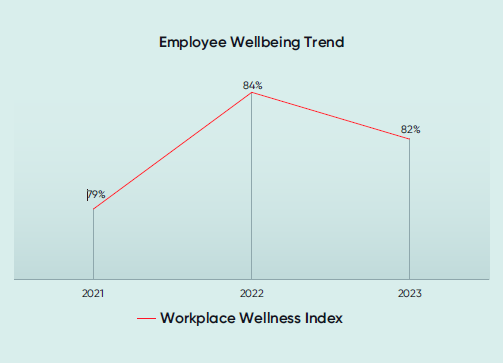
Since 2021, the Workplace Wellness Index has had a 4 percentage point increase. This improvement results from Indian leaders demonstrating higher ownership in prioritizing employee well-being. In addition, employee feedback on Responsible Leadership has increased by 10 percentage points since 2021, reflecting this change in approach.

These efforts have resulted in the creation of an enabling work environment that supports employee growth and success. However, with the shift towards hybrid working, managers have found it challenging to provide adequate support to their teams across multiple working modes.

Additionally, organizations need help to maintain a sense of community among their employees, further highlighting the need for continued efforts toward creating a supportive and inclusive workplace culture.

Redefining Health Insurance

The health insurance policy in corporate India has undergone a significant change and expanded its coverage to include various aspects that address the employees’ current needs. Maintaining good health proactively requires regular health check-ups, and 58% of the Best workplaces provide this benefit to their employees. Employers consistently encourage employees to avail of this benefit by reminding them about it and promoting its usage.

Flexibility: A Non-Negotiable for Today’s Workforce

In today’s workforce, flexibility has become a non-negotiable expectation from employees, brought on by the pandemic. In response, organizations have had to redesign programs and policies to adapt to the new normal of remote work and hybrid working. Even field-based businesses have found ways to offer flexibility to their employees.

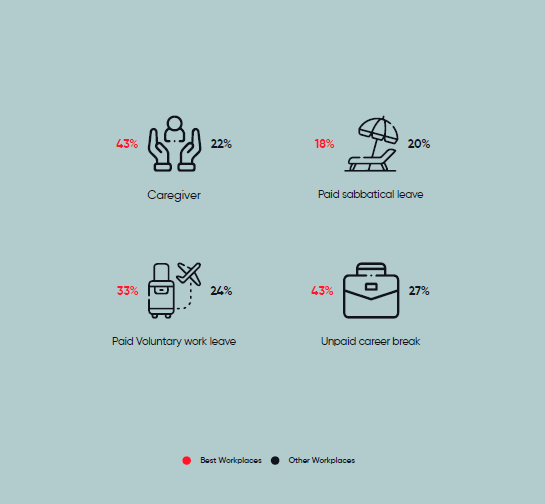
The best workplaces recognize the value of caregivers and provide options for career breaks, paid volunteering opportunities, and formal policies and programs to support their employees. While there is no significant difference between the Best and Other workplaces in providing paid sabbaticals, companies need to acknowledge the importance of allowing their employees to take a wellness break from work and recharge.

Workplace Wellness: A Distinctive Competitive Edge

Companies that prioritize a culture of holistic well-being among their employees have a competitive advantage when creating a culture of innovation. Such organizations also have employees who perceive the leadership to be more effective than those in companies that do not prioritize employee well-being. Specifically, employees in companies in the top quartile are 15% more likely to experience a culture of innovation and 14% more likely to perceive their leadership as influential than those in the bottom quartile. This highlights the importance of prioritizing employee well-being to foster innovation and effective leadership in the workplace.

The Magic of Fostering Wellness

Employee burnout has recently become a significant challenge for India, especially since the pandemic hit. It refers to a condition where employees experience emotional, mental, and physical exhaustion due to long-term stress and high work demands. This can lead to reduced productivity, poor performance, and even physical and mental health issues.

Various factors can contribute to burnout, such as inflexible work arrangements, limited control over work tasks, ineffective communication from management, and lack of clarity regarding job expectations and goals. The impact of burnout on an organization can be significant, and companies need to take measures to address it.

Studies have shown that companies with a high Workplace Wellness Index of around 90% experience a lower employee burnout rate of approximately 15%, while companies with a low Workplace Wellness Index of around 75% have a higher employee burnout rate of around 39%. Therefore, organizations must prioritize employee wellness to reduce burnout and ensure a healthy and productive workforce.

The Road Ahead

Well-being is of utmost importance for individuals, organizations, and the nation. Therefore, corporate India needs to take on the responsibility of Making India a Healthy Place to Work For All and make it an integral part of its business strategy.

Research indicates that providing health insurance, access to doctors, counselors, and regular health check-ups are now basic expectations at any workplace interested in creating a high-performing organization. However, these benefits may not provide a competitive edge as they can be easily replicated.

The real differentiator of the Best Workplaces is the role that leaders play in institutionalizing a culture of holistic well-being and role-modeling the right behaviors. These organizations consider well-being as important as any other business metric and create an enabling work environment that stands out. We urge all leaders across India to participate in this movement of Making India a Healthy Place to Work For All.

Want to know more about how you can support employee well-being at your workplace; enroll in our Certification today!

The Power of Employer Branding for Attracting Top Talent

In today’s job market, attracting top talent is crucial for the success of any company. But with so many employers vying for the same pool of candidates, it can be challenging to stand out. That’s where employer branding comes in. By creating a strong employer brand, you can differentiate your company from the competition and attract the best talent.

But what exactly is employer branding, and how can you build it? Let’s explore the importance of employer branding, the significance of the Great Place To Work® CertificationTM, and how to build a strong employer brand that attracts top talent.

Understanding the Great Place To Work Certification and its Significance

The Great Place To Work Certification is an internationally recognized certification that acknowledges companies with exceptional workplace cultures. Companies must go through a thorough evaluation procedure, including a Trust IndexTM Survey and a Culture AuditTM to become Certified. As it displays a commitment to establishing a positive and inclusive work environment, the Certification is a useful tool for businesses trying to attract top talent.

Employee morale and retention can be greatly impacted by having a Great Place To Work Certification. According to our data, employees at Certified organizations express higher levels of job satisfaction, are more likely to stick with their current employers, and are more likely to promote the business to others.

Spotlighting Your Company Culture and Employee Experience on Social Media

Social media is an essential tool for building and promoting your employer’s brand. By showcasing your company culture and employee experience on social media, you can give potential candidates a glimpse into what it’s like to work for your company. This can be essential for companies that may not have a well-known brand or reputation.

Platforms like LinkedIn, Instagram, and Twitter can be powerful tools for sharing your company culture and values. Share photos and videos of your employees at work, highlight employee accomplishments and milestones, and share testimonials from current employees. This can help potential candidates get a sense of your company’s culture and values and help them decide if your company is the right fit for them.

Building Your Employer Brand with Great Place To Work Certification

Earning the Great Place To Work Certification can be a powerful tool for building your employer brand. Use the Certification in your job postings, on your company website, and in your social media posts to showcase your commitment to creating a positive workplace culture.

You can also use the Certification to attract top talent by participating in career fairs and networking events. Having the Certification Badge on display at these events can help you stand out from the competition and attract the best candidates.

Benefits of Building a Strong Employer Brand

Building a strong employer brand can have many benefits for your company. A strong employer brand can:

  • Attract top talent: You can attract the best candidates for your vacant roles by building a powerful employer brand.
  • Improve employee morale: When they work for a company with a good reputation, employees are more likely to be content and engaged.
  • Increase retention: Strong employer brands increase the likelihood that workers will stick around at a company.
  • Enhance your reputation: A strong employer brand can help you establish a positive reputation in your industry and community.

Measuring the Impact of Employer Branding on Talent Acquisition and Retention

Measuring the impact of employer branding on talent acquisition and retention is essential for understanding the effectiveness of your employer branding efforts. To evaluate the effectiveness of your employer branding activities, utilize the following metrics:

  • Applicant quality: Measure the quality of your job applicants to determine if your employer branding efforts are attracting top talent.
  • Time-to-hire: Measure the time it takes to fill open positions to determine if your employer branding efforts are speeding up the hiring process.
  • Employee retention: Measure employee retention rates to determine if your employer branding efforts are helping to keep your employees engaged and satisfied.
  • Referral rates: Measure the percentage of new hires that come from employee referrals to determine if your employees are actively promoting your company to their networks.
  • Social media engagement: Measure the engagement rates of your social media posts to determine if your content is resonating with your audience.

By tracking these metrics, you can determine the impact of your employer’s branding efforts and make adjustments as necessary.

The Importance of Employer Branding in Attracting Top Talent.

In today’s competitive job market, building a strong employer brand is crucial for attracting top talent. By earning the Great Place To Work Certification, spotlighting your company culture and employee experience on social media, and measuring the impact of your employer branding efforts, you can create a positive reputation for your company and attract the best candidates.

Remember, building a strong employer brand is an ongoing process. Continuously monitor and improve your employer branding efforts to ensure that you are attracting and retaining the best talent for your company. By doing so, you can set your company up for long-term success.

Employee well-being is a critical aspect of any successful organization. It refers to an employee’s physical, emotional, and mental health and ability to function effectively. When employees feel good and are healthy, they are more productive and engaged in their work, which benefits both the employee and the organization.

Employee productivity is a crucial factor in any organization’s success, but it can be impacted by various factors, just like any other aspect. Unfortunately, the current recession and job insecurity in the economic climate have made it particularly challenging.

In light of these challenges, examining how they affect employees and exploring potential solutions organizations can adopt to alleviate these issues is essential.

Impact of the recession on employees

Job Security

The current uncertainty can make employees feel more anxious or stressed about their job security, financial stability, etc. This can lead to declining mental health as employees worry about layoffs or budget cuts. In addition, the uncertainty of an economic downturn can also cause employees to feel less confident about their future, which can further aggravate anxiety and stress.

Employee well-being can no longer be seen as a passing fad; it requires consistent attention and improvement. Despite a significant increase in the Workplace Wellness Index in the previous year, 2023 has seen a 2-point decline in perceptions. Organizations must collectively drive well-being efforts to create a healthy workplace for all.

Employee well-being trend from 2021 to 2023

Effect on work-life balance

Another way a recession can impact employee well-being is its effect on work-life balance. For example, employees may be less likely to take time off work, even when feeling unwell, due to fears about job security. This can lead to employees becoming burnt out and overwhelmed as they work long hours without taking breaks or vacations. In addition, employees may be required to take on additional responsibilities at work due to budget cuts or downsizing, leading to even more stress and pressure.

Reduced Job Satisfaction

Reduced job satisfaction during a recession stems from several critical factors. As companies downsize to cut costs, remaining employees often face increased workloads, leading to burnout and fatigue. The added responsibilities without corresponding support or resources amplify stress levels, making it difficult for employees to maintain high performance and job satisfaction. 

Additionally, career advancement opportunities become scarce as organizations tighten budgets and freeze promotions or new roles, which can demotivate employees seeking growth and development in their careers. Companies may also reduce benefits and perks as part of cost-saving measures. The loss of these incentives, such as health benefits, bonuses, and wellness programs, directly impacts employees’ sense of value and satisfaction with their job, further eroding their overall well-being and commitment to the organization. 

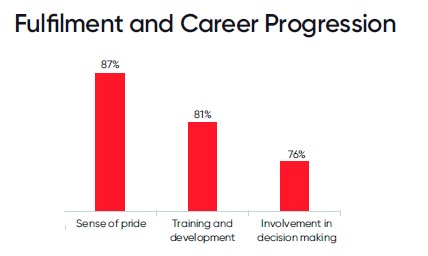
When employees feel proud of their workplace, this has a positive impact on their self- esteem and contributions to the organization’s growth.

Employee Engagement

During a recession, employee engagement often suffers due to widespread uncertainty and dissatisfaction. Concerns over job security and financial stability can preoccupy employees’ minds, leading to lower engagement levels. This pervasive sense of uncertainty can diminish motivation, as employees might feel their efforts could be more valued or that their future with the company could be more secure. Consequently, productivity can decline, as disengaged employees are less likely to go above and beyond in their roles.

Moreover, maintaining a positive workplace culture becomes increasingly challenging. Economic hardships can force companies to make difficult decisions, such as reducing benefits, freezing promotions, or even laying off staff. These actions can create a negative atmosphere, eroding trust and morale. Leaders must work harder to communicate transparently foster a supportive environment to mitigate these effects, and strive to keep the workforce engaged and motivated.

Financial Strain

Financial strain during a recession significantly impacts employees and their work performance. Personal financial difficulties, such as reduced income, increased debt, or the loss of a partner’s job, can create significant stress and anxiety. These pressures can distract employees, making it hard for them to concentrate on their work and maintain productivity levels. 

Stress-related health issues, like anxiety, depression, or physical ailments, often increase absenteeism as employees take time off to manage their well-being or personal financial matters. This absenteeism can disrupt workflow and burden other team members, further affecting overall productivity and morale.

Additionally, the search for financial stability can drive higher turnover rates. Employees may leave their current positions for opportunities perceived as more secure or better paying, seeking to mitigate their financial stress. This turnover can lead to loss of institutional knowledge, increased recruitment costs, and further strain on remaining employees, perpetuating a cycle of stress and decreased organizational performance.

How companies can provide organizational support and convenience

The current economic climate has created a challenging environment for many employees. As companies face these challenging times, they need to recognize their impact on their employees and take proactive steps to support their well-being.

Take proactive steps to understand how your employees are doing.

The first step is for companies to understand how their employees are feeling. Conducting a well-being survey can help organizations assess the level of stress and anxiety their employees are experiencing and identify the areas where they need to focus their attention.

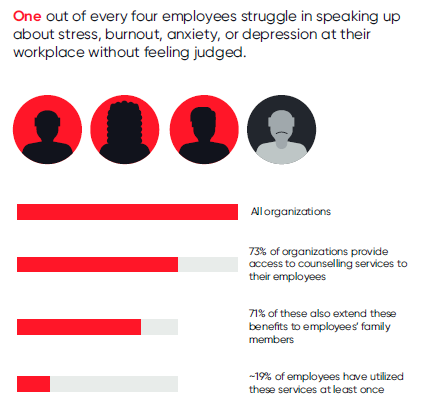
Additionally, companies should ensure that their employees know the types of employee assistance programs available. These programs can provide employees with access to 4ounselling services, financial advice, and mental health support, which can be especially helpful during times of stress and uncertainty.

Retaining employee benefits that help them cope with change will have a positive impact on employees

Prioritizing management of talent

Companies should prioritize the management of their current talent. Many organizations focus heavily on hiring the needed talent but fail to manage and support their existing employees adequately. By offering training and development opportunities, companies can help their employees grow and develop their skills, increasing job satisfaction and reducing the likelihood of them leaving the company.

Lay more focus on transparent communication

Communication is also critical during times of economic uncertainty. Companies should communicate consistently and transparently with their employees to keep them informed about the company’s financial situation, the impact of the recession, and any measures it takes to support its employees. Regular updates and addressing employees’ concerns can help reduce anxiety and increase job satisfaction.

Fostering a positive workplace

Furthermore, companies can create a positive work environment that supports employee well-being by implementing flexible work arrangements. For example, allowing employees to work from home or providing flexible hours can help employees balance work and personal responsibilities, reducing stress and improving well-being.

Employee well-being is critical to any successful organization and can be severely impacted by recession or other economic challenges. However, by taking proactive steps to support employee well-being, including regular check-ins, transparent communication, and promoting work-life balance, organizations can help employees weather these challenges and emerge more robust and resilient.

Fostering a positive workplace

Visit us Here to learn more about how you can align your strategies with your employee’s well-being.

Introduction: The Shift to Hybrid Work Model

The COVID-19 pandemic has brought about significant changes in the way we work. With remote work becoming the new norm, companies have been forced to adapt to a new work model – the hybrid work model. This new model combines the best of both worlds, with employees working both in the office and remotely. While this model has many benefits, it also presents new challenges, especially when it comes to maintaining a strong company culture.

The Importance of Company Culture in a Hybrid Work Model

Company culture is essential in any work environment, and it becomes even more important in a hybrid work model. With employees working both in the office and remotely, it can be challenging to maintain a sense of community and shared values. A strong company culture can help bridge this gap by providing a sense of purpose and shared identity. It also helps foster collaboration, productivity, and employee engagement.

In a hybrid work model, where employees may feel disconnected from their colleagues and the company, a strong culture can help create a sense of belonging and reduce turnover. Overall, the importance of company culture cannot be overstated in a hybrid work model, and companies must make it a priority to build and maintain a strong culture that resonates with all employees, regardless of their work location.

Traditional Company Culture and Its Challenges in a Hybrid Work Model

Company culture is essential in any work environment, and it becomes even more important in a hybrid work model. With employees working both in the office and remotely, it can be challenging to maintain a sense of community and shared values. A strong company culture can help bridge this gap by providing a sense of purpose and shared identity. It also helps foster collaboration, productivity, and employee engagement.

Reinventing Company Culture in a Hybrid Work Model

Companies must first understand the challenges they face to reinvent company culture in a hybrid work model. One of the biggest challenges is communication. With employees working both in the office and remotely, it can be challenging to maintain open and effective communication. To overcome this challenge, companies must embrace technology and use it to facilitate communication and collaboration. This includes tools like video conferencing, instant messaging, and project management software.

Another challenge in a hybrid work model is creating a sense of community and shared experiences. To overcome this challenge, companies must find new ways to bring employees together, both in person and virtually. This includes virtual team-building activities, online social events, and hybrid meetings that allow employees to connect regardless of their location.

Virtual Coffee Breaks: The New Water Cooler

One innovative way to bring employees together in a hybrid work model is through virtual coffee breaks. These breaks provide employees with an opportunity to connect with their colleagues, share experiences, and build relationships. Virtual coffee breaks can be facilitated through video conferencing, and they can be scheduled on a regular basis to ensure that all employees have an opportunity to participate. These breaks can be structured or unstructured, depending on the company’s culture and employees’ preferences.

Fostering Collaboration and Connection in a Hybrid Work Model

Another critical aspect of building and maintaining company culture in a hybrid work model is fostering collaboration and connection. To achieve this, companies must create a culture that promotes open communication and encourages employees to share ideas and collaborate. This includes creating a culture of trust, where employees feel comfortable sharing their thoughts and ideas without fear of judgment or retribution.

Innovative Ways to Build and Sustain Company Culture in a Hybrid Work Model

There are many innovative ways to build and sustain company culture in a hybrid work model. Some of these include:

Keeping the Culture Alive: Challenges and Solutions

There are several challenges that companies must overcome to keep their culture alive in this new work model. In this section, we will explore these challenges and some solutions to overcome them.

Challenge: Maintaining Consistency

In a traditional work environment, it’s easier to maintain consistency in the company culture. Employees are all in the same physical location and experience the same work environment. However, in a hybrid work model, employees work in different locations and experience different work environments. This can make it challenging to maintain consistency in the company culture.

Solution: Emphasize Core Values

To overcome this challenge, companies must emphasize their core values. Core values are the foundation of a company’s culture and can help maintain consistency, regardless of the work location. Companies should communicate their core values regularly and ensure that all employees understand and embrace them. This can be achieved through regular training, internal communications, and recognition programs that reinforce the company’s core values.

Challenge: Building Relationships

Building relationships is essential in building a strong company culture. In a traditional work environment, employees have more opportunities to build relationships through in-person interactions. However, in a hybrid work model, employees work in different locations, making it challenging to build relationships.

Solution: Virtual Team Building

Virtual team-building activities can help build relationships between employees working in different locations. Companies can schedule virtual team-building events, such as virtual trivia games, online happy hours, and other fun activities that encourage employees to interact and get to know each other. These activities can be structured or unstructured, depending on the company’s culture and employee preferences.

Challenge: Overcoming Communication Barriers

Effective communication is essential in building and maintaining a strong company culture. In a hybrid work model, employees work in different locations, making it challenging to communicate effectively.

Solution: Embrace Technology

To overcome communication barriers, companies must embrace technology. Video conferencing, instant messaging, and project management software can facilitate communication and collaboration. These tools can help employees feel connected, even when working in different locations.

Challenge: Adapting to Change

Adapting to change is essential in building a strong company culture. In a hybrid work model, employees must adapt to a new work environment, which can be challenging.

Solution: Provide Support and Resources

Companies must provide support and resources to employees to help them adapt to the new work model. This includes training and development programs that help employees develop new skills, coaching and mentoring programs that provide support and guidance, and wellness programs that promote work-life balance and overall well-being.

Challenge: Addressing Employee Burnout

Employee burnout is a significant challenge in a hybrid work model. With employees working from home, it can be challenging to separate work and personal life, leading to burnout.

Solution: Promote Work-Life Balance

To address employee burnout, companies must promote work-life balance. This includes setting clear expectations around work hours, providing support for caregivers, and encouraging employees to take breaks throughout the day. Companies should also offer wellness programs that promote physical and mental well-being.

Conclusion: Embracing Change and Building a Strong Culture in a Hybrid Work Model

Building and maintaining a strong company culture in a hybrid work model is essential. While there are challenges, companies can overcome them by emphasizing core values, building relationships through virtual team building, embracing technology to facilitate communication, providing support and resources to employees, and promoting work-life balance. By embracing change and finding innovative solutions, companies can build and sustain a strong culture that resonates with all employees, regardless of their work location.

Camera red icon

LIVE WEBINAR WITH Q & A

certification-badge-2026-rhc4efc9ny04x7lz17jff7guyhsup5b0yvrou4vd72

The Certification Advantage: Why Partner with Great Place To Work®

How partnering with Great Place To Work can strengthen your people strategy, and drive business outcomes through data-driven insights and Certification.

prasad-kachraj

Prasad Kachraj

Managing Director, Great Place To Work, India

23rd September 2026  |  4.00 PM - 4.30 PM IST

Register Now