
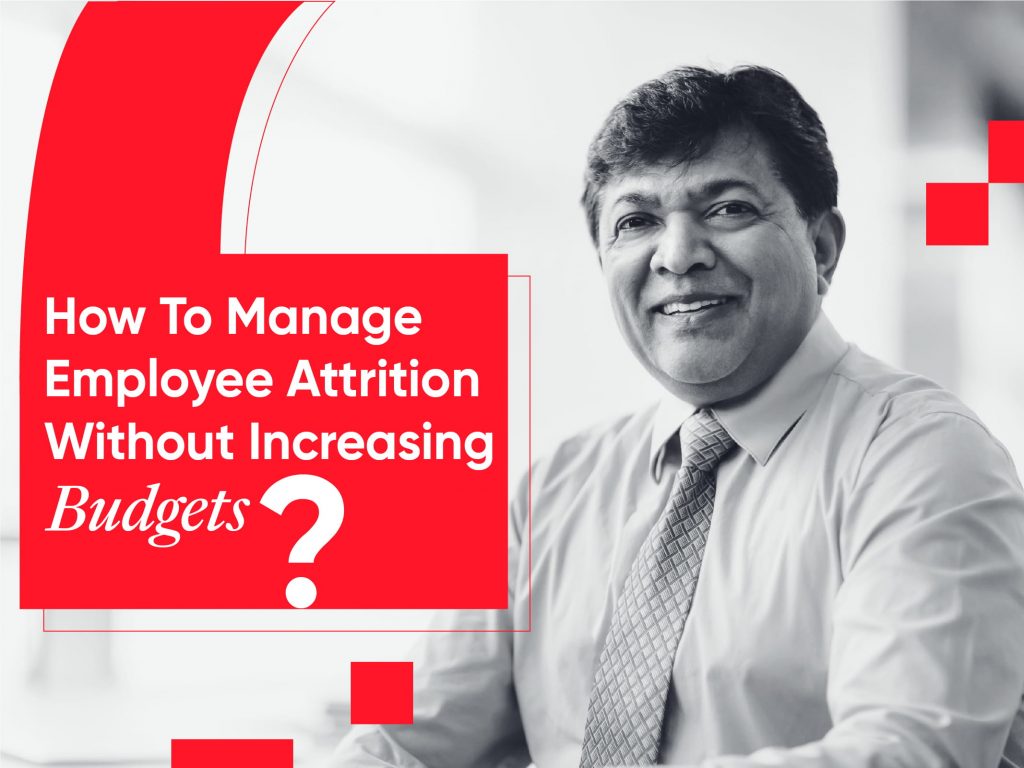
The success and growth of an organization lie in its employees who are engaged with the company, motivated by their work, and stay productive under all circumstances. As a result, companies view employee attrition as a potential challenge, especially when they are growing quickly and operate in a competitive industry.
In most companies, the Human Resources (HR) department handles this aspect; however, everyone involved must overcome the common misconception that employee attrition is driven by remuneration. Another assumption is that only the HR department is responsible for managing employee attrition.
Companies have undertaken in-depth employee surveys, held direct discussions, and analyzed past patterns to understand that many factors beyond the salary packages affect attrition. At Great Place to Work®, we help companies evaluate their culture and reduce employee attrition. This article focuses on understanding the impact of employee attrition, its causes, and how to limit it.
How Does Employee Attrition Affect the Company?
When employees decide to change companies, it affects many factors that go beyond their tasks and responsibilities and their direct stakeholders. The impact of employee attrition extends beyond work and can disrupt the work schedule and deliverables, customer satisfaction, and how the team works together.
Employee attrition impacts various other aspects and has hidden costs that include:
Hidden Cost #1: Recruitment-Related Expenses
The HR department steps in to replace employees as soon as possible when they leave the organization. The process of replacing a skilled and experienced employee can cost the company in terms of resources like money, time, and opportunity costs.
These include:
- Advertisement costs include placing ads in journals, post the position on online portals, or engage with recruitment consultants to find a replacement.
- The recruitment team invests time and efforts to go through the resumes received, shortlist them, and conduct initial screening processes like tests and interviews.
- When the recruitment team finalizes a candidate list, they move on to checking with managers and team leads to schedule interviews, which involves time and resources.
- Opportunity costs include the time team leaders and managers spend on the interview process, which they could have devoted to their core jobs.
- Time involved in the negotiation process and in dealing with increased remuneration, as well as the time lag before the candidate joins the job.
Hidden Cost #2: Onboarding, Training, and Orientation
The next cost aspect is onboarding the candidate and orienting them to the company’s work style, mission, vision, and purpose. If it is a technical role, the company will have to invest a lot of time, personnel, and money to train them about the nuances of the job.
Another cost organizations often overlook is the time it takes for a new employee to become oriented to the company’s work processes and style. There is a lag in the time required for the new employee to learn about the job, technology involved, processes to follow, and adjusts to existing team.
Hidden Cost #3: Loss of Reputation, Knowledge, and Employee Morale
When an employee resigns from their position, there is a domino effect. The first effect is on the work they are currently doing and the need to quickly fill the position. It also means that the training and skills that the employee has will also be lost. Moreover, when an employee leaves the company, it affects the team’s morale. The team may feel lost, demotivated, or doubtful about their continuing to work in the organization.
The stress of transitioning from a familiar employer to a new one can also cause employees to share their negative feedback within their circle and online. When this happens, it can cause people in the employee’s circle to view the company negatively.
What Are the Causes of Employee Attrition?
Many employers attribute remuneration as the main reason for employees leaving the company. It could be true in some cases, but it is often not the main reason for a resignation. Often, the underlying reason for employee attrition is more complex than salary. These reasons stem from how employees feel about their relationship with the company and vice versa.
Great Place To Work® India’s 2026 retention research shows that the factors influencing employees’ intent to stay go beyond compensation. Feeling like a full member of the organization has the strongest relative contribution to long-term retention (37.7%), followed by the ability to be oneself at work (19.9%), feeling welcomed when joining the company (15.1%), and management showing a sincere interest in employees as people (14.2%).
Cause #1: Lackluster Onboarding and Initial Team Interactions
Clichés like ‘first impressions leave a lasting impression’ are true, especially when creating a pleasant and welcoming onboarding experience for a new joinee. When an employee enters a new company, the initial interactions with the leadership and with their team can shape their overall impression of the company. When a company fails at this initial stage, it unsettles the employee and makes them keep looking at other options. Among Best Workplaces™, 94% of employees say they are made to feel welcome when they join the company, compared to 91% at other workplaces.
Cause #2: Disregard for Their Individual Personas and Preferences
When an employee joins a new company, they look for acceptance and support. When a company fosters an environment of diversity and inclusion, employees immediately feel like they belong. And when this does not happen, employees feel unseen and unsupported and start looking for other avenues. Companies today must be proactive in building support systems for their employees; for instance, having a uniform maternity policy for all types of couples having children, whether it is by natural conception, surrogacy, or adoption.
The data reinforces how important belonging is to retention. When employees are treated as full members of the organization regardless of their position, 93% experience this positively, compared with just 33% among those who do not. In fact, this factor has the highest relative importance (37.7%) among the retention drivers studied.
Cause #3: Not Being Valued as a Person and Appreciated Only for Their Work Contributions
Companies recruit employees based on their skills, experience, and the value they will bring to the role. However, employees have their own thought processes and preferences, and when a company ignores them, employees feel less valued. Organizations that support employees in aspects beyond their role or work contributions are more likely to retain valuable talent. Our research shows that 95% of employees experience positive outcomes when management shows a sincere interest in them as people, compared with 47% among those who do not.
Cause #4: Incompatible Team Culture and Manager Interactions
When an individual joins an organization, they spend more than their waking hours, five days a week, to their work. This means they depend on their colleagues and team leaders for interactions about and beyond work. When employees feel there is a culture mismatch, they are more likely to move on to other opportunities. Creating a workplace where people feel comfortable being themselves also matters for retention. Great Place To Work India’s 2026 research shows that 90% of employees experience this positively, compared to 41% among those who do not. The ability to be oneself has a 19.9% relative importance in influencing employees’ intent to stay.
Cause #5: Unclear Career Path and Reduced Scope for Growth
Another aspect that contributes significantly to employee attrition is a lack of a clear vision and insight into growth perspectives. Employees who feel they are not growing in their roles or careers often decide to move on to other opportunities to advance their careers. Employees need to know that the company supports and encourages their career aspirations with the right career path and resources.
Cause #6: Unrealistic Expectations, Constant Pressure, and Burnout
When an organization sets unrealistic expectations for employees and ignores pleas for help, employees may leave quickly. When a company forces employees to always focus on professional commitments over their personal lives, this can lead to burnout and ultimately attrition.
How to Reduce Employee Attrition Without Bigger Budgets?
Most companies want to keep employee attrition down but often feel deterred by the extra cost that this will incur. When looked at holistically, successful companies have managed to reduce employee attritions without increasing budgets.
Here are some steps that organizations can take to ensure that employee attrition is manageable.
Step #1: Hire People for Skills and Cultural Fit
One of the basic but essential steps to ensure employees have a sense of belonging is to tweak the hiring process. Educate hiring managers to look for qualified candidates with the right attitude and who are more likely to fit in culturally. To do this, they must be aware of the company culture and the team dynamics. When they do this, it ensures that new employees synchronize better with the existing team. Hiring for cultural alignment also features among the key drivers of retention. In Great Place To Work India’s 2026 research, 89% of employees at Best Workplaces say management hires people who fit in well, compared with 84% at other workplaces.
Step #2: Tweak the Onboarding Process to Make It Better
Once the company has hired candidates who are more likely to be a better cultural fit, the company must work on the onboarding process. It is essential to make it a seamless, warm, and welcoming experience. Starting from the time a candidate accepts the offer, the onboarding process must nurture and provide the candidate with information that will engage them and keep them connected. When the candidate has a specific point of contact to answer HR-related questions, a mentor for work-related queries, and pairing each new hire with a buddy to support daily routines can help.
Step #3: Create a Visible and Aspirational Career Path
Most people who join a new organization have aspirations and ambitions, and the onus of making their career path clear rests with the company. Include the concept of career growth and learning opportunities to new employees during the onboarding process itself to keep them motivated. It is a great way to remind employees what they can look forward to when they put in effort.
Step #4: Train Managers and Team Leaders to Be More Empathetic
Many employees have said that their relationship with their team lead has played a huge role in their decision to continue working at a company or leave the job. A simple, effective, and economical step to manage employee attrition is to train managers to be better at active and empathetic listening. Employees respond positively when their manager is willing to listen to them and support them in times of crisis. The employee experience data reinforces the importance of this manager-employee relationship. 87% of employees at Best Workplaces say management shows a sincere interest in them as people, not just employees, compared with 81% at other workplaces.
Step #5: Set Up a Visible Rewards and Recognition Forum That Works
In many organizations, rewards and recognition are annual events that may not address the many small achievements employees make throughout the year. The leadership team along with the HR team, must set up means to ensure performance recognition is a constant process by enabling peers, subordinates, and leaders to appreciate each other.
Step #6: Make Flexibility and Work Life Balance Easy
People today want to work smart and balance their personal life at the same time. Companies can no longer rely on the traditional work schedules and adapt to changing needs by inculcating flexibility. They can set up schedules that offer a mix of work-from-home and office meetings periodically. Organizations that encourage people to focus on work and personal wellness at the same time can manage employee attrition better.
Step #7: Make Learning a Part of the Growth System
Employees do not prefer steady and slow-growing careers where people stay in the same role with small changes in designation and remuneration. As the corporate world evolves, people seek careers that offer interesting work that help them grow. They want to learn new things related to their job or even move on to new avenues. Companies must make learning a part of the employee growth system.
Step #8: Facilitate Communication Across the Company
Clear and transparent communication is a factor that engages employees and fosters an atmosphere of trust. The culture of communication must flow from the top to the lower levels of the organization. Set up mechanisms to enable communication through activities like team-building exercises, town halls, informal chats, surveys, etc., to keep it going.
Step #9: Set Up Forums and Associations for Support
The concept of a global organization with people from across diverse backgrounds has become the norm. While this benefits the organization in terms of creativity, diverse points of view, and contributions, it also means the organization must support people in navigating the complexities of diverse backgrounds. Setting up support forums helps people adjust and helps the organization manage employee attrition.
Summary of How India’s Best Workplaces Manage Employee Attrition Without Increasing Budgets
In summary, the study of India’s best workplaces shows that they manage employee attrition with a multi-pronged approach in every aspect of their operations. They invest in developing manager-level skills that enhance their culture. These companies approach work-life balance with dedication and make working a pleasure.
These companies maintain easy and transparent communication and develop viable and attractive career paths that encourage people to learn and grow. With an approach that shows leadership commitment to core values, they allow a relationship of trust between management and employees. Their approach to rewards and appreciation is dynamic, not relegated to an annual event.
Managing employee attrition requires a continuous approach that entails commitment and dedication. The starting point is understanding what employees think of their company and its culture. Want help on getting started? This is where our team at Great Place To Work can help. We help you understand what employees feel via employee surveys. We also provide culture consulting services to help you act on the results. Want to take this forward? Click here to connect with us.
Frequently Asked Questions
Is it possible to manage employee attrition without budget changes?
Most of the steps that companies can take to manage employee attrition do not require budget allocation. Steps like improving communication, hiring candidates with the right mindset, and setting progressive career paths can help in retaining employees.
Why do people quit their jobs?
A deeper analysis of reasons why people quit shows that in most of the instances, employees quit their jobs due to factors like a toxic work culture, lack of communication, poor career path definition, no work-life balance, and a breakdown in team dynamics. These factors can make the prospect of working at the current job look unattractive.
What is the role of managers in managing employee retention?
Managers are ambassadors of the company culture, facilitating communication, encouraging team members to work cohesively, and building career paths that help employees fulfill their career aspirations.
Which are some low-cost strategies that will reduce employee attrition?
Some easy and budget-friendly strategies that help reduce employee attrition include rewards and recognition programs that allow instant recognition, hybrid work policies, team-building activities, and transparent communication.
How does employee retention affect business?
Employee retention has a major impact on the business, including but not limited to business continuity, customer satisfaction, improved teamwork, and the public image of the business.