In the dynamic landscape of modern workplaces, diversity and inclusion stand as pillars of progress, shaping organizations into vibrant, innovative, and empathetic spaces. Acknowledging the significance of embracing diversity and Equality isn’t just a moral obligation; it’s a strategic imperative. In this blog, we delve into the multifaceted dimensions of building an inclusive workplace, exploring the nuances of understanding, the challenges faced, and comprehensive strategies that can transform workplaces into havens of DEIB.

Understanding Diversity and Inclusion

Diversity extends far beyond visible differences. It encompasses a spectrum of identities – race, gender, ethnicity, sexual orientation, age, and abilities. It’s about recognizing and embracing an organization’s rich tapestry of humanity.

Inclusion goes a step further, acknowledging that more than diversity is needed. It’s about fostering an environment where everyone feels valued, respected, and empowered. Inclusion dismantles barriers, ensuring that diverse voices are heard and actively welcomed.

Challenges in Building an Inclusive Workplace

Building an inclusive workplace fosters diversity, equality, and a sense of belonging among employees. However, there are several challenges that organizations often face in achieving this goal.

Unconscious Bias

Unconscious biases are automatic, ingrained attitudes or stereotypes about certain groups of people. This can influence decision-making processes, leading to unfair treatment and exclusion of specific individuals or groups.

Lack of Diversity and Representation

This refers to the team being limited in race, gender, age, sexual orientation, and other demographic factors. Lack of diversity hampers the creation of an inclusive environment, as different perspectives and experiences are essential for fostering inclusivity.

Inequitable Policies and Practices

These refer to policies or practices that unintentionally discriminate against specific groups. Biased policies or practices, even if unintentional, can lead to unequal opportunities and treatment, creating divisions within the workforce.

Inadequate Diversity and Inclusion Training

With proper training, employees may be aware of their biases and understand the experiences of others, hindering the development of an inclusive culture.

Resistance to Change

Resistance to diversity and inclusion initiatives, whether from employees or leadership, poses a significant challenge. This resistance hampers the effective implementation of inclusive policies and practices, impeding organizational progress. Overcoming this challenge requires raising awareness, education, and fostering understanding to create an inclusive workplace where everyone feels valued and respected.

Inclusive Leadership Gap

The lack of inclusive leadership skills and behaviors among managers and executives deepens the challenge of building an inclusive workplace. Inclusive leaders play a pivotal role in setting the tone for the organization, modeling inclusive behaviors, and integrating diversity and inclusion efforts into the organizational culture. Their ability to embrace and champion these values is essential for creating an environment where diversity is celebrated, and all employees feel valued and included.

Microaggressions and Harassment

Microaggressions subtle discriminatory actions, create hostile workplace environments, especially for marginalized individuals. This challenge undermines inclusivity efforts, making it crucial to raise awareness and foster a culture of respect and acceptance in the workplace.

The Multifaceted Approach Towards Building an Inclusive Environment

1. Education and Training: Conduct regular diversity and inclusion training programs to raise awareness about unconscious biases, microaggressions, and inclusive behaviors.

2. Leadership Commitment: Ensure leadership is actively committed to diversity and inclusion initiatives, setting an example by promoting inclusive practices at all levels of the organization.

3. Policy Review: Regularly review policies and procedures to identify and eliminate biases. Ensure that all policies promote fairness, equality, and inclusivity.

4. Promote Inclusive Leadership: Train managers and executives in inclusive leadership skills, encouraging them to foster an inclusive team culture.

5. Encourage Open Communication: Create a safe space for employees to voice concerns and provide feedback. Address reported incidents promptly and transparently.

6. Promote Diverse Representation: Actively recruit and promote individuals from diverse backgrounds, ensuring representation at all levels of the organization.

7. Support Employee Resource Groups: Establish and support employee resource groups (ERGs) representing various demographics, providing a platform for networking and support.

8. Mentorship and Sponsorship Programs: Implement mentorship and sponsorship initiatives to support the career growth of underrepresented employees.

9. Inclusive Benefits: Offer benefits and resources that cater to the diverse needs of employees, including parental leave, mental health support, and accommodations for individuals with disabilities.

10. Regular Evaluation: Continuously assess the effectiveness of diversity and inclusion initiatives, seeking employee feedback and adjusting strategies accordingly.

11. Collaborate Externally: Engage with external organizations, attend workshops, and collaborate with experts to gain insights into best practices for fostering inclusivity.

12. Promote Allyship: Encourage employees to be allies, promoting understanding and support for colleagues from diverse backgrounds.

By implementing these strategies, organizations can create a more inclusive workplace where all employees feel valued, respected, and empowered to contribute their best work. By embracing the DEIB initiatives, we can forge workplaces that reflect the world’s diversity and serve as beacons of Equality, Understanding, and harmony. Visit us here to learn more.
In the fast-paced landscape of the 21st century, the workplace has become a melting pot of different generations, each bringing its unique perspective and values. However, no generation has more profoundly impacted our work than millennials. In 2023, the Great Place To Work® comprehensive study delved deep into India’s millennial workforce dynamics, shedding light on the shifting paradigms and priorities that define their professional lives.

The Generational Shift: From Gen-X to Gen-Z

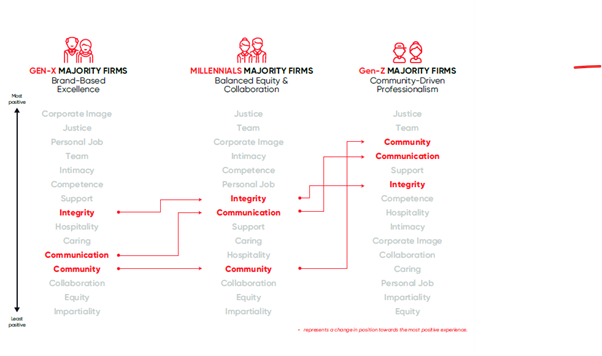
Generational changes have undeniably transformed the Indian workplace. From the Gen-X majority firms to the burgeoning influence of Gen-Z, the workforce is experiencing a paradigm shift. For millennials, the workplace is not just a site of employment; it’s a community where their voices are heard and fairness prevails.

The Generational Shift

Millennials at the Helm

In 2023, millennials have emerged as the backbone of many Indian companies, constituting a staggering 70% of the workforce. Their confidence in their workplace is evident, with 87% considering their company to be a Great Place To Work. 39% of millennials have climbed the corporate ladder into managerial roles, challenging the traditional hierarchical structures. Yet, challenges persist. Only 52% express confidence in their leadership’s judgment, and merely 22% of these millennials are females, highlighting the gender gap in the professional sphere.

A Dynamic Landscape: Industry Variances

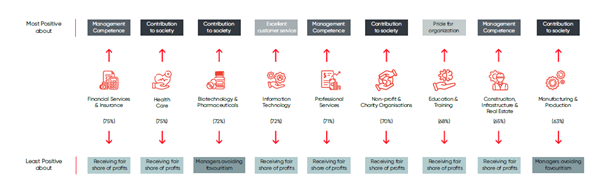
The millennial experience in the workplace varies significantly across industries. 4 out of 9 sectors witnessed millennials responding most positively when their organizations contributed positively to society. However, concerns about favoritism and fair profit sharing persist, indicating a need for more equitable policies.

Industry Variances

The Rise of Millennial Managers

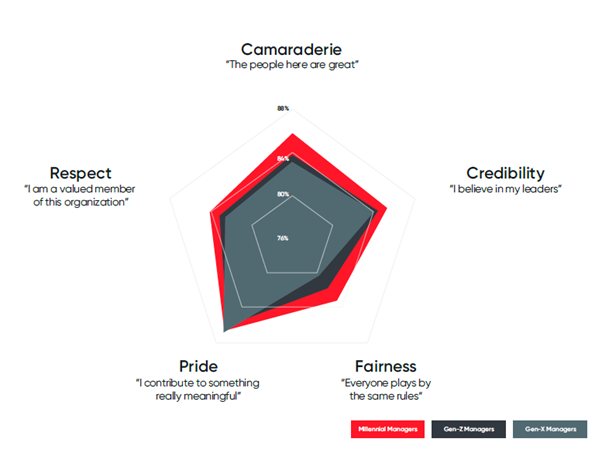
The study identified millennial managers as the leaders of positive workplace culture. Leading in all aspects, they exemplify the values of a progressive workplace – fairness, community, innovation, and integrity.

Risk of Millenial Managers

5 Steps Towards Creating a Best Workplace for Millennials

The study also outlined five crucial steps for companies aiming to create an ideal workplace for millennials:

1. Special & Unique Benefits: Providing access to distinctive benefits tailored to the organization fosters employees’ sense of belonging and appreciation.

2. Fair Share of Profits: Ensuring a transparent and fair distribution of profits fosters trust and commitment among the workforce.

3. Motivation: Cultivating a positive work environment where employees find fulfillment and enthusiasm in their tasks is pivotal to retaining a millennial workforce.

4. Fun & Welcoming Place: A workplace infused with warmth and camaraderie encourages employees to engage actively, enhancing their overall experience.

5. Inform, Share Expectations & Align Actions: Open communication, clear expectations, and aligning actions with public statements instill confidence in the workforce, fostering a culture of trust.

The 2023 study on India’s millennial workforce underscores the need for adaptability in the ever-changing professional landscape. Organizations can attract and retain the best talent from this dynamic generation by understanding their unique needs, acknowledging their concerns, and fostering a culture of fairness and openness. As the workplace continues to evolve, embracing these changes will be key to building a thriving, diverse, and innovative workforce in the years to come. Visit us here for more information.

In the ever-evolving landscape of the modern workplace, cultivating great workplaces is a goal shared by organizations worldwide. The importance of a positive workplace culture, where employees are engaged, motivated, and empowered, cannot be overstated. At the heart of any great workplace lies a group of exceptional leaders who are instrumental in achieving organizational goals and shaping the culture that defines the organization. This blog post will explore a comprehensive framework for nurturing organizational leadership excellence.

The Importance of Leadership in Great Workplaces

Leadership is the cornerstone of any thriving organization. It provides direction, instills a sense of purpose, and empowers employees to achieve their full potential. In great workplaces, Leadership is not confined to the executive suite; it’s distributed across all levels of the organization. Employees are encouraged to lead in their capacity, regardless of their formal title or role.

Building a Foundation of Leadership

  • Self-awareness and Personal Growth: Great leaders begin with self-awareness. They understand their strengths, weaknesses, and values. They continually seek personal growth and development, recognizing that Leadership is not a fixed trait but an ongoing journey of self-improvement. 
  • Skills and Competencies for Effective Leadership: Leadership is not innate; it’s a set of skills and competencies that can be learned and honed. Effective communication, decision-making, and conflict resolution are just a few examples of great leaders’ skills.
  • Role Modeling and Integrity: Leaders set the tone for the entire organization. They must lead by example, demonstrating the values and behaviors they expect from others. Integrity is non-negotiable in great leaders, as it fosters trust and credibility. 

Fostering a Culture of Leadership

  • Empowering Every Employee: In great workplaces, Leadership is not limited to the top tiers of management. Organizations encourage and empower every employee to take on leadership roles by leading projects, mentoring colleagues, or suggesting process improvements. 
  • Effective Communication: Effective communication is vital to Leadership. Great leaders excel at listening, providing feedback, and fostering open and transparent team communication. Collaboration is also emphasized, as it brings diverse perspectives to the table. 
  • Diversity and Inclusion: Great workplaces recognize the value of diversity and inclusion. They understand that diverse teams are more innovative and better equipped to solve complex problems. Inclusive Leadership ensures that every voice is heard and valued. 

Developing and Nurturing Leaders

  • Identifying and Nurturing Talent: To sustain leadership excellence, organizations must identify and nurture emerging leaders. Succession planning ensures a pipeline of talent and provides opportunities for leadership development. 
  • Leadership Development Programs: Structured leadership development programs are essential for grooming future leaders. These programs may include training, mentoring, and opportunities for real-world leadership experiences. 
  • Mentorship and Coaching: Mentorship and coaching play a crucial role in leadership development. Experienced leaders guide and support emerging talent, sharing wisdom and helping them navigate the complexities of Leadership.

Measuring and Evolving Leadership

  • Key Performance Indicators (KPIs) for Leadership Effectiveness: Measuring leadership effectiveness is essential for improvement. Organizations can use KPIs such as employee engagement scores, turnover rates, and 360-degree feedback to gauge leadership impact.
  • Feedback and Continuous Improvement: Great leaders are receptive to feedback. They actively seek input from their teams and use it to refine their leadership approaches. This continuous improvement cycle fosters growth.
  • Adapting to Change: In today’s fast-paced world, change is constant. Great leaders are adaptable and able to guide their teams through periods of transformation with resilience and confidence. Cultivating leadership excellence is not a one-time task; it’s an ongoing commitment. By following this framework, organizations can create a culture where Leadership is pervasive, diversity is celebrated, and individuals are empowered to become their best versions.

Employees are more engaged in such environments, productivity soars, and innovation flourishes. Ultimately, great workplaces are not just the result of leadership excellence—they are its living embodiment. Visit us here to learn more.
The Great Place To Work® Certification™ is more than just a badge – it signifies that your company values its employees above all else. This milestone allows you to honor your workforce, connect with a global community of exceptional organizations, and establish your company as a coveted workplace. Now, how can you make the most of our Certification throughout the year beyond the initial announcement?

Here are some creative ideas we’ve observed other companies use to spread the joy year-round:

Share on Social Media

Offer your followers an exclusive glimpse into your company’s celebration. Share photos of your office party on social media and create engaging videos for Facebook. Don’t forget to use #CelebrateYourGreat, #CND2023IN, #GPTWCertifiedIN to participate in the nationwide conversation. You may also use the template provided in the celebratory toolkit or create your own version and spread the joy.

Certification Nation Day

Publish a Press Release!

This win is absolutely buzzworthy, and we’ve made it super simple to spread the word far and wide! You can use the PR template provided in our celebratory toolkit or get creative and craft your own. Get ready to share the excitement with everyone!

Host a Virtual Celebration

Even if your team has yet to return to the office, there are numerous inventive ways to celebrate remotely. Organize a virtual party with music, games, and shout-outs to your employees. For added flair, consider choosing a theme and coordinating Zoom backgrounds for participants. You may also use the Zoom backgrounds provided by Great Place To Work.

Acknowledge Your Team

Seize this day as an opportunity to recognize employees throughout your organization for their contributions to creating a remarkable workplace. While manager tributes are appreciated, peer recognition can be even more meaningful. Consider implementing a Secret Santa-style matching system to encourage thoughtful recognition among coworkers. One-on-one appreciation ensures that every employee has their moment in the spotlight.

Write a Blog Post

Share your Certified status on your company blog and elaborate on what this achievement means to your organization. Use this platform to proudly showcase your accomplishments and elaborate on the significance of joining the prestigious Certified Club.

Spread the word about your Great Place To Work profile page

Promoting your Great Place To Work profile page is a powerful way to highlight your Certified organization’s distinct qualities. This platform allows you to broadcast the exceptional aspects of your workplace culture to the world. It’s your opportunity to shine a spotlight on what makes your workplace truly outstanding and entice top talent to join your exceptional team.

Celebrate Certification Nation Day

Certification Nation Day is when all certified organizations across the nation come together to recognize and celebrate the best workplaces throughout the country. Join the global celebration of Certified great workplaces and discover their unique company culture. Be inspired by the world’s most successful and innovative workplaces from November 1-3, 2023.

If you’re searching for more celebration ideas, don’t hesitate to consult your team. The most inclusive celebrations are those that everyone helps create, reflecting the spirit of an inclusive culture within your organization. Visit us here to learn more.
In the ever-evolving landscape of India’s workplace culture, the nation’s mid-sized organizations have emerged as a powerhouse of innovation and employee-centric practices. This blog delves into the best workplace practices cultivated by some of India’s great mid-size organizations. Join us as we explore the winning strategies that attract top talent and inspire employees to thrive, creating a symbiotic relationship that fuels growth and success.

Cultivating Organizational Values and Sustainability: DHL Logistics’ Value Tree Initiative

DHL Logistics has launched the Value Tree Initiative with a clear objective: to promote and sustain organizational values globally and locally. This initiative achieves its goal through various communication channels such as performance conversations, team huddles, department meetings, and one-to-one connects. These interactions identify individuals who embody the company’s values and recognize their progress.

Implementing the initiative involves distributing “value leaves” to colleagues who exhibit aligned behaviors, fostering organizational appreciation and recognition. Importantly, any employee can present a value leaf, promoting a culture of recognition. Additionally, DHL Logistics plants a real tree for each completed virtual Value Tree, contributing to sustainability efforts.

The impact of the Value Tree Initiative is evident as DHL Logistics reports collecting 14 Value Trees over the past year. These tangible symbols represent the positive influence of the initiative on the organization’s culture and its commitment to values and sustainability.

Fostering a Culture of Collective Learning: ORIX’s Path to Success

ORIX has embarked on a mission to cultivate a culture of collective learning within its organization. The primary objective is to encourage open discussions regarding project failures and, in doing so, promote a culture of recognizing successes and transparently learning from setbacks. This ambitious undertaking is realized through a unique practice known as FAILCON.

Implementing FAILCON involves hosting a quarterly Failure Conference, a platform for exchanging and discussing valuable insights gained from failed projects. During these sessions, participants openly share their experiences, focusing on identifying the causes of failure and the lessons derived from these experiences.

The impact of FAILCON is substantial, as it accumulates valuable insights from failed projects. By openly discussing and analyzing these failures, participants can discern recurring patterns, root causes, and potential areas for improvement. This practice enhances the organization’s ability to learn from its mistakes and empowers employees to identify and address issues proactively. In essence, ORIX’s commitment to fostering a culture of collective learning through FAILCON facilitates continuous improvement and innovation within the company.

Unlocking Potential and Embracing Inclusion: F5 Networks Journey towards Excellence

F5 Networks is on a journey towards excellence by implementing a program that fosters technical excellence (TE) and champions inclusion, diversity, equity, and allyship (IDEA) principles. The central objective of this program is to maximize the potential of all employees by providing them with resources and opportunities, with a particular focus on underrepresented groups.

TE’s implementation strategy strongly emphasizes aligning with corporate objectives, integrating IDEA principles into its core operating model and programs, and proactively addressing any existing gaps through evaluations and interventions. Concrete actions include removing employment criteria based on experience, gender, or background from job roles. Additionally, F5 Networks is diversifying decision-making committees within the F5 Patent program, ensuring a broader representation of voices.

The impact of TE’s commitment to IDEA is visible through the tangible actions and initiatives it has set in motion to promote inclusion, diversity, equity, and allyship within F5. By dismantling barriers and investing in inclusion, TE strives to increase the participation of underrepresented groups in critical areas such as innovation and intellectual property creation. This program not only unlocks the potential of individual employees but also propels F5 Networks toward a more inclusive and innovative future.

Connecting Through Stories: Humans of Coupa Transforming Connections at Work

“Connecting Through Stories: Humans of Coupa Transforming Connections at Work” is an initiative with a clear objective: to nurture personal connections among colleagues within the organization while raising awareness about the unique individuals who constitute Coupa.

The implementation of this initiative draws inspiration from the “Humans of New York” concept and takes the form of a storytelling video series featuring employees. Initially launched as an internal effort during the pandemic, it has gained immense popularity, creating a public platform known as the “Humans of Coupa” website.

The impact of this website has been significant, evident in its high engagement rates and the inspiring stories it has showcased. The series has resonated deeply with employees, serving as a platform to highlight team achievements and garnering external recognition for the meaningful work it accomplishes.

In essence, “Humans of Coupa” stands as a testament to the power of storytelling in forging connections within and beyond and exemplifies the positive impact that sharing personal narratives can have on workplace culture and employee engagement.

Thriving Together: Hilti Team Camps Promote Cohesion and Teamwork

“Hilti Team Camps” represent a strategic initiative designed to achieve several critical objectives within the organization. The overarching goal of these camps is to strengthen the company’s culture, address team-related issues, and promote reflection, development, and team cohesion among its employees.

The implementation of Hilti Team Camps is a well-structured process. These camps are conducted every two to three years as off-site workshops, providing employees with a dedicated break from their daily work routines to focus on matters directly related to their teams. During these camps, various activities include competitive games, one-on-one teammate sessions, strategy-focused discussions, improvement dialogues, and manager feedback sessions. These activities collectively enable teams to identify improvement areas and collaboratively develop action plans to address these issues.

The impact of Hilti Team Camps on the organization is highly positive. For instance, a camp themed around ‘Care and Perform’ effectively addressed performance pressure and stress arising from technological challenges. Overall, the camps have consistently demonstrated their ability to enhance team dynamics, elevate employee satisfaction, and reinforce the company’s culture as a cohesive and supportive community. Through these well-planned and executed activities, Hilti Team Camps have fostered a thriving workplace environment where employees thrive together.

Leading from Within: Pitney Bowes showcases Leadership Potential at all levels

The primary objective of the Pitney Bowes Leadership Team is to spearhead transformation, cultivate a culture centered around value creation, and serve as exemplars of the company’s core values.

To achieve this objective, the Leadership Team is annually chosen based on merit rather than entitlement. This selection process aims to ensure that the team comprises diverse individuals from various organizational levels, including women, people of color, and international members. This diversity in the composition of the Leadership Team underscores the organization’s commitment to recognizing and harnessing leadership potential at all levels. The impact of the Leadership Team’s approach is noteworthy.

It effectively drives organizational transformation, fosters a culture deeply rooted in value creation, and sets a powerful example of diverse leadership within Pitney Bowes. By showcasing leadership potential at every position in the company, this initiative empowers all employees to contribute to the organization’s success, regardless of their level or background. In essence, Pitney Bowes’ approach to leadership is about leading from within and harnessing the collective potential of its workforce to propel the company forward.

Collaboration for Success: Mindbody’s Product Roadmaps Bring Ideas to Life

At Mindbody, the product roadmap process is pivotal in achieving several key objectives. Primarily, it serves as a strategic tool for defining and targeting new product development efforts, aligning stakeholders across the organization, identifying market shifts, and fostering innovation within the company.

The implementation of this process is well-structured and begins with the advocacy of individuals who champion their ideas through a position paper. The goal is to align stakeholders and clearly define the problem the proposed product or feature aims to solve. The process then advances through review meetings and validation with users and the market, strengthening the ideation phase. Subsequently, a compelling business case is developed, complete with a detailed ROI analysis. This comprehensive analysis focuses on problem-solving, target audience identification, acquisition strategies, and delivery plans. Only a select few concepts that align closely with the company’s goals and market needs make it onto the product roadmap, which is widely shared with the entire team.

The impact of this initiative is far-reaching. It fosters a culture of collaboration among stakeholders and various departments, ensuring that all aspects of product development, including design, research, marketing, sales, and support, are thoroughly considered and integrated into the roadmap. Ultimately, the product roadmap process at Mindbody is a testament to the organization’s commitment to collaboration for success, where the collective efforts of its teams drive innovation and market relevance.

As India’s mid-sized organizations continue to rise, they remind us that success is not solely defined by scale but by the commitment to creating workplaces where every individual can reach their full potential. As we draw the curtains on this exploration, we are left with a profound appreciation for the dedication and innovation these organizations bring to the table, setting a high standard for the future of work in India. Visit us here to learn more.
In today’s fiercely competitive job market, businesses are engaged in the “talent war.” Companies constantly compete to attract and retain top-tier talent, and finding innovative strategies to gain an edge is crucial. One such strategy that has gained significant traction in recent years is employer branding. In this blog post, we’ll explore the concept of employer branding and how it can give your organization a distinct advantage in the talent war.

The Current State of the Talent War

The talent war is more heated than ever before. With a rapidly changing business landscape and evolving job market, finding and retaining skilled employees has become increasingly challenging.

Factors such as the retirement of the Baby Boomer generation, advancements in technology, and shifting workforce expectations have contributed to this competitive job market. As a result, companies are not only competing with one another but also with the allure of freelancing, remote work options, and the gig economy.

What is Employer Branding?

Employer branding is a multifaceted concept that involves shaping and promoting your company’s image and reputation as an employer. It goes beyond traditional corporate branding, focusing specifically on the employee experience and your organization’s perception of a great workplace. It’s about creating a compelling narrative that resonates with potential candidates and existing employees.

The Benefits of Strong Employer Branding

Improved Recruitment

A strong employer brand can significantly enhance your recruitment efforts. When your company is seen as a great workplace, you’ll find it easier to attract top-tier candidates who are genuinely excited about joining your organization.

Increased Employee Retention

Beyond attracting new talent, employer branding plays a crucial role in retaining your existing workforce. Employees who feel proud to be associated with your company and believe in its values and mission are likelier to stay loyal and engaged.

Enhanced Company Performance

Employer branding isn’t just about recruitment and retention; it can also drive company performance. Engaged and motivated employees are more productive, creative, and committed to achieving the organization’s goals.

Competitive Advantage

A strong employer brand sets you apart from the competition in a crowded job market. It can become a unique selling point that draws both customers and top talent to your company.

Building Your Employer Brand

Define Your Brand Identity

Start by defining your company’s values, culture, and mission. What makes your organization unique? What do you stand for, and what kind of workplace do you want to create? These foundational elements will serve as the basis for your employer brand.

Employee Involvement

Your employees are your brand ambassadors. Encourage their active participation in shaping and promoting the employer brand. Their stories and experiences can provide authentic insights into your company culture and the benefits of working for your organization.

Consistency Across Channels

Ensure that your employer brand message is consistent across all communication channels, from your company website and social media profiles to job listings and recruitment materials. Consistency helps reinforce your brand image.

How Employer Branding Attracts Top Talent

Your employer brand can be a powerful tool for attracting the talent you need to succeed in the talent war.

Authentic Storytelling

Share authentic stories of your employees and their experiences within your organization. Highlight their career journeys, successes, and personal growth. Authentic storytelling can resonate with potential candidates who aspire to similar experiences.

Showcase Company Culture

Use your online and offline platforms to showcase your company culture. Share videos, blog posts, and social media updates that give candidates a glimpse into your workplace environment, team dynamics, and company values.

Employee Testimonials

Encourage your employees to share their thoughts and feedback about working at your company. Employee testimonials can provide genuine insights into what being a part of your organization is like.

Awards and Recognitions

If your company has received awards or recognitions for its workplace culture or employee satisfaction, don’t hesitate to showcase them. These accolades serve as external validation of your employer brand.

By leveraging these strategies, your employer brand can create a powerful pull factor for top talent, making your organization a preferred choice in a competitive job market.

Measuring the Impact of Employer Branding

As with any strategic initiative, measuring the impact of your employer branding efforts is essential. This data-driven approach lets you understand what’s working and where improvements are needed.

Key Metrics

Identify key metrics to track the effectiveness of your employer branding strategy. These may include employee retention rates, application-to-hire ratios, employee satisfaction scores, and the quality of candidates in your talent pipeline.

Surveys and Feedback

Regularly conduct surveys and gather feedback from employees and job applicants. Use this input to assess the alignment between your brand promise and employee experience.

Benchmarking

Compare your employer branding metrics to industry benchmarks to understand how you stack up against competitors. Benchmarking provides valuable insights into areas where you may need to improve.

Continuous Improvement

Use your collected data to make informed decisions and continuously improve your employer branding strategy. Adjust your tactics based on what you learn from the metrics and feedback.

By measuring the impact of your employer branding efforts, you can refine your strategy and ensure that it remains effective in attracting and retaining top talent.

As the job market grows increasingly competitive, having a strong employer brand becomes paramount. It attracts top-tier talent, enhances employee retention, drives company

performance, and provides a competitive advantage. By following best practices and measuring your efforts, you can position your organization as an employer of choice, ensuring long-term success in the relentless pursuit of top talent. Visit us here to learn more.
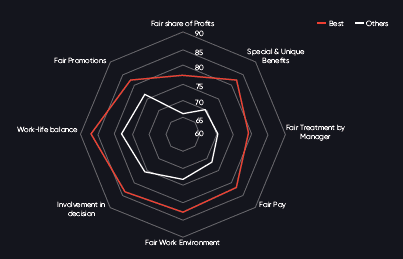
India’s Great Mid-size Workplaces™ has set a new standard by surpassing other workplaces in various aspects. They maintain a significant 9% gap in fairness, covering areas such as pay, profit-sharing, benefits, and work environment. Additionally, these top-tier workplaces excel in providing work-life balance and actively involving employees in decision-making processes. Let’s learn more about how these companies have done better than others in their sector.

Striking a Balance

In mid-size organizations, respect and credibility are pivotal in shaping workplace culture, fostering an environment where employees feel valued and appreciated. The overall employee experience has remained steady since 2022, at 84%. However, it is worth noting that Best Workplaces are leading the way with a significant 5% advantage, reaching an impressive 89% Trust Index Score. 

Over the past year, there has been progress in certain aspects of workplace culture. The workplaces have shown an increase in respect, with a notable 2% improvement in work-life balance support and a 1% rise in training assistance. Despite these positive developments, a pressing issue that demands attention is the area of communication. Employees have expressed a need for better focus on communication, as the perception around both top-down and bottom-up communication has declined from the previous year. 

Recognition and celebration of work, support in employees’ personal lives, and assistance within the work environment all make employees feel respected and valued. Additionally, credibility and trustworthiness in leadership are crucial to building a solid and cohesive culture where employees believe in their leaders’ abilities and intentions. 

However, certain aspects require conscious attention to uplift the overall culture. Communication with employees is paramount, ensuring transparent and effective channels for information sharing. Alongside this, management reliability is pivotal in creating a sense of stability and dependability within the organization. 

By addressing these areas and proactively working to strengthen respect, credibility, and communication, mid-size organizations can enhance their workplace culture, leading to increased employee satisfaction and organizational success. 

The Upward Spiral

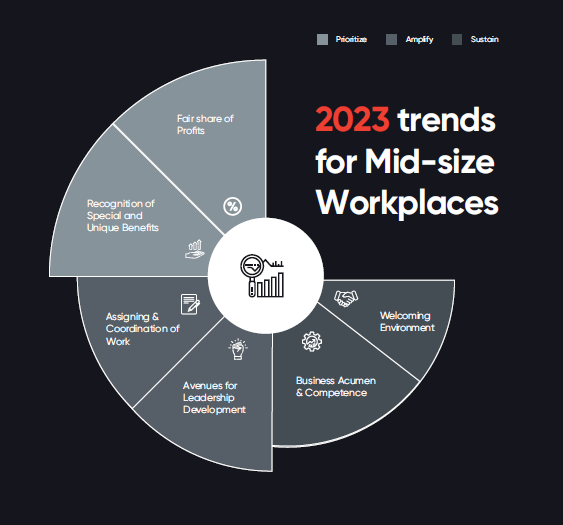
To ensure future success and growth, organizations and leaders must prioritize certain key areas: 

  • Prioritize benefits and a fair share of profits for all 
  • Amplify leadership and empower the trailblazers 
  • Sustain business competence and stay ahead of the curve 

By prioritizing employee benefits and profit-sharing, amplifying leadership capabilities, and sustaining business competence, organizations can create a strong foundation for future success. These strategic efforts demonstrate a commitment to employees’ well-being, foster a culture of innovation and growth, and ensure the organization remains competitive in an ever-changing business environment. 

2023 Workplaces Trends

Tailoring Workplace Culture

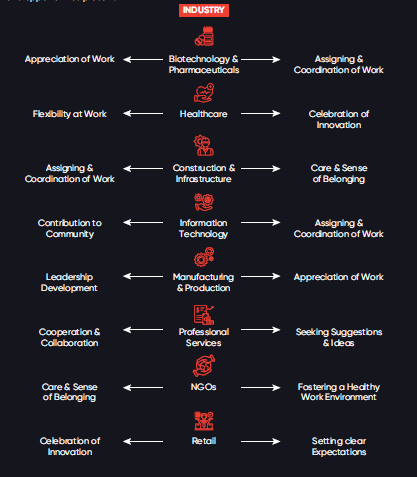
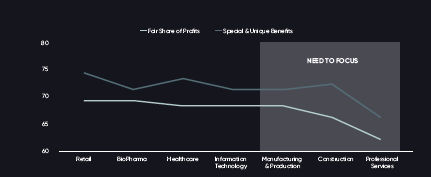
Industries hold unique challenges and opportunities, demanding tailored strategies. By aligning with these industry-specific focus areas, businesses can tackle challenges and seize opportunities for prosperity.

Industry Unique Challenges and Oppurtunities

Beyond Ordinary

Best workplaces stand out by going beyond ‘Must-haves’ to ‘Great-to-have.’

Must have’s

Essential for shaping organizational culture, must-have elements include an unbiased environment, a supportive atmosphere, and management competence with unwavering integrity.

Good to have

Adding to the employee experience, desirable elements encompass fair treatment and promotions, work-life balance, equitable pay, and participation in decision-making processes.

Great to have

Taking culture to new heights, exceptional elements entail equitable profit sharing and distinctive, unique benefits that set organizations apart.

Best Workplaces Drive – Fairness in Pay, Profits, Environment, Work-Life Balance, and Involvement in Decision-Making

Best Workplaces stands out as a leader in the diverse industry landscape, boasting a remarkable 9% advantage over Other Workplaces in “Great to Have” aspects.

Best Workplaces

Industries like Professional Services, Manufacturing, and Construction must refocus and re-imagine practices prioritizing employee benefits and equitable profit-sharing.

Best Workplaces

The Hidden Cost

Impact on Productivity, Retention, and Innovation

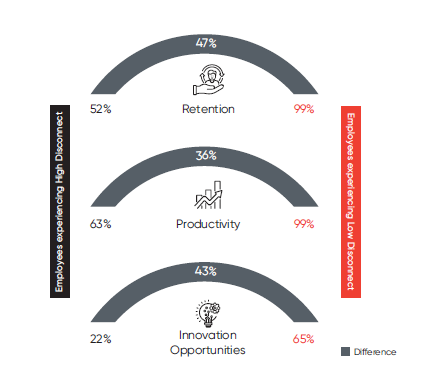
The consequences of neglecting a solid workplace culture and disregarding the incorporation of essential “good-to-have” and “great-to-have” elements are significant. A staggering 69% of employees in such organizations become highly susceptible to disengagement, leading to a profound sense of detachment from their work. This disconnection directly impacts productivity and the retention of valuable talent and can impede the fostering of an innovative environment that drives organizational growth and success.

Employee Disconnect

Workplace Ikigai: A guide to overcome Workplace Disconnect and enhance Productivity, Retention, and Innovation

Workplace Ikigai

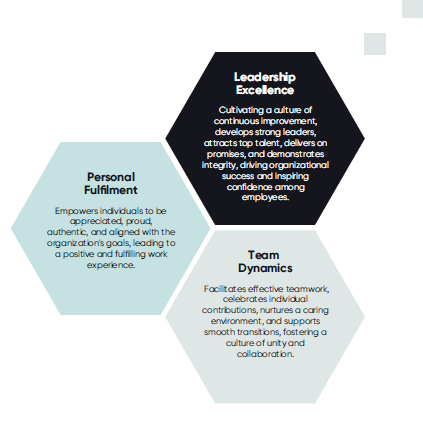
Unveiling the Power of Workplace Ikigai is a journey towards retaining the best talent, optimizing productivity, and amplifying innovation. Organizations can align their efforts with a purpose-driven approach, ensuring sustained growth, engagement, and success by addressing Workplace Disconnect through the dimensions of Leadership Excellence, Personal Fulfillment, and Team Dynamics.

Investing in Workplace Ikigai yields impressive results:

– 3.5x more innovation opportunities

– 2x higher intent to stay with the organization

– 1.6x increased workplace productivity

Embracing Workplace Ikigai fuels innovation and loyalty and significantly enhances productivity, creating a thriving environment for success.

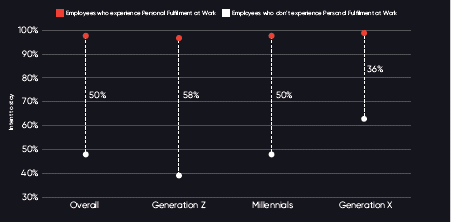
Unlocking the Self Factor: Personal Fulfilment Drives Talent Retention

When retaining top talent, the power of personal fulfillment cannot be overstated. It’s the driving force behind individuals’ unwavering commitment and engagement in the workplace. Anchored in facets like team pride (33%), role contribution (22%), work appreciation (23%), and a sense of belonging (22%), personal Fulfilment forms the bedrock of a thriving work experience. Notably, the research underscores its significance, revealing that those who find genuine satisfaction in their roles are twice as likely to remain dedicated to their organization.

This insight carries particular weight for the emerging purpose-driven generation, as an astounding 40% of these individuals will only remain loyal to an organization that effectively addresses their personal fulfillment prerequisites. By emphasizing these nuanced aspects of personal Fulfilment, organizations can cultivate a workforce that’s not just dedicated but also deeply connected to the core values and aspirations of the company, thus achieving higher retention rates and a more engaged workforce.

Driving Transformation: Nurturing Team Dynamics for Enhanced Productivity

In the realm of organizational success, the dynamics within a team play a pivotal role in driving high productivity. The orchestration and coordination of tasks (23%), an encompassing sense of care (26%), frequent recognition (27%), and seamless work transitions (24%) collectively mold strong team dynamics that fuel productivity.

Collaborative teams ignite motivation and instill dedication and a willingness to go the extra mile, leading to a remarkable 1.6 times increase in employee engagement and focus. Particularly pertinent for the driven older generation, the impact of solid team dynamics must be noticed. In its absence, productivity dwindles to 61%, underlining the crucial connection between cohesive teamwork and an organization’s overall performance.

Perspectives of employees across generations

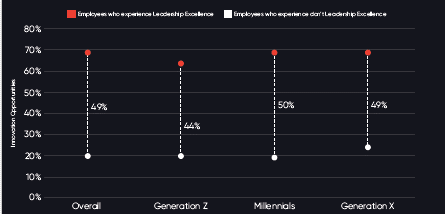
Cracking the Code: Leadership Excellence Drives Innovation

The power of effective leadership cannot be understated, as organizations that prioritize and embody it witness a remarkable threefold increase in innovation opportunities for their employees. This significance is particularly evident among Millennials, where only 20% experience opportunities to innovate within organizations that need more leadership excellence. The connection between strong leadership and a culture of innovation is undeniable, underscoring the pivotal role that effective leadership plays in shaping an organization’s capacity for creative growth.

Perspectives of employees across generations

The Greatness Blueprint

Great Workplace CUlture Blueprint

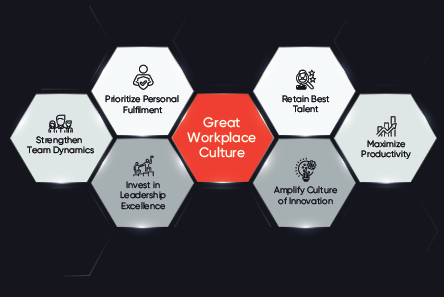
In the dynamic landscape of modern workplaces, unlocking employees’ potential and fostering a thriving culture has never been more crucial. The pillars of Workplace Ikigai—Personal Fulfilment, Team Dynamics, and Leadership Excellence—shine as beacons guiding organizations towards greater productivity, enhanced retention, and amplified innovation.

Personal Fulfillment empowers individuals to embrace their roles with pride and authenticity, creating a workforce that is not just engaged but deeply connected to the organization’s purpose. Team Dynamics weave a tapestry of collaboration, where each individual’s contribution is celebrated, nurturing an environment of unity and shared success. Leadership Excellence is the cornerstone of innovation, shaping a culture that encourages creativity and encourages employees to push boundaries.

By investing in these dimensions, organizations can transform from merely functional entities to vibrant ecosystems that attract and retain talent, fuel productivity, and foster an unwavering commitment to innovation. As we navigate the ever-evolving landscape of work, Workplace Ikigai emerges as the guiding philosophy that addresses the workforce’s needs and propels organizations toward a future of growth, prosperity, and shared success. To learn more, visit us here.

In today’s dynamic and competitive business landscape, organizational success is not solely determined by technical expertise and hard skills. The significance of soft skills cannot be overstated, as they are the glue that holds an organization together and propels it toward long-term success. Soft skills, such as effective communication, emotional intelligence, adaptability, problem-solving, leadership, teamwork, and conflict resolution, foster a positive work environment and drive organizational growth and prosperity. In this blog, we will look more closely at the framework to assess and identify the soft skills that contribute to the success of any organization.

Understanding the Importance of Soft Skills in Organizations

Soft skills surpass technical competence and encompass collaborating, empathizing, and communicating effectively. Soft skills directly impact employee engagement, productivity, and job satisfaction, leading to higher retention rates and a more positive company culture. Moreover, they influence customer satisfaction, as employees with strong, soft skills tend to deliver exceptional service and build meaningful relationships with clients.

Identifying Key Soft Skills for Organizational Success

Identifying key soft skills for organizational success is crucial to building a thriving workplace culture. 

Effective communication 

Effective communication is a fundamental soft skill that underpins organizational success. It facilitates seamless information flow and collaboration among team members, improving productivity and efficiency. 

Employees feel valued, engaged, and motivated in a workplace where effective communication thrives, leading to higher job satisfaction and retention rates. Additionally, strong communication skills are pivotal in building positive relationships with clients, stakeholders, and customers, enhancing the organization’s reputation and market standing.

Promoting effective communication within the organization involves cultivating a culture that prioritizes open dialogue and transparent communication. Leaders should lead by example, encouraging regular team meetings, providing constructive feedback, and fostering an environment where ideas and concerns can be freely shared. 

Emotional intelligence 

Emotional intelligence is a crucial soft skill that fosters empathy and understanding, enhancing relationships and conflict-resolution capabilities within an organization. When employees feel understood, supported, and valued, they become more engaged and committed to the organization’s mission, leading to increased productivity and reduced turnover rates. 

By recognizing and managing their own emotions and those of others, individuals with high emotional intelligence can navigate conflicts more effectively, promoting constructive dialogue and resolution. This emotional awareness creates a positive work environment, ultimately impacting the organization’s bottom line by improving employee retention and fostering a cohesive and harmonious workplace culture.

Adaptability 

Adaptability is a vital soft skill that empowers employees to navigate change and embrace innovation, enabling organizations to thrive in dynamic environments. In today’s rapidly evolving business landscape, adaptability is a key factor in an organization’s ability to stay competitive and relevant. By fostering a culture of adaptability, organizations encourage their employees to be open to new ideas, embrace change, and remain flexible in the face of challenges. 

This ability to adapt allows organizations to identify emerging opportunities and respond quickly to market shifts, gaining a competitive edge. Furthermore, adaptability is essential in problem-solving, as it enables employees to approach challenges with creativity and resourcefulness.

Problem-solving 

Problem-solving is a crucial soft skill that empowers teams to overcome challenges creatively and find innovative solutions. A workforce proficient in problem-solving can drive efficiency, cut costs, and implement strategic improvements, all of which contribute to the organization’s long-term success. By swiftly identifying and addressing issues, adept problem-solvers ensure smooth operations and maximize productivity. 

Fostering a culture of continuous improvement, adaptability, and innovation, organizations that prioritize problem-solving skills gain a competitive advantage, enabling them to thrive in an ever-changing and challenging environment.

Leadership 

Leadership is a crucial soft skill that inspires and motivates employees, driving them toward shared goals. A strong leadership culture fosters a sense of ownership and responsibility among employees, leading to higher levels of engagement and performance. Effective leaders lead by example, setting a positive tone and vision for the entire team. They empower employees to unleash their full potential, fostering teamwork, communication, and creativity. 

In a leadership-driven environment, employees feel valued and supported, resulting in enhanced productivity and collaboration. Moreover, strong leadership facilitates effective decision-making and strategic planning, positioning the organization for long-term success and growth. Overall, leadership is instrumental in creating a thriving and high-performing organizational culture.

Teamwork 

Teamwork is a fundamental soft skill that fosters synergy and creates a cohesive work environment. When employees collaborate effectively, they combine their diverse skills and perspectives, leading to greater creativity and problem-solving capabilities. A collaborative setting nurtures trust and respect among team members, encouraging open communication and a willingness to share ideas. 

This atmosphere of mutual support results in improved efficiency and innovative thinking, as individuals feel empowered to contribute their best efforts. Ultimately, a team that excels in teamwork experiences higher job satisfaction, as everyone feels valued and part of a unified mission, driving the organization towards success.

Conflict resolution skills 

Conflict resolution skills are essential soft skills that ensure conflicts are managed constructively within an organization. Employees can prevent unnecessary disruptions and animosity by addressing disputes respectfully and fairly.

A workplace that prioritizes effective conflict resolution maintains a positive work environment where open communication and understanding prevail. 

Developing Soft Skill Metrics

To effectively assess soft skills, organizations should establish quantifiable metrics. Organizations can gauge progress, identify trends, and make data-driven decisions to improve their workforce’s soft skill proficiency by measuring soft skill development over time.

Observing Soft Skills in Action

In addition to assessments, observing soft skills in real-life scenarios is equally crucial. Encouraging managers and supervisors to document instances of exemplary soft skill utilization during team meetings, client interactions, and problem-solving sessions helps identify and reward employees who consistently exhibit strong soft skills.

Real-life observations provide a holistic view of an employee’s soft skill proficiency. They offer opportunities for feedback and recognition, reinforcing positive behavior and fostering a culture that values soft skills. Organizations can create recognition programs to celebrate employees demonstrating outstanding soft skills, encouraging others to develop these essential traits.

Training and Development Initiatives

Investing in soft skill training and development programs for employees at all levels is paramount. By providing opportunities for skill enhancement, organizations can nurture a culture of continuous learning, strengthen soft skill proficiency, and enhance overall organizational performance.

Training programs should be designed to address the specific soft skill needs of different departments and job roles. For instance, customer-facing teams may benefit from effective communication and emotional intelligence training, while managers may require leadership and conflict resolution training.

Additionally, organizations can leverage internal resources or partner with external training providers to deliver customized workshops, webinars, and coaching sessions. Interactive and experiential learning experiences, such as role-playing and group activities, can foster engagement and active participation, leading to a deeper understanding and practical application of soft skills.

By embracing and implementing this comprehensive framework, organizations can enhance their workforce’s soft skill proficiency, foster a positive and collaborative work environment, and ultimately drive long-term success in an ever-evolving business landscape. As soft skills continue to gain recognition as essential drivers of success, organizations that prioritize their development will undoubtedly thrive in an increasingly competitive and interconnected world. To learn more, visit us.

Companies often prioritize financial performance, marketing strategies, and product development in pursuing business success. However, one essential aspect frequently overlooked is the physical workplace environment. The place where employees spend a significant portion of their waking hours can profoundly impact their well-being, productivity, and overall job satisfaction. In this blog post, we delve into the importance of assessing employee satisfaction in the physical workplace environment and explore innovative approaches to enhance employees’ experiences.

The Impact of the Physical Workplace Environment

We’ve all experienced our surroundings’ subtle yet significant influence on our mood and productivity. Research has consistently shown that the physical workplace environment is vital to employee satisfaction and performance. A poorly designed office with uncomfortable furniture, insufficient lighting, and inadequate ventilation can lead to decreased productivity, increased stress, and even higher employee turnover rates.

On the other hand, a thoughtfully designed and inspiring workspace can boost creativity, collaboration, and overall employee morale. By prioritizing the physical workplace environment, companies can create a positive work culture that fosters employee engagement and loyalty.

Going Beyond Traditional Approaches

Traditional employee satisfaction surveys can be helpful but may only partially capture the nuances of the physical workplace environment. To gain deeper insights, organizations should embrace modern approaches to assessing employee satisfaction:

1. Real-time Feedback Apps

Mobile applications that allow employees to provide instant feedback on various aspects of the workplace are gaining popularity. Whether it’s rating the temperature, noise levels, or the comfort of their chairs, real-time feedback apps enable companies to identify pain points quickly and address them promptly.

2. Workplace Experience Platforms

Emerging technologies offer Workplace Experience Platforms that continuously use data analytics to assess the workplace environment. It collects and analyzes data on employee preferences, behavior, and interactions with the workspace, and these platforms help organizations make data-driven decisions to enhance employee satisfaction.

Identifying Pain Points

To improve the physical workplace environment, it’s crucial to identify the pain points employees face daily. Conducting focus groups or individual interviews can provide valuable insights into specific issues that need addressing. Common pain points may include noise distractions, inadequate break areas, lack of privacy, or uncomfortable furniture.

Designing an Employee-Centric Workspace

Creating an employee-centric workspace is the cornerstone of boosting employee satisfaction. Here are some strategies to consider:

1. Flexible Workstations

Allow employees to personalize their workstations to suit their preferences and needs. Offer adjustable desks and chairs to promote ergonomic comfort.

2. Biophilic Design

Integrate elements of nature into the workspace, such as plants, natural light, and natural materials. Biophilic design has been shown to reduce stress and enhance creativity.

3. Inclusive Spaces

Design spaces that cater to different work styles and preferences. Offer quiet zones for focused work, collaborative spaces for group projects, and comfortable break areas for relaxation.

Measuring the Impact of Changes

When implementing changes in the workplace, it’s essential to measure their impact on employee satisfaction. Set measurable goals and track key performance indicators (KPIs) before and after making modifications to assess their effectiveness. This data-driven approach will help companies fine-tune their strategies and continuously improve the workplace environment.

Psychological and Emotional Factors

While physical attributes are essential, the psychological and emotional aspects of the workplace environment also play a significant role in employee satisfaction. A supportive company culture, strong leadership, and a healthy work-life balance create a positive work environment that fosters employee happiness and job satisfaction.

Leveraging Technology for Continuous Improvement

As technology advances, companies can leverage AI-powered systems to monitor employee preferences and adapt the workplace environment accordingly. This approach creates a dynamic, personalized workspace that enhances employee experiences and productivity.

Assessing and improving employee satisfaction in the physical workplace environment should be a priority for any forward-thinking organization. Going beyond the basics and adopting innovative approaches will create a happier and more productive workforce and give businesses a competitive edge in attracting and retaining top talent.

By recognizing the significance of the physical workplace environment and actively working to enhance it, companies demonstrate their commitment to employee well-being and professional growth. A thriving workplace environment fosters a positive company culture and sets the stage for long-term success and prosperity. So, let’s embrace this essential aspect of business management and build a brighter future for both employees and organizations.

To learn more about workplace culture, visit us here.

In today’s dynamic business landscape, attracting and retaining top talent has become an organization’s paramount goal. The success of any company relies not only on its products or services but also on the collective strength of its employees. Recognizing this, some companies in India have emerged as beacons of excellence, setting the bar high when creating a conducive and fulfilling work environment.

In this blog, we will delve into the best practices embraced by a few of India’s Best Companies To Work For™.

1. Learnings from Best Workplaces: Best Practices in Equity in Pay

Bridging the Gap: Ericsson India’s Strategies for Equal Compensation

At Ericsson India Global Services, they ensure that all employees are treated fairly and equally regarding pay. They do this by providing special training for People Managers to understand and promote Diversity and Inclusion. They also focus on gender diversity during performance evaluations and salary reviews to ensure everyone gets a fair chance.

To prevent any unconscious biases that could affect pay decisions, they conduct Unconscious Bias Training. Moreover, they regularly analyze employee data, especially related to gender, to identify and fix gender pay gaps. This way, they aim to create a more equal and inclusive workplace for everyone.

Inclusive Excellence: NVIDIA’s Proactive Approach to Pay Parity

At NVIDIA, ensuring everyone is treated fairly and equally regarding pay is a top priority. They take this seriously and have a thorough process to check for any pay disparities every year. They look at more than 75 aspects, such as job performance, education, experience, and job level.

If they find any significant differences in pay that shouldn’t be there, they act immediately to fix it. They want to ensure that everyone’s hard work and contributions are recognized and rewarded fairly.

NVIDIA doesn’t stop there. They also make sure that promotions are given fairly to all employees, regardless of their gender, race, or ethnicity. They monitor promotion rates across the company and have found no significant differences based on these factors.

Empowering Associates: MOURI Tech’s Focus on Pay Satisfaction and Benefits

At MOURI Tech (P) Limited, fairness and equal opportunities are at the core of their compensation strategy. They follow diversified wage acts governed by the central body, ensuring a transparent and just compensation philosophy that values their skilled workforce.

Through intensive analysis, market studies, and surveys, MOURI Tech derives structured pay metrics, aligning them with industry standards and employee satisfaction. They are committed to providing fair and justified compensation, fostering an inclusive and supportive work environment that empowers every employee to thrive and contribute effectively to the organization’s growth. MOURI Tech sets a strong example for building a workplace that values and rewards employees, fostering a culture of growth and success.

2. The Learnings from Best Workplaces – Best Practices in Encouraging Flexibility and Work-Life Balance

Hilton’s Sabbatical and Flexibility Initiatives

Hilton, known for its commitment to a fulfilling work environment, offers unique Sabbatical and Flexibility Initiatives. Selected Team Members enjoy three mini sabbaticals to “Reconnect and Recharge,” fostering a motivated workforce.

The “Hilton Flex” program enables wage access as earned, granting financial autonomy. Modernized schedule management and a dedicated app empower employees to control their work schedules.

Hilton’s focus on well-being and flexibility sets a remarkable example for nurturing workplace cultures, leading to engaged and productive teams. Embracing these best practices fosters a satisfied and harmonious workforce, ensuring long-term success.

3. Learnings from Best Workplaces – Best Practices in Maximizing Human Potential

Unleashing Team Potential: Atlassian’s Flexible Work Program

At Atlassian India LLP, the innovative TEAM Anywhere program empowers employees to choose their work location – office or home – offering up to 90 days of remote work. They orient around time zones, ensuring global teams collaborate effectively.

India-based employees can work in any state, and the streamlined compensation system allows hiring talent nationwide. The Global Relocation Policy offers immigration support, showcasing Atlassian’s commitment to an inclusive work environment. The Flexible Work Program fosters an adaptive and inclusive culture, enabling employees to thrive and contribute to the company’s success.

Unlocking Leadership Potential: Salesforce’s Pathways to Success

At Salesforce, equitable access to leadership opportunities is a priority. The Great Leader Pathways (GLPs) program revolutionizes leadership training, tailored to employees’ unique stages of growth. These pathways offer personalized learning with self-paced, live, and immersive experiences, nurturing essential skills and mindsets.

The GLPs include distinct pathways:

1. Aspiring People Leader: For individual contributors aspiring to lead and support teams effectively.

2. Leader of Individual Contributors: Equips leaders to foster collaborative and high-performing teams.

3. Leader of Leaders: Empowers leaders responsible for guiding and supporting fellow leaders.

4. Function Leaders: Hones the skills of executives responsible for specific functions’ success.

5. Enterprise Leaders: Engages senior executives in transformative experiences for leading the organization.

6. Growing Experts: Focuses on developing subject matter expertise without formal managerial roles.

Salesforce’s dedication to cultivating exceptional leaders at all levels strengthens its talent pipeline and fosters a culture of growth and empowerment. This investment in leadership development ensures employees can unlock their full potential and contribute to both the company’s and their personal success.

4. Learnings from Best Workplaces: Best Practices in Creating a Fun Place to Work

Celebration: Barbeque Nation’s innovative ideas for celebrating talent

Barbeque-Nation Hospitality Limited exemplifies best practices for creating a fun workplace. Throughout December, they celebrated each day uniquely, fostering camaraderie and excitement among employees.

The first week featured knowledge-based quizzes, promoting learning and friendly competition. The second week celebrated diverse Indian flavors, fostering cultural appreciation and team bonding. The third week offered indoor games, allowing employees to unwind and build collaboration. The fourth week showcased talent hunt activities, recognizing individual contributions with exciting prizes.

Barbeque-Nation’s fun workplace practices teach us the importance of joy, camaraderie, and recognition. Embracing such activities cultivates a positive workplace culture, leading to engaged employees, improved productivity, and a successful organization.

Wizards Challenge: Akamai’s Strategy to Identify and Solve Problems in a Fun Way

Akamai Technologies India Private Limited adopts the ‘Wizards Challenge,’ a fun and engaging ideation program encouraging creative problem-solving. With well-defined problem statements, clear timelines, and rewards, the company fosters a culture of creativity and teamwork. The challenge unlocks the creative potential of its workforce, driving continuous improvement and showcasing their commitment to talent and innovation. Embracing fun and recognition empowers teams to tackle business challenges with creativity and agility.

5. Learnings from Best Workplaces: Best Practices in Leadership Development

Investing in Leadership: DHL Express proactively invests in leadership development initiatives.

DHL Express India’s Certified International Specialist (CIS) program fosters a community based on product quality and exceptional service. It starts with a detailed induction for new hires, emphasizing customer-centricity and transforming leadership thinking. The program promotes collaboration across functions, providing networking opportunities and a CIS Passport to track progress. The CIM Supervisory Excellence Academy offers comprehensive training for lower-level managers. Graduation ceremonies celebrate achievements and inspire employees to reach their potential.

Future Leaders Acceleration Program: HP’s Commitment to Enhancing Leadership Potential

HP invests in leadership excellence through the Future Leaders Acceleration Program (FLAP). This initiative empowers middle-level managers with essential competencies for future leadership roles.

The FLAP curriculum covers personal branding, networking, change management, communication in virtual settings, decision-making, and group dynamics.

The blended learning approach combines virtual modules, live sessions with experienced leaders, and virtual classroom sessions led by experts.

The program fosters camaraderie and collaboration, promoting networking and idea exchange. HP’s dedication to leadership development creates a strong leadership pipeline and a culture of continuous learning, contributing to its sustained success. The best workplaces prioritize empowering employees, fostering inclusivity, and investing in continuous growth. By embracing such practices, organizations can cultivate exceptional workplaces where motivated and fulfilled employees contribute to sustained success and growth.

To read more on this, download our report here.

Camera red icon

LIVE WEBINAR WITH Q & A

certification-badge-2026-rhc4efc9ny04x7lz17jff7guyhsup5b0yvrou4vd72

The Certification Advantage: Why Partner with Great Place To Work®

How partnering with Great Place To Work can strengthen your people strategy, and drive business outcomes through data-driven insights and Certification.

prasad-kachraj

Prasad Kachraj

Managing Director, Great Place To Work, India

23rd September 2026  |  4.00 PM - 4.30 PM IST

Register Now