Employee well-being has evolved from a mere buzzword to a crucial business strategic imperative. It demands consistent attention and enhancement. Although the Workplace Wellness Index surged significantly the previous year, perceptions in 2023 slightly declined by 2 points. This underscores organizations’ collective responsibility to actively foster employee well-being and ensure a healthy workplace environment for all.
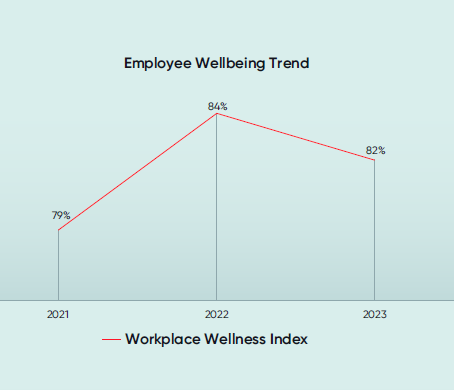
Graph of Employee Wellbeing Trend from 79% in 2021 to 84% in 2022 and 82% in 2023.

This blog will delve into emerging trends, key drivers, and areas of improvement across various domains. It will also explore effective strategies drawn from leading workplaces that promote employee well-being, offering valuable insights for organizational enhancement.

A deep dive into well-being culture experience across industries

The Construction, Infrastructure, and real Estate industry stands out as a frontrunner in workplace wellness. It leads the graph, closely trailed by the retail sector.

However, despite the overall positive trend, 2023 witnessed a decline in workplace wellness scores, particularly in certain areas.
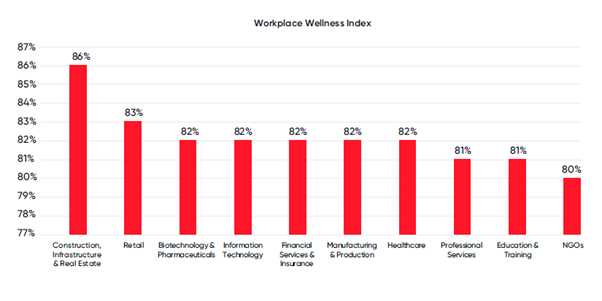
Graph of Workplace Wellness Index of various sectors like Construction, Retail, Pharma, Financial, Manufacturing, Healthcare, Professional Services, Education, NGOs.

With the decline in workplace wellness scores in 2023, maximum dip has been observed in the below areas.

  • Mental Health Support
  • Professional Growth and Development
  • Effective Management and Engagement

These detractors demonstrate a clear need for leaders to address mental health concerns, professional development needs and employee engagement concerns at the workplace.

Navigating through the see-saw of burnout and wellbeing

Maintaining the delicate balance between burnout and well-being is crucial in fostering a healthy workplace environment. In 2023, there was a noticeable decline of 2 points in Workplace Wellness perceptions, accompanied by a troubling increase of 3 points in reported burnout experiences.

A significant divergence is evident in burnout rates when comparing workplaces. While only 16% of employees in the Top 25% of Workplaces report high burnout, a troubling 40% of employees in the Bottom 25% indicate experiencing high burnout levels.
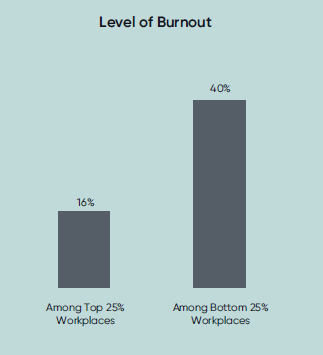
Graph of level of burnout with Among Top 25% Workplaces being at 16% and Among Bottom 25% Workplaces being at 40%

Employees who do not experience burnout exhibit behaviors that contribute positively to organizational success. They are twice as likely to express long-term commitment to their organization, demonstrate extra effort to accomplish tasks, readily adapt to necessary changes, and view their workplace favorably.

Leaders must cultivate a culture of well-being throughout the organization. Although leaders and managers consistently perceive their workplace wellness positively, non-managerial employees report lower perceptions. The decline in scores for non-managerial employees from 83% to 81% in 2023 underscores the urgent need for leaders to prioritize and lead wellbeing initiatives. Leaders have a valuable opportunity to improve the overall employee experience by demonstrating a genuine commitment to well-being, openly sharing their own well-being journeys, and ensuring that actions align with organizational values.

Mental Health

One in every four employees finds it challenging to voice concerns about stress, burnout, anxiety, or depression in their workplace without fearing judgment. Despite organizations implementing mental health benefits such as counseling services, mental health webinars, and wellness leave policies, the underutilization of these resources underscores the necessity for improving accessibility and ease of use.

There’s a clear need for a structured framework that supports employees willing to open up about their struggles. This framework can facilitate a more supportive environment where employees feel comfortable seeking help and utilizing available resources to effectively address their mental health needs.

Physical Health & Fitness

While 78% of organizations offer facilities for doctor consultations, only 38% extend policies or benefits related to physical health training. This glaring discrepancy underscores the urgent need for intervention in workplace preventive healthcare measures. Organizations must shift from sporadic health workshops to implementing a comprehensive and systematic health and wellbeing framework.

An exemplary model is demonstrated by Acquia India Pvt. Ltd., which provides a holistic and flexible health insurance benefit package. Each employee can choose coverage options that align with their individual needs, with the entire cost covered by the organization. Moreover, parental coverage is included by default in all policies. Beyond standard coverage, the policies cover inpatient (IPD) and outpatient (OPD) expenses, IVF treatment, and psychiatric ailments, among other benefits. This approach prioritizes employee health and demonstrates a commitment to comprehensive well-being support.

Social Health

83% of employees express a positive sense of community within their workplace. Interestingly, data indicates that the perception of workplace community tends to increase with age, with younger workers reporting the lowest sense of community while those aged 55 or older report the highest.

Accenture Solutions Pvt. Ltd. fosters a strong sense of community through its Passion Clubs initiative. These clubs allow employees to join communities of like-minded individuals who share similar interests and hobbies. This initiative strengthens interpersonal bonds and enriches the workplace environment, contributing to overall employee satisfaction and well-being.

Fulfillment and Career Progression

Employees’ pride in their workplace positively impacts their self-esteem and contributions to the organization’s growth. However, leaders must prioritize supporting employees in their career progression planning, training and development and fostering a culture of shared decision-making.
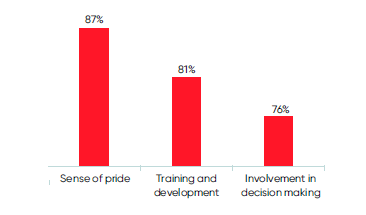
Graph showing levels of Sense of pride being at 87%, Training and development at 81% and Involvement in decision making at 76%

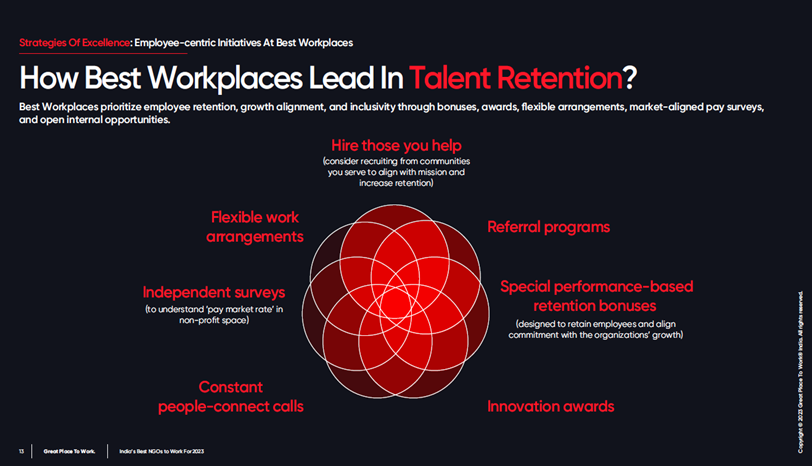
TVS Credit Services Limited’s ISHA – Inner Engineering program has been instrumental in equipping participants with a profound understanding of their minds and bodies. This empowers them to effectively manage stress, enhance productivity, and cultivate stronger workplace relationships. With a focus on mindfulness and self-awareness, the program resonates deeply with participants, significantly improving overall well-being. Key benefits observed include heightened energy levels, improved sleep quality, emotional balance, stress reduction, and the prevention or reversal of chronic ailments.  As workplaces evolve, prioritizing employee well-being has become paramount for organizational success. From addressing mental health challenges to fostering a sense of community and supporting career progression, organizations must invest in comprehensive strategies that nurture holistic employee wellness. Visit us here to learn more. 
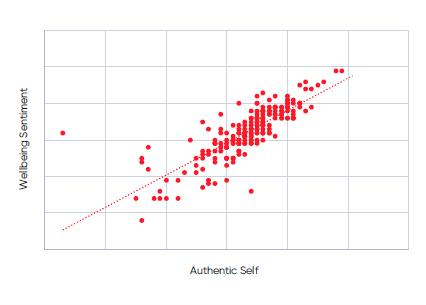
In 2023, it became increasingly evident that fostering an environment where employees can express their true selves is paramount. This authenticity promotes a sense of belonging and comfort, thus elevating overall well-being. This blog will uncover the transformative power of nurturing employee well-being and its profound impact on organizational excellence.

The Importance of Key Drivers of Workplace Wellness in 2023

Upon closely examining the key drivers of what drives employee wellbeing, our research found – 

  • Management’s commitment to upholding the values and practices they advocate is a significant driver of employee satisfaction. When management aligns its actions with its words, it cultivates trust and respect among the workforce, playing a crucial role in enhancing the workplace atmosphere.
  • Equally crucial is the recognition and mitigation of employee exhaustion. Creating a culture where employees feel empowered to prioritize their mental and physical health over work demands is not just important; it’s essential.
  • Encouraging open discussions about mental health underscores the importance of addressing psychological well-being in the workplace. When employees feel supported and encouraged to seek help, it fosters a compassionate and understanding environment.
  • An effective grievance redressal framework also ensures that employees’ concerns are heard and addressed promptly. This mechanism reinforces trust in the organization and demonstrates a commitment to resolving issues transparently and fairly.
Graph showing Authentic Self vs Wellbeing Sentiment

On average, the top 25% of workplaces exhibit a 17% more positive experience regarding these drivers than the bottom 25%, highlighting the correlation between workplace excellence and the prioritization of employee wellness.

Synergizing Employee Well-being and Workplace Culture

When employees experience psychological safety at the workplace, they are:

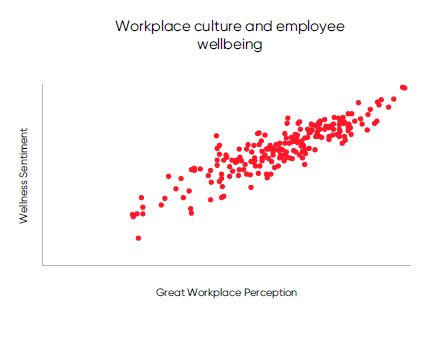
Graph of workplace culture and employee wellbeing
  1. 4 times more likely to describe their workplace as great when they feel psychologically safe.
  2. They are 3 times more likely to envision a long-term future with the organization. The sense of security and support provided by psychological safety fosters loyalty and commitment among employees. 
  3. They are 2 times as likely to adapt quickly to the organization’s dynamic needs. Psychological safety facilitates a culture of openness and innovation, wherein employees feel comfortable experimenting, taking risks, and embracing change. 
  4. Employees who feel psychologically safe are 2 times more likely to go the extra mile in their work. They are motivated to invest additional effort and energy into their tasks, driven by a sense of ownership, camaraderie, and shared purpose within the workplace.

By nurturing this sense of safety and trust, workplaces can unlock the full potential of their workforce, driving innovation, productivity, and sustainable growth.

A Healthy Workforce Matrix

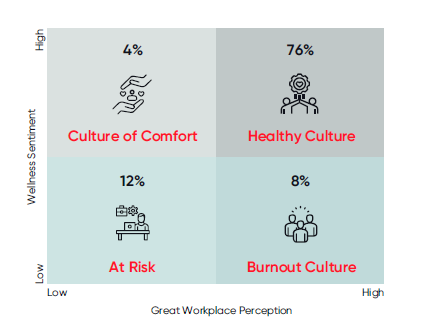
On average, three out of every four employees experience a healthy workplace culture.

Healthy Culture

Employees who have positive perceptions of both workplace culture and well-being experience. This is an ideal situation for the workplace and the workforce and results in motivated employees who stay with the organization for a long.

Culture of Comfort

Employees who experience a psychologically healthy workplace but do not have an overall positive culture experience. Leaders to identify these employees and understand their areas of concern as that can lead to retaining these employees for a long.

Burnout Culture

Employees who have an overall positive workplace experience struggle with their psychological and emotional well-being. Due to work-related stress and anxiety, these employees might feel burnt out quickly. Leaders need to prioritize their well-being.

At Risk

Employees who neither experience an overall positive workplace nor experience healthy well-being at work are at high risk of attrition and becoming detractors of the organization’s brand.

Wellbeing is Directly Proportionate to Innovation

At companies that prioritize wellbeing, 3X more employees leverage innovation opportunities.

Organizations in the Top Quartile of the Workplace Wellness Index, for every 2 employees that do no experience innovation at the workplace; there are 13 employees that do experience innovation opportunities. However, this number is only limited to 4 employees experiencing innovation opportunities at the organizations in the Bottom Quartile.

One of the practices to improve innovation by Acquia India Pvt. Ltd. is a Spot Bonus practice to invite and celebrate innovative minds at work. Every Leadership Executive recommends employees from their team to the CEO for Spot Bonuses every quarter for thinking out of the box and jumping in and owning it. The CEO selects the best of the best exemplary innovations and performances out of all the recommendations. The winners of this reward receive a one-time monetary bonus ranging from INR 35000 to INR 50000 in their monthly salary. The impact being a direct monetary reward, drives innovation and process improvement.

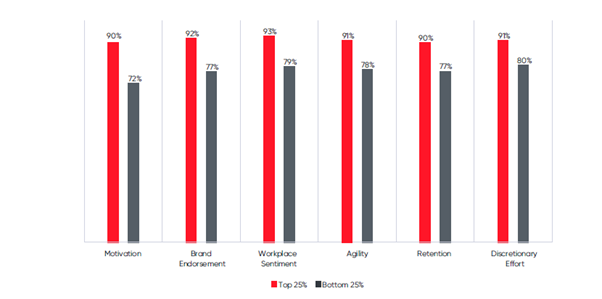
Graph showing Top 25% and Bottom 25% of Motivation, Brand Endorsement, Workplace Sentiment, Agility, Retention and Discretionary Effort.

On average, organizations in the Top Quadrant, based on their Workplace Wellness Index, lead by 14% in various measures of business outcomes.

Way Forward

There is an undeniable connection between employee well-being and organizational success. A happy and healthy workforce fuels productivity, creativity, and overall engagement, leading to a rewarding impact on the bottom line. By fostering a culture of well-being, leaders are making a strategic investment in the future of their business.

To maximize the return on this investment, a personalized approach is crucial. Aligning well-being initiatives with employee needs and expectations ensures a high level of engagement and maximizes the program’s value. Focusing on the initiatives with the greatest potential impact, supported by data-driven insights, further strengthens the program’s effectiveness.

Furthermore, adopting a proactive approach through preventive measures, such as stress management workshops and healthy lifestyle programs, empowers employees to take control of their well-being and foster a resilient workforce. This can be further strengthened by assigning dedicated stakeholder champions and resources to ensure the program’s long-term sustainability and success.

Organizations prioritizing employee well-being create an environment where individuals can thrive, ultimately contributing to a stronger, more successful organization. This is an investment worth making. Visit us here to learn more. 


In our recent report, we analyze the current state and future prospects of the manufacturing sector in India. The report dives into various facets of the industry, ranging from economic indicators and government policies to employee sentiment and workplace dynamics. Let’s look closer at the valuable insights into the challenges and opportunities shaping the manufacturing landscape.

Resilience of the Manufacturing Sector Amidst Downturn

Despite a recent dip in the Purchasing Managers Index (PMI), the outlook for India’s Manufacturing sector remains robust, marked by significant expansion in sectoral activity and backed up by supportive government policies. In fiscal year 2023, the sector achieved a milestone with its highest-ever annual exports, totaling $447.46 billion, showcasing a growth rate of 6.03%. The government’s unwavering commitment to the industry is evident through initiatives such as the Production Linked Incentive, National Manufacturing Policy, Make In India 2.0, Digital India, and Startup India, all aimed at fostering growth and innovation. Additionally, the Index of Industrial Production (IIP) saw a remarkable rise, reaching 141.8 in October 2023, marking a 10.4% increase compared to the previous year. Foreign Direct Investments (FDI) continue to flow into the sector, with $33 billion recorded as of September 2023 for the ongoing financial year, facilitated by policies allowing 100% FDI under the automatic route in most sectors. Despite the slight downturn indicated by the PMI for December, dropping to 54.9, the lowest in 18 months, the manufacturing sector’s resilience is underpinned by its significant contribution to India’s GDP, accounting for 17% and providing employment opportunities for an estimated 35.6 million people.

Positive Shift in Workplace Perception

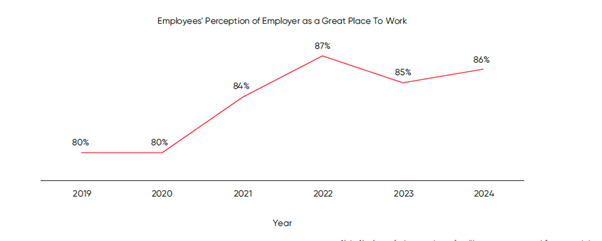
Within the manufacturing industry, organizations experience a notable uptick of 1% in the perception of being a great place to work among employers, with an impressive 86% of employees affirming their organization’s status as such in 2024.

However, despite this improvement, current satisfaction levels fall short of those observed in 2022, suggesting an ongoing requirement for sustained efforts in cultivating an exceptional workplace culture. This need for continuous improvement is more pronounced among larger organizations, as the current rise in perception is predominantly driven by mid-sized companies.

Employees' Perception of Employer as a Great Place To Work

Closing the Gap: Manufacturing Sector’s Trust Index

In a remarkable development, the Grand Mean Trust Index for the Manufacturing Sector has narrowed the gap with other industries, standing just 1% point behind at an impressive 82%.

While the manufacturing sector may lag behind other industries in various aspects, unlike their counterparts in different industries, manufacturing sector employees express higher levels of pride and a profound sense of accomplishment in their professional endeavors. Moreover, they harbor positive sentiments regarding their work’s contribution to society and desire longer tenures in their current positions.

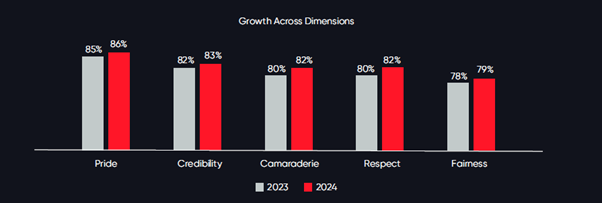
Growth across different dimensions such as Pride, Credibility, Camaradarie, Respect and Faireness

Navigating Disillusionment in Career Progression

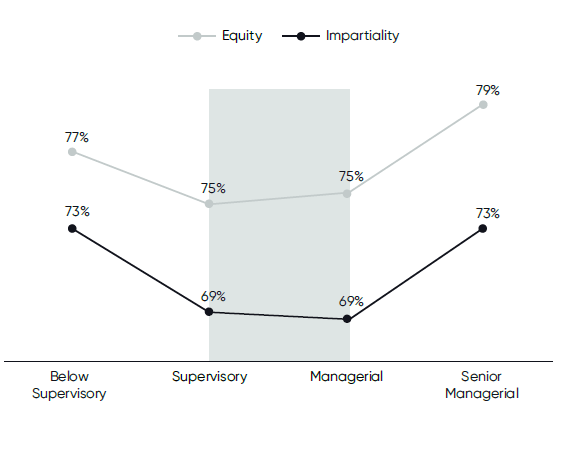
As individuals progress in their careers within the manufacturing sector, they encounter a trough of disillusionment, significantly influencing their perception of workplace fairness. This phenomenon potentially serves as both a precursor and a contributing factor to employee attrition within these career stages. Addressing issues of equity and impartiality becomes imperative to mitigate this disillusionment and foster a more supportive and inclusive work environment conducive to employee retention and satisfaction.

Equity and Impartiality in Career Progression across job levels

Sentimental Dynamics in the Manufacturing Industry

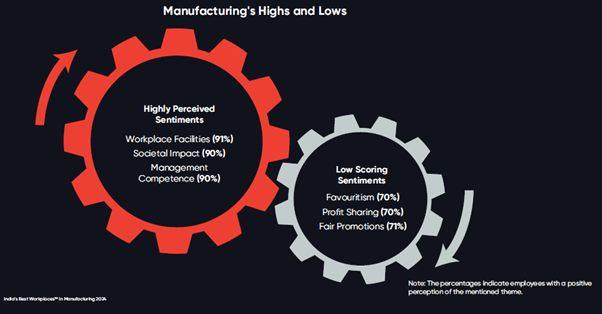
Within the manufacturing sector, employee sentiment reflects a nuanced landscape of satisfaction and concern. The highest satisfaction levels are observed in workplace facilities, societal impact, and management competence. These aspects likely contribute to a positive work environment and employee morale.

However, the sentiment could be more uniformly positive across all aspects. Employees express the lowest satisfaction levels regarding favoritism in the workplace, profit-sharing schemes, and the fairness of promotions. These concerns suggest areas where there may be disparities or perceived injustices within the organizational structure, warranting attention and potential remedial action to enhance employee trust and engagement.

Manufacturing Sector's Sentiments

Integrity: A Crucial Driver of Employee Satisfaction in Manufacturing

In the manufacturing sector, the perception of integrity within organizational leadership is pivotal in influencing workplace culture and employee satisfaction. Organizations within this industry must prioritize efforts to enhance management’s perceived integrity.

To foster employee retention and maintain a motivated workforce, manufacturing organizations must ensure that their leaders consistently uphold their commitments, exemplify honesty and integrity, and align their actions with their words. By embodying integrity in their conduct and decision-making processes, leaders can inspire trust among employees, cultivating a positive work environment conducive to productivity and well-being. This emphasis on integrity is a cornerstone for building a strong organizational culture and fostering long-term success within the manufacturing sector.

The manufacturing sector in India exhibits promising signs of growth and resilience, propelled by significant achievements in exports, government support, and industrial production. While challenges such as maintaining workplace satisfaction and addressing equity issues persist, there is ample room for improvement and innovation. By prioritizing integrity, fostering a positive workplace culture, and leveraging the benefits of becoming a Great Place To Work, manufacturing organizations can drive sustained growth, enhance competitiveness, and contribute to the overall prosperity of the sector and the nation. Visit us here to learn more. 

Moving beyond basic pay, Workplace Ikigai brings a significant change. It connects personal passions with the organization’s goals, creating a meaningful purpose. Leadership isn’t a solo journey; it’s a team effort driven by understanding and a shared impact. This intentional alignment isn’t just about job happiness; it’s about leaving a lasting legacy. Workplace Ikigai is an open invitation to rewrite our work story – to go beyond the routine of pay checks and step into a world of fulfilled hearts where every action carries lasting significance. Let’s dive deeper into the components of Workplace Ikigai. 

Leadership Excellence

Nurturing a culture of continuous improvement is imperative for a flourishing organizational landscape. It forges resilient leadership and is a compelling magnet, attracting top-tier talent. The unwavering dedication to ongoing enhancement ensures that commitments are not mere proclamations but tangible actions rooted in a foundation of integrity.

Additionally, employees experience a profound confidence in such a culture derived from a collective commitment to progress. It surpasses individual accomplishments, evolving into a collaborative journey toward excellence. Each team member becomes not merely a participant but a vital contributor to the culture of continuous improvement, shaping a workplace where everyone plays a pivotal role in the unfolding narrative of sustained success.

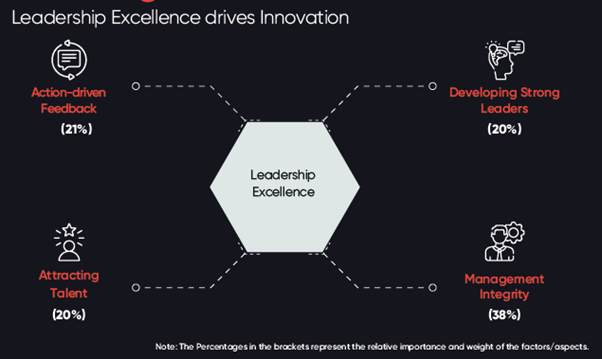
The key to unlocking innovation lies in cultivating leadership excellence within an organization. A conducive environment is created that amplifies employee innovation opportunities threefold by prioritizing and showcasing effective leadership. For Millennials, the scenario shifts significantly, with only 20% reporting experiencing innovation opportunities in an organization needing more leadership excellence. 

Leadership Excellence drives Innovation

Recognizing the pivotal role of strong leadership becomes critical in cracking the code to foster a culture of Innovation, where each team member is empowered to contribute their creative insights and ideas, propelling the organization towards continuous growth and success.

Personal Fulfillment

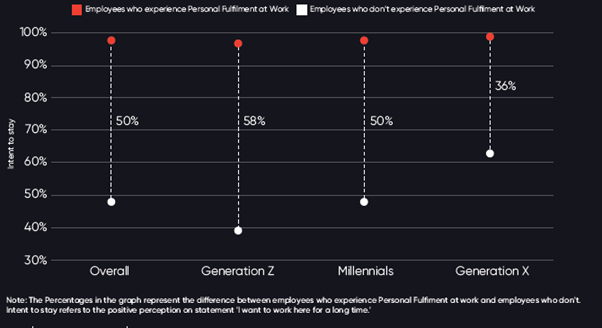
Empowering individuals to feel appreciated, proud, authentic, and aligned with the organization’s goals is a catalyst for creating a positive and fulfilling work experience. Personal fulfillment emerges as a pivotal force in driving organizational talent retention.

A recent Great Place To Work® India survey shows that personal fulfillment significantly impacts retention rates. Individuals who experience fulfillment in their work become twice as likely to stay with their organization. This holds particular significance for the younger, purpose-driven generation, where 40% would consider leaving an organization that falls short in meeting their personal fulfillment needs. 

Personal fulfilment at work across generations

Recognizing and addressing the individual aspirations and fulfillment of employees becomes a strategic imperative for organizations aiming to retain and harness their talent pool’s potential effectively.

Team Dynamics

Team Dynamics involves not only recognizing individual contributions but also celebrating them. Creating a caring environment where team members feel supported, valued, and encouraged is crucial. Additionally, ensuring smooth transitions within the team further fosters a culture of unity and collaboration.

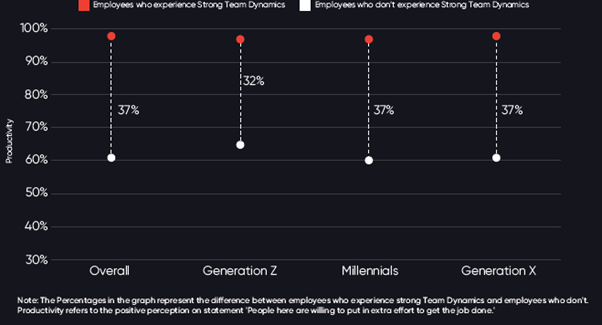
Team Dynamics is the art of weaving together each team member’s strengths and unique qualities. It goes beyond acknowledging individual efforts to creating an atmosphere where every contribution is appreciated. By nurturing a supportive and collaborative culture, teams become a collection of individuals and a cohesive unit working towards shared goals. This approach enhances overall team performance and contributes to a positive and enriching work environment. Team Dynamics emerge as a catalyst for driving transformation and fostering high organizational productivity. The strength of team collaboration goes beyond mere cooperation; it significantly influences motivation, dedication, and the willingness of employees to go the extra mile. Collaborative teams create an environment where individuals become 1.6 times more engaged and focused, leading to heightened productivity.

This effect is particularly pronounced among the goal-driven older generation. In instances where team dynamics are weak, their productivity takes a notable dip, reaching only 61%. Recognizing the influence of team dynamics becomes pivotal for organizations aspiring to maximize productivity and enhance the overall work experience. By prioritizing and nurturing collaborative team environments, organizations can unlock the full potential of their workforce, driving transformative change and achieving higher levels of success.

Personal fulfilment at work across generations

Workplace Ikigai serves as the driving force behind organizational evolution. In embracing it, organizations can cultivate a thriving environment where Innovation flourishes, individuals thrive, and teams collaboratively contribute to the organization’s enduring success. Visit us here to learn more. 
The workforce is undeniably the most valuable asset of any organization. While “An organization’s greatest asset is its people” may sound like a common saying, its importance cannot be overstated. Organizations must maintain agility to stay competitive in the face of inevitable change and the rapid evolution of trends such as remote work, digital technology, and artificial intelligence. 

Keeping pace with these changes requires a commitment to employee training across all levels of the organization. This investment in employee development is essential for competitiveness and a crucial driver for overall growth and business success. The connection between professional development and fostering a robust organizational culture is evident and influences various interconnected aspects, providing a distinct competitive edge. In this blog, we will explore four key areas where an investment in professional development has positively impacted the employee experience.

Employee Retention and Satisfaction

Content employees stay with the organization, while dissatisfied ones are more likely to leave. A crucial strategy for retaining talent involves offering career development opportunities. 92% of the people working in organizations with good professional development endorse their workplace and say that it’s a good workplace.

An organization that fosters a supportive environment for a broad range of career development opportunities enables employees to keep their career paths open and encourages them to explore internal options for their next career step rather than seeking external opportunities.

Employees seek meaningful skill application for personal and professional satisfaction, enhancing retention. Maintain strong connections, identify preferred training areas collaboratively, and establish clear career paths for growth within the organization.

Productivity and Talent

When bringing in new employees, it’s crucial that they possess the essential skills required for the job. Similarly, the skills of existing staff need to be sharp and current. Regularly investing in professional development is the most effective way to ensure that your talent can deliver the necessary outcomes and prevent stagnation. 

Employee productivity declines when individuals become bored, leading to diminished interest in the organization, its objectives, and their team. Consistent training is a key strategy to maintain high levels of knowledge, and employees equipped with the necessary tools, skills, and training are more likely to be productive than those without.

Cultivating a culture of continuous learning and development fosters an environment where individuals are motivated to learn from one another, leading to exponential growth within teams. When employees participate in training programs, it is beneficial to encourage them to share what they learn with their team. Facilitating open discussions within the team, allowing questions, and exploring how newly acquired skills can be applied to day-to-day objectives are essential aspects of this approach. Additionally, identifying skill gaps, determining which team members would benefit from similar training, and identifying specific training needs contribute to a comprehensive strategy for skill development.

Innovation and Creativity

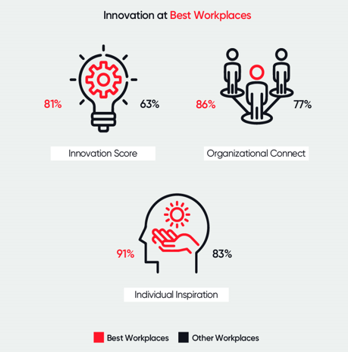
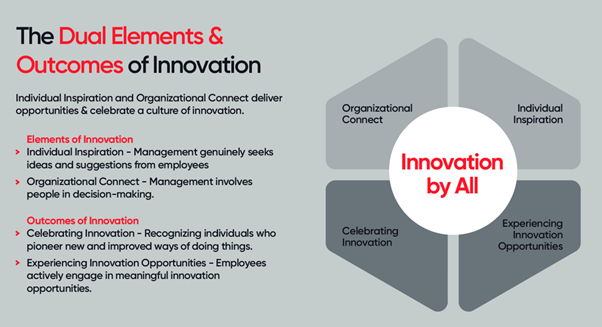
Investing in the development of your workforce not only contributes to their happiness and satisfaction but also signifies a commitment to continual learning and growth within an innovative culture. Employees at best workplaces in innovation show a 9% more connection to their organization and 8% more inspiration on an individual level. This forward-looking approach, unafraid of exploring new avenues, is crucial for individual and organizational advancement. Training stimulates individuals’ minds, fostering critical thinking, self-reflection for improvement, and exposure to novel methods and technologies that might otherwise go unnoticed. These elements collectively foster innovative and creative thinking, sparking new ideas.

Innovation at Best Workplaces

Incorporating innovative learning methods can also cultivate openness to change among individuals. For instance, utilizing new technologies such as virtual and augmented reality in training or employing simulations for skill acquisition in a risk-free environment can make the learning process safe and allow individuals to experiment with risk-taking. These experiences can then be applied to real work, introducing new concepts and solutions and showcasing the positive outcomes firsthand, ultimately encouraging creativity, agility, and the development of innovative thinking skills applicable to day-to-day tasks.

The Dual Elements and Outcomes of Innovation

To support this, it’s essential to cultivate an internal culture that champions innovation and acknowledges that only some new ideas will succeed on the initial attempt. Including innovation-focused training in the overall development program, making the innovation process safe and accessible by welcoming new ideas and regular feedback, and recognizing and appreciating innovative and creative thinking should all be integral components of organizational efforts.

Engagement and Empowerment

A compelling vision shared by an organization can inspire individuals, attracting those who align with its passion and purpose. Continuous training and development play a pivotal role in sustaining motivation and inspiration among individuals, propelling them toward shared success. When a company invests in the growth of its employees, a reciprocal attachment and engagement to the shared vision and purpose emerge, creating a mutually beneficial scenario.

Empowering individuals with new skills and fostering a learning and growth-oriented environment enables them to take charge of their achievements and careers. This investment communicates trust and worthiness, instigating a robust commitment to hard work and inspiring team members to do the same. A team of skilled individuals enthusiastic about learning and growth becomes a formidable force with limitless potential.

The positive cycle of growth and development generates a sense of pride that forms the foundation for organizational success. Leading by example from the top and promoting a lifelong dedication to learning establishes a solid groundwork for individuals to flourish, fostering loyalty and commitment. Such dedicated teams work hard and exhibit long-term loyalty to the organization. The best workplaces leverage this energy to cultivate thriving employees and enhance their company cultures.

To learn more about this visit us here.

In the ever-evolving landscape of the modern workplace, the well-being of employees has emerged as a pivotal factor influencing organizational success. Recognizing the profound impact of a positive work environment on individual morale, productivity, and overall job satisfaction, forward-thinking leaders are increasingly focusing on holistic strategies that go beyond traditional approaches. 

This blog comprehensively explores innovative initiatives designed to prioritize and enhance employee well-being. Amidst the challenges posed by remote work and the ever-present demands of a fast-paced professional landscape, we explore the importance of informal interactions, carving out time for fun, and personalized one-on-one check-ins. When thoughtfully implemented, these strategies create a resilient and supportive workplace culture. 

Encourage acts of kindness. 

Fostering a culture of kindness within the workplace is a simple yet powerful strategy to enhance the overall well-being of employees. Kindness has been shown to improve mental health and create a positive and supportive atmosphere within the organizational setting.  

Encouraging employees to engage in acts of kindness, whether big or small, contributes to building strong social bonds and promoting a sense of connection among team members. Organizations can positively impact their workforce’s mental and emotional health by cultivating a workplace environment that values and encourages kindness.

Harness your Employee Resource Groups 

Harnessing the potential of Employee Resource Groups (ERGs) can significantly contribute to creating a diverse, inclusive, and supportive workplace environment. ERGs, being employee-led committees aligned with organizational goals, naturally bring people together based on shared interests. These groups foster a sense of belonging and play a crucial role in building strong social bonds among members. 

By leveraging the power of ERGs, organizations can tap into the collective strength of their workforce, promoting collaboration across teams and providing valuable networking opportunities. According to the Great Place To Work’s Best Workplaces in IT report, 76% of employees utilize remote working options, which calls for increased focus on initiatives to improve camaraderie. Initiatives led by ERGs contribute to a more inclusive workplace culture, allowing employees to connect, share experiences, and support each other. Ultimately, activating Employee Resource Groups can positively impact employee well-being by fostering a sense of community and connection within the organization.

Instigate informal interactions 

Flexible work has many benefits for workers, but social connection is a challenge. Some pre-pandemic research found that full-time remote employment increased loneliness by 67% compared to in-office work. Initiating informal interactions within the workplace is a strategic move to enhance team dynamics and bolster employee well-being. In a traditional office setting, casual conversations that naturally occur—whether by desks or in communal spaces—foster a sense of camaraderie among team members. However, in remote work scenarios, these spontaneous interactions may be lost. 

Leaders can proactively instigate informal interactions to counteract this, providing dedicated time for non-work-related discussions. Leaders create an environment where team members can share, connect, and alleviate stress by setting an example and incorporating moments for personal connections in meetings. Recognizing that productivity isn’t solely determined by ploughing through agendas, these intentional, informal interactions contribute to a more supportive and connected work culture, positively impacting employee well-being.

Create space at the top of meetings

Reserving a space at the beginning of meetings for personal, non-work-related conversations is a thoughtful strategy that can significantly contribute to fostering employee well-being. In a virtual work environment, where the incidental chats of a physical office are absent, deliberately setting aside time for casual discussions becomes crucial.

Leaders who prioritize this practice not only demonstrate a commitment to their team’s holistic well-being but also create an opportunity for team members to be heard. This intentional approach allows individuals to share personal updates, alleviating stress and fostering a sense of connection. By acknowledging that effective meetings extend beyond agenda items, organizations can build a more supportive and socially connected work culture, positively impacting employee morale and engagement.

Make time for fun

Carving out dedicated time for fun activities within the workday is a simple yet impactful way to contribute to employee well-being. In the fast-paced and often stressful workplace environment, injecting joy and fun can have significant positive effects.

Whether through virtual coffee breaks, optional meetings with no set agenda, or creative team-building exercises, making time for fun creates opportunities for team members to relax, connect, and enjoy each other’s company. This intentional focus on enjoyment contributes to a positive work culture, helps alleviate stress, and fosters a sense of camaraderie among colleagues. Recognizing the importance of work-life balance, these fun moments contribute to a more holistic and supportive workplace environment.

Check-in on a 1:1 level

Conducting one-on-one check-ins is a personalized and impactful approach to support employee well-being. Without face-to-face interactions, these individual meetings provide a dedicated space for employees to express their thoughts, concerns, and personal challenges.

Leaders who prioritize regular one-on-one check-ins demonstrate genuine care for their team members and gain valuable insights into individual needs. This approach allows employees to feel seen and heard, fostering a sense of connection and support. By acknowledging and addressing personal and professional challenges one-on-one, organizations can enhance overall employee well-being and contribute to a workplace culture that values individual experiences and growth.

Prioritizing individualized support for employee well-being is not only a strategic approach but also a compassionate one. The importance of personal connections cannot be overstated, as employees who receive tailored assistance feel recognized and enable leaders to respond more effectively to their distinct needs. Whether it’s connecting employees with a supportive “buddy” during challenging times or leaders engaging in virtual “drive-by” for personal check-ins, these initiatives underscore the significance of fostering genuine connections within the workplace. Organizations can create a more resilient, supportive, and ultimately thriving work environment by recognizing and addressing each team member’s unique preferences and challenges. Visit us here for more information.

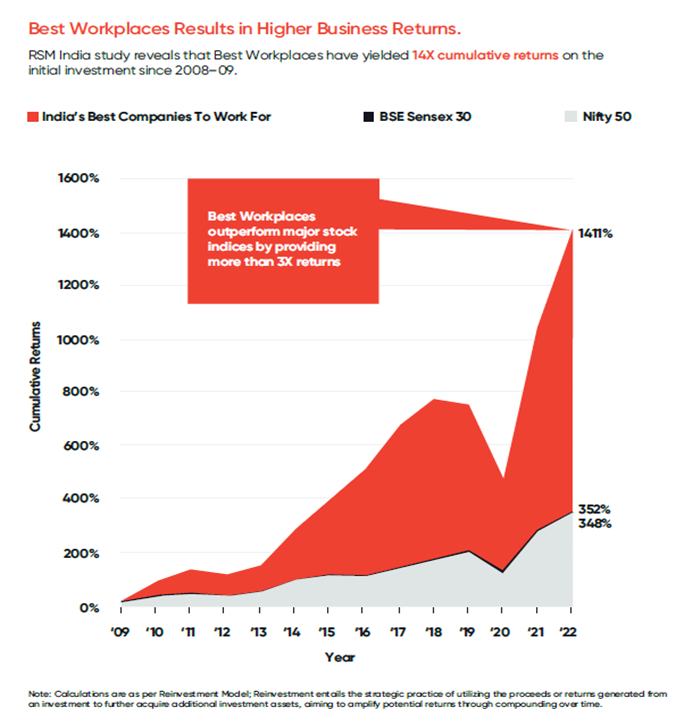
The ever-evolving landscape of the workplace is now firmly situated within the creative economy, where innovation, knowledge, and adaptability reign supreme. Recent findings from a comprehensive study conducted by RSM India illuminate the pivotal role that best workplaces play in this transformative environment. In this article, we will delve into the interplay between best workplaces and the creative economy, exploring how these workplaces have yielded remarkable returns and created a breeding ground for innovation, productivity, and inclusivity. 

Best Workplaces: A Beacon in the Creative Economy

The creative economy, marked by the dominance of intangible assets, knowledge, and innovation, is where the best workplaces shine. Data points from our India’s Best Companies To Work For (Top 100) report reaffirm the substantial influence of best workplaces in this new creative economy scenario. 

1. 14X Cumulative Returns on Investment:

The RSM India study underscores that the best workplaces have yielded an extraordinary 14X cumulative return on the initial investment since 2008-09. This monumental financial achievement not only exemplifies the robust financial benefits but also signifies the value of nurturing employee well-being and development. 

Higher Business Returns

2. 3X Outperformance of Stock Indices:

Returns of Best workplaces also excel compared to major stock indices by 3X. The substantial financial success of these workplaces is rooted in their innovative, engaged, and productive work culture

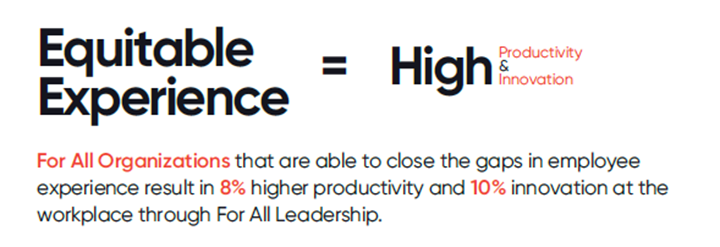
3. Equitable Experience and Enhanced Productivity and Innovation:

A hallmark of the best workplaces is their commitment to delivering an equitable experience across demographics. This commitment results in an 8% increase in productivity and a remarkable 10% boost in innovation. The cultivation of a diverse and inclusive environment empowers every individual to contribute unique perspectives and ideas, thereby driving innovation and productivity.

For All Organizations

4. Leadership that Inspires Meaning:

In organizations led by For All leaders, leadership is a driving force that ignites a sense of purpose and meaning among employees. On average, it results in 62% more employees discovering meaning in their jobs, feeling like they are making a difference, and being a part of a better future. This sense of purpose fuels engagement and motivation, thereby improving performance.

5. Maximizing Employee Potential in a High-Growth Economy:

In a high-growth phase of the Indian economy, the focus on enabling employees to maximize their potential is of paramount importance. Best workplaces prioritize the development and growth of their employees to harness the opportunities presented by a dynamic and evolving economy.

The Role of Best Workplaces in Navigating the Creative Economy

Best workplaces, as the data suggests, serve as vital catalysts in navigating the creative economy. They act as fertile grounds for innovation, engagement, and productivity, where employees are encouraged to unleash their full potential. Here’s how other organizations can be successful in the creative economy, too.

1. Cultivating Creativity:

In the creative economy, creativity is the most precious asset.  Other organizations should cultivate creativity through a supportive and inclusive culture where diverse ideas are not merely welcomed but celebrated.

2. Continuous Learning:

Other organizations must champion continuous learning, ensuring that employees remain relevant and adaptable in a swiftly changing landscape. They offer opportunities for skill development and personal growth.

3. Entrepreneurial Mindset:

Other organizations must foster an entrepreneurial mindset, empowering employees to take calculated risks, experiment with new ideas, and drive innovation.

4. Innovation in Organizational Culture:

Other organizations must invest in creating a culture of innovation where employees are encouraged to present new ideas, processes, and solutions.

5. Remote Work Strategies:

Other organizations must adapt to the rise of remote work by providing the tools and resources necessary for employees to work effectively from any location. They shift the focus to results, not physical presence, promoting flexibility and productivity.

6. Collaboration with the Gig Economy:

Other organizations must also acknowledge the potential of the gig economy and actively seek opportunities to collaborate with independent workers, freelancers, and entrepreneurs to tap into their expertise and skills.

In the dynamic landscape of the creative economy, the best workplaces emerge not only as thriving environments but also as pivotal drivers of innovation, productivity, and financial success. The data points from the RSM India study provide clear evidence of the tangible advantages of investing in a positive work culture. As the Indian economy enters a high-growth phase, enabling employees to maximize their potential becomes imperative. Other organizations, with their emphasis on inclusivity, innovation, and meaningful leadership, can stand as the forerunners as well. In this new creative economy scenario, maximizing potential is not just an aspiration but a guiding principle for success. Embrace the values of the best workplaces and set the stage for a future of work that is not only dynamic but also deeply fulfilling.

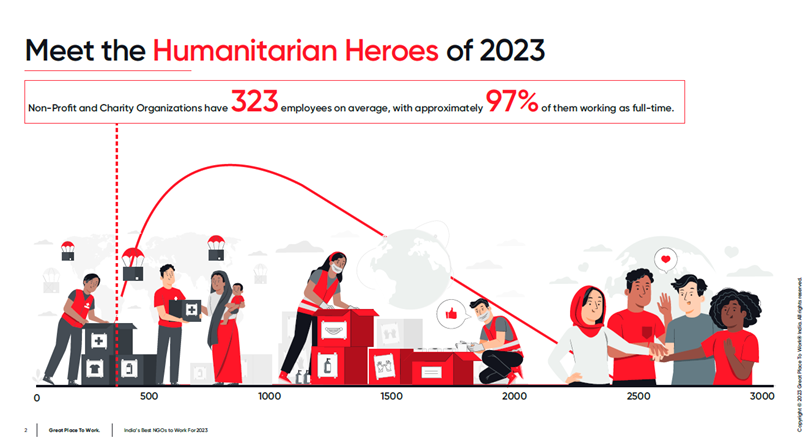
Humanitarian Heroes

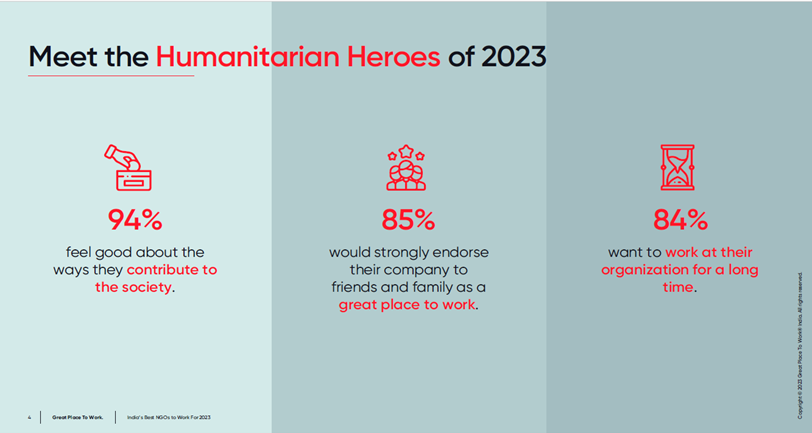
Non-profit and charity organizations have long been at the forefront of humanitarian efforts, striving to make the world a better place. Their employees play a crucial role in driving these missions forward. In 2023, a remarkable 94% of non-profit employees reported feeling good about the way they contribute to society, setting them apart from other industries.

This article explores the factors that make these organizations a beacon for workplace contentment, from employee endorsements to their strong desire for long-term commitment. We will also examine key statistics from our recent India’s Best NGOs to Work For 2023 report that paint a picture of the evolving landscape of non-profit organizations in 2023. To get more insights into these findings, you can download the full report from our website.

The Heart of Employee Satisfaction in Non-Profits

The statistics for employee satisfaction in non-profit organizations are nothing short of impressive. With a significant majority of employees experiencing satisfaction in their contributions to society, it’s clear that content employees drive the heart of humanitarian efforts. This high level of satisfaction is a testament to the fulfilling nature of work within these organizations. One of the most striking findings is that 85% of non-profit employees would strongly endorse their organization to friends and family as a great place to work. This level of endorsement reflects the deep sense of pride and commitment that employees feel towards their work. It’s not just a job; it’s a vocation that they are eager to share with others.

Humanitarian Heroes

Moreover, 84% of employees in non-profit organizations express a strong desire to work at their organization for a long time. This desire for long-term commitment showcases the stability and sense of belonging that non-profits offer to their employees. They are not just seeking a paycheck but a fulfilling career and a meaningful mission.

Diversity and Inclusion

Humanitarian Heroes

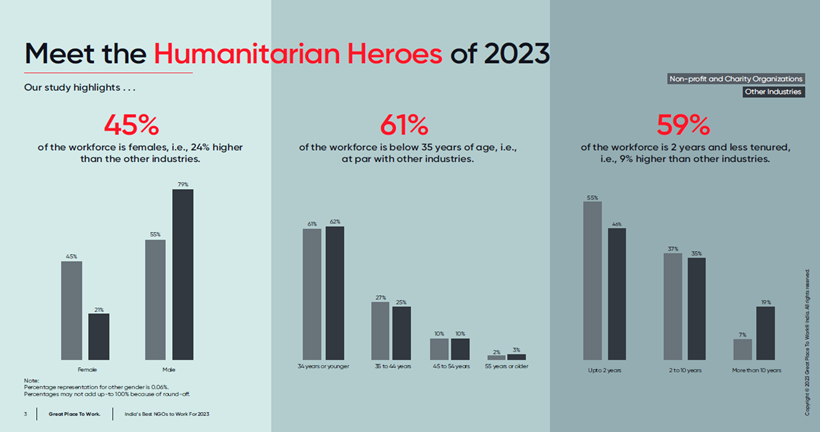
Non-profit organizations are also making significant strides in promoting diversity and inclusion. In 2023, 45% of the workforce in these organizations is comprised of females, marking a 24% higher representation than in other industries. This gender diversity is a testament to the inclusive culture that non-profits are cultivating. It is not just about doing good in the world; it’s also about creating a diverse and equitable workplace.

Non-profit and Charity Organizations

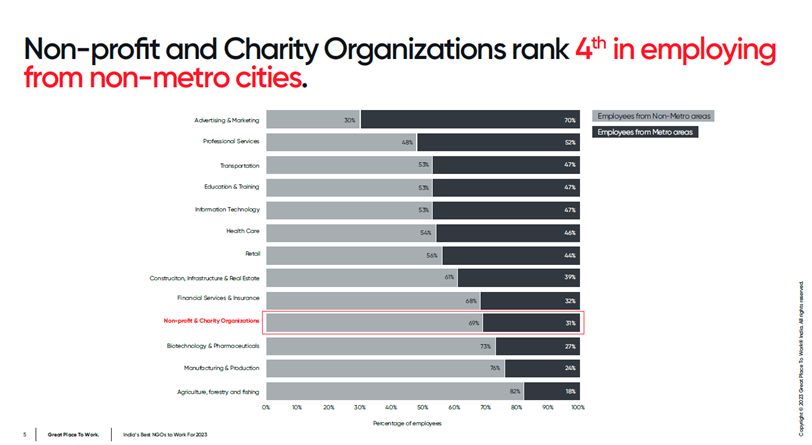
Another interesting fact is that 69% of employees in non-profit organizations hail from non-metro cities. This indicates that non-profits are reaching out and providing opportunities to individuals from all walks of life, not just those in urban areas. It’s a testament to the inclusive and diverse workforce that characterizes these organizations.

Comparing Non-Profits to Other Industries

Working for good Vs Working for profit

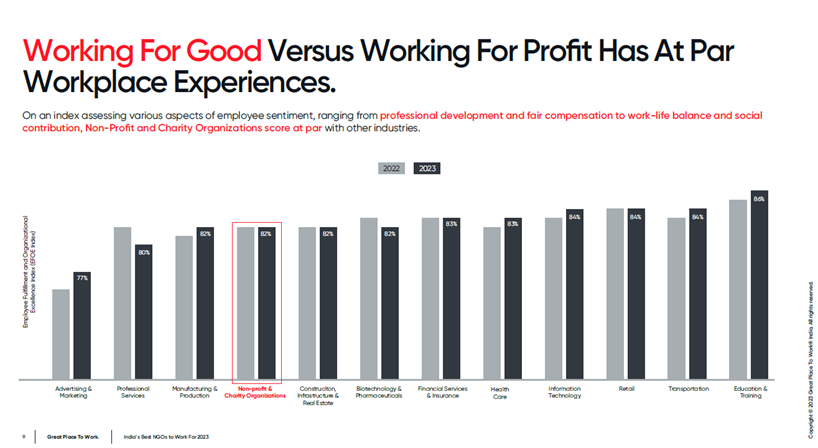
Non-profit and charity organizations score at par with other industries when it comes to various aspects of employee sentiment. These aspects include professional development, fair compensation, work-life balance, and social contribution. It’s clear that non-profits are not lagging behind; they are standing shoulder-to-shoulder with their counterparts in the for-profit sector.

What Sets the Best Non-Profits Apart?

To understand what makes certain non-profits stand out, we need to look at some key differentiators. In 2023, 7% more employees in the Best Workplaces in NGOs report feeling good about the ways they contribute to society compared to employees in other non-profit organizations. This suggests that the best non-profits excel not only in their missions but also in the way they engage and inspire their employees.

One significant difference is in the perception of management. There is a 6-7% difference in perception around management in the Best Workplaces in NGOs compared to the other workplaces. This indicates that effective leadership and management are critical in creating a positive and inspiring work environment within non-profits.

The change everywhere also provide better benefits, a fun working environment, and a work-life balance. These factors contribute to the high level of employee satisfaction and retention in these organizations. It’s not just about the mission; it’s also about how the organization supports and values its employees.

Talent Rentention in Best Workplaces

Non-profit and charity organizations are thriving in 2023, not only in terms of their societal contributions but also in their commitment to employee satisfaction. The diversity and inclusion efforts within non-profits are also commendable, with a higher representation of females and employees from non-metro cities. Non-profits are breaking barriers and creating opportunities for individuals from various backgrounds.

As we’ve seen, the best non-profits distinguish themselves by fostering a positive work culture, excelling in management, and providing attractive benefits. They set the gold standard for employee satisfaction within the sector.

In conclusion, non-profit and charity organizations are not only the heart of humanitarian efforts but also the heart of employee satisfaction. If you want to learn more about the insights and data behind these findings, you can download the full report from our website. Non-profits are not just changing the world; they are also changing the lives of those who work for them, one satisfied employee at a time.

In modern workplaces’ fast-paced and competitive world, imposter syndrome has emerged as a silent barrier to individual and organizational success. Addressing imposter syndrome is not just a matter of personal well-being; it has far-reaching implications for workplace dynamics and overall productivity. Employees grappling with imposter syndrome often struggle to internalize their achievements, leading to chronic self-doubt. This chronic self-doubt, in turn, affects their performance and interactions within the workplace, creating an environment of insecurity and apprehension.

Understanding Imposter Syndrome

Imposter syndrome is a psychological pattern where individuals doubt their accomplishments and fear being exposed despite evident success. This pervasive self-doubt is not limited to beginners; even seasoned professionals and high-achievers frequently find themselves afflicted.

Individuals experiencing imposter syndrome often exhibit signs such as perfectionism, self-criticism, fear of Failure, and downplaying their achievements. These symptoms create a cycle of anxiety and undermine confidence, hindering personal and professional growth.

The Impact on Workplace Dynamics

Imposter syndrome significantly diminishes productivity. When individuals doubt their abilities, they tend to overcompensate, investing excessive time and energy in tasks to prove their worth. This over-commitment often leads to burnout, hampering sustained productivity.

In team environments, imposter syndrome can disrupt collaboration. Individuals may hesitate to voice their opinions or contribute ideas, fearing judgment or rejection. This reluctance stifles creativity and innovation, essential to a thriving workplace culture.

Long-Term Consequences

The long-term consequences of imposter syndrome are profound. Constant self-doubt can lead to missed opportunities for career advancement and personal development. Employees may avoid challenging projects or shy away from leadership roles, limiting their professional growth potential.

Addressing imposter syndrome in the workplace is not merely a matter of boosting individual confidence. Employers can mitigate the adverse effects of imposter syndrome by fostering a culture of acceptance, providing mentorship, and promoting psychological well-being. When employees feel valued and supported, they are more likely to embrace challenges, collaborate effectively, and contribute meaningfully, creating a workplace where everyone can thrive.

Strategies to Tackle Imposter Syndrome

Promoting Self-Awareness

Encouraging self-reflection and introspection is the first step in overcoming imposter syndrome. Individuals can confront these feelings head-on by recognizing and understanding the patterns of self-doubt. Acknowledging personal strengths and achievements is crucial, no matter how small they seem. Reflecting on one’s accomplishments provides a solid foundation for building self-confidence.

Fostering Supportive Work Environments

Creating a nurturing workplace environment is essential. Mentorship programs and peer support initiatives allow individuals to share their experiences and challenges openly. Leaders and managers play a pivotal role in fostering this supportive atmosphere. By actively listening and creating a safe space for employees to express their feelings of inadequacy, leaders can dismantle the walls of isolation that imposter syndrome often builds.

Developing Resilience and Confidence

Building resilience and confidence is an ongoing journey. Practical techniques such as positive affirmations, where individuals consciously reinforce their abilities and worth, can be transformative. Additionally, mindfulness practices help individuals combat negative self-talk by grounding them in the present moment, fostering mental resilience.

Cultivating a Positive Mindset

Embracing Failure as a Learning Opportunity

Failure is not the end but a stepping stone to growth. Encouraging employees to reframe failures as valuable learning experiences fosters a resilient mindset. Sharing stories of successful individuals who faced setbacks and emerged stronger exemplifies the transformative power of failure. These narratives serve as beacons of hope, illustrating that setbacks are not indicators of inadequacy but opportunities for personal and professional development.

Setting Realistic Goals and Celebrating Achievements

Setting achievable goals is vital in overcoming imposter syndrome. Individuals can measure their progress more effectively by breaking down larger objectives into manageable tasks. Celebrating even minor victories, whether completing a challenging project or receiving positive feedback, reinforces self-confidence. Acknowledging these accomplishments creates a positive feedback loop, bolstering self-esteem and diminishing imposter feelings.

Empowering Organizational Change

Training and Workshops

Organizations must invest in education and awareness programs. Regular workshops and training sessions can illuminate the prevalence of imposter syndrome and provide practical strategies for overcoming it. Interactive activities within these sessions encourage open discussions, allowing employees to share their experiences and learn from one another. These initiatives create a sense of unity, reassuring individuals that they are not alone in their struggles.

Policy and Culture Shifts

Organizational policies play a crucial role in combating imposter syndrome. Embracing inclusivity and diversity initiatives ensures that employees from all backgrounds feel valued and respected. Recognizing and rewarding employees based on their unique contributions and skills rather than mere seniority promotes a positive culture. This shift in focus redirects the spotlight from self-doubt to genuine recognition, diminishing imposter feelings. In the battle against imposter syndrome, self-awareness, support, and positive reinforcement are our strongest allies. Recognizing the signs and acknowledging personal achievements provide the foundation for building confidence. Organizations, leaders, and individuals are all responsible for creating workplaces where self-doubt has no room to thrive. By fostering a culture of understanding, implementing supportive policies, and championing the unique strengths of every employee, we can build an environment where everyone feels valued and confident. Visit us here to learn more.
In the dynamic landscape of modern workplaces, diversity and inclusion stand as pillars of progress, shaping organizations into vibrant, innovative, and empathetic spaces. Acknowledging the significance of embracing diversity and Equality isn’t just a moral obligation; it’s a strategic imperative. In this blog, we delve into the multifaceted dimensions of building an inclusive workplace, exploring the nuances of understanding, the challenges faced, and comprehensive strategies that can transform workplaces into havens of DEIB.

Understanding Diversity and Inclusion

Diversity extends far beyond visible differences. It encompasses a spectrum of identities – race, gender, ethnicity, sexual orientation, age, and abilities. It’s about recognizing and embracing an organization’s rich tapestry of humanity.

Inclusion goes a step further, acknowledging that more than diversity is needed. It’s about fostering an environment where everyone feels valued, respected, and empowered. Inclusion dismantles barriers, ensuring that diverse voices are heard and actively welcomed.

Challenges in Building an Inclusive Workplace

Building an inclusive workplace fosters diversity, equality, and a sense of belonging among employees. However, there are several challenges that organizations often face in achieving this goal.

Unconscious Bias

Unconscious biases are automatic, ingrained attitudes or stereotypes about certain groups of people. This can influence decision-making processes, leading to unfair treatment and exclusion of specific individuals or groups.

Lack of Diversity and Representation

This refers to the team being limited in race, gender, age, sexual orientation, and other demographic factors. Lack of diversity hampers the creation of an inclusive environment, as different perspectives and experiences are essential for fostering inclusivity.

Inequitable Policies and Practices

These refer to policies or practices that unintentionally discriminate against specific groups. Biased policies or practices, even if unintentional, can lead to unequal opportunities and treatment, creating divisions within the workforce.

Inadequate Diversity and Inclusion Training

With proper training, employees may be aware of their biases and understand the experiences of others, hindering the development of an inclusive culture.

Resistance to Change

Resistance to diversity and inclusion initiatives, whether from employees or leadership, poses a significant challenge. This resistance hampers the effective implementation of inclusive policies and practices, impeding organizational progress. Overcoming this challenge requires raising awareness, education, and fostering understanding to create an inclusive workplace where everyone feels valued and respected.

Inclusive Leadership Gap

The lack of inclusive leadership skills and behaviors among managers and executives deepens the challenge of building an inclusive workplace. Inclusive leaders play a pivotal role in setting the tone for the organization, modeling inclusive behaviors, and integrating diversity and inclusion efforts into the organizational culture. Their ability to embrace and champion these values is essential for creating an environment where diversity is celebrated, and all employees feel valued and included.

Microaggressions and Harassment

Microaggressions subtle discriminatory actions, create hostile workplace environments, especially for marginalized individuals. This challenge undermines inclusivity efforts, making it crucial to raise awareness and foster a culture of respect and acceptance in the workplace.

The Multifaceted Approach Towards Building an Inclusive Environment

1. Education and Training: Conduct regular diversity and inclusion training programs to raise awareness about unconscious biases, microaggressions, and inclusive behaviors.

2. Leadership Commitment: Ensure leadership is actively committed to diversity and inclusion initiatives, setting an example by promoting inclusive practices at all levels of the organization.

3. Policy Review: Regularly review policies and procedures to identify and eliminate biases. Ensure that all policies promote fairness, equality, and inclusivity.

4. Promote Inclusive Leadership: Train managers and executives in inclusive leadership skills, encouraging them to foster an inclusive team culture.

5. Encourage Open Communication: Create a safe space for employees to voice concerns and provide feedback. Address reported incidents promptly and transparently.

6. Promote Diverse Representation: Actively recruit and promote individuals from diverse backgrounds, ensuring representation at all levels of the organization.

7. Support Employee Resource Groups: Establish and support employee resource groups (ERGs) representing various demographics, providing a platform for networking and support.

8. Mentorship and Sponsorship Programs: Implement mentorship and sponsorship initiatives to support the career growth of underrepresented employees.

9. Inclusive Benefits: Offer benefits and resources that cater to the diverse needs of employees, including parental leave, mental health support, and accommodations for individuals with disabilities.

10. Regular Evaluation: Continuously assess the effectiveness of diversity and inclusion initiatives, seeking employee feedback and adjusting strategies accordingly.

11. Collaborate Externally: Engage with external organizations, attend workshops, and collaborate with experts to gain insights into best practices for fostering inclusivity.

12. Promote Allyship: Encourage employees to be allies, promoting understanding and support for colleagues from diverse backgrounds.

By implementing these strategies, organizations can create a more inclusive workplace where all employees feel valued, respected, and empowered to contribute their best work. By embracing the DEIB initiatives, we can forge workplaces that reflect the world’s diversity and serve as beacons of Equality, Understanding, and harmony. Visit us here to learn more.
Camera red icon

LIVE WEBINAR WITH Q & A

certification-badge-2026-rhc4efc9ny04x7lz17jff7guyhsup5b0yvrou4vd72

The Certification Advantage: Why Partner with Great Place To Work®

How partnering with Great Place To Work can strengthen your people strategy, and drive business outcomes through data-driven insights and Certification.

prasad-kachraj

Prasad Kachraj

Managing Director, Great Place To Work, India

23rd September 2026  |  4.00 PM - 4.30 PM IST

Register Now