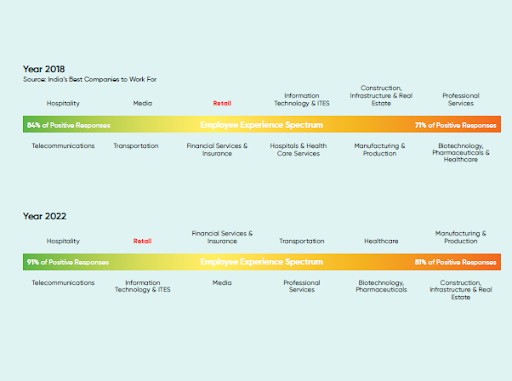
India’s manufacturing industry is experiencing significant growth, with promising opportunities for manufacturers in India and South-East Asia, even as the global supply chain is disrupted due to war and the pandemic. This growth is driven by robust demand at the domestic level, increasing investments, policy support from the government, and higher reliance on the sector globally.

However, there is still much work to be done in the manufacturing industry to ensure a fair and effective workplace. While the industry has shown an increase in employee engagement over the last five years, it still stands at 81%, ranking among the lowest. As a result, organizations need to support their business with a robust people strategy to maximize the opportunities the market offers in the coming times.

Manufacturing Industry Today

According to the latest data, Best Workplaces outperform the industry on crucial differentiators by an average of 11%. Great People Managers, Pride, Credibility, and Camaraderie, are among the aspects converging to similar importance levels, with sustained engagement levels despite an industry drop of 2%. The gap between Best Workplaces and the industry has increased equivalent to pre-pandemic levels, and hence it’s even more essential now for workplaces to teach practices of Best Workplaces.

As India transforms into an on-shore manufacturing hub, organizations must focus on creating a fair and effective workplace culture. Fairness and respect at the workplace have observed the highest growth over the last five years, with an increase of 8% and 6%, respectively. Focusing on these aspects and creating a culture of fairness and respect is essential for making your workplace effective. By investing in their people and prioritizing fairness and respect, manufacturers can maximize the market’s opportunities and succeed in the coming times. Organizations that can achieve this will be better equipped to navigate the challenges of a rapidly changing market and succeed in the long run.

The manufacturing industry has consistently reported low levels of employee engagement across all aspects, with a 3% lower perception than other industries. The current state of the industry in 2023 shows that the difference between manufacturing and other sectors ranges from 1% to 5%, with the highest distinction in employee perception of impartiality (5%) and the least in the corporate image (1%) and personal job (1%).

Even the highest-scoring workplace culture aspects, including corporate image, justice, team, private employment, and competence in the manufacturing and production (M&P) industry, are 2% below average compared to other sectors.

Areas of Improvement

Despite this, employees in the manufacturing industry report the highest positive experience on pride, justice towards personal aspects, and management competence in running a business. However, areas of improvement for the sector remain fairness at the workplace and leadership behaviors that enable the involvement of everyone in decision-making, candid communication, and delivery of promises.

Although the above remains true, blue-collar and white-collar workers have unique needs; Best Workplaces acknowledge and actualize them. As a result, employees at the Best Workplaces in both groups report higher experiences (+8% and +7%, respectively) than others.

The three facets of fairness that require prioritization include impartiality, justice, and equity. Detachment by managers, fair treatment regardless of an individual’s age, gender, race/caste, and sexual orientation, and equity in treatment, compensation, and opportunities for recognition.

Way Forward

To move forward in 2023, the manufacturing industry must prioritize fairness as it is the lowest-scoring and most significant differentiator. Best workplaces outperform the industry by 6% and others by 9% on fairness. Experiencing fairness at the workplace results in the increased motivation of 22% and 16% higher intent to stay. Among all aspects, most fair organizations differentiate utmost on impartiality by 28%.

The manufacturing and production industry should commit to fairness. Three action items to create an impartial workplace include:

Despite the testing times and mid of the company’s transition, PGP Glass ensured all possible ways to retain employees by implementing practices that enable a fair work environment, such as being an equal opportunity employer, having zero tolerance for any form of discrimination and harassment, and having a whistle-blower policy. The company also focuses on competence and connection as they define an effective leader.

At best workplaces, 10% more employees respond positively to management that shows competence in running the business and builds authentic connections at the workplace. In addition, organizations that focus on fairness and effective leaders observe a significant rise (+8%) in the overall workplace sentiment of employees.

The manufacturing industry must build a fair, transparent workplace to retain and motivate employees. This includes having fair/bias-free practices and ensuring that managerial behavior is aligned with employee needs. Along with competence in providing business results, leaders must focus on building authentic connections and demonstrating care for people consistently.

To know more about the manufacturing industry’s workplace culture, download our detailed report Here.
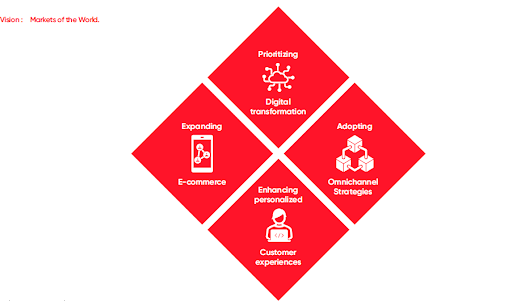
India’s retail industry is experiencing significant growth, with a Compound Annual Growth Rate (CAGR) of 10-11%. Various factors fuel this growth, including the rising purchasing power of the middle class, the increase in e-commerce, and advancements in supply chain management.

Over the past decade, India’s purchasing power has grown from 15.55 in 2011 to 23.13 in 2021, as measured by the purchasing power parity index. One of the significant contributors to this growth is the e-commerce market, which is predicted to reach $200 billion by 2026.

The surge in digital technology adoption and the widespread availability of affordable smartphones and high-speed internet has accelerated the growth of the e-commerce market. Furthermore, the COVID-19 pandemic has expedited the shift towards digital and contactless shopping as consumers seek safer, more convenient purchasing methods. In addition to the rise of e-commerce, newer retail business models are emerging in India, including online, offline, and hybrid models, focusing on experiential stores that offer unique and engaging shopping experiences.

From Great to For All

Retailers now differentiate themselves by creating memorable in-store experiences that appeal to customers’ senses and emotions. With continued growth and innovation across the industry, the retail revolution in India shows no signs of slowing down. As retailers continue to adapt to changing consumer preferences and behaviors, the future of retail in India looks bright and exciting.

Navigating the Current State of the Workplace

Employee experience is crucial to the success of any organization. It encompasses more than just providing benefits and perks. It includes creating a supportive work culture, providing leadership, offering career development opportunities, and fostering a sense of purpose. Retail is one industry that has stood out in recent years for its efforts to improve the employee experience.

While the retail sector has significantly improved employee experience, the best workplaces surpass industry standards. These companies report up to 6-10 percentage points higher positive experiences on key aspects than the overall industry.
This indicates that the practices followed by the best workplaces make a significant difference in employees’ overall experience.

The factors determining the best workplaces from others include trust in leadership, a sense of belonging, opportunities for growth, communication, and work-life balance.
Leaders in the retail industry must align their intent with employee experience and create a culture that fosters innovation and leadership development.

Navigating the Current State of the Workplace

In addition, leaders can create an environment where employees feel valued and motivated to give their best. A positive employee experience is essential for employee engagement, motivation, and retention. The continued focus on creating a positive workplace culture will help the retail industry attract and retain top talent and maintain a positive workplace experience for all employees. With these efforts, the retail sector is well-positioned to continue its growth and success in the years ahead.

Exploring the Future of the Retail Industry

The workplace challenge of the current state is necessity-driven execution, which means that organizations are primarily focused on addressing the immediate needs and challenges they face. However, the future focus should be on planned practices, meaning that organizations must take a strategic approach to manage their long-term goals and challenges.

This requires organizations to invest

  • Time
  • Resources
  • Effort

in planning and implementing practices to help them achieve their long-term goals.

Planned practices include:

  • Building a diverse and inclusive workplace culture.
  • Investing in employee development and training.
  • Creating a flexible work environment.
  • Fostering innovation and creativity.
  • Developing a strong leadership pipeline.

These practices are beneficial in the long run and help attract and retain top talent, enhance employee engagement, and create a positive brand image.

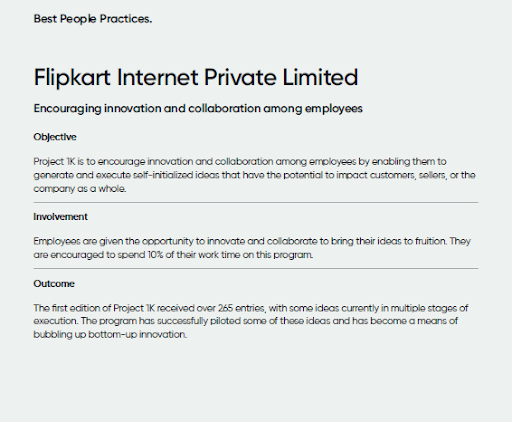
To drive innovation across the organization, leaders must foster a culture encouraging creativity, collaboration, and experimentation. This involves creating an environment where employees feel comfortable sharing their ideas and suggestions and management takes them seriously.

In addition, leaders can encourage innovation by providing opportunities for employees to contribute to decision-making processes and actively seeking their input.

Exploring the Future of the Retail Industry

In conclusion, the retail industry has made great strides in improving employee experience, and retail companies are among the best workplaces across all sectors. The industry continues to focus on improving workplace culture, emphasizing impartiality, equity, and collaboration. With these continued efforts, the retail industry is well-positioned to attract and retain top talent and maintain a positive workplace experience for all employees.

In today’s world, organizations need to have a diverse and inclusive workforce to succeed. One of the most critical ways to demonstrate this is by providing equitable and inclusive promotion opportunities. A promotion is a crucial milestone in an employee’s career and can be a significant factor in achieving job satisfaction and financial security. Therefore, it’s essential to ensure that promotions are offered based on merit and not personal biases. 

So, let’s explore the importance of equity and inclusion in the workplace, the common barriers to equitable and inclusive promotions, and discuss five strategies that organizations can implement to make promotions more equitable and inclusive.

The Importance of Equity and Inclusion in the Workplace:

Diversity, equity, and inclusion (DEI) are crucial elements of a healthy and productive work environment. Diversity means having a workforce that represents a range of backgrounds, experiences, and perspectives. Equity means ensuring that everyone has access to the same opportunities and resources, regardless of their background or identity. Inclusion means creating a work environment where everyone feels welcome, valued, and respected.

Promotions are a critical aspect of a company’s culture and values. They can demonstrate an organization’s commitment to diversity, equity, and inclusion or highlight its lack thereof. Promotions should be based on merit, not on an individual’s identity or background. If promotions are biased, it can lead to a lack of diversity in leadership, which can have a negative impact on the organization’s culture, productivity, and bottom line.

Common Barriers to Equitable and Inclusive Promotions:

There are several barriers to equitable and inclusive promotions that organizations need to be aware of. These barriers include:

    1. Strategy 1: Establish Clear Promotion Criteria and Expectations:

      One of the best ways to make promotions more equitable and inclusive is to establish clear promotion criteria and expectations. This can help ensure that all employees understand what is required to advance in their careers and that promotions are based on merit.

      Clear promotion criteria should be based on objective factors such as job performance, skills, and experience. Additionally, organizations should communicate these criteria to all employees and ensure that they are applied consistently across the organization.

      Strategy 2: Provide Development Opportunities and Resources for All Employees:

      Providing development opportunities and resources to all employees is another critical strategy for making promotions more equitable and inclusive. This can help ensure that all employees have the tools and skills they need to succeed in their roles and advance in their careers.

      Development opportunities can include training, mentoring, coaching, and job shadowing. Organizations should ensure that these opportunities are available to all employees, regardless of their background or identity.

      Strategy 3: Use Objective and Consistent Evaluation Methods:

      Objective and consistent evaluation methods are essential for ensuring that promotions are based on merit and not personal biases. Evaluation methods should be based on objective criteria such as job performance, skills, and experience.

      Additionally, organizations should ensure that these evaluation methods are applied consistently across the organization. This can help ensure that all employees are evaluated fairly and that promotions are based on merit.

      Strategy 4: Address Bias and Stereotypes in Promotion Decisions:

      Unconscious biases and stereotypes can influence decision-making in the promotion process. To address this, organizations should provide training to managers and employees on unconscious bias and stereotype awareness. This can help individuals become aware of their biases and learn strategies to mitigate their impact on decision-making.

      Organizations can also implement blind screening processes that remove identifying information from resumes and job applications. This can help ensure that individuals are evaluated based on their skills and experience rather than personal biases.

      Strategy 5: Foster a Culture of Inclusion and Belonging:

      A culture of inclusion and belonging is critical for creating an environment where all employees feel valued and supported. When employees feel included, they are more likely to be engaged and motivated, which can lead to better performance and productivity.

      Organizations can foster a culture of inclusion and belonging by:

        1. Taking Action to Create Equitable and Inclusive Promotion Processes:

          Organizations that are committed to equity and inclusion should take action to create promotion processes that are equitable and inclusive. This includes implementing the strategies outlined above, but it also requires ongoing monitoring and evaluation of the promotion process to ensure that it remains fair and unbiased.

          Leaders in the organization should regularly review promotion data to ensure that there are no disparities based on identity or background. They should also seek feedback from employees to understand their experiences with the promotion process and identify areas for improvement.

          Promotions are a critical aspect of an organization’s culture and values. Ensuring that promotions are based on merit and not personal biases is essential for creating a diverse, equitable, and inclusive workforce. Organizations can implement several strategies to make promotions more equitable and inclusive, including establishing clear promotion criteria, providing development opportunities for all employees, using objective and consistent evaluation methods, addressing bias and stereotypes, and fostering a culture of inclusion and belonging. By taking action to create equitable and inclusive promotion processes, organizations can create a more diverse, engaged, and productive workforce.

Innovation is no longer a luxury but a necessity for workplaces to remain competitive, drive growth, and stay relevant in today’s dynamic and rapidly changing business landscape. It’s worth noting that India’s efforts to foster innovation in the workplace have not gone unnoticed. As per the Global Innovation Index, India has made significant progress, moving from the 81st position in 2018 to the 40th in 2022. It’s a testament that Indian workplaces focus on fostering innovation to drive growth, competitiveness, and sustainability.

Workplace Innovation Composite

There are five essential dimensions that drive workplace culture:

  • Fairness
  • Camaraderie
  • Innovation by all
  • Credibility
  • Respect and pride

Each of these dimensions has a different impact on the innovation score.

According to recent research, respect, and pride have a more significant impact on innovation scores than other workplace culture dimensions. For example, respect alone accounted for 30% of the innovation score, and pride accounted for 20%, whereas fairness only had a 16% impact, and camaraderie and credibility had a 17% impact each. These findings highlight the importance of valuing respect and pride in the workplace culture as critical drivers of innovation. By prioritizing these dimensions, companies can create an environment that fosters innovation and drives growth.

It’s interesting to note that respect and pride led to an 11-12% higher innovation score, indicating that companies that prioritize these two dimensions may be more likely to foster an innovative workplace culture. This research suggests that creating a workplace culture that values respect and pride can be a crucial driver of innovation. Therefore, companies looking to improve their innovation scores should focus on improving these dimensions in their workplace culture.

The Dual Elements and Outcomes of Innovation

Innovation can be broken down into two essential elements:

  • Individual inspiration
  • Organizational connect

Individual inspiration involves management genuinely seeking ideas and suggestions from employees, while organizational connect involves management involving people in decision-making processes. When these elements are present in a workplace culture, it creates opportunities for innovation and fosters a culture that celebrates it.

The outcomes of innovation can also be divided into two categories.

  • Celebrating innovation involves recognizing individuals who pioneer new and improved ways of doing things. This recognition helps build a culture of innovation by reinforcing the importance of creative thinking and risk-taking.
  • Experiencing innovation opportunities involves employees actively engaging in meaningful innovation opportunities.

These elements and outcomes of innovation create a workplace culture that fosters creativity, experimentation, and growth. In addition, by promoting personal inspiration and organizational connections, companies can create an environment where everyone is empowered to contribute to the innovation process.

Innovation an Edge for Best Workplaces

The data suggests that innovation can be a crucial differentiator for Best Workplaces. Employees at these organizations have demonstrated an 18% higher rate of innovation than employees at other workplaces.
In addition to higher rates of innovation, employees at Best Workplaces also reported feeling a stronger connection to their organization. They demonstrated a 9% higher level of organizational connect, suggesting that these workplaces prioritize involving people in decision-making processes and creating a sense of community and belonging among employees.
Finally, employees at Best Workplaces reported feeling 8% more inspired on an individual level. This suggests that these organizations prioritize individual inspiration, seeking out and valuing ideas and suggestions from employees at all levels of the organization.
By fostering a culture of inspiration, Best Workplaces creates an environment where employees are encouraged to think creatively and take risks. These findings highlight the importance of innovation in creating a workplace culture that values personal inspiration and organizational connection.

Fostering a Culture of Innovation by All

The data highlights the importance of innovation in the workplace and its positive impact on employees’ experiences, retention, and business outcomes. To leverage the benefits of innovation, companies must ensure that all employees have equal opportunities to innovate and that their innovation practices align with employees’ experiences. In addition, by celebrating people who try new and better ways of doing things, regardless of the outcome, companies can foster a positive work environment where ideas are valued, and employees feel engaged. As a result, employees are more likely to consider the organization a great workplace, feel more confident about career opportunities, and work for longer.

Furthermore, innovation in the workplace positively impacts workplace agility, customer service, and employees’ sense of pride in the organization, leading to increased productivity, better business outcomes, and a competitive advantage in the marketplace. Finally, celebrating innovation in the workplace improves employee morale and productivity, leading to a competitive edge in the market and overall success for the organization.

The benefits of innovation in the workplace can be significant for people, businesses, and the world. Innovation opportunities have the potential to boost employee confidence in their executive teams’ judgment and improve the overall employee experience, ultimately benefiting people. Celebrating innovation can increase productivity, better business outcomes, and a competitive advantage in the marketplace, helping businesses. Additionally, promoting innovation can improve employee morale and engagement, which can positively impact the world by fostering a positive work environment where ideas are valued, and employees feel supported.

Camera red icon

LIVE WEBINAR WITH Q & A

certification-badge-2026-rhc4efc9ny04x7lz17jff7guyhsup5b0yvrou4vd72

The Certification Advantage: Why Partner with Great Place To Work®

How partnering with Great Place To Work can strengthen your people strategy, and drive business outcomes through data-driven insights and Certification.

prasad-kachraj

Prasad Kachraj

Managing Director, Great Place To Work, India

23rd September 2026  |  4.00 PM - 4.30 PM IST

Register Now