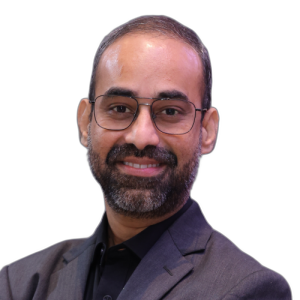

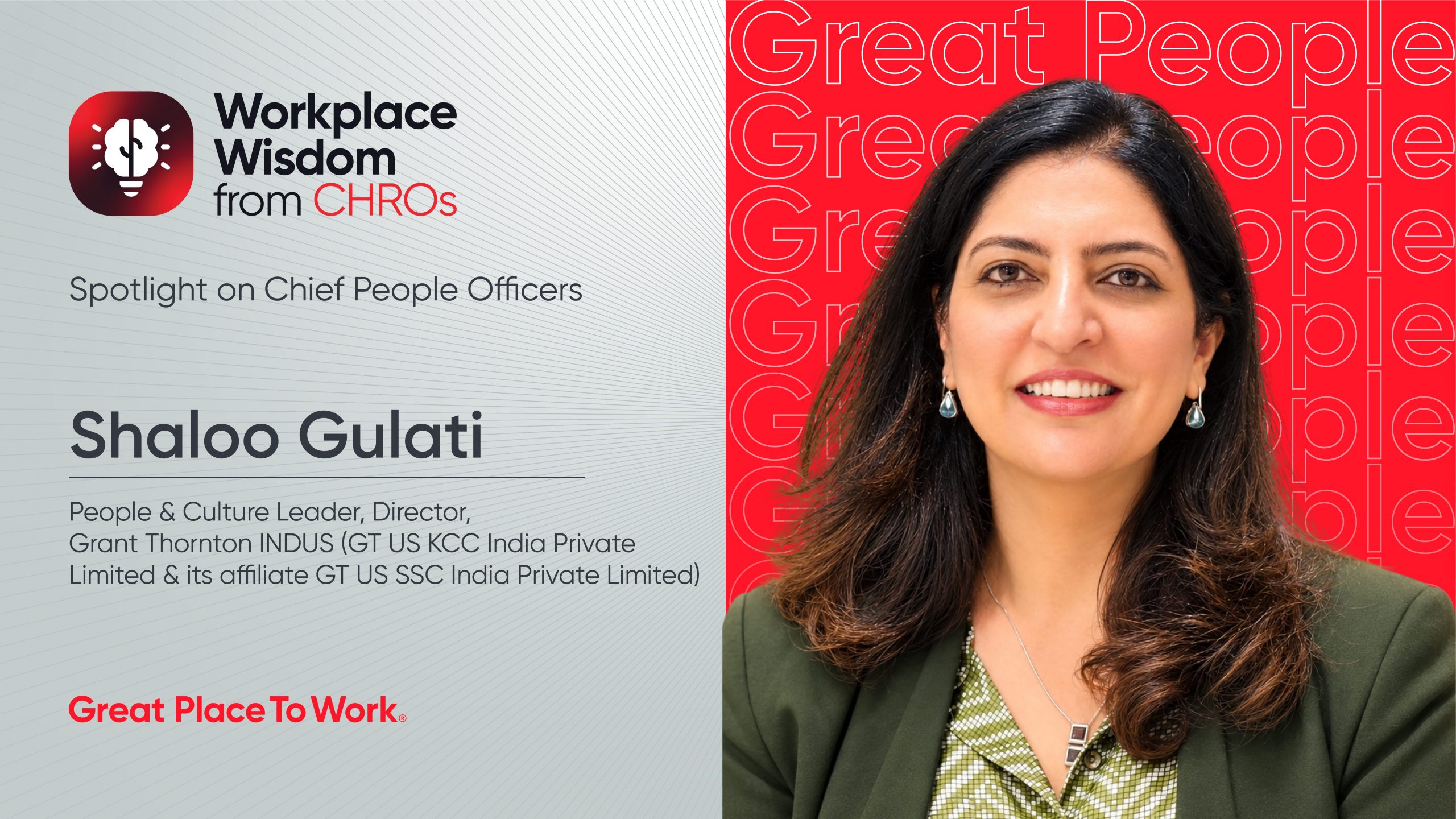
Shaloo Gulati is a business-focused People & Culture leader with over two decades of experience helping organizations scale, transform, and unlock growth through people, leadership, and culture. Drawing on experience across professional services, consulting, financial services, industrial services, and technology-enabled organizations, she is known for partnering closely with business leaders to navigate change, build leadership capability, and create high-performing workplaces where people and business outcomes thrive together.
As Director, People & Culture at Grant Thornton INDUS, she is shaping the people agenda for a rapidly growing professional services firm, leading initiatives across talent strategy, leadership development, culture transformation, employee experience, and digital innovation. Her focus is on building a future-ready organization by strengthening leadership effectiveness, fostering a culture of continuous learning, and preparing talent to succeed in an increasingly AI-enabled world. Under her leadership, GT INDUS has strengthened its position as an employer of choice, earning Great Place to Work® certification for three consecutive years while continuing to invest in workforce capability, manager effectiveness, and new ways of working. A strong advocate of authentic leadership and lifelong learning, Shaloo believes the organizations that will thrive in the future are those that combine
Q1. How do you personally define a “great place to work,” and how does that definition shape your people strategy?
For me, a ‘great place to work’ is one where people feel trusted to be themselves, empowered to take ownership, and inspired to make a meaningful impact. It’s an environment where individuals feel psychologically safe to speak up, share ideas, challenge the status quo, and bring their authentic selves to work every day without fear of judgment.
At Grant Thornton INDUS, that belief comes alive through our Bring Your Own Self culture, where individuality is respected, voices are heard, and people feel valued, trusted, and confident in contributing their best. I believe people thrive when they are given the freedom to own outcomes, put their heart into their work, continue learning and growing, and know that what they do genuinely matters.
For me, culture is not separate from business strategy; it is the operating system that shapes how leaders show up, how teams collaborate, how decisions are made, and ultimately how sustainable performance is achieved. That belief is at the core of my People Strategy. I focus on creating an environment where belonging, growth, accountability, and purpose reinforce one another, enabling people to realize their full potential while contributing to the success of the organization.
Our CLEARR values, Collaboration, Leadership, Excellence, Agility, Respect, and Responsibility, provide the foundation for how we work, lead, and make decisions every day. They help create a workplace where people feel supported, empowered, and connected to a larger purpose. Because when people feel they belong, have a voice, and are empowered to make a difference, they do their best work. And when people thrive, the organization thrives too.
Q2. What has been the impact of partnership with Great Place To Work®? How did it influence the organisation’s culture, mindset, or operations?
Our partnership with Great Place To Work® has been incredibly valuable because it provides an independent and credible reflection of our culture through the voice of our people. It gives us far more than a score or a certification; it gives us insight. It helps us understand where we are building trust, enabling growth, fostering belonging, and where we need to focus our attention as leaders.
This year was especially meaningful as we were recognized as a Great Place To Work® for the third consecutive year and were also named among India’s Top 15 Best Workplaces™ in Professional Services. While these recognitions are significant milestones, what matters most is what they represent, the lived experiences of our people and the strength of the culture we are building together.
For me, the true value of the partnership lies not in the recognition itself, but in the discipline it creates. It reinforces the belief that culture must be measured, listened to, and continuously improved. GPTW challenges us to look beyond assumptions and deeply understand what our people are experiencing across moments that matter, from onboarding and development to leadership, well-being, inclusion, and career growth.
What has been particularly powerful is the way it has strengthened a culture of listening and accountability. The real impact of employee feedback comes when leaders translate insights into meaningful action, communicate progress transparently, and demonstrate that every voice matters. GPTW has helped us create that rhythm, where feedback informs priorities, leaders own culture outcomes, and employee experience becomes a strategic business imperative rather than an HR initiative.
It has also reinforced an important mindset across the organization: that a great workplace is never a finished destination. Recognition provides validation, but it should never create complacency. Instead, it should inspire us to raise the bar, challenge ourselves, and remain intentional about creating an environment where people can do meaningful work, grow professionally, and feel a genuine sense of belonging.
Ultimately, I see Great Place To Work® not as a badge we earn, but as a continuous improvement partner. It helps us stay connected to what our people are telling us, holds us accountable to our aspirations, and ensures that as our business evolves, our culture continues to grow stronger alongside it.
Q3. How are you addressing the growing need for continuous learning and upskilling, especially in roles impacted by Artificial Intelligence (AI)?
We view AI as an opportunity to augment human potential, not replace it. As work becomes increasingly AI-enabled, our focus is on helping people continuously learn, unlearn, and adapt so they can create greater value in a rapidly evolving environment.
At Grant Thornton INDUS, our Learning & Organizational Effectiveness team has made AI a strategic capability priority. We are actively identifying emerging skill requirements and reimagining how learning is delivered to build future-ready talent. Following our Microsoft Copilot rollout, we introduced awareness sessions, practical workshops, external learning opportunities, and team-level experimentation to help colleagues confidently integrate AI into their day-to-day work. We are also encouraging the application of AI across projects and business processes to drive meaningful improvements in productivity, quality, and client outcomes.
For me, the bigger shift is what this means for the future of work and the role of People & Culture. We are moving from workforce planning to capability planning. As organizations become increasingly AI-enabled, People & Culture must become the architect of what I call agentic adaptability, building an organization’s capacity to continually learn, reinvent itself, and respond to change. This requires us to anticipate how roles, skills, careers, and operating models will evolve and ensure our people are equipped not only with digital fluency but also with the mindset to navigate constant transformation.
Our goal is not simply AI familiarity; it is building an AI-native mindset. Through our Learning & Organizational Effectiveness agenda, we are creating a culture of continuous learning where people understand how to work alongside AI, leverage it responsibly to enhance creativity and productivity, and focus on the distinctly human capabilities that will remain enduring differentiators, including critical thinking, judgment, empathy, collaboration, leadership, and innovation.
Ultimately, our focus is to make AI adoption responsible, inclusive, and human-centered. Technology will continue to transform how work gets done, but our investment in learning, capability building, and adaptability will ensure that our people have the confidence, opportunity, and support to thrive in an increasingly dynamic world.
Q4. To what extent is AI shaping your organization’s approach to hiring, employee development and retention. How do you balance it’s benefits with the need for human judgment and a positive employee experience?
AI is increasingly shaping our people strategy, from how we identify talent and build capability to how we improve productivity and employee experience. It is also changing the skills we prioritize, with greater emphasis on digital fluency, adaptability, problem-solving, learning agility, and the ability to work effectively with AI-enabled tools.
In employee development, AI allows us to make learning more relevant, knowledge more accessible, and work more efficient. In hiring and retention, it can support sharper insights and better experiences, but we are clear that the final responsibility for people decisions must remain human.
Our role is to ensure AI is adopted with governance, fairness, empathy, and transparency. Decisions around hiring, performance, career growth, leadership development, or employee relations require context, values, and judgment that technology cannot replace. What I watch closely is whether AI is improving the employee experience while strengthening trust, inclusion, and decision quality.
At Grant Thornton INDUS, we see AI as an enabler of better work, not a substitute for human connection. Our approach is anchored in responsible adoption, ethical decision-making, and the CLEARR values that guide how we serve our people and clients.
Q5. As Gen Z increasingly enters and shapes the workforce, how is GT INDUS adapting its culture and policies to align with their expectations, values, and workstyles?
At Grant Thornton INDUS, we view Gen Z as part of a broader multigenerational talent ecosystem. Their expectations around purpose, flexibility, authenticity, well-being, and growth are helping shape a more responsive workplace for everyone. Our Bring Your Own Self culture is central to this, encouraging people to show up authentically, contribute ideas openly, and feel a sense of belonging while pursuing high standards of performance.
Over the last few years, we have consciously reviewed and evolved our policies and people’s practices to ensure that the voices of our younger employees are heard, and their needs are reflected in the employee experience we design. One example is our flexible medical insurance program, which allows employees to customize their coverage based on their individual requirements. Many younger employees may not need extensive dependent coverage and therefore have the flexibility to optimize their benefits differently, including options such as PawProtect for pet insurance and FitPass for fitness and wellness. This shift reflects a broader philosophy that employees increasingly value choice, personalization, and flexibility over one-size-fits-all benefits.
Beyond policies and benefits, we are creating opportunities for younger employees to contribute, influence, and lead. We have found that Gen Z employees are deeply purpose-oriented and eager to make an impact early in their careers. Initiatives such as CSR, Sports, Wellbeing, and Fun@GT provide platforms for employees to take ownership, lead programs, collaborate across teams, and develop leadership capabilities beyond their core roles.
We have also intentionally designed our workplaces to support the way younger professionals prefer to work. While flexibility remains important, we have observed that many early-career employees thrive through collaboration, social interaction, and learning from peers. Our office spaces are therefore designed to encourage connection and teamwork, and it’s common to see employees organically forming groups to brainstorm, solve problems, and learn from one another.
At the same time, we recognize that younger employees expect transparency, continuous learning, meaningful work, and a voice in shaping culture. As we grow, one of my priorities is to scale trust, not just policies or programs, so employees continue to feel heard, supported, and connected to purpose. Our focus is to create an employee experience where choice, accountability, and contribution coexist, so all generations can thrive, learn from one another, and strengthen the firm together.
Q6. GT INDUS has been recognised as one of the Best Workplaces™ in the Professional Services industry. What do you believe differentiates a truly great workplace within professional services, where client demands and billable pressures can often compete with the priority of building a strong culture?
In professional services, culture and performance are not competing priorities, they reinforce each other. Sustainable high performance is only possible when people feel trusted, supported, challenged, and connected to a larger purpose.
At INDUS, we believe a great workplace is one where people deliver exceptional outcomes for clients while having the opportunity to grow, learn, and thrive. Culture is not a standalone HR initiative; it is embedded in how we lead, collaborate, develop talent, and define success.
Over the last few years, we have strengthened this culture through investments in leadership effectiveness, future-ready learning, transparent career growth, market-aligned rewards, meaningful employee experiences, and performance frameworks such as RISE. Together, these initiatives create an environment where accountability and growth go hand in hand.
What truly differentiates a great workplace is not the absence of pressure, but how people experience it. When employees feel psychologically safe, heard, equipped, and empowered, they are more resilient, innovative, and engaged. They bring their best selves to work and deliver their best work for clients.
As we prepare for the future, we are equally focused on building AI and digital fluency while strengthening the human capabilities that matter most: judgment, learning agility, collaboration, empathy, and leadership. We believe the organizations that thrive will be those that successfully combine technology with human potential.
Ultimately, a great workplace is one where people success and business success fuel one another. When people feel they belong, are growing, and can make a meaningful impact, exceptional performance follows.
Personally, I don’t believe a great workplace is one where people are simply comfortable. It’s one where they are challenged to grow, supported when they stumble, recognized for their contributions, and inspired by a shared purpose. When that happens, both people and organizations thrive.
Q7. Looking ahead, what is one skill or mindset you believe the next generation of HR leaders must develop to stay future-ready?
If I had to choose one mindset for future HR leaders, it would be what I call agentic adaptability – the ability to continuously learn, unlearn, and reinvent ourselves while helping organizations do the same.
In a world being reshaped by AI and constant disruption, HR must move beyond workforce planning to capability planning. We need to anticipate what the future requires and create cultures where people are encouraged to learn continuously, build new skills, experiment with new ways of working, and adapt with confidence.
For me, this means investing in learning and capability building, creating opportunities for cross-functional exposure, embedding AI and digital fluency into everyday work, and rewarding curiosity, agility, and growth.
The most effective HR leaders will combine technological fluency with deep human judgment, ensuring organizations remain agile without losing sight of their people and purpose. Ultimately, our role is not to help organizations cope with change, but to build organizations that are capable of continuously adapting, evolving, and thriving through it.
Q8. As a Global Capability Center (GCC) supporting operations of Grant Thornton LLP, the U.S. member firm of Grant Thornton International Ltd, how do you build an organisational identity that stays true to global standards while creating a culture that feels distinctly local and personal to employees in India?
As a capability center supporting Grant Thornton member firms globally, our culture is built on a balance of global alignment and local ownership. We are guided by Grant Thornton’s quality standards, client-centric mindset, and CLEARR values, while creating an employee experience that reflects the aspirations, diversity, and identity of our people in INDUS.
For me, culture becomes powerful when people can see both the firm’s purpose and their place in it. That’s why we focus on translating global values into meaningful local experiences through leadership accessibility, employee-led communities, learning opportunities, and our Bring Your Own Self culture.
As we evolve into a multi-entity platform, integrating nearly 20 organizations, our focus is not just on scaling the business but on scaling culture. We have a unique opportunity to create a common way of working anchored in our values, while preserving the strengths and diversity that each entity brings. For me, success is building a culture that is globally aligned, locally relevant, and personally meaningful, where every employee feels connected to a shared purpose and empowered to contribute their best.
Q9. Professional services and GCCs are often associated with high attrition and demanding workloads. What people practices have had the most measurable impact on retention and employee wellbeing at GT INDUS?
Professional services and GCCs are often associated with high attrition, but I believe people don’t leave demanding work, they leave when they stop learning, growing, or feeling connected to a purpose.
At Grant Thornton INDUS, we’ve seen a significant decline in attrition over the last few years, alongside a growing number of boomerang employees choosing to return. To me, that’s one of the strongest indicators of a healthy culture.
What has made the biggest difference is our focus on creating an environment where people can thrive. Our scale and growth provide opportunities to work on complex assignments, gain early client exposure, take ownership, and accelerate their careers. We invest heavily in both technical and professional learning, and our culture empowers people to lead, contribute, and continuously develop new capabilities.
Equally important is our Bring Your Own Self culture, where people feel trusted, valued, and supported. When employees experience strong learning opportunities, meaningful work, leadership accessibility, and a genuine sense of belonging, they are far more likely to stay engaged and build long-term careers.
Ultimately, our approach is simple: create a workplace where people are learning, growing, and making an impact. When that happens, retention becomes an outcome, not an objective. People stay where they are growing, trusted, and able to do the best work of their careers. That’s the experience we’re intentionally building at Grant Thornton INDUS.
Q10. What role do people managers play in shaping day-to-day employee experience at GT INDUS, and how do you equip them to lead with empathy alongside performance expectations?
People managers are the most important culture carriers because employees experience culture through them every day. It’s reflected in how feedback is given, how performance is discussed, and whether people feel trusted, supported, and able to grow.
At Grant Thornton INDUS, we expect managers to be coaches. Leading with empathy doesn’t mean lowering standards; it means creating trust, providing clarity, and helping people succeed while holding them accountable.
That’s why we invest in manager development from the moment people take on leadership responsibilities. Through leadership programs, coaching conversations, performance frameworks, and reinforcement of our CLEARR values, we equip managers to lead with confidence, inclusivity, and accountability. Many of our leaders are homegrown, which speaks volumes about our commitment to developing talent from within.
Our focus is simple: build managers who can balance performance with people. When managers lead with trust, care, and accountability, culture strengthens, belonging grows, and performance becomes sustainable.
People don’t experience culture through policies. They experience it through their managers.