In the dynamic landscape of contemporary business, organizations are not just economic entities driven solely by profit motives. Today, they are perceived as stewards of a greater purpose — one that extends beyond boardrooms and bottom lines. The imperative is clear: to nurture the social sustenance of our people. It’s a paradigm shift from profit-centric models to a holistic approach that values human rights, well-being, and inclusive growth. This shift not only defines the essence of progressive organizations but also sets the stage for workplace cultures that contribute to societal betterment.

The Essence of Social Sustenance

At the core of social sustainability lies the commitment to respect and promote human rights, foster employee well-being, and drive inclusive growth. It’s a multifaceted approach that goes beyond traditional business metrics, recognizing the interconnectedness of organizational success and societal progress.
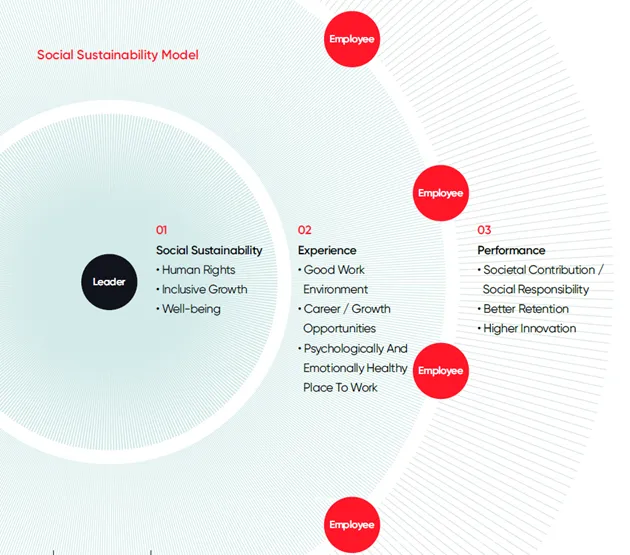
Social Sustainability Model

Organizations that prioritize social initiatives and actively engage in fostering social sustenance reap numerous benefits. They cultivate workplace cultures that contribute to societal betterment, enhance employee retention, and foster an atmosphere of innovation. The strategic integration of social issues into the organizational framework effectively mitigates cultural risks, positioning these organizations as leaders not only in their industries but also within their communities.

Empowering Employee Voices

Employee Voices

The power of employee voices cannot be overstated. Organizations that champion social sustainability actively seek to represent the diverse perspectives of their workforce. The Commitment towards Social Sustainability report highlights the participation of over 1.3 million employee voices, a testament to the commitment of organizations towards inclusivity and transparency.

Industry Dynamics in Social Sustainability
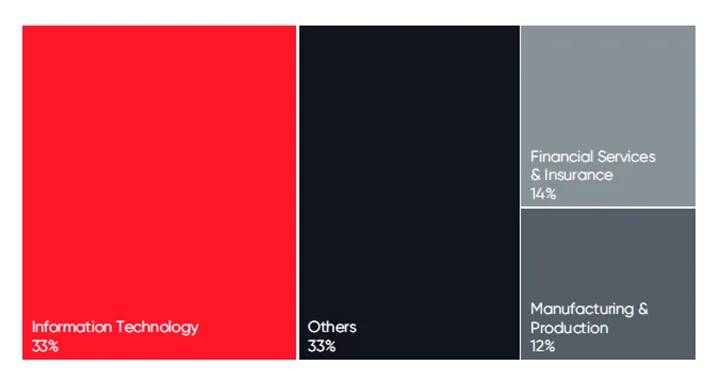
Industry Dynamics in Social Sustainability

While the report indicates commendable progress in the realm of social sustainability, it also underscores marked differences across industries. The IT sector emerges as a frontrunner, leading in various factors. To close the gap and provide a more equal environment, coordinated efforts across all businesses are necessary, yet the financial services sector lags behind.

Socially Conscious Workplaces: Standing Apart
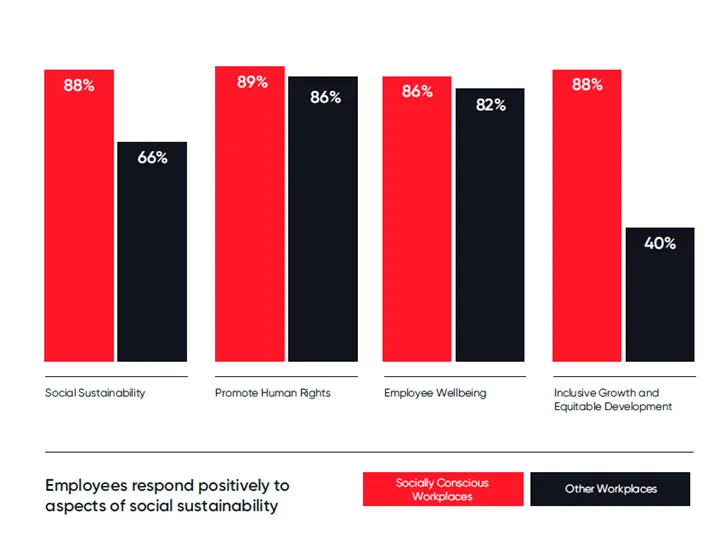
Socially Conscious Workplaces

Socially conscious workplaces stand apart due to their unwavering commitment to human rights, well-being, and inclusive growth. Despite this commitment, however, there remains a noticeable disparity in social sustainability outcomes. While strides have been made in upholding human rights, the challenge lies in translating these efforts into tangible results for inclusive and equitable growth.

Creating a Fair and Respectful Working Environment
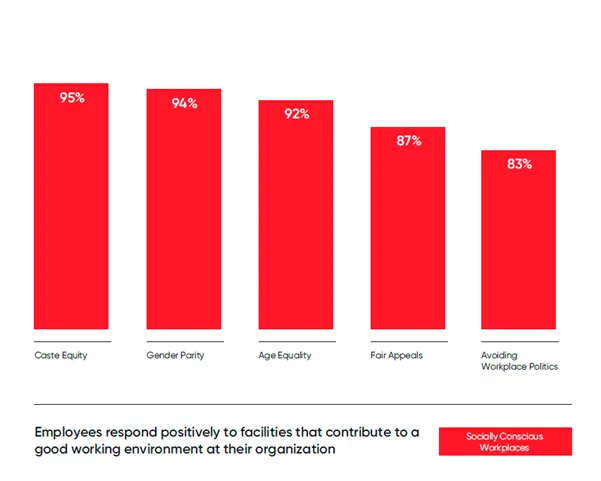
Fair and Respectful Working Environment

One of the defining characteristics of socially conscious workplaces is their dedication to creating a fair and respectful working environment. By prioritizing and promoting human rights, these workplaces contribute to a positive atmosphere enabled by the facilities received by employees. The commitment to eradicating discrimination and fostering diversity ensures that every employee feels valued, paving the way for a thriving organizational culture.

Enhancing Mental and Emotional Well-being
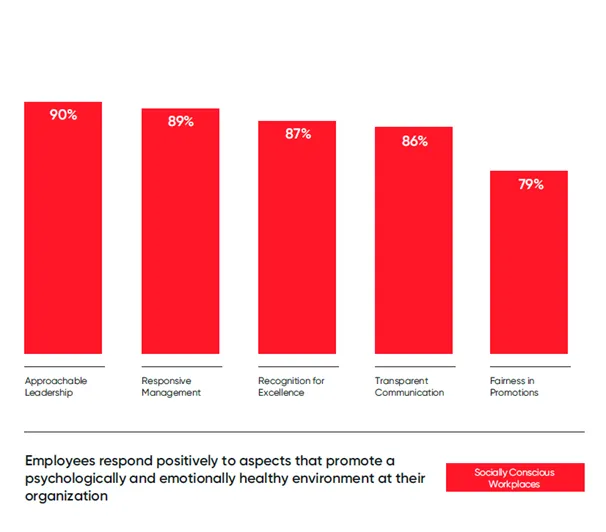
Mental and Emotional Well-being

The correlation between social issues and mental and emotional health is undeniable. Employee well-being is given priority in socially conscious workplaces because they understand that a positive work environment involves more than simply physical comfort—it also involves emotional support and open communication. These organizations foster an environment where employees feel empowered and supported to bring their best selves to work by addressing mental health challenges.

Thriving Career Opportunities
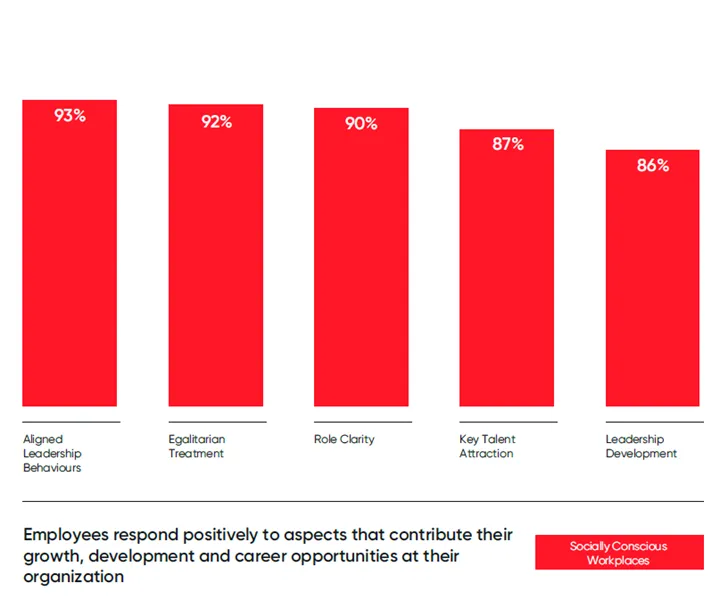
Career Opportunities

Inclusivity and equitable development are not just moral imperatives; they are strategic assets for organizations. Socially conscious workplaces, by promoting inclusive growth, create an environment of excellence that fosters career opportunities and growth. The commitment to fairness in promotions and career advancement ensures that employees feel valued and motivated to contribute their best.

Cultivating Purpose, Retention, and Innovation
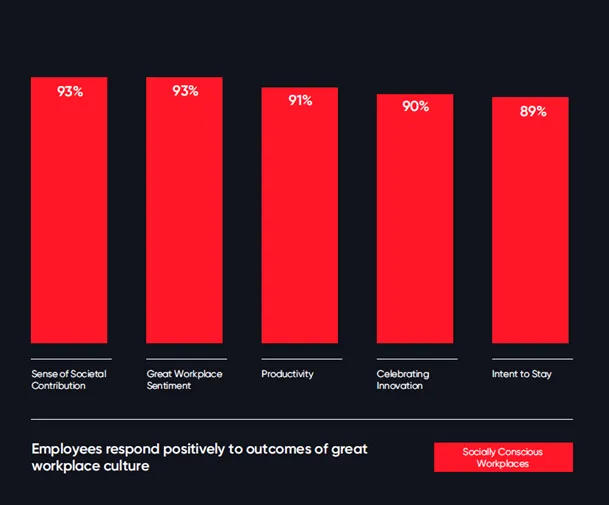
Positive outcomes of great workplace culture

Socially conscious workplaces are not just about compliance; they are about cultivating a sense of purpose. Employees in these kinds of settings have a strong sense of purpose and connection to their work, which increases retention rates.

The culture of societal contribution resonates with employees, fostering a willingness to stay for the long term. Additionally, the commitment to social sustainability creates a fertile ground for innovation, as diverse perspectives and ideas thrive in an inclusive and supportive culture.

Future Focus Areas: Promoting Fairness and Transparency
Social Sustainability

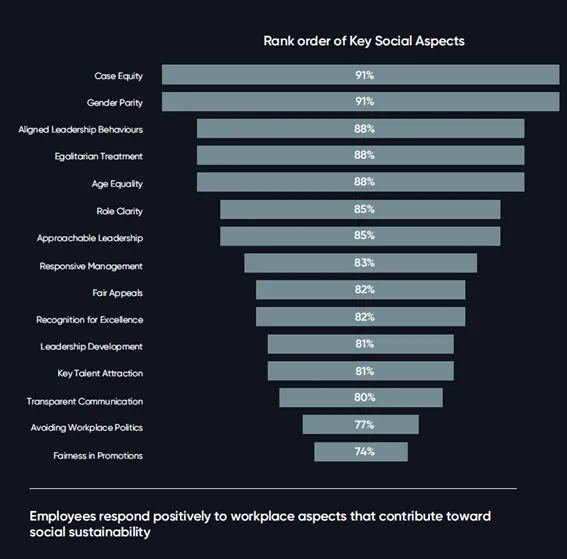
As organizations march towards greater social sustainability, the focus must shift towards ensuring fair promotions, transparent communication, and the eradication of workplace politics. These aspects, identified as crucial by the report, are integral to shaping the future of work. Employees respond positively to workplace environments that actively contribute to social sustainability, creating a positive feedback loop where organizational success and societal progress are mutually reinforcing.

The Social Sustainability report serves as a beacon for organizations navigating the complex landscape of contemporary business. It reinforces the idea that organizations are not just economic entities; they are societal stakeholders with a responsibility to nurture the social sustenance of their people. By prioritizing human rights, well-being, and inclusive growth, organizations can create workplaces that not only thrive but also contribute meaningfully to the betterment of society. As we move forward, the focus on fairness, transparency, and the holistic well-being of employees will undoubtedly shape the future of work, ensuring that organizations not only succeed financially but also leave a lasting positive impact on the world.
A Trusted Leader INSPIREs

In an era marked by unprecedented global challenges, the call for extraordinary and courageous leadership echoes louder than ever before. As revealed by Edelman’s 2023 Trust Barometer, economies worldwide find themselves in a precarious situation, grappling with the far-reaching effects of global conflicts that threaten markets. In this volatile landscape, business leaders are compelled to redefine their skill sets to not only weather the storm but also thrive. This transformation demands a closer look at the role of emotional intelligence in shaping effective and competitive business leadership.

Defining the New Skill Set:

A Trusted Leader

The tides of change necessitate a fresh set of leadership tenets, with compassion taking center stage. In a world fraught with uncertainties, leaders must embody empathy for the challenges their teams face. Compassion becomes the catalyst for cultivating a supportive workplace culture that fosters resilience and unity. Learning emerges as the second pillar of this new skill set. As markets evolve and disruptions become the norm, leaders must adopt a continuous learning mindset. Embracing change and nurturing a culture of curiosity and adaptability are essential for staying ahead in this dynamic environment.

Humility, often overlooked but of immense significance, constitutes the third element. In an era of complexity, acknowledging one’s limitations and valuing diverse perspectives become critical. Humble leaders inspire trust and openness, creating an environment conducive to innovation.

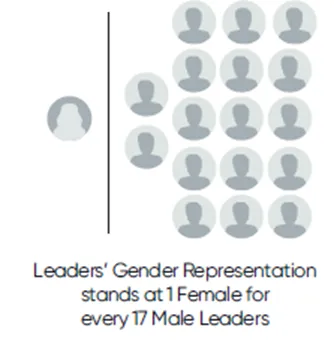
1 Female Leader for Every 17 Male Leaders

Our India’s Most Trusted Leaders 2023 report sheds light on the persistent gender gap, with just one female leader for every 17 male leaders. This underscores the urgency for cultivating responsible, effective, and trustworthy leadership to bridge this glaring disparity.

The Impact of Remote Work:

The seismic shift toward remote work has redefined the dynamics of leadership. The absence of regular in-person interactions has fueled concerns about performance and productivity. Some leaders, succumbing to productivity paranoia, resort to invasive monitoring methods. The insistence on a return to the traditional office setup reflects a struggle to adapt to evolving work norms. Navigating this terrain requires leaders to embrace emotional intelligence as a tool for understanding and addressing the unique challenges presented by remote work.

Cascading Leadership Values:

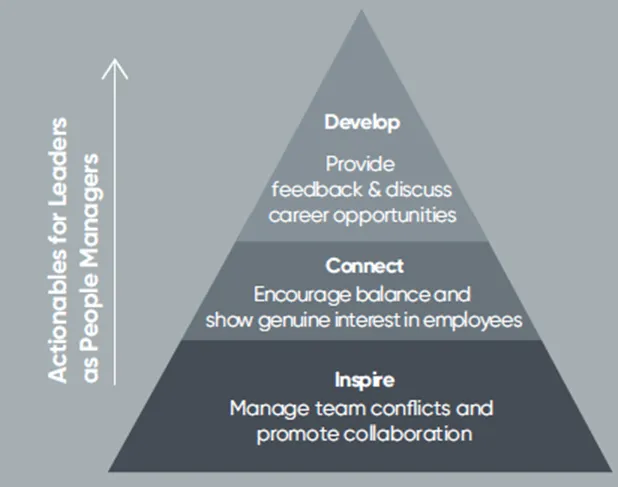
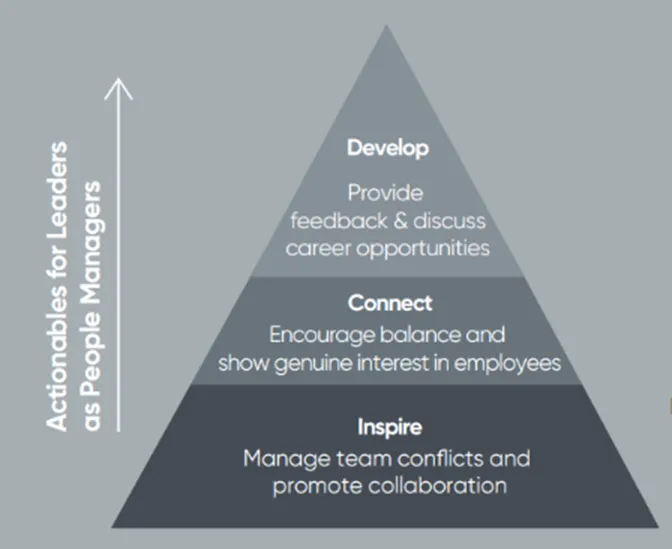
Actionables for Leaders as People Managers

Gone are the days of top-down leadership; the modern workplace demands a more egalitarian approach. Every employee, irrespective of their hierarchical position, is a potential leader. This shift emphasizes the need to foster a culture where leadership skills are not confined to a select few but permeate every level of the organization. Even individual contributors, without direct reports, play pivotal roles as project leaders or collaborators, leveraging their leadership skills to drive initiatives across departments.

Emotional Intelligence as the Game-Changer:

At the heart of this paradigm shift is emotional intelligence (EI). EI encompasses self-awareness, self-regulation, empathy, and social skills. Leaders who harness the power of EI create workplaces that are not only resilient but also innovative. Honesty and trust are fostered by leaders who are self-aware enough to recognize their own advantages and disadvantages. Self-regulation allows them to navigate challenges with composure, setting the tone for the entire organization.

Empathy, a cornerstone of emotional intelligence, is crucial in understanding the diverse needs and challenges of a remote workforce. Leaders who empathize create a sense of belonging, driving engagement and loyalty. Social skills, the final component of EI, enable leaders to communicate effectively, resolve conflicts, and build strong, collaborative teams.

The current global landscape demands leaders who can navigate uncertainties with grace and resilience. The new skill set for leadership, grounded in compassion, learning, and humility, is essential for success. Organizations must prioritize cultivating leaders who embody these qualities to bridge gender gaps and foster trust. The impact of remote work requires a nuanced approach that embraces emotional intelligence.

As leadership values cascade through every level of the organization, emotional intelligence emerges as the game-changer. Leaders who prioritize EI create adaptive, collaborative, and innovative workplaces. In this era of extraordinary challenges, leveraging the power of emotional intelligence is not just a choice; it’s a strategic imperative for businesses aiming not only to survive but to thrive in the face of uncertainty. In embracing this transformative approach to leadership, organizations can position themselves not only as survivors but as pioneers, shaping the future of business in an ever-evolving world.

A workplace’s culture, productivity, and general well-being are significantly influenced by leadership. A great workplace is not just defined by physical amenities or competitive salaries; it’s also about trust, inclusivity, and effective management. In this blog, we’ll explore the crucial role that leadership plays in creating a great workplace, drawing insights from various data points and studies. We’ll delve into the qualities of trusted leaders, the gender gap in leadership, and actionable steps leaders can take to foster a positive work environment.

The Qualities of Trusted Leaders

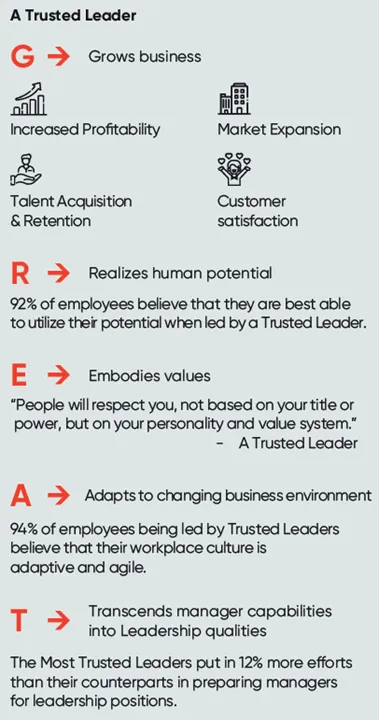
Trust is the cornerstone of effective leadership. According to our Leadership report, the most trusted leaders put in 12% more effort than their counterparts in preparing managers for leadership positions. What sets these leaders apart are certain qualities that make them trustworthy and influential.

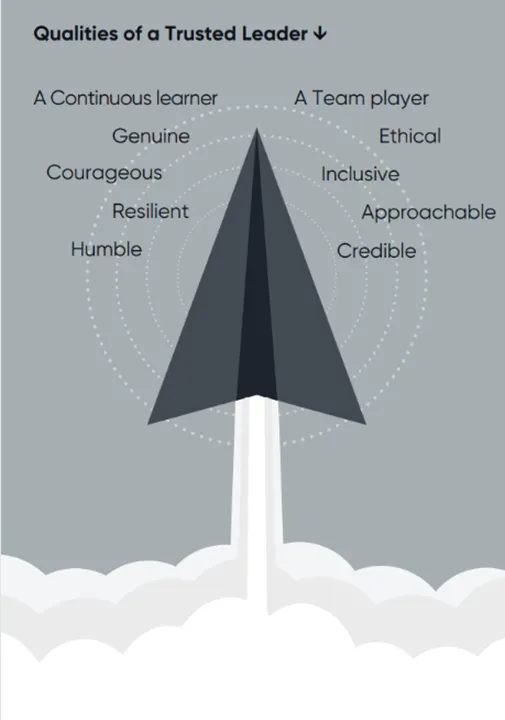
Qualitied of a Trusted Leader

1. Continuous Learner: Trusted leaders are committed to personal growth and learning. They understand that leadership is an evolving journey and continuously seek opportunities to improve themselves.

2. Team Player: A great leader is not a solitary figure but someone who collaborates with their team, values diverse perspectives and encourages open communication.

3. Genuine: Authenticity is key. A culture where employees feel free to express themselves is fostered by trusted leaders who are sincere in their interactions.

4. Courageous: They have the courage to make difficult decisions, take calculated risks, and stand up for what they believe is right, even in challenging situations.

5. Resilient: Resilience is vital in leadership. Trusted leaders bounce back from setbacks, inspire their teams to do the same, and maintain a positive outlook.

6. Humble: Humility goes hand in hand with trust. Leaders who are humble acknowledge their mistakes, seek feedback, and never let their ego overshadow their team’s success.

7. Ethical: Integrity is non-negotiable for trusted leaders. They lead by example and adhere to ethical standards, ensuring fairness and transparency in their actions.

8. Approachable: Approachability fosters a culture of open communication. Trusted leaders are easy to approach, and they actively listen to their team’s concerns and ideas.

9. Credible: Trust is built on credibility. Leaders who consistently deliver on their promises and maintain a high level of competence earn the trust of their teams.

Qualitied of a Trusted Leader

The Gender Gap in Leadership

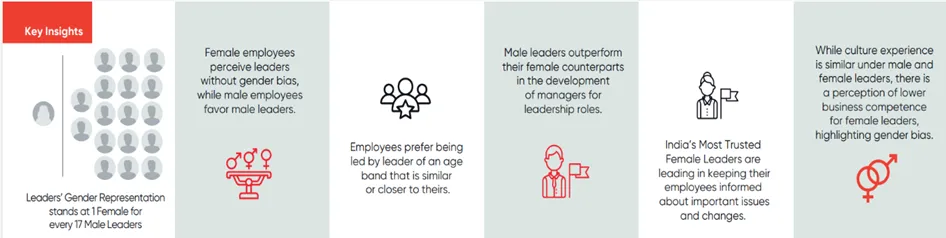
Despite progress in gender equality, there remains a significant gender gap in leadership. Data reveals that for every 17 male leaders, there is only one female leader. This disparity has implications for workplace dynamics and employee perceptions.

Female employees view leaders objectively, highlighting the significance of fairness and opportunity. On the other hand, male employees tend to favor male leaders, indicating the presence of unconscious biases. This bias can hinder the advancement of women in leadership roles and create an unequal work environment.

While cultural experience is similar for male and female leaders, there is a perception of lower business competence for female leaders, highlighting gender bias. This perception is unjust and underscores the need for organizations to challenge and address these biases. Creating a great workplace involves addressing these disparities and fostering an inclusive culture where leadership is based on merit, not gender.

Age and Leadership

In addition to gender, age also plays a role in leadership dynamics. Employees tend to prefer being led by leaders of an age band similar to or closer to theirs. This preference can be attributed to relatability and shared experiences.

Leaders must recognize the importance of bridging generational gaps within their teams. They can do so by promoting intergenerational collaboration, encouraging knowledge sharing, and embracing the unique perspectives that each age group brings to the table.

India’s Most Trusted Female Leaders

In India, trusted female leaders are leading the way in keeping their employees informed about important issues and changes. This communication transparency fosters trust and ensures that employees feel valued and engaged.

Actionable for Leaders as People Managers

Actionable for Leaders as People Managers

Effective leadership goes beyond personal qualities; it also involves specific actions and behaviors that foster a great workplace. Here are some actionable steps leaders can take as people managers:

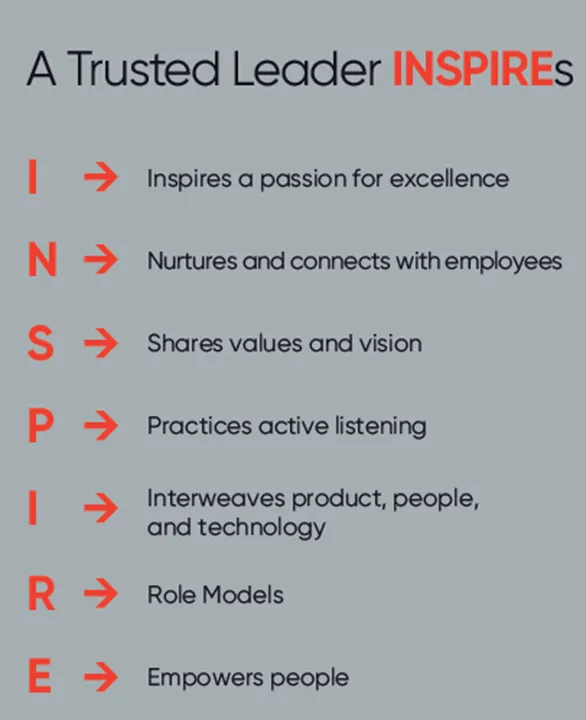
1. Inspire: Leaders should actively manage team conflicts and promote collaboration. To motivate teams to perform at their highest point, it’s essential to have the capacity to resolve conflicts amicably and foster a positive work atmosphere.

2. Connect: Leaders should encourage work-life balance and show genuine interest in their employees. Building strong connections with team members helps create a sense of belonging and trust.

3. Develop: Providing regular feedback and discussing career opportunities are essential for employee growth. To ensure that each team member realizes their full potential, leaders should invest in their personal growth.

Leadership is a linchpin in the creation of a great workplace. Trusted leaders possess qualities such as continuous learning, teamwork, authenticity, courage, resilience, humility, ethics, approachability, and credibility. However, gender bias and age-related preferences persist, underscoring the need for organizations to prioritize inclusivity and equal opportunities. Leaders must actively work to bridge gender and generational gaps, inspiring their teams, building connections, and facilitating professional development. By doing this, they can aid in the development of an environment at work where workers flourish, trust is abundant, and everyone has an equal opportunity of success. In the pursuit of a great workplace, leadership is not just a role; it’s a responsibility and a vital one at that.

In the ever-evolving landscape of the modern workplace, cultivating great workplaces is a goal shared by organizations worldwide. The importance of a positive workplace culture, where employees are engaged, motivated, and empowered, cannot be overstated. At the heart of any great workplace lies a group of exceptional leaders who are instrumental in achieving organizational goals and shaping the culture that defines the organization. This blog post will explore a comprehensive framework for nurturing organizational leadership excellence.

The Importance of Leadership in Great Workplaces

Leadership is the cornerstone of any thriving organization. It provides direction, instills a sense of purpose, and empowers employees to achieve their full potential. In great workplaces, Leadership is not confined to the executive suite; it’s distributed across all levels of the organization. Employees are encouraged to lead in their capacity, regardless of their formal title or role.

Building a Foundation of Leadership

  • Self-awareness and Personal Growth: Great leaders begin with self-awareness. They understand their strengths, weaknesses, and values. They continually seek personal growth and development, recognizing that Leadership is not a fixed trait but an ongoing journey of self-improvement. 
  • Skills and Competencies for Effective Leadership: Leadership is not innate; it’s a set of skills and competencies that can be learned and honed. Effective communication, decision-making, and conflict resolution are just a few examples of great leaders’ skills.
  • Role Modeling and Integrity: Leaders set the tone for the entire organization. They must lead by example, demonstrating the values and behaviors they expect from others. Integrity is non-negotiable in great leaders, as it fosters trust and credibility. 

Fostering a Culture of Leadership

  • Empowering Every Employee: In great workplaces, Leadership is not limited to the top tiers of management. Organizations encourage and empower every employee to take on leadership roles by leading projects, mentoring colleagues, or suggesting process improvements. 
  • Effective Communication: Effective communication is vital to Leadership. Great leaders excel at listening, providing feedback, and fostering open and transparent team communication. Collaboration is also emphasized, as it brings diverse perspectives to the table. 
  • Diversity and Inclusion: Great workplaces recognize the value of diversity and inclusion. They understand that diverse teams are more innovative and better equipped to solve complex problems. Inclusive Leadership ensures that every voice is heard and valued. 

Developing and Nurturing Leaders

  • Identifying and Nurturing Talent: To sustain leadership excellence, organizations must identify and nurture emerging leaders. Succession planning ensures a pipeline of talent and provides opportunities for leadership development. 
  • Leadership Development Programs: Structured leadership development programs are essential for grooming future leaders. These programs may include training, mentoring, and opportunities for real-world leadership experiences. 
  • Mentorship and Coaching: Mentorship and coaching play a crucial role in leadership development. Experienced leaders guide and support emerging talent, sharing wisdom and helping them navigate the complexities of Leadership.

Measuring and Evolving Leadership

  • Key Performance Indicators (KPIs) for Leadership Effectiveness: Measuring leadership effectiveness is essential for improvement. Organizations can use KPIs such as employee engagement scores, turnover rates, and 360-degree feedback to gauge leadership impact.
  • Feedback and Continuous Improvement: Great leaders are receptive to feedback. They actively seek input from their teams and use it to refine their leadership approaches. This continuous improvement cycle fosters growth.
  • Adapting to Change: In today’s fast-paced world, change is constant. Great leaders are adaptable and able to guide their teams through periods of transformation with resilience and confidence. Cultivating leadership excellence is not a one-time task; it’s an ongoing commitment. By following this framework, organizations can create a culture where Leadership is pervasive, diversity is celebrated, and individuals are empowered to become their best versions.

Employees are more engaged in such environments, productivity soars, and innovation flourishes. Ultimately, great workplaces are not just the result of leadership excellence—they are its living embodiment. Visit us here to learn more.

In every organization, the role of a manager is critical to the success of the team and the overall performance of the company. Great managers possess unique qualities and characteristics that set them apart from the rest, enabling them to inspire and guide their teams toward achieving extraordinary results. Let us explore some of the key traits that make great managers stand out. By understanding these qualities, aspiring leaders can learn how to become exceptional managers and create thriving workplaces.

Cultivating Strong Emotional Intelligence 

One of the most important traits of great managers is their high emotional intelligence (EI). Understanding emotions in oneself and others and being able to use this awareness to manage relationships successfully is a key component of emotional intelligence. Managers with good EI are more likely to create a positive work atmosphere, establish trust, and successfully settle disagreements among team members, according to a Harvard Business Review article. An emotionally intelligent manager can empathize with their team members, understand their concerns, and respond in a supportive manner, creating a sense of psychological safety within the team.

1. Empowering and Trusting their Team

Exceptional managers empower their team members by providing them with autonomy, ownership, and trust. Many studies state that teams led by empowering managers have higher levels of employee engagement and productivity. Employees are more driven to take responsibility for their actions and become more committed to their work when they feel trusted and given the authority to make judgments. Furthermore, trust between managers and employees fosters a positive relationship, encouraging open communication and idea-sharing, ultimately driving innovation and creativity within the team. 

2. Effective Communication Skills

The foundation for successful management is effective communication. Great managers excel in both listening and articulating their ideas clearly. By being open to feedback and actively engaging in constructive conversations, they ensure that their team members feel valued and understood. According to reports, managers who prioritize communication enjoy higher team collaboration and overall performance. Furthermore, clear communication ensures that all team members are aligned with organizational goals and understand their roles and responsibilities, reducing the risk of misunderstandings and enhancing productivity.

3. Setting Clear Goals and Expectations

To drive performance and success, great managers set clear, achievable goals and expectations for their teams. It is proven that transparent goal-setting significantly improves team alignment, coordination, and motivation. When team members understand the expectations set for them and the broader goals of the organization, they are better equipped to prioritize their tasks and efforts, leading to increased efficiency and productivity. Regularly reviewing and providing feedback on progress towards these goals is also crucial for keeping team members motivated and focused.

4. Providing Growth Opportunities

Outstanding managers recognize the potential in their team members and actively seek opportunities for their professional development. According to our reports, managers who prioritize employee growth and career advancement experience lower turnover rates and higher employee satisfaction. Investing in employee development not only enhances their skills and knowledge but also increases their loyalty to the organization. Great managers provide mentoring, coaching, and opportunities for continuous learning, fostering a culture of growth and advancement within the team. 

5. Promoting a Positive Work Culture

Great managers foster a positive work culture that promotes inclusivity, collaboration, and recognition. Companies strongly emphasizing positive culture and employee well-being experience higher employee retention and greater organizational resilience. Managers that place a high priority on employee well-being foster a culture where staff members feel valued and supported, which increases their commitment to the company and job satisfaction. Recognizing and celebrating employees’ efforts and achievements can significantly boost morale and motivation within the team. 

6. Encouraging Innovation and Risk-Taking

Innovation is a crucial driver of growth and success in any organization. Exceptional managers encourage their teams to think creatively, take calculated risks, and learn from failures. A Forbes study highlights that organizations led by innovation-driven managers experience higher profitability and competitive advantage. Creating a culture that celebrates innovation and encourages experimentation allows team members to explore new ideas, leading to breakthroughs and continuous improvement. Managers who support risk-taking without fear of punishment create an environment where creativity flourishes, and employees feel more comfortable proposing new approaches.

7. Addressing Conflicts and Challenges Proactively

Conflict is inevitable in any team environment. However, great managers address conflicts proactively and work towards resolving them constructively. Managers who handle conflicts effectively can maintain team cohesion and ensure a harmonious work environment. Conflict resolution involves active listening, understanding different perspectives, and facilitating discussions to find mutually beneficial solutions. When conflicts are addressed promptly and professionally, team members feel supported, and the team can move forward together, promoting a healthy and productive work atmosphere. 

In conclusion, great managers possess a unique blend of emotional intelligence, communication skills, empowerment, and a growth mindset. They prioritize their team members’ well-being, promote a positive work culture, and actively seek opportunities for growth and innovation. By emulating these qualities, aspiring leaders can enhance their management skills and create a dynamic, engaged, and high-performing team.

Becoming a great manager is a journey that requires continuous learning and self-improvement. By understanding the traits and practices that set great managers apart, individuals can pave their way toward successful leadership and make a lasting impact on their teams and organizations.

Remember, being a great manager isn’t just about achieving business goals; it’s also about inspiring and supporting the people you lead to reach their full potential, fostering a culture of collaboration and growth that benefits everyone involved. So, start your journey toward becoming an exceptional manager today!

The program fosters camaraderie and collaboration, promoting networking and idea exchange. HP’s dedication to leadership development creates a strong leadership pipeline and a culture of continuous learning, contributing to its sustained success. The best workplaces prioritize empowering employees, fostering inclusivity, and investing in continuous growth. By embracing such practices, organizations can cultivate exceptional workplaces where motivated and fulfilled employees contribute to sustained success and growth.

To read more on this, download our report here.

In the relentless realm of the modern workplace, the mental well-being of managers often hides in the shadows. Yet, their state of mind holds the key to team dynamics and performance. Imagine a team led by a struggling manager grappling with their mental health battles. As their resilience wanes, cracks appear in communication, decision-making, and overall team cohesion. Recognizing the profound impact of managers’ mental health is an imperative call to prioritize and support these leaders, igniting a path toward success for the organization and its teams.

The Impact of Managers’ Mental Health on Team Productivity

Managers’ mental well-being profoundly influences their decision-making, communication, and leadership style. When managers are experiencing high levels of stress, anxiety, or burnout, their ability to think clearly and make sound decisions can be compromised.

Additionally, their communication with team members may need to improve, leading to misunderstandings or a need for clarity in expectations. Furthermore, a manager’s leadership style can be affected, with potential consequences such as micromanagement, lack of trust, or inconsistent guidance.

Numerous studies have demonstrated a strong correlation between a positive manager’s mental health and employee motivation, satisfaction, and productivity. When mentally healthy, managers are better equipped to provide support, recognition, and constructive feedback to their team members. This fosters a positive work environment and enhances employee engagement and morale.

According to Great Place To Work® research, “India’s Most Trusted Leaders put in 12% more effort than their counterparts in preparing managers for leadership positions.” This statistic further reinforces the correlation between positive mental health in managers and their teams’ motivation, dedication, and effectiveness. It emphasizes the significance of investing in managers’ mental well-being to unlock the full potential of both managers and their teams, ultimately driving organizational success.

Organizational Benefits of Prioritizing Managers’ Mental Health

  • Increased productivity When mentally healthy, managers are better equipped to make sound decisions, communicate effectively, and lead their teams with clarity and focus. This fosters a more productive work environment, as team members feel supported, motivated, and empowered to perform at their best.
  • Enhanced employee retention Prioritizing managers’ mental health creates a positive work culture that values the well-being of employees. This, in turn, increases employee satisfaction and loyalty, reducing turnover rates.
  • Improved employee satisfaction Managers who prioritize their mental health are more attuned to the needs and concerns of their team members. Managers can enhance employee satisfaction and engagement by fostering a supportive and inclusive environment. Happier employees are more likely to be productive, provide better customer service, and contribute positively to the organization’s overall success.
  • The attraction of top talent Organizations prioritizing and supporting managers’ mental health are more likely to attract top talent. Prospective employees seek organizations prioritizing work-life balance, employee well-being, and mental health support.

Nurturing Managerial Mental Health for Organizational Success

To foster managerial mental health, organizations must create a supportive work environment that values mental well-being. This can be achieved by promoting open and honest communication, where managers feel comfortable discussing their mental health concerns without fear of judgment or stigma. Organizations should actively encourage managers to prioritize self-care and set boundaries to maintain a healthy work-life balance.

Promoting work-life balance and stress management is essential for supporting managers’ mental health. Organizations can implement policies and practices that encourage reasonable work hours, flexible scheduling, and adequate time off.

Regular mental health check-ins and support systems within the organization are vital for promoting managerial well-being. Organizations should establish a culture of checking managers’ mental health through one-on-one meetings or anonymous surveys to understand their challenges and offer appropriate support.

Recognizing Signs of Struggling Managers

Providing insights into identifying signs of mental health issues in managers is crucial for early intervention and support. Some common indicators may include noticeable changes in behavior, such as increased irritability, frequent mood swings, or withdrawal from social interactions. Managers may exhibit reduced productivity, difficulty concentrating, or declining decision-making abilities. Physical symptoms like fatigue, insomnia, or changes in appetite can also be signs of underlying mental health issues.

Recognizing the signs of struggling managers and promoting a culture of open communication and empathy is crucial in ensuring their well-being. By addressing mental health challenges proactively, organizations can provide the necessary support systems and resources to help managers navigate their struggles, reduce potential negative impacts on their teams, and foster a workplace culture of compassion and support.

Strategies for Teams to Support Managers’ Mental Health

  • Practice empathy and understanding Cultivate a culture of empathy within the team. Seek understanding and empathizing with the manager’s experiences, challenges, and emotions. Show support and offer a listening ear without judgment.
  • Share the workload Offer assistance and collaborate with the manager to distribute the workload effectively. Recognize when they may be overwhelmed and provide support to ensure a manageable workload.
  • Encourage work-life balance Respect and encourage boundaries between work and personal life. Avoid unnecessary after-hours communication and support the manager in taking breaks and time off to recharge and rejuvenate.
  • Offer positive feedback and recognition Recognize the manager’s efforts, achievements, and contributions. Providing positive feedback and acknowledging their accomplishments can boost their morale and sense of value.
  • Promote a supportive team environment Foster a sense of camaraderie and support within the team. Encourage team-building activities, such as team lunches or recreational events, to strengthen relationships and create a supportive network.

Implementing these strategies can create a team culture that values and supports managers’ mental health.

The importance of managers’ mental health for the organization and their teams cannot be overstated. Organizations and groups must prioritize mental health for a thriving, high-performing workforce. By recognizing the impact of managers’ mental health on team dynamics and productivity, organizations can create an environment where managers feel supported and empowered to prioritize their well-being.

To learn more about how to promote employee wellness, visit us here.

In today’s rapidly evolving and highly competitive work environments, effective leadership is essential for creating a culture that nurtures trust, collaboration, and innovation. Psychological safety is a critical factor that contributes to a healthy and thriving workplace.

When employees feel psychologically safe, they are empowered to express themselves freely, voice their opinions, and contribute their unique perspectives without fear of negative repercussions. Psychological safety encourages open communication, idea-sharing, and team synergy. This blog post will delve into the profound significance of psychological safety in the workplace.

Understanding Psychological Safety

Psychological safety is a concept that revolves around creating an environment where individuals feel safe and comfortable expressing their thoughts, ideas, concerns, and opinions without the fear of negative consequences. It encompasses a sense of trust, openness, and mutual respect among team members, where everyone feels valued, and their contributions are acknowledged.

Psychological safety is crucial for several reasons

Encourages Risk-Taking

When employees feel psychologically safe, they are more likely to take calculated risks, explore innovative ideas, and challenge the status quo.

Promotes Open Communication

Psychological safety enables open and honest communication among team members. As a result, individuals feel empowered to speak up, share their perspectives, ask questions, and engage in constructive debates.

Enhances Learning and Growth

When individuals feel safe to make mistakes, they are more inclined to experiment, learn from failures, and continuously improve.

Lead by Example

Leaders play a pivotal role in establishing and nurturing psychological safety within their teams. They are responsible for setting the tone and modeling the behaviors they wish to see in others. Here are some key ways leaders can lead by example:

Demonstrating Vulnerability

Leaders who openly acknowledge their mistakes, share their challenges and express vulnerability create a safe space for others to do the same. By demonstrating that it is acceptable to be imperfect, leaders encourage employees to take risks, share their concerns, and learn from their experiences.

Empathy and Understanding

Leaders should strive to understand their employees’ experiences, emotions, and perspectives. By practicing empathy, leaders demonstrate that they care about their team members’ well-being and are willing to support them.

When leaders consistently exhibit these behaviors, they create a culture where everyone values and practices psychological safety. Team members feel inspired and empowered to follow their leaders’ example, resulting in a cohesive and high-performing team that thrives on open communication and mutual support.

Foster Trust and Respect

Building trust and respect is fundamental to cultivating psychological safety within a team. Therefore, leaders should prioritize developing solid relationships with their team members, establishing credibility, and demonstrating integrity.

Open and Transparent Communication

Leaders should be transparent in communication, sharing relevant information with their team members and honest about challenges and decisions. Transparent communication fosters trust by creating a sense of inclusion and shared understanding.

Delegate and Empower

Trust your team members by delegating responsibilities and giving them autonomy in their work. By empowering employees and showing confidence in their abilities, leaders create a sense of trust and respect, contributing to psychological safety.

Embrace and Learn from Mistakes

In a psychologically safe workplace, mistakes are viewed as opportunities for growth and learning. Therefore, leaders should encourage a culture that embraces mistakes and supports individuals in learning from them.

Psychological Safety Around Failure

Create an environment where individuals can openly admit mistakes and discuss failures. Foster a growth mindset that sees failures as learning experiences rather than reasons for blame or punishment.

Foster a Learning Culture

Encourage continuous learning and professional development within the team. Provide resources, training opportunities, and encourage individuals to learn from their mistakes and share their wisdom with others.

Address Conflict and Difficult Conversations

Conflict is a natural part of any workplace; addressing it constructively is crucial for maintaining psychological safety.

Establish Clear Expectations

Set clear expectations for behavior and communication within the team. This includes promoting respect, active listening, and constructive feedback. By establishing guidelines, everyone understands the boundaries and can navigate conflicts more effectively.

Encourage Collaboration and Perspective-Sharing

Encourage conflicting parties to collaborate and seek different perspectives. This helps broaden their understanding and promotes empathy. Encourage individuals to find areas of agreement and work towards a mutually satisfactory resolution.

Provide Coaching and Skill-Building

Offer coaching and skill-building opportunities to individuals who struggle with conflict resolution. Guide effective communication, emotional intelligence, and problem-solving techniques. By equipping team members with these skills, leaders empower them to navigate conflicts more effectively.

Follow-up and Monitor Progress

After addressing a conflict, follow up with the involved parties to ensure the resolution is effective and sustainable. Monitor progress and provide ongoing support as needed. This demonstrates your commitment to fostering psychological safety and maintaining a positive work environment.

Creating a psychologically safe workplace is a transformative process that requires ongoing commitment from leaders. By prioritizing trust, open communication, learning, and addressing conflict, leaders can build a culture that empowers employees to bring their whole selves to work, collaborate effectively, and thrive individually and collectively. The journey toward psychological safety is continuous, and the rewards are invaluable.

To learn more about creating a positive work environment, visit us here.

Camera red icon

LIVE WEBINAR WITH Q & A

certification-badge-2026-rhc4efc9ny04x7lz17jff7guyhsup5b0yvrou4vd72

The Certification Advantage: Why Partner with Great Place To Work®

How partnering with Great Place To Work can strengthen your people strategy, and drive business outcomes through data-driven insights and Certification.

prasad-kachraj

Prasad Kachraj

Managing Director, Great Place To Work, India

23rd September 2026  |  4.00 PM - 4.30 PM IST

Register Now