A few years ago, conversations around AI at work felt distant, something particular for tech companies or future-focused conferences. But today it has become a part of everyday work life.

Employees use AI to draft emails, summarize meetings, analyze reports, answer customer queries, and even prepare presentations. Some organizations have already started utilizing it in regular work models. Others are still trying to understand where it fits best. And honestly, both reactions make sense. Because while AI has the potential to improve productivity and reduce manual work, it also brings very real concerns around trust, job security, workplace culture, and human connection.

The conversation is no longer about whether AI will enter the workplace. It already has. The bigger question now is that how do organizations use it responsibly without losing the human side of work?

At Great Place To Work® India, we’ve consistently seen that employees don’t just care about efficiency. They care about whether they feel valued, heard, supported, and trusted; especially during periods of transformation.

And AI is creating one of the biggest workplaces shifts we’ve seen in years. So before companies rush into adoption, it’s important to understand both sides of the conversation.

Pros of AI in the Workplace 

AI is creating new opportunities to improve efficiency, productivity, and employee experiences across organizations. Here are some of them: 

1. AI Reduces Repetitive Work 

Most employees don’t dislike working hard. What frustrates them is work that feels unnecessarily repetitive. Manually updating spreadsheets, responding to the same customer queries repeatedly,  organizing files, and scheduling meetings across multiple calendars. These small tasks consume more energy than organizations sometimes realize. AI can help remove that operational clutter. 

When repetitive work gets automated, employees often have more time for strategic thinking, creativity, collaboration, and problem-solving that is the kind of work individuals usually find more meaningful. Of course, implementation matters at the end. If AI tools are confusing or poorly integrated, they can create more friction instead of less. 

2. Faster Decision-Making 

AI systems can process large volumes of data much faster than humans. 

That’s particularly useful for organizations dealing with: 

  • Customer insights 
  • Operational forecasting 
  • Financial analysis 
  • Workforce planning 
  • Trend identification 

Instead of spending weeks manually analyzing data, leaders can access insights within minutes. But faster decisions don’t automatically mean better decisions. AI can provide information, but it still takes human judgment to understand context, emotions, team dynamics, and long-term impact. The strongest workplaces use AI to support leaders, not replace thoughtful leadership altogether. 

3. Better Employee Support 

One of the most underrated benefit benefits of using AI is how fast it can enhance the everyday employee experience. Employees often waste time waiting for simple answers such as “How many days of leave do I have left?”, “Where can I access this policy?” or “How do I reset my system access?” 
 
These daily issues can instantly be resolved with proper AI-powered HR and IT support tools. And while those moments may seem small, they shape how employees experience the workplace daily. Nobody enjoys feeling stuck waiting for basic support. 

That said, organizations should be careful not to over-automate sensitive conversations. Employees still want human interaction when situations involve conflict, stress, well-being, or career discussions. 

4. Improved Productivity 

This is probably the most talked-about benefit of AI in the workplace; and for good reason. AI can eventually help people to complete some tasks faster and efficiently, whether it’s about summarizing documents, organizing information, generating first drafts, or analyzing patterns, AI can reduce the amount of manual effort required for everyday work. 

But there’s an important ambiguity here. Higher productivity should not translate into constant pressure to do more in less time. Some companies unintentionally create unhealthy expectations once employees start using AI tools. Suddenly, faster output becomes the new baseline. 

The healthiest workplaces use AI to improve work quality and reduce burnout, not intensify it. 

5. More Personalized Learning and Development 

Traditional corporate training often feels generic as employees sit through the same learning modules regardless of role, experience level, or career goals. Unsurprisingly, engagement and learning suffers. AI is helping organizations personalize learning experiences more effectively. 

Employees can now receive: 

  • Customized course recommendations 
  • Skill-based learning paths 
  • Real-time feedback 
  • Development suggestions aligned with their career goals 

This creates a more relevant learning experience and helps employees adapt faster to changing workplace demands. In a world where skills are evolving constantly, that flexibility matters. 

6. Better Customer Experience 

Customers today expect quick responses and seamless experiences. 

AI helps companies respond faster through: 

  • Chat support 
  • Predictive recommendations 
  • Automated service requests 
  • Personalized interactions 

That improves efficiency for both customers and employees. Instead of handling repetitive requests all day, employees can focus on more complex customer situations that require empathy, creativity, and problem-solving. 

Because even in highly digital workplaces, human connection still matters, specifically during difficult customer interactions. 

7. Reduced Human Error 

The chances of making mistakes by humans increases when work becomes repetitive or high-pressure.  

AI can reduce errors in areas like: 

  • Payroll 
  • Inventory management 
  • Compliance tracking 
  • Data entry 
  • Financial reporting 

This improves operational accuracy and can save organizations significant time and cost. But AI isn’t flawless either. If the systems are trained on incomplete or biased data, the output can still be inaccurate. Which is why human oversight remains critical. 

8. Encourages Innovation 

When employees spend less time on administrative work, they often have more space to think creatively. 

AI can create room for: 

  • Innovation 
  • Brainstorming 
  • Strategic projects 
  • Experimentation 
  • Collaboration 

Interestingly, many employees don’t fear technology itself. What they fear is losing purpose or relevance. Organizations that position AI as a tool to enhance human capability, instead of replacing it, tend to see stronger engagement during transformation periods. 

Cons of AI in the Workplace 

As AI becomes more prevalent in the workplace, organizations must also consider the potential risks and challenges it presents. Some of the key challenges include:  

1. Fear of Job Displacement 

This is probably the biggest concern employees have around AI in the workplace. Even when organizations reassure teams that AI is meant to “assist,” employees still wonder: “What happens to my role in the long run?” 

And honestly, it’s not an unreasonable concern. Some jobs are changing rapidly. Certain repetitive tasks are disappearing entirely. New skill expectations are emerging faster than many employees anticipated. 

The problem isn’t only job loss, it’s uncertainty. When organizations introduce AI without clear communication, employees may begin imagining worst-case scenarios on their own. That’s why transparency matters so much during workplace transformation. 

2. Risk of Bias in AI Systems 

AI systems learn from existing data. And if that data reflects historical bias, the technology can unintentionally reinforce it. 

This becomes especially concerning in areas like: 

  • Hiring 
  • Promotions 
  • Performance evaluations 
  • Workplace surveillance 

An AI tool may appear objective while still producing unfair outcomes behind the scenes. Organizations cannot assume technology is automatically neutral. Responsible AI implementation requires continuous monitoring, ethical oversight, and human accountability. 

3. Reduced Human Interaction 

As more workplace processes become automated, there’s a growing risk that work starts feeling less personal. 

Employees still need: 

  • Recognition, 
  • Empathy, 
  • Support, 
  • Collaboration, 
  • Meaningful conversations. 

No AI system can fully replace the emotional intelligence of a supportive manager or the trust built within strong teams and employees notice when workplaces become overly transactional. 

4. Privacy and Surveillance Concerns 

AI tools often collect significant amounts of employee data. 

This can include: 

  • Productivity tracking 
  • Communication patterns 
  • System activity 
  • Behavioral insights 
  • Performance metrics 

Without transparency, employees may begin feeling constantly monitored rather than supported and eventually that creates a trust problem. 

Employees are far more likely to accept workplace technology when companies clearly explain: 

  • What data is being collected 
  • Why it’s being used 
  • How employee privacy is protected 

For a better workplace environment, trust and transparency should go hand in hand. 

5. High Implementation Costs 

AI adoption isn’t always simple or inexpensive. 

Organizations often underestimate the investment required for: 

  • Software integration 
  • Infrastructure 
  • Cybersecurity 
  • Employee training 
  • Ongoing maintenance 

And beyond financial cost, there’s also a cultural cost if implementation is rushed. Poorly managed AI rollouts can create confusion, resistance, and frustration internally. Furthermore, technology transformation works best when organizations prepare people alongside systems. 

6. Overdependence on Technology 

AI can improve efficiency, but overdependence creates its own risks. Employees may gradually rely too heavily on automation for: 

  • Decision-making 
  • Writing 
  • Analysis 
  • Problem-solving 

Over time, this can weaken critical thinking and independent judgment. Not every workplace problem has a data-driven answer. Some situations require intuition, emotional awareness, and human understanding. The goal should be balanced collaboration between humans and technology; not total dependence. 

7. Skills Gaps and Resistance to Change 

Not every employee feels confident navigating AI-driven workplaces. For some employees, rapid technological change can feel intimidating rather than exciting. 

Especially when companies: 

  • Introduce new systems too quickly 
  • Provide limited training 
  • Assume everyone will adapt automatically 

Resistance to AI often has less to do with technology and more to do with fear of being left behind. Organizations that invest in continuous learning and psychological safety tend to navigate change far more successfully, and employees are usually willing to learn when they feel supported instead of judged. 

8. Creativity Can Start Feeling Formulaic 

One concern that doesn’t get discussed enough is how overreliance on AI can slowly affect originality at work. AI tools are excellent at generating quick drafts, summarizing ideas, and offering suggestions. But because these systems are trained on existing patterns and publicly available information, the output can sometimes start sounding repetitive or predictable. And over time, workplaces risk producing work that feels technically correct, but less creative. 

This is especially important in roles involving: 

  • Content creation 
  • Marketing 
  • Design 
  • Strategy 
  • Branding 
  • Innovation 

If employees begin depending too heavily on AI-generated thinking, there’s a chance original perspectives, experimentation, and human creativity may gradually decline. The strongest ideas in organizations often come from lived experiences, emotional intelligence, curiosity, and unconventional thinking; these are things AI still cannot fully replicate. That’s why the healthiest workplaces use AI as a creative support tool, not a replacement for human imagination. 

How Organizations Can Use AI Responsibly? 

AI adoption should never become purely a technological conversation, but it has also become a leadership conversation. 

The organizations building healthy AI-enabled workplaces are usually the ones focusing equally on: 

  • Employee trust 
  • Ethical usage 
  • Transparency 
  • Reskilling 
  • Inclusion 
  • Communication 

Because employees don’t expect leaders to have every answer immediately, but they do expect honesty. They want clarity around how AI will affect their roles, what support will be available, what changes are expected, and whether leadership genuinely prioritizes employee wellbeing during transformation. Therefore, in many ways, that determines whether AI becomes empowering or disruptive inside an organization. 

Final Thoughts 

AI is changing the workplace faster than most organizations expected. Some of those changes are exciting, some are uncomfortable, and others are most probably a mix of both. There’s no doubt AI in the workplace can improve efficiency, productivity, innovation, and employee support when implemented thoughtfully. But technology alone doesn’t create great workplaces; employees still want trust, fairness, right leadership and human connection.  

The organizations that succeed in the AI era will not simply be the fastest adopters of technology. They’ll be the ones that remember work is still deeply human; even in increasingly digital environments. Because ultimately, great workplaces are not defined by how advanced their technology is. They’re defined by how people experience work every single day. 

Frequently Asked Questions  

1. Will AI replace employees in the workplace? 

The answer is uncertain at the moment. AI may change how some jobs are taken care of, but it is unlikely to replace human employees entirely. Most of the companies are utilizing AI to automate repetitive tasks while helping employees to focus on creativity, management, and the decision-making process.  

2. What are the biggest benefits of AI in the workplace? 

AI can improve employee workplace experience by making regular tasks more simple and efficient. Moreover, AI helps companies improve productivity, faster decision-making, and reduce manual work.  

3. What are the risks of using AI at work? 

Using AI at work comes with some major risks that include job insecurity, data privacy, workplace surveillance, and bias. AI can create confusion and mistrust if it is used without clear communication and ethical usage 

4. How can organizations introduce AI successfully? 

Companies that effectively implement AI typically prioritize open communication, staff training, and transparency. When people are aware that AI will enhance rather than replace their jobs, they are better able to adapt.
 

Posted in AI

Living in the age of AI is a new experience for everyone, but by no means is it an equal experience for all in terms of adaptability and usage. In the past few years, the workplace environment has changed rapidly, resulting in a rise in hybrid workplace culture, newer expectations regarding innovation, extinction and creation of jobs, and lots more. The younger generations, comprising Gen Z and younger millennials, have had the opportunity to embrace AI and grow alongside it as they have just entered the workplace. The foundation, training, and evolution of AI come naturally for them. The generations prior need to demonstrate stronger agility and adaptability as AI goes on to evolve their workplace culture experience.

But whenever something new is presented, it brings its own set of challenges. We have seen changes in the workplace regarding employee wellness, and AI is at the forefront of it. As organizations go on accelerating innovation and integrating AI into operations, employees are left navigating a blend of opportunity, pressure, and ambiguity in their work lives. The question today therefore is: Is AI behind a potential new wave of burnout at the workplace amid growing uncertainty?

Understanding this tension that employees feel with regards to AI, therefore becomes the first step in examining the state of wellness today.

Current state of workplace wellness (Best vs Others)

Despite these changes, the overall wellness trend is moving upward. The Great Place To Work® Wellness Index improved from 82% to 85% this year. With notable gains in fulfillment and autonomy (83%-86%), Best Workplaces consistently outperformed the others, scoring higher across all wellness dimensions, thereby enabling stronger work environment, leadership, community, and manager support. With wellness rising, the question remains: why should you care?

Burnout trend over time: While the wellness rate has improved, burnout has not disappeared and remains uneven across groups, particularly among younger generations.

The Burnout & Innovation Link: According to Great Place To Work data, opportunities to innovate rise by 79% when burnout is low, showing that low‑burnout employees are 12 times more likely to feel able to innovate.

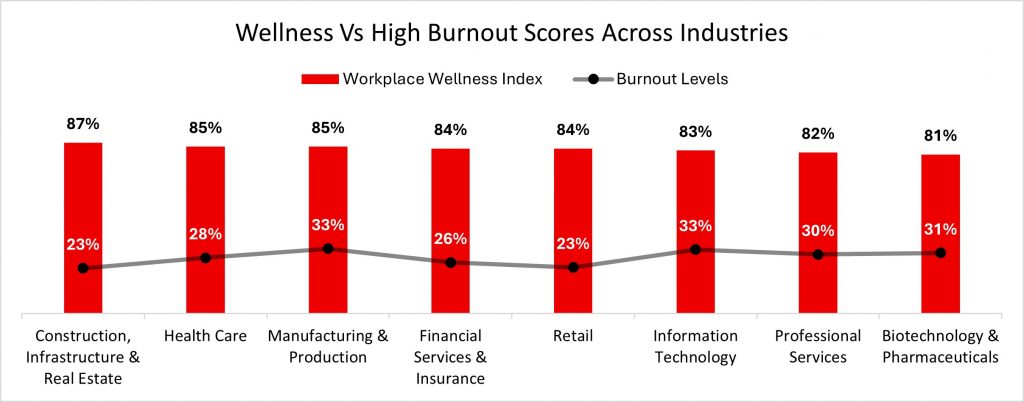
Industry lens: Wellness in industries has varied in ways that reinforce this pattern. Construction showed the highest wellness (87%) and the lowest burnout (23%), whereas industries such as IT and Manufacturing, despite being innovation‑centric, records higher burnout (33%) with wellness at 83%.

Wellness Vs High Burnout Scores Across Industries

These stats clearly reinforce the strong relationship among innovation, wellness, and burnout, and establish organizational structure and culture as foundational pillars of business performance.

With younger generations reporting higher burnout, a deeper dive into this relationship with AI reveals a bigger picture.

Gen Z and millennials are often grouped together, but their workplace experiences differ sharply. Millennials entered the workforce during a time of digital transformation and economic turbulence, which aided in building resilience. Gen Z, however, began entering during a period of global disruption, rapid AI acceleration, and heightened mental health awareness.

Also Read: How AI is changing employee engagement?

Because Gen Z is more comfortable with AI, also enabled by its expansive use in later stages of their education. It is not surprising that millennials showed higher concerns related to the probability of AI replacing their job, with 1 in 2 expressing significant fear. This concern also likely stems from millennials being mid‑career at a stage where disruption carries heavier financial and personal consequences for them. In contrast, Gen Z showed less fear than Millennials.

Gen Z’s deep integration with technology, constant digital stimulation, and reliance on AI tools can increase emotional fragility. They also carry higher expectations of purpose, flexibility, and wellness, making the gap between expectations and reality more emotionally taxing. Millennials, in contrast, display stronger resilience but face a much higher anxiety around long‑term job stability.

Yet anxiety does not overshadow optimism. Across generations, 8 in 10 employees feel hopeful about the opportunities AI will create. This two‑way sentiment of hope mixed with fear demonstrates that employees view AI as both a potential enabler and a destabilizer.

These generational contrasts suggest that AI’s impact on burnout is not uniform and that its emotional weight depends heavily on career stage and lived experience.

When AI Is Used Well, It Can Reduce Burnout

Employees enthusiastic or cautiously optimistic about AI report significantly better wellness outcomes. Among those excited to use AI at work, 72%-83% reported “Good” or “Excellent” wellness across emotional, social, mental, physical, and financial dimensions. Similarly, employees who are hopeful about AI opportunities show 75%-84% of wellness scores across the board.

AI shows its positive effect in many ways,

  • Reduces cognitive load by taking over repetitive tasks and summarizing information.
  • Gives employees a greater sense of control, which supports mental and emotional wellbeing.
  • Improves productivity without adding additional fatigue.
  • Builds confidence through training, supported by hands on learning, access to tools, use‑case examples, and clear responsible AI policies.

Employees who have a strong wellness perception and are supported by effective AI integration, are going to be twice as likely to stay long‑term in their organization. This makes AI driven wellbeing not just beneficial, but a strategic tool for organizations going forward.

AI can therefore both increase burnout by making people feel threatened, overwhelmed, or underprepared to use it, and simultaneously decrease burnout depending on how thoughtfully it is implemented by empowering employees in their work.

A Call for Leadership

Leaders now carry a crucial responsibility in shaping how their organizations adapt to an AI‑integrated future. This means moving beyond mere technology adoption and actively preparing their workforce through continuous training, transparent communication about changing roles, and a culture where experimentation is encouraged without fear of consequences. It also requires strengthening mental health and wellness support, ensuring that employees feel psychologically safe amidst rapid transformation. Most importantly, leaders must be intentional about using AI as an enabler rather than a replacement, by designing systems, processes, and expectations that allow AI to elevate human contribution instead of overwhelming it.

Posted in AI

AI isn’t just creeping into the world of work; it’s shaping how people feel at work. Employee engagement is no longer shaped only by annual surveys, manager conversations, or recognition programs. In 2026, engagement is increasingly being influenced by how intelligently organizations listen, respond, and act in real time, and that is where AI enters the conversation.

Also Read: Employee Engagement Programs to Implement in 2026

Artificial intelligence is helping organizations move from reactive engagement practices to proactive culture decisions. It is enabling leaders to detect early signs of disengagement, personalize employee experiences, reduce repetitive work, and improve how people experience work every day. But AI in employee engagement is not simply about introducing new tools. It is about using technology in ways that strengthen trust, improve fairness, and help employees feel supported rather than monitored.

At Great Place To Work®, our recent research shows that organizations are already moving quickly in this direction. 84% of CHROs say their organizations are beyond the initial exploration phase of AI implementation, while 67% of employees report that their company is already at an intermediate or advanced stage of AI adoption. The real shift now is this – AI is no longer just a technology conversation; it is a workplace culture conversation.

What Does AI in Employee Engagement Mean?

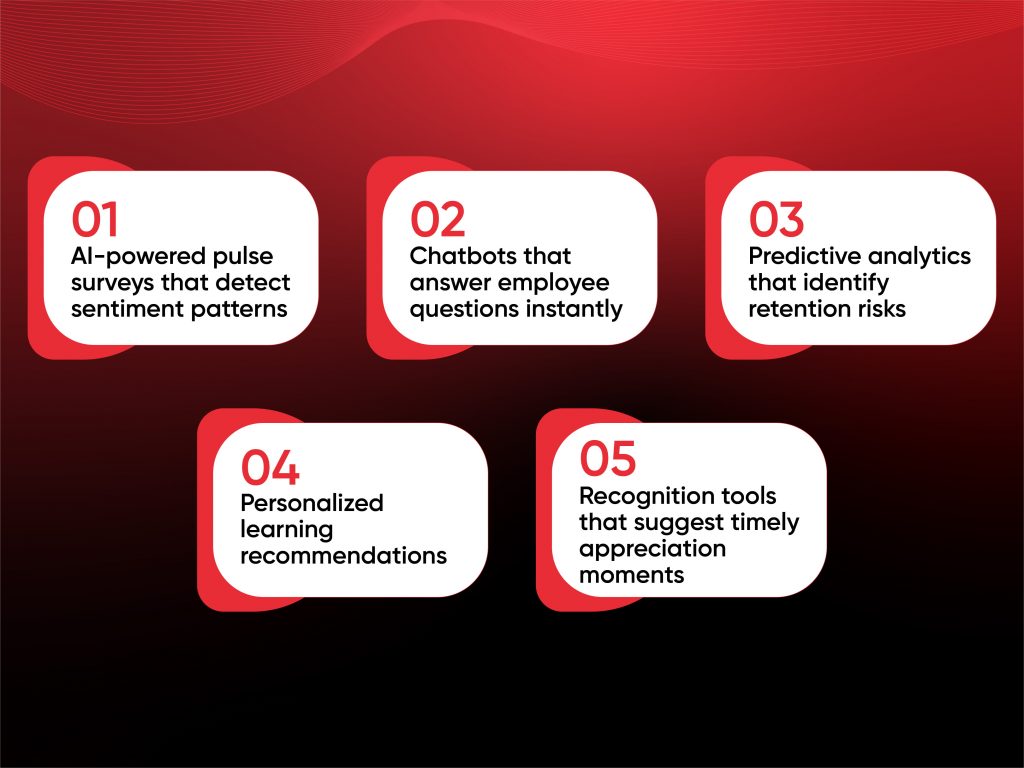
AI in employee engagement refers to the use of artificial intelligence to understand employee sentiment, improve communication, personalize support, and help organizations make faster and better people decisions. In practical terms, this can include:

What Does AI in Employee Engagement Mean

The difference between traditional engagement and AI-enabled engagement is speed and precision. Instead of waiting months to understand how employees feel, leaders can identify shifts in trust, workload pressure, manager effectiveness, or motivation much earlier. This matters because engagement today is highly dynamic. Employees expect organizations to respond faster, communicate better, and create work experiences that feel relevant to them.

Why AI is a Game-Changer for Engagement? 

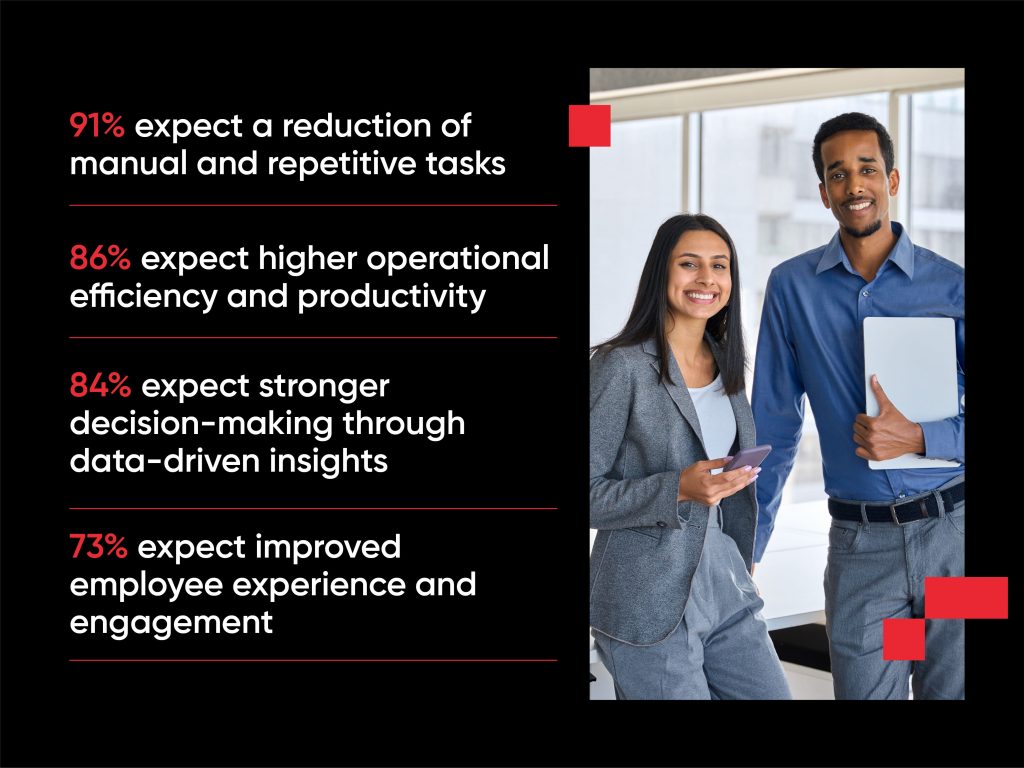
The biggest strength of AI is not automation alone; it is the ability to improve how organizations respond to human needs. Our research with CHROs shows that the top expected benefits of AI are:

Why AI is a Game-Changer for Engagement

When repetitive work is reduced, employees get more time for meaningful contributions. That directly influences motivation, ownership, and satisfaction. AI also changes engagement because it helps leaders move from assumptions to evidence. 

For example, a manager may believe a team is doing well because productivity remains high. AI-based engagement signals may reveal that response time has dropped, recognition has reduced, or attrition risk has increased. This allows earlier intervention, before disengagement becomes a resignation.

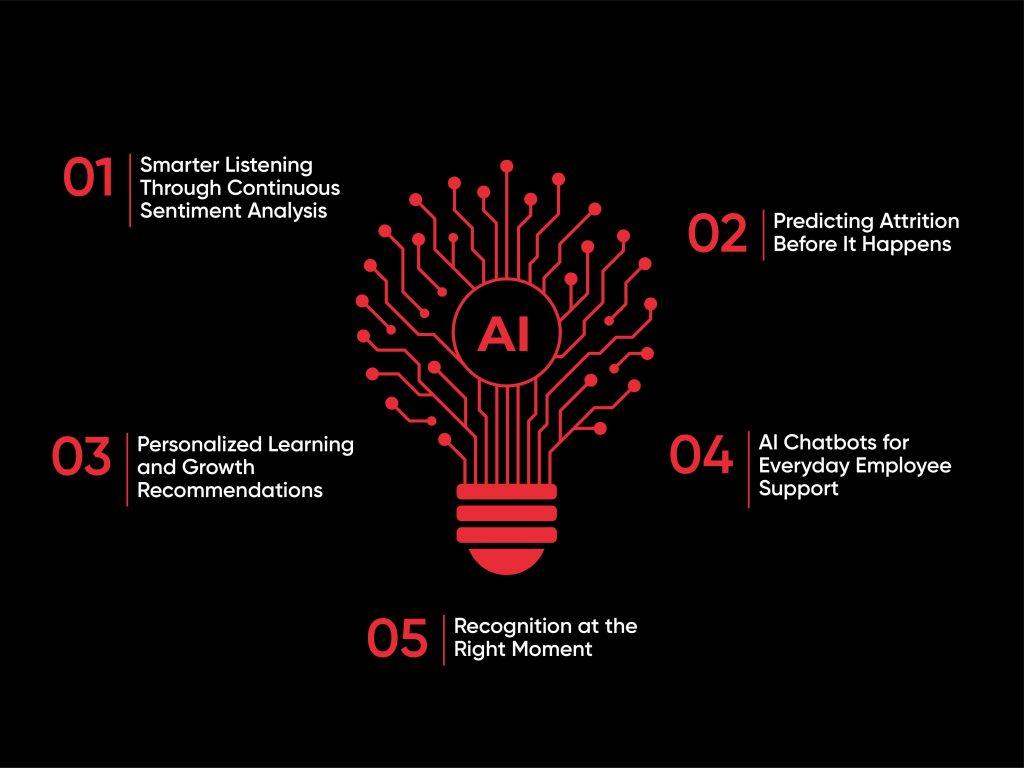
Key Applications of AI in Employee Engagement 

Key Applications of AI in Employee Engagement

With changing dynamics and workplace culture, AI adoption has become more common, and its key applications depend on the company’s usage and requirements. Let’s take a look at a few key applications of AI in employee engagement that every company should use: 

#1. Smarter Listening Through Continuous Sentiment Analysis 

Traditional engagement surveys capture a moment. AI helps capture patterns over time. AI tools can analyze survey responses, internal communication trends, and employee feedback to identify recurring themes such as workload pressure, lack of recognition, or trust concerns. This helps HR leaders move beyond scores and understand where action is most needed. Companies are consistently working hard to create the best culture, but something that works for one company may not work for another. Because every company is different, their industry is different, the scope of work and culture is different. Therefore, learning from Best Workplaces™ gives you an idea of the practices you can implement, but listening to your employees will show you the exact data and give you the right direction for creating the best workplace culture.  

#2. Predicting Attrition Before It Happens 

Employee retention is one of the strongest use cases of AI in employee engagement. Our research shows that at least 40% of employees who worry that AI may replace their jobs are already planning to leave, regardless of role level. This is critical because disengagement often begins long before resignation. 

AI can help detect patterns such as: 

  • Drop in participation 
  • Reduced internal mobility interest 
  • Lower manager interaction 
  • Increased absence patterns 

The value is not prediction alone, it is enabling timely conversations. Exit interviews are not the right time to gain feedback and act on it. An organization should use AI to understand an employee’s pattern of work and flag patterns of disengagement so that the conversation can begin quite before.  

#3. Personalized Learning and Growth Recommendations 

Career growth remains one of the strongest engagement drivers. As AI changes roles, organizations must also help employees adapt. According to Great Place To Work research, 57% of CHROs prefer reskilling and internal job rotations as their primary AI transition strategy. Conventional training programs frequently make the assumption that every employee learns at the same rate and in the same manner. Because of this, some workers could get bored while others find it difficult to keep up. Low involvement and underutilization of educational resources may result from this mismatch. AI-powered learning platforms personalize the entire development process. They assess an employee’s present skill set, pinpoint knowledge gaps, and design specialized learning programs. The system suggests new resources that meet employees’ changing demands as they advance.  

AI supports this by recommending: 

  • Relevant skill pathways 
  • Learning modules 
  • Internal opportunities 
  • Career movement options 

#4. AI Chatbots for Everyday Employee Support 

Employees increasingly expect quick answers. Regardless of an employee’s position or level of expertise, traditional onboarding procedures frequently adhere to a uniform checklist. As a result, even after the first few weeks, a lot of new recruits could still feel confused about their duties or alienated from their colleagues. By developing customized onboarding experiences that take into account each employee’s history, job function, and preferred method of learning, AI has the potential to completely change the onboarding process.

Also Read: Essential HR Policies Every Organization Must Implement

To guarantee a seamless incorporation into the company, these technologies provide knowledge progressively, pair workers with mentors, and track advancement. AI chatbots help simplify common workplace questions around: 

  • Leave policies 
  • Benefits 
  • Internal processes 
  • Learning access 
  • IT support 

The benefit is not replacing HR interaction; it is reducing delay in routine support. This allows HR teams to focus more on high-value people conversations. 

#5. Recognition at the Right Moment 

Recognition loses impact when it becomes delayed or is overlooked. AI tools can identify milestones, collaboration moments, or performance patterns and prompt leaders to recognize employees in real time. That helps create a stronger emotional connection because appreciation feels timely and visible. AI-driven recognition systems are able to identify trends in worker performance that managers might miss. These tools assist in identifying workers who regularly surpass expectations and provide suitable recognition opportunities by analyzing contributions across projects and activities. The advantages of utilizing AI for incentives and recognition are: 

  • Accurately tracking worker performance 
  • Notifying recipients of rewards or appreciation on time 
  • Examining performance information and recommending areas for development 

Benefits of AI in Employee Engagement 

Here are a few benefits of using AI in employee engagement: 

#1 Better Productivity Without Adding Pressure 

Today, the best use case of AI is that it reduces the time you take to do repetitive tasks. If you train an AI chatbot and set up a workflow, then your repetitive tasks can be taken care of, and you don’t have to invest the same time every day. For example, if your daily task includes segregating the data from an Excel sheet based on daily user experience, then AI can actually do that in seconds. When employees spend less time on repetitive tasks, focus improves. This explains why CHROs rank productivity as one of AI’s strongest benefits. 

#2 Higher Retention Through Early Intervention 

Engagement improves when organizations respond before frustration builds. AI helps leaders act earlier. This is where AI-powered employee engagement technologies truly shine. AI can identify the warning indicators weeks or even months before someone submits their resignation letter. The sentiment analysis monitors communication patterns and engagement levels to increase staff productivity with AI. Through this, the HR teams may take action before it’s too late when the system recognizes early indicators of disengagement or burnout. 

#3 More Personalized Employee Experience 

Not every employee needs the same support. AI helps organizations personalize communication, learning, recognition, and resources. Traditional performance review systems are now outdated. AI in employee engagement can now give you data time data based on deal data and insights, and you don’t have to wait a quarter to look at an employee’s experience or performance.  

#4 Stronger Leadership Decisions 

Data-backed decisions reduce guesswork. And employees trust leaders more when action feels informed and fair. Interestingly, Great Place To Work’s employee insights show that employees with high confidence in leadership report significantly more positive AI experiences at work. This means leadership trust still shapes whether AI strengthens culture or creates anxiety. 

How to Implement AI in Your Engagement Strategy? 

Introducing AI into engagement requires culture readiness, not just technology readiness. So, to make it a little easier for you, here is how you can actually implement AI in employee engagement: 

#1. Start with a Clear Business and People Problem 

The biggest mistake that organizations make is that they follow others, which is not completely wrong, but don’t forget that unique problems require unique solutions. Do not adopt AI because it is trending, rather look at your requirements. The best way is to start with a question: what engagement challenge are we solving? Is it retention, survey fatigue, manager effectiveness, or learning participation? Once you know the problem, you’ll be able to find the right answer.  

#2. Build Trust Before Expanding Tools 

Our research on CHROs shows that 21% of CHROs identify governance, ethics, and privacy safeguards as a top priority when implementing AI. During the times of increasing anxiety among employees due to the evolution and implementation of AI, leaders need to be transparent.  

Employees must know what data is being used, why it is being used, and how decisions are being made. Providing information or reasoning will help them gain clarity and increase trust in leadership, because trust determines adoption. 

#3. Invest in Capability Building 

The biggest barrier today is not employee resistance; it is capability. 28% of CHROs say limited internal AI skills are the biggest challenge in implementation. Organizations need to train both managers and employees. Not just on tool usage, but on responsible use. Employees should be made aware of the do’s and don’ts. Moreover, there should be a set of guidelines on the usage of AI tools, and employees should be given proper training before using them. 

#4. Keep Human Oversight Strong 

AI should guide decisions, not replace judgment. Especially in engagement, human interpretation remains essential. Human connection is the essence of any interaction and will remain the same. Signals will always require conversation, and data will require real context. 

#5. Future of AI in Employee Engagement 

The future of engagement will not be fully automated, it will be intelligently assisted. In the next few years, organizations will likely see: 

  • Predictive engagement dashboards 
  • AI-supported manager coaching 
  • Real-time culture diagnostics 
  • Personalized career pathways  

At the same time, role evolution will also increase. Great Place To Work research shows 61% of CHROs expect 5% to 25% of roles to change because of AI within three years. This means employee engagement strategies must increasingly focus on adaptability, confidence, and reskilling. The organizations that succeed will not be those with the most AI tools. They will be the ones that help employees feel prepared, included, and supported through change. 

Conclusion 

AI can improve employee engagement, but only when it is used to make work more human, not less. The strongest cultures do not use AI simply to monitor productivity. They use it to listen better, reduce friction, support growth, and help leaders act with greater clarity. At Great Place To Work, we continue to see that when trust is strong, employees are more open to change, more willing to learn, and more optimistic about the future of work. And in 2026, that may become the biggest competitive advantage of all. 

Frequently Asked Questions 

Is AI replacing HR roles in employee engagement? 

No, AI is helping HR teams automate repetitive tasks and improve decision-making, but human conversations, trust-building, and culture leadership will remain crucial. 

What are the examples of AI tools for engagement? 

Examples include pulse survey platforms, sentiment analysis tools, AI chatbots, recognition platforms, and predictive retention analytics. 

How does AI improve employee engagement? 

AI improves engagement by helping organizations detect concerns earlier, personalize employee support, reduce repetitive work, and strengthen manager action. 

How can companies ensure ethical AI use? 

Organizations should establish governance, explain data usage clearly, maintain privacy safeguards, and ensure human oversight in people’s decisions.

Summary – This blog explores what employee experience truly means, why it’s essential for both human well-being and business success, proven strategies for improvement, common challenges leaders face, and how Great Place To Work® Certification™ provides a roadmap to building exceptional workplace cultures. 

What makes someone look forward to Monday mornings? What transforms a job into a place where people feel they truly belong? The answer lies in employee experience, the sum of every interaction, feeling, and moment that shapes how people experience their work and workplace.

At Great Place To Work, our research representing the voices of 5.7 million+ employees reveals a fundamental truth: great workplaces aren’t built on perks or policies alone. They’re built on trust, belonging, and the consistent feeling that “I matter here.” When employees experience workplaces where they feel valued, heard, and connected to purpose, something remarkable happens. They don’t just show up, they bring their whole selves to work.

The question for leaders today isn’t whether employee experience matters, but how to intentionally design it so every person, regardless of who they are or what they do, feels the workplace is great for them.

What Is Employee Experience?

Employee experience is the journey individuals take through your organization, encompassing every touchpoint, interaction, emotion, and observation from the moment they first encounter your employer brand through their final day and beyond.

It’s what people feel when they walk into the office (or log on remotely). The quality of their relationship with their manager, the fairness they perceive in how decisions are made, the pride they take in their team’s work, and the sense of belonging they feel with colleagues. It’s whether they have the tools they need, whether their ideas are heard, whether they see opportunities to grow, and whether they believe their work contributes to something meaningful.

How Do You Define Employee Experience?

Based on 30 years of studying the Best Workplaces™ globally, Great Place To Work defines employee experience through three essential dimensions:

  • Trust – Credibility, respect, and fairness in relationships and work.
  • Pride – Meaning derived from personal contributions, team accomplishments, and organizational impact.
  • Camaraderie – Genuine care, psychological safety, and authentic connections with colleagues.

When these align consistently, exceptional employee experiences emerge.

Why Is the Employee Experience Important?

Employee experience matters because it directly impacts human well-being and organizational performance simultaneously. This isn’t a trade-off where you choose between caring for people and achieving results, it’s an integration where both flourish together.

From a human perspective, people spend significant portions of their lives at work. When that experience is positive, when they feel respected, supported, and connected, it enhances their overall quality of life. Conversely, negative workplace experiences contribute to burnout, stress, and diminished well-being that spills into personal life.

From a business perspective, the evidence is compelling. Organizations where everyone experiences a positive work environment report 9% greater discretionary effort across all industries. Best Workplaces score 7% higher on critical experience drivers, including career growth opportunities, better team dynamics, and clarity of expectations.

The financial impact is equally clear. Our research shows that Best Workplaces have yielded 14X returns on initial investment since 2008-09, outperforming major stock indices by more than 3X. When people have great experiences at work, they stay longer, perform better, innovate more readily, and deliver superior customer experiences, all of which drive business results.

Perhaps most importantly, employee experience shapes organizational resilience. In times of change, uncertainty, or crisis, organizations with strong cultures of trust and positive employee experiences weather storms more effectively because their people remain committed and engaged.

Why Businesses Need to Invest in Employee Experience?

Today’s workplace is transforming quickly. GenAI, a growing Gen Z workforce, hybrid work, and rising expectations for transparency and purpose are reshaping what people want. Employees now expect more than pay; they want psychological safety, real inclusion, well-being support, and room to grow, and companies that can’t offer this struggle to attract and keep talent.

This shift is redefining the psychological contract, pushing organizations toward more human-centric cultures that genuinely value individual needs and aspirations. In a competitive talent market, that shift matters; strong employee experience and a positive employer reputation help companies hire better and retain more.

Simply put, investing in employee experience is no longer optional, it’s essential.

6 Ways to Improve Your Employee Experience Strategy

Build a Culture of Genuine Recognition

People need to feel seen and appreciated for their contributions. When recognition is timely, specific, and authentic, it reinforces that their work matters and motivates continued excellence.

Create Crystal-Clear Communication and Alignment

Ambiguity creates anxiety and disconnection. Clear communication about organizational direction, individual roles, and expectations helps employees understand how their work contributes to the bigger picture.

Foster Transparent, Approachable Leadership

The quality of leadership fundamentally shapes daily experience. When leaders are accessible, listen actively, and create psychological safety, employees feel empowered to speak up, share ideas, and bring their authentic selves to work.

Strengthen Team Connection and Belonging

Relationships at work matter profoundly to employee experience. Creating opportunities for genuine connection, collaboration, and celebration builds camaraderie that transforms colleagues into trusted teammates.

Invest in Growth and Development

People want to evolve, not stagnate in their careers. Providing clear development paths, learning opportunities, and support for skill-building shows employees the organization is invested in their future.

Ensure Fairness and Equity Across All Groups

Best Workplaces create “For All” cultures where positive experience isn’t limited to certain demographics. This means examining experience data across different groups and taking action to close gaps, so everyone feels valued and included.

Challenges to Providing a Great Employee Experience

Even well-intentioned organizations face obstacles in creating consistently positive experiences, such as:

  • Recognition Gaps – Systems that fail to acknowledge contributions meaningfully leave people feeling invisible. The challenge isn’t creating recognition programs but ensuring recognition is timely, specific, equitable, and valued by recipients.
  • Communication Breakdowns – When organizational direction, expectations, or changes aren’t communicated clearly and consistently, employees experience confusion and disconnection. Information silos between departments or levels exacerbate this challenge.
  • Leadership Skill Gaps – Not all managers naturally possess the emotional intelligence, trust-building capabilities, or people development skills required to create great experiences for their teams. Without investment in leadership development, even good intentions fall short.
  • Inclusion Inconsistencies – When some groups experience significantly better workplace culture than others, whether based on gender, role level, tenure, or department, it creates inequity that undermines overall culture. Achieving consistency is challenging but essential.
  • Limited Resources and Competing Priorities – Organizations face pressure to deliver financial results, manage operations, and drive growth. When employee experience initiatives compete for budget and leadership attention with other priorities, they often get deprioritized despite good intentions.
  • Resistance to Change – Improving employee experience often requires changing long-standing practices, behaviours, and systems. Organizational inertia and resistance from those comfortable with the status quo can slow or derail improvement efforts.

How to Improve Employee Experience with Great Place To Work Certification

Great Place To Work Certification provides organizations with a proven methodology and roadmap for creating consistently positive employee experiences.

The process begins with the Trust Index™ Survey, where employees provide confidential feedback across credibility, respect, fairness, pride, and camaraderie, revealing not just overall experience but differences across demographic groups and roles. The Culture Audit™ complements this by evaluating leadership practices, programs, and policies that shape your organization’s culture and daily employee experience.

Together, these tools offer:

  • Benchmarking Data: Compare your employee experience to thousands of organizations globally, understanding where you stand and what’s possible.
  • Actionable Insights: Identify specific opportunities to improve experience for all employees or targeted groups.

Organizations that achieve certification join a community committed to continuous improvement, gaining accountability and evidence-based insights that matter most to their people. The certification journey transforms intuition into data-driven understanding, fragmented initiatives into integrated culture strategies, and good intentions into measurable impact.

Conclusion

When people experience work as a place where they’re trusted, valued, and connected to something meaningful, they don’t just work, they thrive. And when people thrive, organizations succeed in ways that transcend financial metrics, creating lasting value for all stakeholders.

The question isn’t whether to invest in employee experience. The question is: what will you do today to make your workplace great for all?

Frequently Asked Questions

What are the stages of employee experience?

Employee experience spans the entire employee lifecycle: attraction and recruitment, onboarding, development and growth, daily work experience, and offboarding, each stage shaping how people perceive and engage with your organization.

Why should employee experience be your top priority?

Employee experience directly drives business outcomes including retention, performance, innovation, and customer satisfaction, while simultaneously enhancing human well-being making it both a moral imperative and a competitive advantage.

How to improve your employee exit program?

Conduct meaningful exit interviews to gather honest feedback, maintain positive relationships with departing employees as potential brand ambassadors or boomerang hires, and use insights to address systemic issues that drive turnover.

What are the types of employee experience surveys?

Common types include employee engagement surveys (measuring emotional commitment), pulse surveys (frequent check-ins on specific topics), onboarding surveys (new hire experience), exit surveys (departure feedback), and comprehensive culture surveys like the Trust Index™ that measure overall workplace experience.

What is the difference between employee experience vs employee engagement?

Employee experience is the comprehensive journey and all interactions an employee has with the organization, while employee engagement is the emotional commitment and discretionary effort that results from positive experiences. Experience is the cause; engagement is the effect.

The landscape of leadership is undergoing a seismic shift. No longer is it sufficient to merely manage a team; effective leaders must now inspire, develop, and connect with their people while navigating complex challenges and opportunities. At the heart of successful leadership is the creation of a high-trust culture that makes the organization a truly great workplace.

The New Era of Leadership

Today’s leaders are confronted with a myriad of trends that are reshaping the business world. Four key areas demand their attention: embracing purpose, prioritizing sustainability, meeting the expectations of the new-age workforce, and leading in an AI-driven future. These trends are interconnected, and a holistic approach is essential for long-term success.

Purpose: The North Star of Leadership

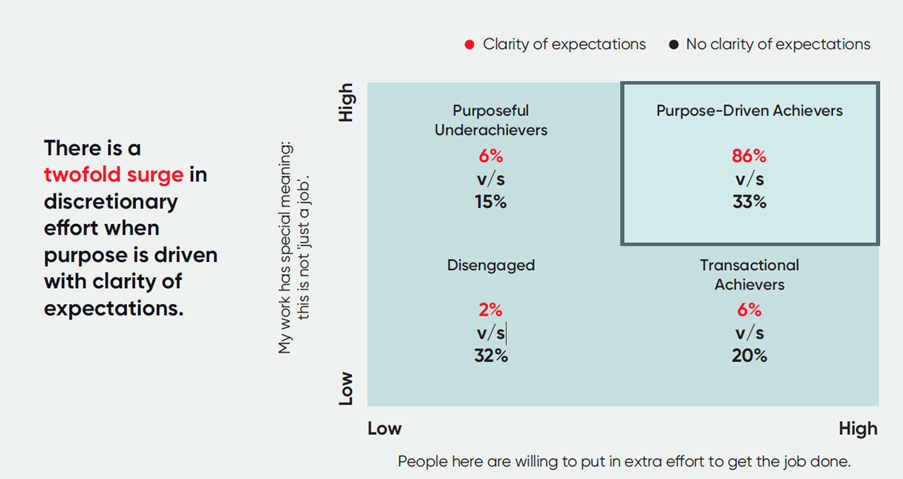
A strong sense of purpose is no longer a nice-to-have; it’s a must-have for organizations and leaders alike. Employees are increasingly seeking work that aligns with their values and makes a positive impact on the world. By making purpose a priority, leaders can foster a more engaged, motivated, and resilient workforce.

Corelation between purpose vs clarity of expectations

To embed purpose into the organizational fabric, leaders must:

  • Embrace empathy and foster inclusivity: Understanding and addressing the needs of team members is crucial for building a strong sense of purpose. Fostering a collaborative and innovative atmosphere where all individuals are appreciated and feel appreciated is crucial. This involves active listening, open communication, and a commitment to equity and diversity.
  • Communicate vision and values clearly: A shared understanding of the organization’s vision and values is fundamental to aligning everyone towards a common goal. By clearly communicating the company’s purpose and how it relates to broader societal issues, leaders can inspire employees to contribute meaningfully. Visual storytelling, interactive workshops, and regular communication channels can be employed to reinforce the organization’s purpose.
  • Commit to sustainability and innovation: Integrating sustainability into business operations and embracing new technologies demonstrates a commitment to a better future. Employees are more likely to feel a sense of purpose when they are working towards a sustainable and innovative organization. This involves setting ambitious sustainability goals, investing in green technologies, and fostering a culture of innovation.

Deloitte India’s ESG Preparedness 2023 survey underscores the growing importance of sustainability. While the majority of Indian businesses recognize the impact of sustainability regulations and the benefits of ESG reporting, many are still unprepared to meet these requirements. This presents a significant opportunity for leaders to differentiate their organizations and attract talent by demonstrating a strong commitment to sustainability.

Meeting the Expectations of Gen Z

The entry of Gen Z into the workforce is fundamentally changing the dynamics of leadership. This generation brings fresh perspectives, bold expectations, and a strong desire for purpose and impact. In order to draw in and keep top talent, leaders need to modify their strategies to fit the particular requirements and goals of Generation Z.

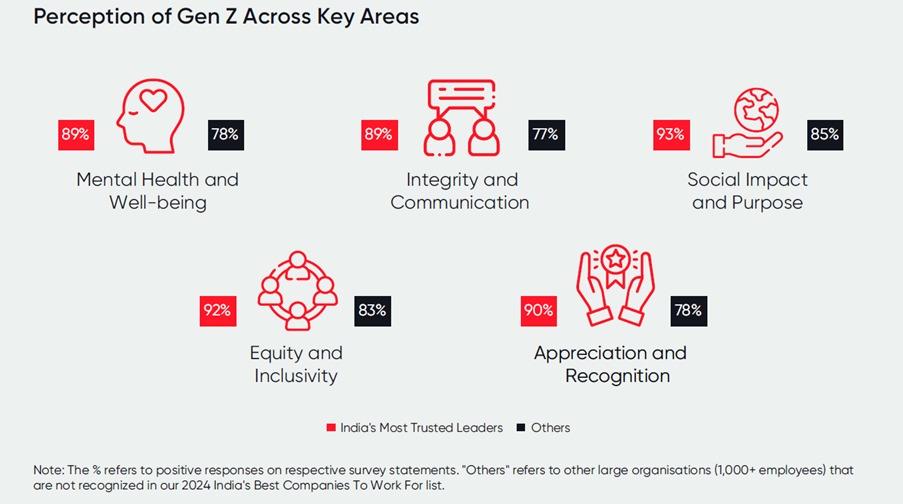
Perception of Gen Z Across Key Areas

Gen Z employees prioritize:

  • Mental health and well-being: Managers need to prioritize employee mental health by fostering a welcoming and inclusive work environment. This includes offering mental health resources, flexible work arrangements, and a culture of open dialogue about mental health challenges.
  • Integrity and communication: Trust and transparency are essential for building strong relationships with Gen Z employees. Leaders must be authentic, honest, and transparent in their communication, and they should actively seek feedback from employees.
  • Social impact and purpose: The desire to have a positive impact on the world is what motivates Generation Z. With the use of volunteer programs, CSR initiatives, and mission-driven projects, leaders can give employees chances to support social concerns.
  • Appreciation and recognition: Gen Z employees value recognition and feedback. Leaders should celebrate successes publicly, provide regular feedback, and offer opportunities for growth and development.
  • Equity and inclusivity: Creating a diverse and inclusive workplace is crucial for attracting and retaining Gen Z talent. Leaders must actively promote diversity and inclusion, challenge biases, and create a culture where everyone feels valued and respected.

By meeting the expectations of Gen Z, leaders can create a high-performance culture and build a strong talent pipeline for the future. Research shows that organizations with India’s Most Trusted Leaders enhance the Gen Z experience by 8-12% across key areas, demonstrating the positive impact of leadership on employee engagement and satisfaction.

Leading in the AI Era

The business landscape is fast changing due to artificial intelligence, and executives need to adjust to this new reality. AI can improve decision-making and automate repetitive jobs, but it’s important to strike a balance between technology and human judgment and empathy.

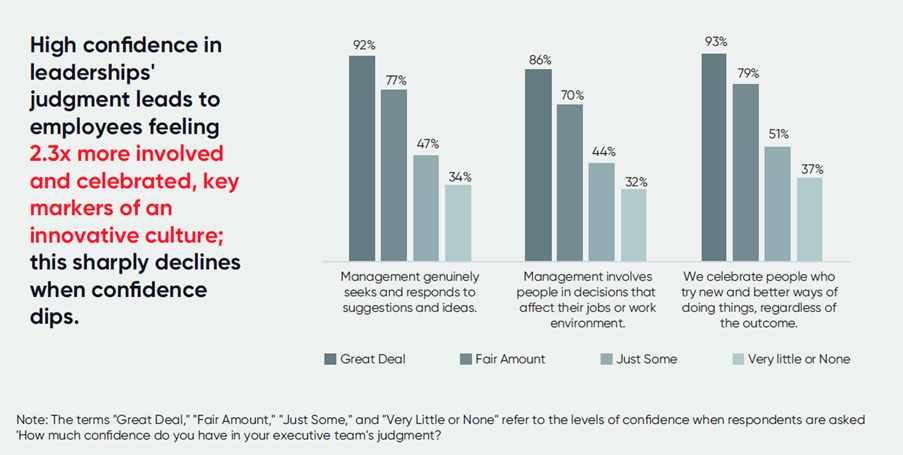
Corelation between high confidence in leadership's judgement and employees feeling involved in innovation culture.

The Indispensable Role of Trust in Leadership in AI-Driven Future

The 2024 Edelman Trust Barometer underscores the pivotal role of trust in AI implementation. While 38% of people are open to AI when managed effectively, a significant 43% are resistant to it if handled poorly. This highlights the need for transparency, accountability, and ethical considerations in AI development and deployment.

Building trust and confidence in leadership is paramount for successful AI adoption. When employees have high confidence in their leaders’ judgment, they are more likely to feel valued, involved in decision-making, and committed to innovation. Conversely, a decline in trust can lead to a significant drop in employee engagement and innovation.

3 Effective Ways to Lead an AI-Powered World

To successfully navigate the AI-driven landscape, leaders should focus on these key strategies:

  1. Invest in your People: Upskilling the workforce in AI and digital literacy is paramount. Leaders can prepare their employees to succeed in the AI era by promoting a culture of ongoing innovation and learning. Providing employees with access to AI tools, mentorship opportunities, and training programs can enable them to fully utilize AI’s potential.
  2. Communicate Transparently: To foster trust and allay worries about job stability, open and honest communication is crucial. Leaders may foster a sense of shared purpose and ownership among staff members by educating them about AI efforts, their part in the process, and the possible advantages. Addressing concerns proactively and providing opportunities for feedback can foster a supportive and collaborative environment.
  3. Leverage AI Strategically: Identifying key areas where AI can deliver the most significant impact is crucial. Focusing on customer experience, employee engagement, and supply chain optimization can yield substantial benefits. Starting with targeted AI projects can help build momentum, demonstrate value, and create a foundation for broader AI integration.

Research indicates that employees who have high confidence in their leadership team’s judgment are more likely to feel valued, involved, and celebrated. This highlights the importance of strong leadership in fostering an innovative culture.

The Interconnectedness of Leadership

The trends discussed above are interconnected and mutually reinforcing. A leader who prioritizes purpose, embraces sustainability, meets the expectations of Gen Z, and effectively leverages AI is more likely to create a high-trust culture and drive organizational success.

For example, a leader who prioritizes purpose and sustainability can attract and retain Gen Z talent who are passionate about making a positive impact on the world. By leveraging AI to analyze sustainability data and identify opportunities for improvement, leaders can demonstrate their commitment to sustainability and innovation.

Ultimately, the key to successful leadership is the ability to connect, develop, and inspire people while navigating the complexities of the modern world. Through the adoption of these trends and the acquisition of required competencies, executives can adeptly position their establishments for sustained prosperity.

Posted in AI

In the dynamic realm of human resources, the integration of technology has evolved into a critical component of organizational success. The rapid digital transformation, propelled by the global shift to remote/hybrid work and the accelerated adoption of artificial intelligence (AI), has reshaped the way organizations manage their talent. In this era of change, HR leaders are embracing people analytics to make informed decisions and enhance overall organizational success.

The Evolution of Remote/Hybrid Work Culture:

The concept of remote/hybrid work, once met with skepticism and reluctance, became a tangible reality for companies and employees alike during the COVID-19 pandemic. This forced experiment has given rise to strong and informed opinions about the work culture that best suits organizations and individuals. Businesses as they adjust to the new normal, remote or hybrid work experience has become a critical factor in shaping talent trends in HR.

Employees now prioritize flexibility, work-life balance, and the ability to work from anywhere. Companies, in turn, are reevaluating their policies and adopting hybrid work models to accommodate the preferences and needs of their workforce. The integration of people analytics is playing a pivotal role in understanding and optimizing these evolving work dynamics.

AI’s Growing Role in HR:

The urgency to incorporate artificial intelligence (AI) into HR functions has become increasingly evident. 81% of HR directors have investigated or used AI solutions to increase process efficiency in their companies, according to new data from Gartner. The integration of AI, especially generative AI, is seen as a key driver for staying competitive in the evolving business landscape.

With 76% of HR leaders believing that organizations failing to adopt AI solutions in the next two years will lag in organizational success, the pressure to embrace AI is palpable. As technology develops, HR professionals are using AI to improve employee engagement, expedite the hiring process, and make data-driven choices that will benefit the company as a whole.

The Impact of Innovation on Workplaces:

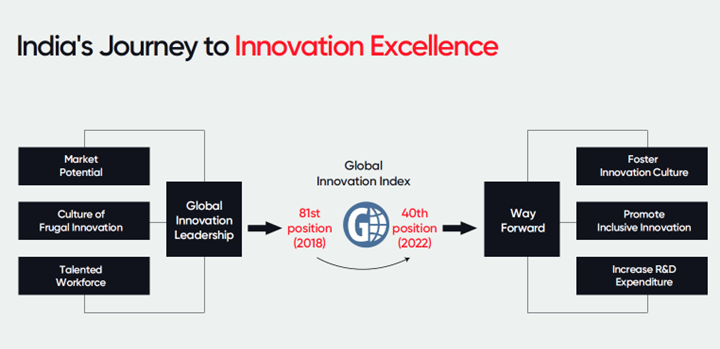
India's Journey to Innovation Excellence

India’s remarkable rise in the Global Innovation Index, jumping from the 81st position in 2018 to the 40th position in 2022, reflects a growing emphasis on creativity and ingenuity. This surge in innovation has a direct correlation with the workplace, as employees in organizations recognized as Best Workplaces™ demonstrate higher rates of innovation.

Innovation at Best Workplaces

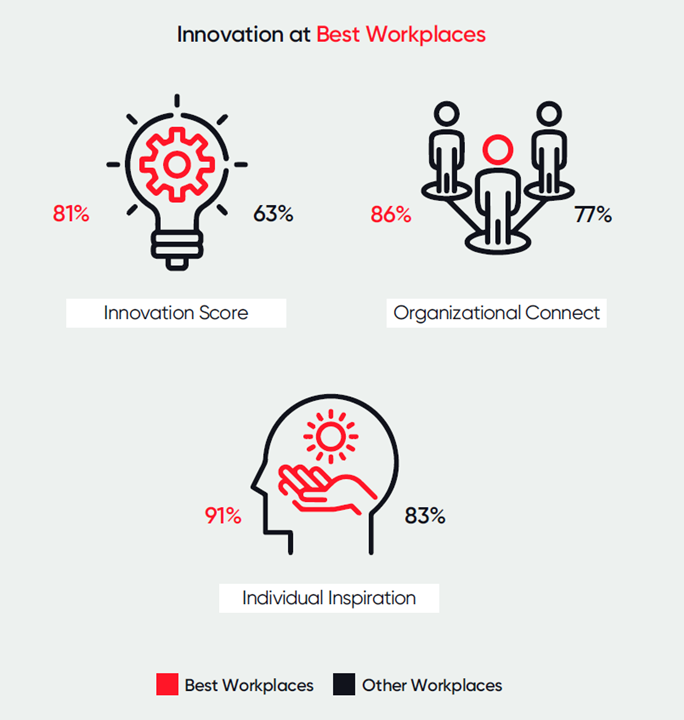
Our data from India’s Best Workplaces Building a Culture of Innovation by All 2023 report shows that employees in Best Workplaces exhibit an 18% higher rate of innovation, 9% more connection to their organization, and an 8% increase in individual inspiration. These statistics underline the importance of a positive work environment in fostering creativity and innovation, reinforcing the link between talent trends and organizational success.

Best Workplaces Leading the Way:

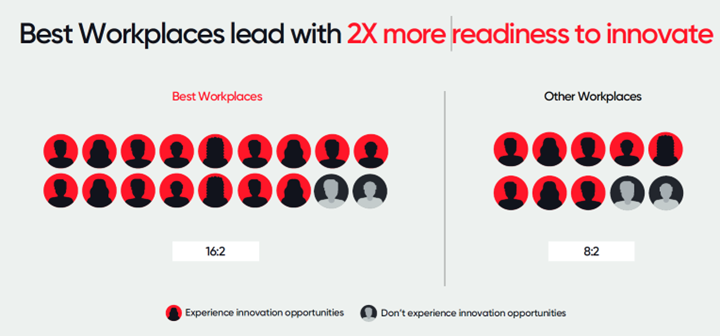
Organizations recognized as Best Workplaces are not only associated with higher innovation rates but also exhibit 2X more readiness to innovate compared to their counterparts. This highlights the significance of a work environment that is supportive and employee-focused on an organization’s capacity to adjust and prosper in a business environment that is changing quickly.

2X more readiness to innovate

As HR leaders explore ways to attract and retain top talent, creating an environment that promotes innovation and employee well-being emerges as a key strategy. People analytics, powered by AI, becomes an essential tool in identifying and implementing initiatives that contribute to a positive workplace culture.

Debunking Myths About AI in HR Technology:

Despite the growing acceptance and adoption of AI in HR, there are lingering myths that hinder its full integration. Addressing these misconceptions is crucial for organizations to leverage the true potential of AI in enhancing HR functions.

  • Myth 1: When tech outperforms employees in their existing roles, tech will replace them.
  • Reality: The purpose of AI technologies is to complement human abilities, not to replace them. Technology is meant to be pervasive in employees’ activities, working collaboratively with human workers to increase efficiency and productivity.
  • Myth 2: HR leaders are holding back on AI-powered tool implementation because of concerns.
  • Reality: Despite concerns related to data privacy, bias, and ethics, AI adoption is on the rise. In a Gartner benchmarking session, 52% of HR leaders expressed active exploration of potential use cases and opportunities for generative AI.

The future of talent trends in HR is intricately woven with the threads of remote work, AI integration, innovation, and employee-centric practices. Making the most of people analytics becomes essential for organizations looking to stay ahead in a constantly shifting landscape. Human Resources leaders can reimagine their strategies and create a culture of creativity and resilience that catapults their companies to new heights of success by debunking myths and embracing the transformative potential of AI. In this era where the workforce is no longer confined to physical offices, the adaptability and foresight enabled by people analytics and AI are becoming indispensable tools for navigating the evolving landscape of talent management.

Posted in AI

The symbiotic interaction between humans and artificial intelligence (AI) is changing the fundamental components of corporate culture in the quickly changing modern workplace. The integration of AI technologies has ushered in a new era where the coexistence of workers and workplace AI is not just a possibility but a necessity for staying competitive. In this blog post, we’ll explore how AI can enrich our understanding of organizational culture, delve into the impact of AI on company culture, and highlight the cultural benefits of embracing artificial intelligence in the enterprise.

Decoding the Dynamics: Worker and Workplace Artificial Intelligence Coexistence

The convergence of human intelligence with AI brings forth a paradigm shift in how we work. AI is becoming more and more of a collaborative partner, increasing production and efficiency, in contrast to the concern that it will replace jobs. The key lies in understanding the nuanced dance between workers and workplace AI, acknowledging the strengths of each, and leveraging them to create a harmonious work environment.

As workers and AI collaborate, it is essential to recognize the unique capabilities each brings to the table. While AI excels in data processing, pattern recognition, and repetitive tasks, humans contribute creativity, emotional intelligence, and critical thinking. A workplace where both entities complement one another and drive productivity and innovation to new heights depends on finding the proper balance.

How Can AI Enrich Our Understanding of Organizational Culture?

Organizational culture, the invisible force shaping the behaviors and attitudes within a company, is deeply intertwined with the introduction of AI. Leveraging AI to understand and enhance organizational culture can be a game-changer. AI analytics can sift through vast amounts of data to identify patterns, providing valuable insights into the dynamics at play.

Effective use of AI goes beyond mere automation. It improves collective learning by analyzing data on employee interactions, preferences, and performance. It clarifies responsibilities by streamlining processes and ensuring accountability. AI affects collaboration positively by identifying opportunities for cross-functional cooperation. Additionally, automating repetitive operations raises staff morale and frees up time for more demanding and meaningful work.

Innovating with AI not only boosts competitiveness but also enables organizations to reassess key assumptions, set new objectives, and realign behaviors. The integration of AI into organizational culture is not about replacing human elements but amplifying them, creating a culture of continuous improvement and adaptability.

The Impact Of AI On Company Culture

The introduction of AI into the workplace inevitably influences company culture. Organizations that embrace AI technologies experience a cultural shift marked by adaptability, innovation, and a focus on continuous learning. The MIT SMR-BCG report underscores the positive impact of AI on company culture, emphasizing its role in shaping a workplace conducive to growth and development.

A culture of inquiry and discovery arises when AI becomes a crucial component of day-to-day operations. Employees become more open to learning and experimenting with new technologies, driving a collective pursuit of knowledge. This shift towards a learning-centric culture not only enhances individual skills but also fosters a sense of community and shared purpose within the organization.

The effective use of AI also brings about a heightened sense of responsibility and accountability. AI makes responsibilities more clear and streamlines processes, giving workers more freedom to own their work. This newfound clarity in responsibilities cultivates a culture of trust and reliability, essential components for a thriving workplace.

Collaboration, a cornerstone of organizational success, is enhanced through the integration of AI. Artificial Intelligence dismantles organizational silos and promotes a culture of teamwork by finding synergies and enabling cross-functional communication. The result is a more cohesive and agile organization, ready to tackle challenges and capitalize on opportunities in the rapidly changing business landscape.

Artificial Intelligence’s Cultural Benefits for Businesses

The cultural benefits of effective AI use are manifold. The following aspects highlight the transformative power of AI in shaping organizational culture:

1. AI’s Proficient Use Enhances Collective Learning Experiences

AI-driven analytics enable organizations to gather and interpret vast amounts of data, uncovering valuable insights. By harnessing this collective intelligence, employees can continuously learn and adapt, fostering a culture of knowledge-sharing and growth.

2. AI’s Optimal Utilization Brings Clarity to Roles and Responsibilities.

One of the significant challenges in any organization is the ambiguity surrounding roles and responsibilities. AI brings clarity by automating routine tasks, allowing employees to focus on their core responsibilities. This clarity not only improves efficiency but also establishes a culture of accountability.

3. AI’s Efficient Use Impacts and Enhances Collaborative Efforts.

AI acts as a catalyst for collaboration by identifying opportunities for teams to work together more effectively. Through data-driven insights, organizations can break down silos and encourage cross-functional collaboration, leading to a more integrated and cooperative culture.

4. Effective Implementation of AI Boosts Overall Team Motivation and Satisfaction.

AI enables workers to focus on more challenging and significant areas of their work by automating monotonous and repetitive chores. This not only boosts morale but also contributes to a positive and motivated workplace culture.

5. AI-Driven Innovation Enhances Competitive Edge and Market Positioning.

Organizations that embrace AI for innovation gain a competitive edge. AI enables businesses to explore new possibilities, experiment with novel ideas, and stay ahead in a rapidly evolving market. This innovation-driven culture is crucial for long-term competitiveness.

6. AI Application for Reassessing Assumptions, Setting Objectives, and Realigning Behaviors

AI’s analytical capabilities provide organizations with the tools to reassess their strategies, challenge assumptions, and set new objectives. This continuous cycle of improvement fosters a culture of adaptability and resilience, positioning the organization for long-term success.

5 Mistakes That Undermine Employee Trust in an AI-Powered Workplace

While the integration of AI brings numerous benefits, certain pitfalls can erode employee trust. Building a supportive and diverse AI-powered workplace requires acknowledging and resolving these issues. Let’s explore five common mistakes that can undermine employee trust:

1. Assuming Employees and Consumers Already Trust You

Trust is not automatic, and assuming it can lead to complacency. Companies need to take proactive measures to establish and preserve trust by answering queries, being open and honest about their AI activities, and showcasing how AI benefits both customers and workers.

2. Underestimating the Change Management Process

The introduction of AI often involves significant changes in processes and workflows. Underestimating the impact of these changes can create confusion and resistance among employees. To ensure a seamless and happy transition for staff members, a strong change management strategy is necessary.

3. Overlooking the Risks When Moving Fast

The rapid implementation of AI without thorough risk assessment can lead to unintended consequences. From biased algorithms to security vulnerabilities, overlooking risks can damage both employee trust and the organization’s reputation. A careful and measured approach to AI implementation is crucial to mitigate potential risks.

4. Failing to Consider Employee Concerns

Employees may harbor concerns about job security, job relevance, or ethical implications of AI. Failing to address these concerns can breed mistrust. To allay these worries, organizations should establish open lines of communication, pay attention to the opinions of their workers, and offer opportunities for professional development.

5. Losing Touch With Your Organization’s Purpose

Amidst the excitement of AI integration, organizations must not lose sight of their core values and purpose. Employees connect with a sense of purpose, and aligning AI initiatives with organizational values reinforces a positive company culture. The human-centric approach ensures that AI is a tool for enhancing, not replacing, the workforce.

Paving the Way for a Human-AI Synergy

In conclusion, the coexistence of workers and workplace AI is not just a technological evolution but a cultural transformation. AI has the potential to enrich our understanding of organizational culture, shape positive company cultures, and drive collective learning, innovation, and collaboration.

As organizations embrace AI, it is crucial to avoid the pitfalls that can undermine employee trust. By actively addressing concerns, communicating transparently, and aligning AI initiatives with organizational values, companies can foster a workplace where humans and AI thrive together. To learn more about AI’s revolutionary potential and the trends shaping the organizational culture in the IT industry, download our comprehensive India’s Best Workplaces in IT & IT-BPM 2023 report. Discover how effective AI use improves collective learning, clarifies responsibilities, enhances collaboration, boosts morale, and propels innovation. It’s time to navigate the future with confidence and embrace the limitless possibilities of a human-AI synergy.

Posted in AI

Webinar

The Certification Advantage: Why Partner with Great Place To Work®

Speaker: Prasad Kachraj, Managing Director, Great Place To Work, India

Session Highlights:

  • Why high-trust workplaces outperform on business outcomes.
  • How data-driven insights can strengthen your people strategy.
  • How partnering with Great Place To
  • Work accelerates your culture journey.
  • The value of Great Place To Work Certification.

9th September 2026 | 4.00 PM - 4.30 PM IST

Register Now