India is on the cusp of an incredible growth spurt, with startup culture taking over, businesses expanding beyond boundaries, and a continued influx of qualified people into the job market. The business world is recognizing the need for stable, aware, and dynamic leadership. Given this, leadership training has become imperative, and there are many courses and programs to help talented individuals transform into effective leaders.

However, a growing concern about leadership training has come to light. All across the corporate world, managers are sent to attend leadership-related courses; they come back energized with new ideas and an empowering approach but soon revert to their old behavior due to work pressure. Leadership capability is no longer just an HR priority; it has become a business imperative. Great Place To Work® India’s latest research, based on the experiences of 5.7 million+ employees across 20+ industries, shows that workplace culture begins with leadership. In fact, India’s Best Workplaces™ have demonstrated that when leaders consistently build trust, organizations create stronger cultures, and the business yields 14X higher market returns.

This is a common theme and Great Place to Work recognizes the need for Leadership Capability Building. That is why we offer solutions that help leaders become better versions of themselves. This blog will explore the nuances of leadership training, why it is often ineffective, and tips for fixing it.

Why Should Indian Organizations Focus On Leadership Training?

The new landscape of Indian businesses is vastly different from the traditional, family-run, hierarchical, and conservative businesses that were the norm a few years back. Here are some factors that have changed over time. Today’s employees expect much more than technical guidance from their leaders. They expect leaders who listen, communicate transparently, build trust, recognize contributions, and help employees grow. Great Place To Work research identifies leadership behaviours such as Listening, Caring, Inspiring, Developing, and Sharing as the foundation for creating high-trust workplace cultures that consistently outperform on business outcomes.

Factor #1: Intermingling of Multiple Generations in the Workforce

In the current scenario, we have employees from various generations. Multiple generations, including Generation X, Millennials, and Gen Z, are working together. Each generation has different expectations of leadership and work styles. It is important to train leadership to become aware of these factors and offer guidance and support accordingly.

Factor #2: Businesses Spanning Various Countries

Indian businesses are expanding beyond borders to sell their products and services, which requires leadership to be prepared to meet the associated challenges. Different countries require nuanced approaches according to their customs.

Factor #3: Changing Styles of Working

In recent times, the corporate world has seen many changes in working styles. Work from home, hybrid work, and working completely on-site require leadership to adapt and meet these changing work styles. Leaders have to guide, inspire, and support people working remotely and onsite. As organizations embrace hybrid work and AI-enabled ways of working, leadership has become even more important. Great Place To Work India observes that technology can improve efficiency, but employees still rely on leaders for clarity, connection, recognition, and purpose. Leadership, therefore, becomes the bridge between flexibility and sustained performance.

Factor #4: Workforce from across Different Geographies

The world has become a smaller place, thanks to technology, and it has become the norm for an Indian company to have people from across countries working for it, either onsite or remotely. This means leadership has to become sensitive and adapt to people from different cultures.

Factor #5: Continuous Technological Advancements

Technologies like AI and machine learning have changed how people work. In some instances, they have made work easier; in others, they have created a sense of insecurity. Leaders must be trained to manage people with different approaches to technological advances. AI is rapidly transforming workplaces, but organizational readiness remains uneven. Great Place To Work India’s research found that 2 in 5 CHROs identify uneven AI adoption across teams, functions, and geographies as their biggest challenge. At the same time, only 26% of organizations currently measure AI’s impact through business outcomes, highlighting the growing need for leaders who can successfully guide people through technological change.

The above factors highlight why relevant and effective leadership is essential to ensure that the workforce continues to get the guidance they need. Leaders must have the leadership skills that drive results to perform well sustainably.

What Are the Reasons behind the Failure of Leadership Training?

In the Indian context, companies of all sizes and across diverse industries recognize the need to train their leadership in response to the changing requirements of the workforce. However, leadership training often fails, and here are some reasons why.

Reason #1: Training Is Not a Constant Process

While companies recognize the need to train leaders, they often treat it as a one-time exercise. The result of this approach is that leaders do not receive the updated support they need to manage an ever-evolving workforce and changing work styles. Moreover, leaders may not be able to fully absorb all the information they receive in a short course and implement these changes only on the surface, resulting in few meaningful changes.

How to fix this?

  • Here are some steps that can make leadership programs more effective:
  • Conduct regular coaching sessions after identifying areas the leader needs support on
  • Undertake regular checks with the team to understand the improvements in leadership style
  • Encourage regular peer-level discussions between leaders to understand what is working

Reason #2: Ineffective Process for Appointing Leaders

Indian companies often approach the appointment of leaders based on technical skills rather than the soft skills leaders require. For instance, the best salesperson will be appointed as the head of sales. While this is a good way to recognize excellent performance and help the team respect the leader, it may not always work, as good leaders need more than technical skills.

Great Place To Work research consistently demonstrates that leadership behaviours, not technical expertise alone, shape workplace performance. Organizations with the strongest Caring and Inspiring leadership experiences outperform by 14% across key business outcomes, including retention, recruitment, customer service, agility, and discretionary effort. This highlights why leadership potential should be assessed alongside functional expertise when selecting future leaders.

How to fix this?

In such cases, the focus of leadership training should be on developing soft skills that leaders require instead of focusing only on the technical aspects:

  • Start by assessing leadership skills, identify improvement areas, and create training programs
  • Create training programs based on two-way communication, active listening, and problem-solving
  • Train the leader on strategic thinking, analytical approach, and effective conflict resolution
  • Emphasize the need for effective delegation and help them with ways to measure performance

Reason #3: Leadership Training Is Theoretical

Training in Indian companies often tends to be more theoretical rather than practical. This means the training program is full of motivational theories and presentations that leave the leader feeling motivated but unclear on practical implementations. Often, the training session is based on a template that may not work for the leader being trained. The result is scattered implementation, confused team members, and reverting to old ways of working.

How to fix this?

The starting point could be to look at reports from the industry that showcase practical examples and create the training program, including the following:

  • Study the specific needs of the industry, leadership, and working styles to create the training program
  • Train using workshops, business simulations, and gamification of various practical aspects
  • Make the training session more participative and allow guided discussions to make training more practical
  • Offer real-life examples, case studies, and create business simulations to help leaders understand better and take on a practical approach.

Reason #4: Incomplete Executive Support and Buy-in

India is a country of such vast diversity that we have a mix of traditional family-run businesses, modern corporations, and startups with different approaches to leadership training. In many cases, it could be the HR department advocating for leadership training, and the executive agreeing as a matter of lip service. In such cases, leaders who have been trained in better ways of functioning may lack the freedom to implement what they have learned, resulting in a loss of credibility.

How to fix this?

Start the process from the top with open discussions, showcase the benefits to the company, and get started with the following steps:

  • Get complete executive buy-in and encourage participation to achieve a full download, rather than only the HR team leading the move.
  • Encourage the leadership team to model the behaviors and cultural norms they want others to emulate.
  • Link training outcomes to business results so that leadership sees the value in leadership training and participates wholeheartedly.

Reason #5: Lack of Training on Emotional Aspects

Many leadership training programs focus on business, financial, and technical aspects while overlooking softer areas such as Emotional Intelligence. This can result in leaders not being able to understand what motivates their team beyond remuneration, team dynamics, and effective conflict management. The result can be a decline in employee morale, increased burnout, and reduced employee engagement.

How to fix this?

Including emotional aspects in the training program must start by collecting inputs from the team, assessing the leaders, and understanding improvement areas with the steps given below:

  • Ask the teams working under the leaders to candidly provide anonymous feedback on their leaders with examples if possible
  • Have the leaders assess themselves in soft skills such as listening, empathy, and conflict management.
  • Help them actively seek feedback from their team leaders, peers, and reportees, and act on it.

Reason #6: Not Measuring Outcomes of Effective Leadership

Another factor contributing to the failure of leadership training is that most companies do not measure outcomes or assess the impact on the team. The only factors that are evaluated are the number of people attending and what they thought of the trainee.

How to fix this?

Leadership training will become more effective when leaders know what is at stake and help track metrics related to this:

  • The impact on employee engagement, productivity, attrition, and talent retention
  • Conduct surveys and collect information from teams about the effectiveness of the leadership
  • Studying the interaction between departments and see if there is increased collaboration

Reason #7: Training Agenda Not Linked to Business Goals

Tying the training’s outcome to business goals will improve effectiveness and help secure buy-in from top management. This ensures that training addresses the unique challenges faced by the company’s leadership, rather than offering generic training that lacks long-term impact. For instance, the needs of a manufacturing company’s leadership training will differ from that of a service-based company’s leadership.

How to fix this?

The solution would be to talk to employees, leadership, and the board to understand the needs and work on the following:

  • Ensure the training is woven around the company’s needs and incorporates aspects of the operation, mission, culture, and other factors.
  • Look at competitors and study what they are doing right and where they are going wrong, to work on the training material.
  • Build on existing leadership requirements while incorporating the factors outlined above to make it more effective.

How to Build an Impactful Leadership Training Strategy?

Building impactful leadership training requires input from across the organization and reflects the company’s core values and goals.

Here’s how to do it:

  • Map current leadership competencies and identify areas for improvement
  • Use tools like surveys, townhalls, and 360-degree feedback to collect relevant data
  • Access reports and other information sources to understand what works best for the industry
  • Create personalized and targeted training programs that are engaging and insightful
  • Use technology to make the training material interactive and practical (e.g., gamification, case studies).
  • Combine various learning methods, such as self-learning, trainer-led training, coaching, and mentoring, to get the right mix.
  • Regularly look at the training material and update it to meet the organization’s evolving needs.

The most effective leadership development strategies begin with data, not assumptions. Understanding how employees currently experience leadership helps organizations identify capability gaps, prioritize development areas, and design interventions that address real business challenges rather than perceived ones.

What Does the Future of Indian Leadership Training Look Like?

Leadership training should never be viewed as a standalone learning initiative. It is a strategic investment in organizational culture and business performance. Our research consistently shows that organizations with caring, inspiring, and trust-building leaders create workplaces where employees are more engaged, more agile, more likely to stay, and more willing to contribute beyond what is expected.

As AI becomes embedded in everyday work, leadership will become increasingly human. Great Place To Work research suggests that the future belongs to leaders who can make work meaningful, strengthen trust, encourage learning, and help employees adapt confidently to change. Technology may accelerate work, but leadership determines whether people remain motivated to contribute their best.

With these factors in mind, leadership training will need to ensure that leaders are equipped with more than technical and supervisory qualities. They will need to be adaptable to newer technologies, have the emotional wherewithal to deal with a workforce of a diverse demographic profile, ensure inclusivity, and encourage a growth mindset.

Companies must focus on offering the right support to leadership. Want help on getting started? This is where our team at Great Place To Work can help. Whether it is conducting impartial employee surveys or providing leadership building capabilities, we offer tailored solutions.

The business impact of great leadership is measurable. India’s Best Workplaces generate nearly twice the revenue per employee compared to the average Nifty 500 company, demonstrating that investing in leadership and workplace culture is not simply good for employees, it is good for business.

Want to know how to take this forward? Click here to connect with us

Frequently Asked Questions

Why should Indian organizations focus on leadership training?

Indian organizations are going beyond geographical boundaries, dealing with international entities, becoming more technologically evolved, and facing more challenges due to this. Leadership training equips leaders to be prepared to deal with the changing business environment.

What makes leadership training more effective?

Leadership training becomes more effective when the training program is dynamic, includes practical applications, offers training to deal with increasing complexities of the business, prepares leadership to be better at communication, and is a continuous process.

How to measure the success of leadership training?

Depending on the industry and type of business, the success of leadership can be measured by factors like increased employee engagement, better talent retention, reduced absenteeism, increased productivity, and team adaptability.

For leadership training to be effective, which teams should be involved in the process?

Leadership training becomes more effective when it starts with complete executive buy-in, followed by the HR department who will work on preparing the training content, reporting teams to provide their inputs and opinions on the leadership, and the leadership team themselves.

For years, performance management was treated as an administrative exercise. Annual reviews were conducted, ratings were assigned, forms were completed, and the process repeated itself the following year.

But the workplace dynamics have changed. Today, organizations are operating in environments driven by technological shifts, changing employee expectations, hybrid work models, and increasing pressure to innovate faster. In this environment, performance management can no longer function as a yearly conversation. It must become a business growth strategy.

At Great Place To Work®, one insight consistently stands out across high-trust workplaces: employees perform better when they understand expectations clearly, receive regular feedback, feel recognized for their contributions, and believe their growth matters. This is where an effective performance management system becomes critical. The best systems do not just measure performance. They improve it.

They create a link between people and business goals, strengthen accountability, enable development, and help organizations build cultures where employees can consistently perform at their best. In this blog, we explore how organizations can build a performance management system that not only improves employee performance but also drives long-term business growth.

What Is a Performance Management System?

As we all know performance management system is a structured approach organizations use every year to define expectations, measure performance, provide feedback, develop employees, and align individual goals with business priorities. Traditionally, performance management focused heavily on evaluation. A modern PMS is not just an annual appraisal; it is a continuous loop that connects:

  • Direction – Clear goals and role expectations aligned to business priorities
  • Enablement – Ongoing coaching, resources, and obstacle removal
  • Feedback – Frequent, specific inputs from managers, peers, and customers
  • Evaluation – Fair decisions anchored in evidence and common criteria
  • Outcomes – Recognition, rewards, development moves, and career opportunities
  • Improvement – Insights from the process that leaders act on (not just collect)

Why Performance Management Matters for Business Growth?

Organizations often underestimate how deeply performance management influences culture, trust, and business outcomes. At high-performing organizations, performance management is not treated as a compliance exercise. It becomes a mechanism for enabling clarity, accountability, growth, and alignment.

Great Place To Work’s research across different workplaces consistently shows that employees perform better when they:

  • Understand what is expected of them
  • Receive meaningful feedback regularly
  • Feel recognized for their contributions
  • Trust their managers
  • See opportunities for growth

Not only this, but our research on high-trust workplaces shows that employee experience directly impacts business performance indicators such as retention, innovation, agility, and productivity. For example, employees working under high-trust leadership environments demonstrate:

  • Higher discretionary effort
  • Stronger collaboration across teams
  • Greater willingness to innovate
  • Increased intent to stay long-term

Fairness Builds Trust, Trust Drives Performance

Business growth is ultimately a compounding game: the same organization has to execute today’s priorities while building tomorrow’s capability. A strong PMS drives that compounding by aligning effort to strategy, accelerating course-correction, and making development and rewards feel credible, so people stay and stretch.

Also Read: Leadership Skills That Directly Impact Business Performance

One of the most direct signals that determines the quality of a PMS is whether employees feel evaluations are fair. When employees feel their performance is fairly evaluated, they are:

  • 1.6X more likely to give extra to their work,
  • 1.9X more likely to work in the organization for a longer time,
  • 2.0X more likely to promote their company to friends and family, and
  • 1.6X more likely to provide excellent customer service.

In other words: fairness isn’t just a “culture” metric; it’s a growth metric. Yet, confidence in fair evaluation is slipping. Perceived fairness of performance evaluation declined from 79 in 2023 to 76 in 2026, the lowest point since 2021. This signals a growing concern about consistency and transparency in how performance is assessed.

The decline is broad-based, but it doesn’t land evenly. From 2023 to 2026, perceptions of fair evaluation declined for both genders, but women remained lower and dropped faster (Female: 77→73 vs Male: 80→77), widening the gap from 3 to 4 points. Across generations, Gen Z is losing confidence the fastest (81→75), widening the Gen X–Gen Z gap from 2 to 4 points by 2026. And by seniority, perceived fairness stays highest for Executives (84→83) but declines more for ICs and Mid-level managers (78→75 and 79→76), widening the seniority gap by 2026.

The data clearly states that it is very important to structure Performance Management Systems in a way that it is fair, because only then the employees trust the leadership and make an extra effort to get the work done, which is crucial for business growth.

How to Build a Performance Management System for Business Growth?

Building an effective performance management system requires more than implementing software or redesigning appraisal forms. It requires an intentional design. Here are the key elements organizations should focus on.

1. Clear Goal Alignment

One of the biggest reasons performance systems fail is because employees do not clearly understand how their work connects to business outcomes. Best Workplaces™ create alignment between organizational goals, team objectives, and individual responsibilities.

Employees should be able to answer three questions clearly:

  • What am I expected to achieve?
  • Why does it matter?
  • How will success be measured?

Goal-setting frameworks such as OKRs or SMART goals can help create clarity. However, the framework itself is less important than the quality of alignment. When employees understand how their work contributes to larger business priorities, they become more focused and accountable. So, it is very important for companies to set clear goals and communicate the same effectively to the employees. This is where human communication is of utmost importance.

2. Continuous Feedback and Coaching

One of the biggest shifts in modern workplaces is the shift from annual reviews to continuous conversations. Traditional appraisal systems often fail because feedback arrives too late to create meaningful improvement.

Employees may spend months working without clarity on:

  • Whether they are meeting expectations
  • How priorities have evolved
  • Where they need support
  • What behaviours need improvement

Continuous feedback changes this practice. It enables managers to guide performance in real time instead of evaluating it retrospectively. At high-trust workplaces, employees consistently report stronger experiences when managers communicate openly, provide regular guidance, and create psychological safety around feedback. This can be done by implementing quarterly PMS or balance scorecards that give employees a chance to rate themselves, see where they are currently standing and have quarterly communication with their managers.

This is also an opportunity for organizations to gather feedback and treat them as developmental, not punitive. Such feedback should be taken continuously and must be two way, not only top-down. This matters because employees today expect more coaching-oriented leadership. Regular check-ins create opportunities to solve problems early, improve alignment, reduce ambiguity, reinforce positive behaviours, and strengthen manager-employee trust.

The role of managers also changes significantly in this model. Managers are no longer expected to simply evaluate performance. They are expected to coach employees, remove blockers, and support development. This approach shifts performance management from judgment to growth.

3. Manager Capability Development

A performance management system can only be as effective as the managers implementing it. This is where many organizations struggle. Organizations may redesign processes, introduce new tools, or implement modern frameworks, but if managers are not equipped to lead performance conversations effectively, the employee experience remains inconsistent. At Great Place To Work, our research consistently shows that managers are among the strongest drivers of workplace trust.

Employees often do not experience culture through company policies. They experience it through their immediate manager. Employees expect managers to set expectations clearly, provide fair feedback, recognize contributions consistently, and create psychological safety during conversations. However, many managers are promoted because of technical expertise rather than people leadership capability. As a result, they often struggle with difficult conversations, unbiased evaluation, active listening, and balancing accountability with empathy. This creates uneven employee experiences across teams. Organizations that want performance management systems to drive business growth must therefore invest heavily in manager capability building.

Giftwork® by Great Place To Work is a powerful journey program designed for managers. It equips front-line, mid-level, and senior-level managers to build meaningful, productive workplace interactions, where leaders and employees consistently offer more than what is expected.

This includes strengthening skills around:

  • Coaching and mentoring
  • Developmental feedback
  • Emotional intelligence
  • Active listening
  • Goal alignment
  • Performance calibration
  • Inclusive leadership

Because our research on great workplaces shows that managerial quality directly impacts employee engagement, retention, discretionary effort, team productivity and trust levels. Strong managers do not simply measure performance. They create conditions where high performance becomes sustainable.

4. Recognition and Appreciation

One of the most overlooked drivers of performance is recognition. Employees want to know their work matters. And in many organizations, the absence of recognition creates disengagement faster than the absence of rewards. At high-trust, high-performance workplaces, employees consistently report stronger motivation when appreciation becomes part of everyday culture.

Recognition strengthens motivation and it should not happen only during formal reviews. Employees respond more positively when appreciation is timely. The organizations that build strong performance cultures move recognition beyond top-down appreciation.

They create systems where:

  • Peers recognize peers
  • Managers celebrate behaviours regularly
  • Contributions across levels become visible
  • Organizational values are reinforced consistently

Recognition should not focus only on outcomes. It should also reinforce behaviours organizations want to scale, such as collaboration, innovation, customer centricity, inclusion, ownership, and adaptability.

This is where Giftwork becomes important. Organizations often struggle to make appreciation consistent across teams. Giftwork helps organizations build a culture of real-time recognition by enabling employees and leaders to appreciate contributions aligned with organizational values. This creates visibility around positive behaviours while strengthening engagement and trust. Because performance improves when employees feel seen, valued, and appreciated consistently.

Recognition is one of the most overlooked elements of performance management. Employees want to know their work matters. When organizations consistently recognize contributions, employees feel valued, motivated, and connected to organizational goals. Recognition should not be limited to top performers.

5. Data-Driven Performance Insights

Modern performance management systems should go beyond intuition. Organizations need data to understand:

  • Performance trends
  • Capability gaps
  • Engagement levels
  • Productivity blockers
  • Development needs

Performance conversations become more effective when supported by meaningful insights. However, organizations must avoid reducing employees to numbers alone. Data should inform conversations, not replace them. The goal is not surveillance. It is clarity and improvement. Data gives you the best insights. Therefore, your goal should be to make review cycles more data centric that measures the overall performance of an individual and how that contributes to the organization’s growth.

For example, in the performance review systems, you can set key metrics and KPA for each individual and the overall score gets decided not merely on text but on the numbers that he or she has achieved for completing each responsibility against the maximum score of hundred.

6. Employee Development and Career Growth

Employees do not want performance management to feel transactional; they want growth. Strong systems connect performance conversations with:

  • Learning opportunities
  • Skill development
  • Career progression
  • Succession planning

When employees see a future within the organization, engagement and retention improve significantly. Performance management should not only answer how an individual is performing but also how he or she is growing.

7. Fairness and Transparency

Trust is central to performance management. Fairness erodes when evaluation relies on recall, not evidence. Managers can be asked to maintain simple performance notes throughout the year (wins, learnings, impact metrics, behavioral examples). Where relevant, add structured peer or stakeholder input, so performance isn’t judged from a single vantage point. This reduces recency bias, makes decisions explainable, and builds confidence, especially for employees who already experience lower fairness, like women and Gen Z.

Employees disengage quickly when they sense favoritism, inconsistent standards, unclear promotion criteria, and biased evaluations. It is important for organizations to create transparency around:

  • Evaluation criteria
  • Promotion decisions
  • Performance expectations
  • Reward structures

Because fairness is a very crucial aspect that strengthens trust, and trust strengthens performance.

8. Connect Performance with Business Outcomes and Calibrate Across Teams and Levels

A Performance Management System drives growth only when outcomes lead to real decisions – recognition that is timely, pay and promotion decisions that are explainable, and development plans that change what someone learns or does next. Without visible follow-through, the system becomes “documentation” instead of enablement, and employees begin to doubt whether the organization means what it says.

Even with clear criteria, consistency breaks when every team interprets standards differently. Calibration is the mechanism that protects equity: leaders review outcomes, ratings, and evidence across teams to ensure comparable performance is rewarded similarly. This matters because ICs and mid-level managers are already less confident in fairness than executives; calibration helps close that gap by making standards visible and shared.

9. Close the Loop – Act on Employee Feedback

Listening to employees is only the first step; acting on their feedback is what builds trust. While organizations have continued to seek employee feedback, employees are becoming less confident that their voices translate into meaningful action. Employee confidence that management acts on feedback remained relatively stable at 79% between 2021 and 2025, but declined to 77% in 2026, indicating that although feedback mechanisms may be in place, the follow-through is falling short.

The perception gap across employee groups makes this challenge even more evident. Individual Contributors (75%) are less likely than executives (83%) to believe that management acts on employee feedback. Similarly, women report lower confidence than men (73% vs. 77%), while Gen Z employees are the least convinced (74%), compared to Millennials (77%) and Gen X (80%). These differences suggest that not every segment of the workforce experiences organizational responsiveness in the same way.

To strengthen trust, organizations must move beyond collecting feedback and focus on demonstrating visible action. Regular “You Said, We Did” updates, clear timelines for implementing changes, and assigning accountable owners to key initiatives can reassure employees that their feedback is valued and acted upon. When employees see tangible outcomes rather than just good intentions, trust in leadership grows, leading to higher engagement and stronger workplace culture.

Frequently Asked Questions

What is a performance management system?

A performance management system is a structured process used to align employee performance with organizational goals through feedback, evaluation, coaching, and development.

Why is performance management important for business growth?

It improves productivity, engagement, accountability, retention, and alignment between employees and business objectives.

What are the key components of an effective performance management system?

Clear goals, continuous feedback, manager capability, recognition, fairness, employee development, and data-driven insights.

How often should performance conversations happen?

Organizations should move toward regular check-ins and continuous feedback instead of relying only on annual reviews.

How does recognition improve performance?

Recognition reinforces positive behaviours, increases motivation, and strengthens employee engagement and trust.

Summary – This blog explores what employee experience truly means, why it’s essential for both human well-being and business success, proven strategies for improvement, common challenges leaders face, and how Great Place To Work® Certification™ provides a roadmap to building exceptional workplace cultures. 

What makes someone look forward to Monday mornings? What transforms a job into a place where people feel they truly belong? The answer lies in employee experience, the sum of every interaction, feeling, and moment that shapes how people experience their work and workplace.
At Great Place To Work, our research representing the voices of 5.7 million+ employees reveals a fundamental truth: great workplaces aren’t built on perks or policies alone. They’re built on trust, belonging, and the consistent feeling that “I matter here.” When employees experience workplaces where they feel valued, heard, and connected to purpose, something remarkable happens. They don’t just show up, they bring their whole selves to work.

The question for leaders today isn’t whether employee experience matters, but how to intentionally design it so every person, regardless of who they are or what they do, feels the workplace is great for them.

What Is Employee Experience?

Employee experience is the journey individuals take through your organization, encompassing every touchpoint, interaction, emotion, and observation from the moment they first encounter your employer brand through their final day and beyond.

It’s what people feel when they walk into the office (or log on remotely). The quality of their relationship with their manager, the fairness they perceive in how decisions are made, the pride they take in their team’s work, and the sense of belonging they feel with colleagues. It’s whether they have the tools they need, whether their ideas are heard, whether they see opportunities to grow, and whether they believe their work contributes to something meaningful.

How Do You Define Employee Experience?

Based on 30 years of studying the Best Workplaces™ globally, Great Place To Work defines employee experience through three essential dimensions:

  • Trust – Credibility, respect, and fairness in relationships and work.
  • Pride – Meaning derived from personal contributions, team accomplishments, and organizational impact.
  • Camaraderie – Genuine care, psychological safety, and authentic connections with colleagues.

When these align consistently, exceptional employee experiences emerge.

Why Is the Employee Experience Important?

Employee experience matters because it directly impacts human well-being and organizational performance simultaneously. This isn’t a trade-off where you choose between caring for people and achieving results, it’s an integration where both flourish together.

From a human perspective, people spend significant portions of their lives at work. When that experience is positive, when they feel respected, supported, and connected, it enhances their overall quality of life. Conversely, negative workplace experiences contribute to burnout, stress, and diminished well-being that spills into personal life.

From a business perspective, the evidence is compelling. Organizations where everyone experiences a positive work environment report 9% greater discretionary effort across all industries. Best Workplaces score 7% higher on critical experience drivers, including career growth opportunities, better team dynamics, and clarity of expectations.

The financial impact is equally clear. Our research shows that Best Workplaces have yielded 14X returns on initial investment since 2008-09, outperforming major stock indices by more than 3X. When people have great experiences at work, they stay longer, perform better, innovate more readily, and deliver superior customer experiences, all of which drive business results.

Perhaps most importantly, employee experience shapes organizational resilience. In times of change, uncertainty, or crisis, organizations with strong cultures of trust and positive employee experiences weather storms more effectively because their people remain committed and engaged.

Why Businesses Need to Invest in Employee Experience?

Today’s workplace is transforming quickly. GenAI, a growing Gen Z workforce, hybrid work, and rising expectations for transparency and purpose are reshaping what people want. Employees now expect more than pay; they want psychological safety, real inclusion, well-being support, and room to grow, and companies that can’t offer this struggle to attract and keep talent.

This shift is redefining the psychological contract, pushing organizations toward more human-centric cultures that genuinely value individual needs and aspirations. In a competitive talent market, that shift matters; strong employee experience and a positive employer reputation help companies hire better and retain more.

Simply put, investing in employee experience is no longer optional, it’s essential.

6 Ways to Improve Your Employee Experience Strategy

Build a Culture of Genuine Recognition

People need to feel seen and appreciated for their contributions. When recognition is timely, specific, and authentic, it reinforces that their work matters and motivates continued excellence.

Create Crystal-Clear Communication and Alignment

Ambiguity creates anxiety and disconnection. Clear communication about organizational direction, individual roles, and expectations helps employees understand how their work contributes to the bigger picture.

Foster Transparent, Approachable Leadership

The quality of leadership fundamentally shapes daily experience. When leaders are accessible, listen actively, and create psychological safety, employees feel empowered to speak up, share ideas, and bring their authentic selves to work.

Strengthen Team Connection and Belonging

Relationships at work matter profoundly to employee experience. Creating opportunities for genuine connection, collaboration, and celebration builds camaraderie that transforms colleagues into trusted teammates.

Invest in Growth and Development

People want to evolve, not stagnate in their careers. Providing clear development paths, learning opportunities, and support for skill-building shows employees the organization is invested in their future.

Ensure Fairness and Equity Across All Groups

Best Workplaces create “For All” cultures where positive experience isn’t limited to certain demographics. This means examining experience data across different groups and taking action to close gaps, so everyone feels valued and included.

Challenges to Providing a Great Employee Experience

Even well-intentioned organizations face obstacles in creating consistently positive experiences, such as:

  • Recognition Gaps – Systems that fail to acknowledge contributions meaningfully leave people feeling invisible. The challenge isn’t creating recognition programs but ensuring recognition is timely, specific, equitable, and valued by recipients.
  • Communication Breakdowns – When organizational direction, expectations, or changes aren’t communicated clearly and consistently, employees experience confusion and disconnection. Information silos between departments or levels exacerbate this challenge.
  • Leadership Skill Gaps – Not all managers naturally possess the emotional intelligence, trust-building capabilities, or people development skills required to create great experiences for their teams. Without investment in leadership development, even good intentions fall short.
  • Inclusion Inconsistencies – When some groups experience significantly better workplace culture than others, whether based on gender, role level, tenure, or department, it creates inequity that undermines overall culture. Achieving consistency is challenging but essential.
  • Limited Resources and Competing Priorities – Organizations face pressure to deliver financial results, manage operations, and drive growth. When employee experience initiatives compete for budget and leadership attention with other priorities, they often get deprioritized despite good intentions.
  • Resistance to Change – Improving employee experience often requires changing long-standing practices, behaviours, and systems. Organizational inertia and resistance from those comfortable with the status quo can slow or derail improvement efforts.

How to Improve Employee Experience with Great Place To Work Certification

Great Place To Work Certification provides organizations with a proven methodology and roadmap for creating consistently positive employee experiences.

The process begins with the Trust Index™ Survey, where employees provide confidential feedback across credibility, respect, fairness, pride, and camaraderie, revealing not just overall experience but differences across demographic groups and roles. The Culture Audit™ complements this by evaluating leadership practices, programs, and policies that shape your organization’s culture and daily employee experience.

Together, these tools offer:

  • Benchmarking Data: Compare your employee experience to thousands of organizations globally, understanding where you stand and what’s possible.
  • Actionable Insights: Identify specific opportunities to improve experience for all employees or targeted groups.

Organizations that achieve certification join a community committed to continuous improvement, gaining accountability and evidence-based insights that matter most to their people. The certification journey transforms intuition into data-driven understanding, fragmented initiatives into integrated culture strategies, and good intentions into measurable impact.

Conclusion

When people experience work as a place where they’re trusted, valued, and connected to something meaningful, they don’t just work, they thrive. And when people thrive, organizations succeed in ways that transcend financial metrics, creating lasting value for all stakeholders.

The question isn’t whether to invest in employee experience. The question is: what will you do today to make your workplace great for all?

Frequently Asked Questions

What are the stages of employee experience?

Employee experience spans the entire employee lifecycle: attraction and recruitment, onboarding, development and growth, daily work experience, and offboarding, each stage shaping how people perceive and engage with your organization.

Why should employee experience be your top priority?

Employee experience directly drives business outcomes including retention, performance, innovation, and customer satisfaction, while simultaneously enhancing human well-being making it both a moral imperative and a competitive advantage.

How to improve your employee exit program?

Conduct meaningful exit interviews to gather honest feedback, maintain positive relationships with departing employees as potential brand ambassadors or boomerang hires, and use insights to address systemic issues that drive turnover.

What are the types of employee experience surveys?

Common types include employee engagement surveys (measuring emotional commitment), pulse surveys (frequent check-ins on specific topics), onboarding surveys (new hire experience), exit surveys (departure feedback), and comprehensive culture surveys like the Trust Index™ that measure overall workplace experience.

What is the difference between employee experience vs employee engagement?

Employee experience is the comprehensive journey and all interactions an employee has with the organization, while employee engagement is the emotional commitment and discretionary effort that results from positive experiences. Experience is the cause; engagement is the effect.

Every Celebration Begins with People 

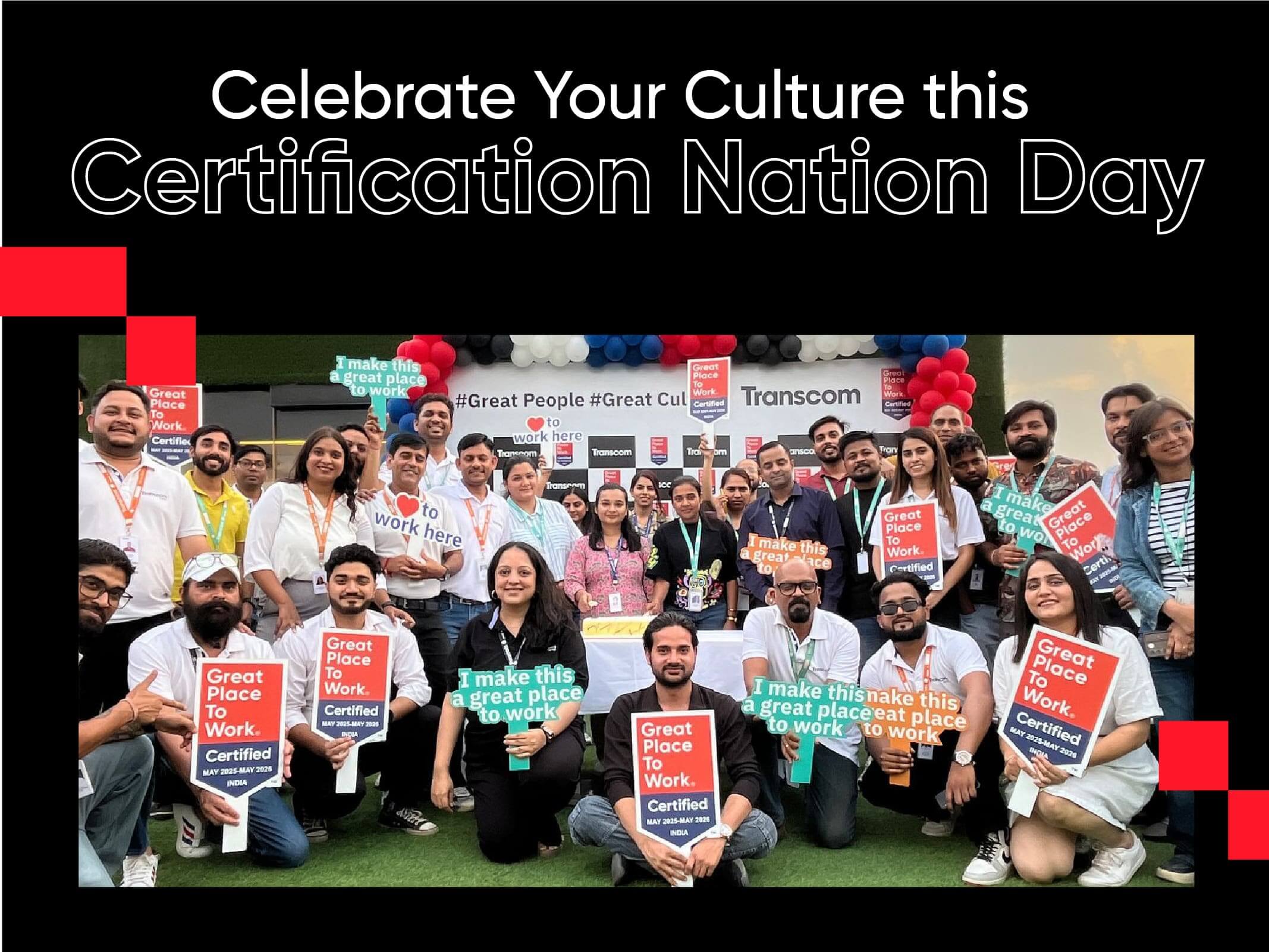
Every year, workplaces across the world come together to celebrate one thing that truly unites them – their people. On October 16, 2025, organizations across India joined the global movement of Certification Nation Day (CND). It is a day dedicated to recognizing the culture, commitment, and communities that make every Certified™ organization a Great Place To Work ®. 
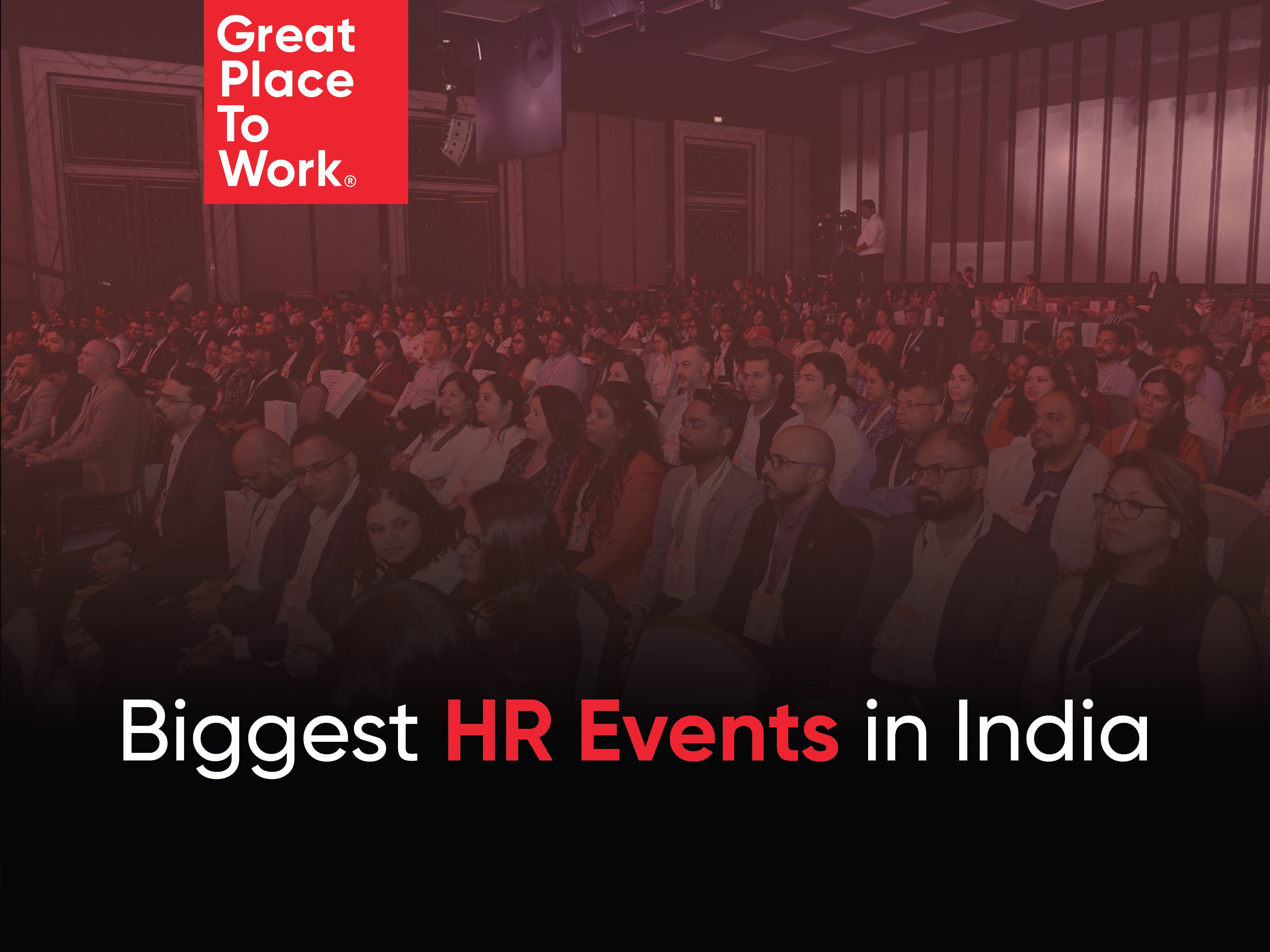
You might have often caught us saying that Certification ™ isn’t the destination – it’s the start to something greater. This year’s celebration was a testament to that. From heartfelt employee stories to colourful office celebrations, India’s workplaces showcased not just their certification, but the progress that follows. 

What is Certification Nation Day? 

Certification Nation Day is our annual, global celebration of Great Place To Work Certified organizations. It’s a day where companies take to their social media platforms and post about everything that makes them great, whether it’s office spaces, office celebrations or simply their people. Each year, thousands of certified workplaces around the world participate, sharing their unique culture stories under hashtags like #CertificationNationDay, #GPTWCertified and #GreatPlaceToWork. 

For Certified™ organizations, it’s a moment of pride and a chance to showcase what makes their workplace special. For those who are yet to join the movement, it’s an invitation to begin your journey of building a high-trust, high-performance culture by taking the first step of getting Certified. 

Why Do We Celebrate Certification Nation Day? 

Behind every great workplace are people who bring purpose, creativity, and connection to life every single day. Certification Nation Day is a tribute to them. It’s a moment for organizations to pause, reflect, and say thank you

But beyond celebration, this day carries a deeper message. It’s also a reminder for all of us that Certification = Momentum. Getting Certified™ isn’t where the journey ends – it’s where it begins. It’s the launchpad for new ideas, more impact, stronger connections, and continuous progress that follows. Participating in Certification Nation Day also helps companies: 

  • Boost employee engagement and pride 
  • Strengthen employer brand visibility 
  • Showcase their culture to the world 
  • Inspire others to start their own culture journeys 

In short, this is not just a day of recognition; it’s a movement of workplaces that believe in the power of workplace culture

Why You Should Get Certified and Celebrate? 

For Certified™ organizations, Certification Nation Day is your spotlight moment. It’s your chance to turn employee voices into brand strength and to tell your story, your way. From heartfelt testimonials and culture reels to grand celebrations, every story shared reminds us of one thing – what it means to be a Great Place To Work

For those who are not yet Certified, this is your cue. Certification isn’t a label; it’s a benchmark and a path towards growth. It starts with listening to your employees, understanding what they value most, and committing to a journey of continuous improvement. 

So, once you’re Certified™, you join a global community of organizations that are not just successful, but trusted, admired, and people-first. 

Get Certified today and be part of next year’s global celebration! Because every great workplace deserves to be recognized. 

Winners of Certification Nation Day 2025

Across the country, workplaces celebrated in their own way with pride, creativity, and gratitude, but united by one powerful emotion: appreciation. We’ve seen huge participation this year, and here are our winners from the Certification Nation Day Contest: 

Flipkart celebrated with high energy and heart. The team came together to highlight what makes Flipkart a Great Place To Work – from their culture of innovation to the people who drive it every day. Their vibrant celebration reflected a deep sense of belonging and pride in being #GPTWCertified.

At Paytm, the focus was on gratitude and team spirit. The organization celebrated its people – the real force behind its success. Their post captured the essence of CND perfectly: that great workplaces are built on trust, collaboration, and joy in working together.

Buchprufer Consultants LLP brought storytelling to the forefront, sharing how their culture of trust, inclusivity, and shared values continue to shape their journey. Their CND celebration showcased that Certification is not the finish line, it’s the beginning of something greater.


WeWork India made Certification Nation Day a true cultural moment by celebrating their Great Place To Work recognitions and thanking the incredible people who’ve shaped their journey.

From videos and photos to celebrations across offices, India’s Certification Nation Day truly reflected the power of a great workplace culture. It also reminded us of something beautiful that often goes unnoticed – while we’re busy hustling through our daily lives, it’s equally important to pause and celebrate our workplace, our people, our culture, and everything else that not only makes our corporate journey meaningful but also adds value to our personal growth. 

Beyond the Celebration: The Real Impact 

While CND brings a day of global excitement, its impact lasts far beyond one date. Organizations that celebrate together often see: 

  • Renewed employee energy and pride 
  • Stronger community and trust within teams 
  • Greater employer brand visibility among potential hires 
  • Deeper connection to the organization’s mission and values 

When employees see their workplace celebrating publicly, it builds emotional connection. It tells them – you matter, your contribution counts, and you’re part of something bigger. That’s the real power of Certification Nation Day. 

A Celebration That Continues All Year Long 

We believe that every organization has the potential to become a Great Place To Work For All™. Certification Nation Day is not just a celebration of those who’ve achieved it, but an inspiration for those who are ready to begin. 

So whether you’re already Certified or just starting your culture journey, take the next step. Build, celebrate, and grow with your people. Because when you invest in culture, your workplace becomes a place where everyone wins. Here’s to all the organizations that celebrated Certification Nation Day 2025 and to those who will join the movement next year. 

Start your journey, get Certified, and celebrate what makes you great. 

Frequently Asked Questions 

When is Certification Nation Day celebrated? 

Certification Nation Day is celebrated every year in October.

How are we supposed to celebrate Certification Nation Day? 

There’s no one right way to celebrate, and that’s what makes it special. Organizations usually mark the day by: 

  •  Sharing culture stories, employee testimonials, and photos on social media 
  • Hosting office celebrations, team activities, or thank-you sessions

Just remember to post your celebrations on social media, tag @Great Place To Work® India and use hashtags #CertificationNationDay, #GreatPlaceToWork and #GPTWCertified when you post.

Can non-certified organizations also be part of Certification Nation Day?

While this is a celebration of Great Place To Work® Certified ™ Workplaces. On this day, organizations celebrate everything that makes them great. But if you want to join the movement, then it’s never too late. Get Certified today and be a part of the next celebration – https://testg.in/get-certified

Certification Nation Day is celebrated only in India?

Not at all! Certification Nation Day is a global celebration organized by Great Place To Work®. Workplaces across countries take part in this celebration.

Is there a registration required to Celebrate Certification Nation Day?

No registration is needed! The only eligibility criterion is that your organization must be Great Place To Work® Certified™. Once certified, you can join the celebration by taking to your social media on the day of the celebration and share your unique story, your way.

11th Floor, Tower B, Peninsula Business Park, Ganpatrao Kadam Marg, Lower Parel, Mumbai – 400013

Every year on October 16th, organizations across the globe come together to celebrate something truly special: the power of exceptional workplace culture. This year’s Certification Nation Day is an incredible opportunity for Great Place To Work® Certified™ companies to showcase what makes their culture special. In this blog, we’ll share five ways you can celebrate Certification Nation Day 2025 and bring your culture to life on your social media channels.

What is Certification Nation Day?

Certification Nation Day is an annual global celebration of workplaces that have earned Great Place To Work® Certification™. It is a day when Certified™ organizations take the stage on their social media to recognize their employees, showcase their culture, and build pride and belonging. More than just a celebration, Certification Nation Day is a movement of action—spotlighting what makes organizations special, honouring their people, and sharing the journey of what it truly means to be Great Place To Work Certified.

Why Should Companies Celebrate Certification Nation Day?

The impact of becoming Great Place To Work Certified is clear. As shown in the chart above, Certified workplaces consistently outperform the India average across key business drivers such as productivity, recruitment, retention, customer service, and agility. When employees feel trusted, valued, and proud of their workplace, they are more engaged and committed, creating a ripple effect that strengthens both people and performance. Certification is not just a badge—it’s a powerful differentiator that reflects a thriving workplace culture. 

great-place-to-work-certified-image

The benefits of celebrating your culture on Certification Nation Day go far beyond just one day of recognition. 

  • Promote your culture and strengthen your reputation as an employer of choice. 
  • Attract top talent with real stories that showcase your employee experience. 
  • Show your values in action by highlighting how you support, recognize, and invest in your people. 
  • Join a global community of Certified companies leading with trust and purpose. 
  • Thank your employees in a meaningful way, building pride, belonging, and community. 

How to Correctly Use Your Great Place To Work Certification Badge?

Your Great Place To Work badge is more than a logo – it’s a symbol of your organization’s commitment to excellence. The most crucial rule when using your certification badge is to maintain its integrity.  

Use it exactly as provided by Great Place To Work to ensure consistency and authenticity across all your communications. This badge represents the rigorous evaluation process your organization underwent and the high standards you’ve achieved in employee experience.

5 Ways to Celebrate Your Culture

1. Add it to Your Website

Start by adding your Certification badge to your careers page. Use this space to talk about your workplace culture and highlight the accolades you’ve earned for it.  

Go a step further by creating a dedicated section that shares your culture story, key initiatives, and what this recognition means for employees. To maximize visibility, you can also place the badge in the footer of your website and on the homepage.

2. Organize a Fun Office Celebration

Plan a celebration that boosts employee engagement and shines a spotlight on your workplace culture, and the people who make it possible every day. 

Add fun elements like danglers, photo booths, and a memory wall where employees can share their favorite moments. Take the opportunity to talk about your culture journey and recognize the contributions of your people. 

Make this day truly about celebrating your workplace culture!

certified-nation-day-picture

3. Utilize Action Kit Materials for Maximum Impact

Use the PPT slides, video call backgrounds, and social media templates to showcase your culture and proudly display your Great Place To Work Certification badge.  

Update your email signatures, use printable graphics for celebrations, and customize Canva templates for social posts, internal comms, and digital displays.   

These ready-to-use resources make it easy to create professional, branded materials that highlight your certification and strengthen your employer brand.

4. Workplace Culture Spotlight 

Shine a light on your people by creating a video where employees share their personal stories – how the company has supported them through ups and downs, and what makes working here special. 

You can also organize storytelling sessions where employees share their experiences and discuss what your workplace culture means to them. These authentic stories not only inspire but also create highly engaging content to celebrate your culture.

5. Spread the Word on Social Media

Share your office celebrations, employee stories, and culture highlights on social media. Use the static posts and Canva templates from the toolkit to join the celebration with ease. 

Don’t forget to use the hashtags –  #GreatPlaceToWork #GPTWcertified #CertificationNationDay and tag Great Place To Work India so we can engage with your posts!

great-place-to-work-certified-itc-hotels

How Can We Build Long-term Employee Engagement Through Celebration?

Certification Nation Day celebrations play a crucial role in maintaining high levels of employee engagement throughout the year. When employees see their organization actively celebrating and promoting its culture, it reinforces their pride in being part of something special.  

This sense of pride and belonging directly contributes to increased employee engagement, as team members feel more connected to their organization’s mission and values.

Certification is the Start of Something Greater! 

While Certification Nation Day provides an excellent opportunity to celebrate your current achievement, it also serves as a launching pad for future success. Use this celebration as a moment to reflect on your journey, acknowledge the progress you’ve made, and set intentions for continued improvement in your workplace culture. 

The visibility and employee engagement generated through your Certification Nation Day activities contribute to a positive cycle that supports your organization’s ongoing success. As employees feel more proud and engaged with their workplace, they become natural ambassadors for your company culture, helping to attract like-minded talent and maintain the high standards that earned your certification.

The Way Forward

Becoming a Great Place To Work Certified is not a destination – it’s a commitment to continuous improvement in creating an exceptional employee experience. Your Certification Nation Day celebration should reflect this ongoing commitment while honouring the significant milestone you’ve achieved. 

By using these six celebration ideas, you’ll not only celebrate your certification but also build a stronger workplace culture, one that your employees are proud to be part of. 

“I have a dream that my four little children will one day live in a nation where they will not be judged by the color of their skin but by the content of their character. I have a dream today.”

– Martin Luther King Jr., ‘I Have a Dream’ speech.

Martin Luther King Jr. famously spoke of a world in which people are judged not by skin color but by character, a vision that still resonates with leaders of all kinds. It’s very common for businesses, too, to set grand ambitions and dreams during rousing town hall setups. From expanding in new markets to launching new products – each venture is a hope to achieve a dream. Yet, for most, they remain limited to the notion of profit maximization. And too often, the plan to achieve it comes down to an operational checklist mandated across all employees’ scorecards.

Genuine change, however, always demands culture serving as a driving force. The vision of a united future in Martin Luther King’s speech connected personal and professional identities. The same principle applies in business: when employees fully grasp and embrace a greater purpose—understand precisely why they should prioritize key deliveries or refine customer service—their efforts often yield remarkable results. A workforce aligned around a common goal is a company’s most powerful asset today.

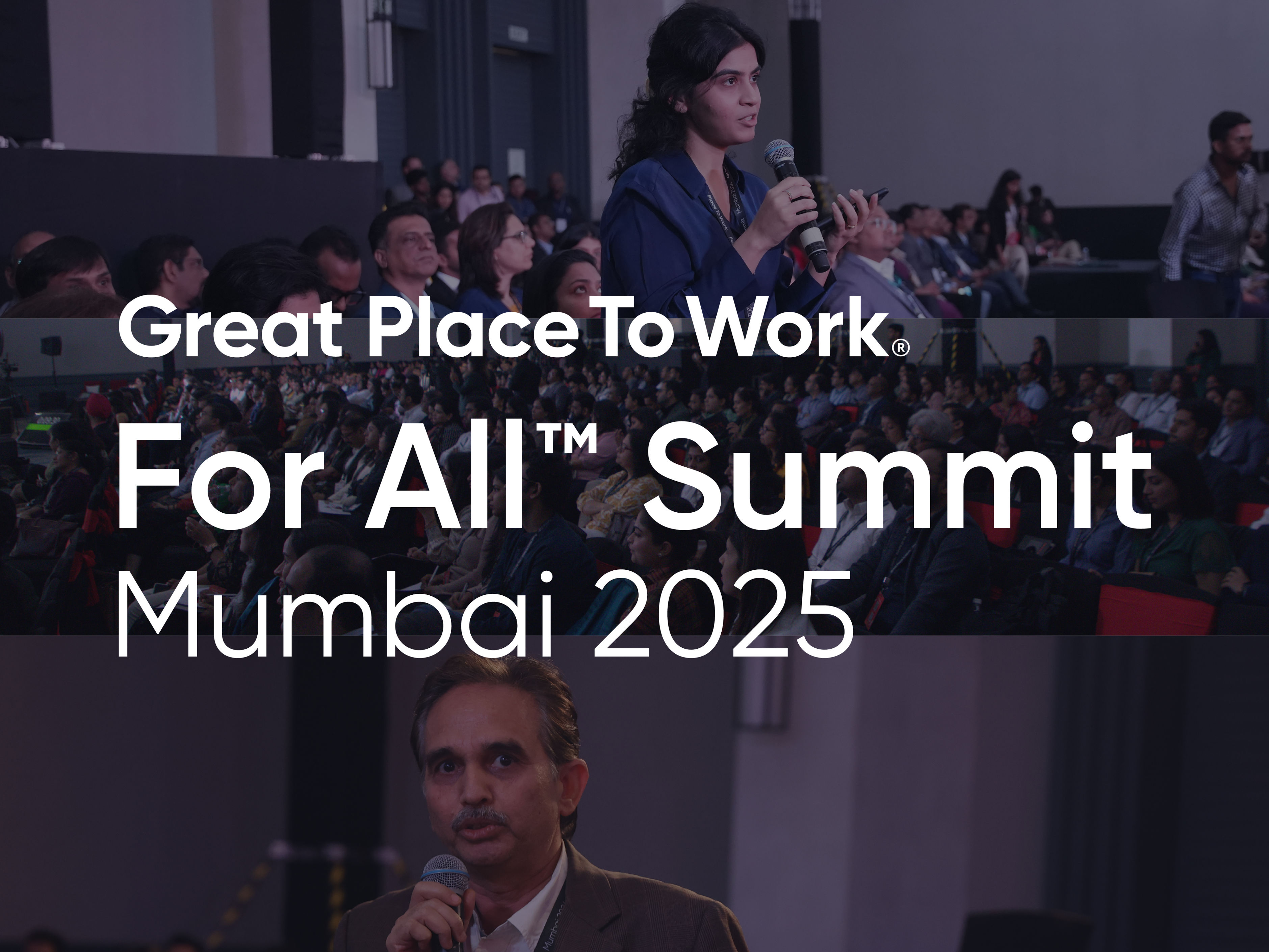
This journey from vision to aligning value for all stakeholders is a differentiator for companies to achieve sustainable success. Organizations succeeding in this journey understand that the ‘who’ and ‘how’ will be as important as the ‘from’ and ‘to.’ Great Place To Work® India’s conversations with workplace leaders at the For All™ Summit Mumbai 2025 have yielded numerous insights on this. The learnings from the Summit in the article ahead reflect a strong sense of trust fueling business excellence and the common goal of building workplaces that matter for the future.

Start with Purpose, Always!

In recent years, organizations have experienced several significant trends that impact the workplace. These include the implementation of back-to-office mandates, the growing influence of a younger workforce, a shift towards mandatory flexibility in work arrangements, and the introduction of AI, which is transforming how we work. This list continues to evolve as we explore these developments.

However, organizations in India have also shown high adaptability to changes. The emphasis on a few areas of people’s practices highlights this shift, with more key phrases around belonging, innovation, and sustainability featured in the programs they have been focusing on in past few years.

Great Place To Work India culture practice submissions. Word Cloud.

One reliable guiding star for firms navigating constant workplace upheavals is an unwavering focus on purpose. Today, employees showcase a stronger need to understand whom they serve—and why—which remains central to retaining and engaging a modern workforce.

Employees who find meaning in their work are 3.2X more likely to stay and 3.4X more likely to recommend their company to others.

This shift is evident even in everyday employee conversations. More people speak of working “with” a company rather than “for” – a desire for shared purpose rather than mere subordination. Hence, in an era where majority cohorts probably begin halfway up Maslow’s hierarchy, the demand to feel part of a grander narrative, rather than the daily tasks, has become more than an aspiration; it is a baseline expectation.

Personalize talent strategy.

Firms are increasingly embracing customized talent strategies in response to the shifting landscape of workplace trends. Discussions with leaders encapsulated this approach using the “BOAT” framework—embracing leadership behaviors that foster a great experience centered around Balance, Opportunity, Access, and Talk to cultivate trust and loyalty.
At heart, the initiatives of the organizations must be personalized to address employees’ most pressing questions:

  • Am I understood?
  • Am I valued?
  • Am I cared for?
  • Am I empowered?

Ensure the customer’s voice stays central.

While products and services have evolved dramatically, the essential nature of consumers has not.
This consistency calls for organizations to keep the customer’s voice at the center of strategy and harness new technologies to cater to enduring human needs. Enabling this, then ensures the sustenance of businesses- using customer insights as a compass in both prosperous and precarious times.

Focus on inclusion and development of individuals.

Leaders’ conversations at the For All Summit Mumbai 2025 also highlighted that real progress demands more than empowerment training programs; it requires a mindset that sees equality as more than identical treatment—one rooted in empathy, nuance, and respect for diverse backgrounds.

Top Priority Areas of 2025 
#1 Upskilling and Reskilling
#2 Developing a leadership pipeline
#3  Talent Retention

Poll results at the 2024 and 2025 For All Summit Mumbai mentioned upskilling and reskilling as the biggest priority, especially given the accelerating impact of artificial intelligence on day-to-day work. Therefore, leaders must prioritize empowerment, inclusion, and development at every level of the organization.

Creating the Best Workplace experience

Change is often easy when the culture is strong. The Best WorkplacesTM understand this and strive to create a High-Trust and High-Performance Culture

Trust, Maximizing Human Potential, Financial Growth, Innovation By All, Values, Leadership Effectiveness

This enables everyone to experience a great workplace for all, leading to innovation and financial growth. With this approach, growth becomes not merely attainable but almost inevitable.

Get Certified to Showcase Your Commitment

Achieving Great Place To Work Certification™ is an excellent way to demonstrate your organization’s commitment to employees’ overall well-being and experience. This Certification not only enhances your employer branding but also helps attract and retain top talent. It highlights to current and prospective employees that your organization values their overall well-being, fostering an environment where they feel appreciated and supported.

By implementing a culture of trust, respect, and collaboration, you can create a workplace where employees feel valued and connected. Certification also provides a benchmark for continuous improvement, helping you identify areas where you can further enhance employee well-being and overall workplace culture. 

Workplace discrimination remains a pressing issue in India despite constitutional guarantees, legal protections, and corporate policies aimed at ensuring equality. Discrimination based on gender, caste, religion, disability, and other identity factors continues to persist, affecting hiring, promotions, wages, and overall workplace culture. Moreover, India currently lacks a comprehensive, codified non-discrimination statute that regulates employers and compensates victims of discrimination. 

The International Labour Organization (ILO) defines discrimination as “unfair treatment based on characteristics like race, colour, sex, religion, political opinion, national origin, or social background, which harms equal opportunities in employment or occupation.” In the Indian workplace, Great Place To Work® research indicates that age-based discrimination is the most prevalent form of bias employees face.

Global trends also influence India’s non-discrimination efforts. The recent rollback of DEI policies in the United States—including diminished support for affirmative action, diversity training, and protections for marginalized groups—has raised concerns about corporate commitments to inclusion worldwide. Many multinational corporations are scaling back their DEI initiatives, which could have ripple effects in India. However, India’s increasing legal and corporate focus on workplace inclusion may counterbalance these international regressions, reinforcing the importance of strong non-discrimination measures. 

Understanding Discrimination at The Workplace Through Data 

Global data from the International Labour Organization (ILO) highlights that gender-based discrimination has hindered nearly 50% of the population from reaching their full potential. In India, this disparity is evident in the persistent gender pay gap, where women earn only ₹40 for every ₹100 earned by men

Within corporate India, while 92% of organizations have implemented gender-neutral policies addressing workplace harassment, including provisions against sexual harassment (POSH) and microaggressions, only 53% of companies have taken strict action against managers who engage in discriminatory practices. Additionally, only 56% of organizations include a clause in their offer letters emphasizing zero tolerance for discrimination, thus indicating a gap in enforcement and accountability. 

India’s legal framework safeguards employees from workplace discrimination and harassment. The Equal Remuneration Act, 1976 mandates equal pay, while the Sexual Harassment Act, 2013 ensures protection against workplace harassment. The Rights of Persons with Disabilities Act, 2016, and the Transgender Persons Act, 2019 prohibit discrimination and promote inclusion. The Industrial Disputes Act, 1947 addresses wrongful termination, and the Maternity Benefit Act, 1961 (amended in 2017) provides paid leave and job security for pregnant, adoptive, and commissioning mothers. These laws collectively promote workplace equality in India.

A Call To Action for Indian Workplaces 

Great Place To Work research reveals that in India’s Best WorkplacesTM, 89% of employees report a positive experience regarding non-discrimination. Additionally, employees who experience a discrimination-free workplace are 2.4 times more likely to feel a sense of belonging

Thus, to foster truly inclusive workplaces, organizations must go beyond legal compliance and actively promote non-discrimination measures: 

  • Develop Clear Anti-Discrimination Policies
    Draft comprehensive policies that explicitly prohibit discrimination, harassment, and retaliation in the workplace. Ensure these policies are easily accessible to all employees and effectively communicated through onboarding, training sessions, and company handbooks.
  • Conduct Regular Awareness and Sensitization Training
    Educate employees on diversity, equity, and inclusion (DEI) principles to foster a more inclusive workplace. Provide specialized training for managers and HR personnel on bias prevention, fair hiring practices, and handling discrimination complaints effectively.
  • Ensure Robust Complaint Redressal Mechanisms
    Establish strong grievance redressal mechanisms, including Internal Complaints Committees, to address workplace discrimination concerns. Implement anonymous reporting channels to encourage employees to report issues without fear of retaliation.
  • Foster Inclusive Hiring and Promotion Practices
    Adopt affirmative action measures to ensure diverse hiring and equal career advancement opportunities. Implement blind recruitment techniques, such as anonymized resumes and structured interviews, to minimize biases in hiring decisions.
  • Enhance Accessibility for Persons with Disabilities
    Provide reasonable accommodations, including accessible workspaces, assistive technology, and flexible work arrangements, to support employees with disabilities. Ensure digital accessibility by optimizing internal systems and tools for individuals using assistive devices.

Conclusion 

While India has made significant strides in combating workplace discrimination, much work remains to be done. Addressing discrimination requires a combination of strong legal frameworks, organizational commitment, and cultural shifts. By fostering inclusive work environments, promoting diversity, and ensuring equal opportunities for all, India can move closer to achieving true workplace equality and equity.  

Get Certified to Showcase Your Commitment

Achieving Great Place To Work Certification™ is an excellent way to demonstrate your organization’s commitment to employees’ overall well-being and experience. This Certification not only enhances your employer branding but also helps attract and retain top talent. It highlights to current and prospective employees that your organization values their overall well-being, fostering an environment where they feel appreciated and supported.

By implementing a culture of trust, respect, and collaboration, you can create a workplace where employees feel valued and connected. Certification also provides a benchmark for continuous improvement, helping you identify areas where you can further enhance employee well-being and overall workplace culture. 

The Great Place To Work® India’s Best Workplaces™ Building a Culture of Innovation by All 2024 report showcases India’s ascent on the global innovation stage. This study highlights the critical role of fostering innovation in the workplace, a key driver of India’s progress towards becoming an innovation powerhouse. Despite India’s impressive 40th position in the Global Innovation Index 2023, the report reveals a slight 2% dip in the perceived culture of innovation within organizations, emphasizing the ongoing challenges and opportunities in this journey. 
The Power of Inclusive Innovation in the Workplace

The report emphasises the importance of inclusivity, collaboration, and trust in nurturing a culture of innovation. Best Workplaces distinguishes itself with an 18% lead in innovation metrics, demonstrating the transformative power of environments where every voice is heard and ideas are celebrated. However, the study also points out unique challenges faced by younger generations and women in accessing innovation opportunities, highlighting the need for more equitable practices. 

Innovation readiness at Best Workplaces outpaces others

A strong correlation between workplace satisfaction and innovation culture emerges from the data. As employees’ positive perceptions of their work environment increase, so does the organization’s capacity for innovation. This relationship is further reinforced by the 5%-9% higher positive perception of key performance indicators reported by employees at Best Workplaces, illustrating the tangible benefits of fostering a culture of innovation in the workplace.

How Different Industries Cultivate Innovation in the Workplace

Financial Services & Insurance

The financial services and insurance sector emerges as a frontrunner in fostering a culture of innovation. This sector demonstrates a strong commitment to creative thinking and progressive practices, setting a benchmark for other industries.

With a 65% culture of innovation score, the financial services and insurance sector outperforms the overall average by 2%. This indicates a sector-wide emphasis on embracing new ideas, technologies, and methodologies. Financial institutions are increasingly recognizing the need to innovate in response to changing customer expectations, digital disruption, and regulatory challenges.

The report reveals that the Best Workplaces in this sector significantly outperform their peers, achieving an impressive 82% innovation score— a substantial 15% lead. This gap underscores the effectiveness of these organizations in creating environments that nurture creativity and forward-thinking. 

The data shows that 51% of employees in the sector enjoy high innovation opportunities. This suggests that over half of the workforce feels empowered to contribute ideas and participate in innovative projects. Such engagement is crucial for maintaining a competitive edge in a rapidly evolving financial landscape.

Innovation at Financial Services & Insurance

Manufacturing

The manufacturing sector shows a commitment to innovation while facing unique challenges. With a 63% innovation culture score, it aligns with the industry average, indicating a steady focus on progressive practices.

Best Workplaces in manufacturing stand out significantly, achieving an 78% score and leading their peers by 17%. This substantial gap suggests these companies have successfully implemented strategies to foster innovation despite traditional industry constraints.

The 9:2 ratio of innovation opportunities is particularly noteworthy, indicating that for every two employees who don’t experience innovation opportunities, nine do. This high ratio reflects a strong overall engagement in innovative practices across the sector.

Innovation at manufacturing Industry

However, the report highlights a critical issue: women employees face challenges in accessing innovation opportunities. Addressing the challenges could involve targeted programs for women in manufacturing, diversity and inclusion training, and re-evaluating innovation processes to ensure equal access.

Information Technology

Surprisingly, the IT sector lags slightly in innovation culture with a 62% score, 1% below the overall average. This contradiction is striking, given the industry’s reputation for cutting-edge technology and rapid advancements.

Despite this overall lag, Best Workplaces in IT excels with a 77% score, maintaining a 16% advantage over peers. This disparity suggests a significant gap between leading companies and the rest of the sector in fostering innovation.

Innovation in the IT Industry

The report indicates that 41% of employees face a 5% gap in innovation opportunities compared to the average. This statistic points to potential systemic issues in how innovation in the workplace is approached across the IT industry.

Moreover, non-managerial staff faces limited opportunities to contribute to innovation, underscoring the need for a more inclusive approach that empowers employees at all levels to drive progress.

Overcoming Challenges for Gen Z, Millennials, and Women

Innovation opportunities for Gen Z, Millennials, and women have stalled at just 40%, revealing a significant gap in their ability to engage in and drive innovation within the workplace. Despite their potential, these groups are being left behind, signaling the need for more inclusive and equitable practices to unlock their full capabilities.

Gen Z and Millennials: Despite their potential, these younger generations face obstacles like limited work experience, lack of access to resources, and different workplace expectations compared to older generations. This means they might not be getting the chances they need to innovate and grow. Companies need to understand these challenges to help these groups reach their full potential and meet the changing needs of the workplace.

Women in the Workplace: Although gender equality has improved, women are still underrepresented in leadership roles and fields that drive innovation, such as technology and STEM (Science, Technology, Engineering, and Mathematics). Issues like unconscious bias and unequal access to opportunities are holding women back from fully participating in and succeeding in innovation-driven projects.

Innovation Opportunities Stagnate for Gen Z, Millennials, and Women

While India’s innovation landscape is making significant strides, there is still some work to be done. Empowering every individual—regardless of generation or gender—to contribute to innovation is a necessity and a strategic advantage. By bridging these gaps, organizations can unlock the full potential of their diverse workforce, ensuring sustained growth and a competitive edge on the global stage.

Get Certified to Showcase Your Commitment 

Achieving Great Place To Work Certification is an excellent way to demonstrate your organization’s commitment to employees’ overall wellbeing and experience. This Certification not only enhances your employer branding but also helps attract and retain top talent. It highlights to current and prospective employees that your organization values their health, happiness, and overall wellbeing. 

By implementing a culture of trust, respect, and collaboration, you can create a workplace where employees feel strong, healthy, and connected. Certification also provides a benchmark for continuous improvement, helping you identify areas where you can further enhance employee well-being and overall workplace culture.

Mid-sized organizations are the backbone of India’s economic growth, playing a vital role in GDP contribution, exports, and job creation. These organizations contribute over 29% of India’s GDP and account for 50% of the country’s total exports. They are instrumental in the manufacturing sector, producing one-third of the output and employing over 110 million people. This makes them crucial to the economy and significant in creating employment opportunities across both urban and rural areas.

Recognizing the importance of mid-sized organizations, the Indian government has introduced various supportive schemes and initiatives. Programs such as SME Samadhaan, Udyog Aadhaar, and Mudra aim to provide financial assistance, simplify regulatory processes, and promote innovation within the sector. This governmental support is essential in helping mid-sized organizations overcome challenges and thrive in a competitive business environment.

For mid-sized organizations in India, it is critical to focus on enhancing business competence, nurturing leadership development, and optimizing employee benefits. Providing a fair share of profits and ensuring transparent, merit-based advancement opportunities are key strategies for sustaining a positive workplace culture. Excelling in these areas not only benefits employees but also drives business success, as evidenced by the performance of Best Workplaces.

Minor Decline in Workplace Experience for Employees in Mid-Sized Organizations

In 2024, the workplace culture experience among mid-sized organizations in India saw a slight decline of 1%. The Trust Index score for these workplaces also experienced a minor decrease of 1% compared to 2023, bringing it to 83%. While this decline is modest, it underscores the importance for organizations to focus on maintaining and enhancing employee trust and satisfaction. Despite these challenges, employees continue to regard their organizations as great places to work, reflecting the resilience of workplace culture.

Minor Decline in Workplace Experience for Employees in Mid-Sized Organizations.

The trend varies across industries. Major sectors like IT, BFSI, and Professional Services experienced a decline of 1-2%, while industries such as NGOs and Manufacturing saw an increase of 1-2% in employee experience compared to last year.

The graph shows the trend across industries. Sectors like IT, BFSI, and Professional Services experienced a decline of 1-2%, while industries such as NGOs and Manufacturing saw an increase of 1-2% in employee experience compared to last year.

Decline in Workplace Sentiment Among Key Demographics

Even though most areas of workplace culture have remained stable at an overall level, we observed a decline in a few sentiments among key employee demographic groups.

Decline in Workplace Sentiment Among Key Demographics.

Women Employees Seek Fairer Pay, Recognition and Less of Favouritism.

Areas with the highest difference in sentiment between men and women: Fair Pay (-6%), Recognition (-5%), and Favoritism (-5%).

When organizations address these issues, female employees are:

  • 3X more likely to experience career growth opportunities
  • 2X more likely to express a desire to stay with their organization long-term.
  • 2X more likely to experience a great workplace.

Strengths to Sustain: What’s Working for Mid-size Workplaces

Despite a slight decline in overall workplace culture scores in 2024, mid-sized organizations in India continue to excel in critical areas such as employee pride, ethical management practices, and a welcoming environment. These strengths, combined with high levels of management competence, form a robust foundation that supports a positive and productive work environment.

For every 2 employees that don’t experience innovation opportunities, there are 9 employees ready to innovate, highlighting the potential for growth in fostering a more innovative workplace culture.

Key highlights include:

  • 89% of employees rate their management as competent, ensuring effective leadership and operational efficiency.
  • 89% of employees feel welcomed when they join the organization.
  • 89% of employees believe their customers would rate their service as ‘excellent,’ reflecting high customer service standards.
  • 89% of employees feel they have the necessary resources and equipment to perform their duties efficiently.
  • 89% of employees are proud to tell others they work here, fostering a strong sense of pride and advocacy within the organization.
  • 88% of employees express that management is honest and ethical in its business practices.
  • 88% of employees feel good about how their organization contributes to society.

These statistics demonstrate the resilience and strength of mid-sized organizations in India, showcasing their ability to maintain a high workplace culture standard even amidst challenges.

Mid-size organizations in India demonstrate a resilient workplace culture, underscored by high levels of safety, fairness, and management competence. These attributes foster an environment where employees feel valued and supported. Maintaining and building upon these strengths is crucial for mid-size organizations to enhance employee satisfaction, drive innovation, and remain competitive.

Mid-sized organizations in India showcase a resilient and dynamic workplace culture, even amidst slight overall scores decline. Key strengths, including high levels of employee pride, ethical management practices, and a welcoming environment, provide a robust foundation for these organizations. By addressing areas such as innovation opportunities and demographic-specific concerns, mid-sized companies can further enhance employee satisfaction and drive business success. The continued focus on maintaining high standards of workplace culture is essential for sustaining growth, fostering innovation, and remaining competitive in India’s rapidly evolving economic landscape. Visit us here to learn more.

The business landscape is in a significant transformation. Environmental, Social, and Governance (ESG) initiatives are no longer a mere regulatory requirement; they are now a fundamental value for many companies. At Great Place To Work® India, we firmly believe that the key to long-term success and true sustainability lies in creating a workplace that values all its employees.  

From Policy to People: The Power of a “For All” Workplace Culture

ESG is often seen as a policy dictated by the government. However, the landscape is changing. We are witnessing a significant shift, with ESG evolving into a people-centric and workplace-driven necessity.

ESG is often seen as a policy dictated by the government. However, the landscape is changing.  We are witnessing a significant shift, with ESG evolving into a people-centric and workplace-driven necessity. Our research report supports this trend. Companies with a ‘For All’ workplace culture consistently outperform others on ESG scores by a substantial 8%. This underscores the importance of a culture that values diversity, equity, and inclusion as a strong foundation for sustainable initiatives. 

TOP RANKED COMPANIES WITH FOR ALL WORKPLACE CULTURE OUTPERFORM OTHERS ON ESG SCORES BY 8%.

The Employee Connection: Motivation and Brand Advocacy 

Employees are not just cogs in the machine; they are the driving force behind an organization’s success.  When workplaces actively contribute to society, it leads to a more motivated and brand-loyal workforce. Our ESG report establishes a direct link between employee experience and a company’s social impact. Employees who are proud of their company’s social impact are:  

  • 3.5 times more likely to say people look forward to coming to work.  
  • 3 times more likely to endorse the company as a great place to work.   
WORKPLACES CONTRIBUTING TO SOCIETY
EXPERIENCE INCREASED MOTIVATION AND BRAND ENDORSEMENT.

This results in a happier, more engaged workforce that becomes vocal advocates for the company’s positive contributions.

Building a Sustainable Future: The Business Case for Great Workplaces 

Creating a Great Place To Work isn’t solely about employee satisfaction; it unequivocally leads to higher stakeholder returns. A study by RSM India unveiled that Best Workplaces have generated an impressive 14X cumulative return on the initial investment since 2008-09. This underscores the tangible financial gain of prioritizing employee experience. Companies with a positive and empowering work environment witness increased productivity, reduced absenteeism, and lower employee turnover, all of which contribute to a healthier bottom line. 

Beyond ESG Scores: The Power of Culture for Environmental Sustainability 

Top-ranked companies with For All Workplace Culture differentiate on environment scores by 3X compared to social aspects.

Our data shows a nuanced trend within ESG performance.  Top-ranked companies with a “For All” workplace culture show a 3Xdifferentiation in environmental scores compared to social aspects. This suggests that a strong culture fosters a deeper commitment to environmental responsibility within the organization. 

A Culture of Sustainability: From Values to Everyday Actions 

Building a sustainable future requires more than just grand pronouncements.  A company culture that prioritizes sustainability translates into everyday behaviors and practices. Here are some ways a great workplace culture can empower employees to be environmentally responsible: 

  • Transparency and Education: Companies should be transparent about their environmental goals and provide employees with the necessary training and resources to understand how their actions contribute to broader sustainability efforts.
  • Empowerment and Recognition: Encouraging employees to suggest and implement sustainable practices demonstrates trust and fosters a sense of ownership. Recognize and reward employees who champion sustainable initiatives within the organization.
  • Leading by Example: Leadership is crucial in setting the tone. When senior management actively participates in and promotes sustainable practices, it sends a powerful message to the rest of the workforce.

Attracting and Retaining Talent for Sustainability Success 

Companies with strong values and a positive culture are more likely to attract talent committed to making a positive impact. These employees are intrinsically motivated by the company’s mission and are likelier to stay with the organization long-term.  A stable and engaged workforce is essential for sustainable growth, as employee turnover disrupts operations and hinders long-term planning. 

Employee Engagement: Aligning Actions with Values for Sustainability 

Creating a sustainable work environment goes beyond just recycling and energy-efficient lighting. A company culture that encourages sustainable behavior empowers employees to take actions that align with the company’s ESG goals and values. This could involve encouraging carpooling, reducing paper consumption, or participating in community clean-up efforts. When employees feel like their daily actions contribute to a larger purpose, it fosters a sense of ownership and commitment to sustainability initiatives. 

Fostering Innovation for a Sustainable Future 

A great workplace culture doesn’t just encourage adherence to existing sustainability practices; it fosters an environment where innovation thrives.  Employees who feel valued, heard, and empowered are more likely to come up with creative solutions for tackling environmental challenges.  Companies can create innovation labs or run internal competitions specifically focused on developing sustainable solutions, encouraging collaboration across departments, and leveraging the diverse skillsets of their workforce. 

Building a Sustainable Supply Chain 

A company’s commitment to sustainability extends beyond its own walls. Partnering with suppliers who share similar values is crucial for creating a truly sustainable ecosystem.  Companies with a great workplace culture are more likely to prioritize ethical sourcing and fair labor practices throughout their supply chain.  This not only strengthens their ESG profile but also fosters trust and loyalty with key partners. 

Measuring Progress and Communicating Impact 

Sustainability is a continuous journey, not a destination. It’s essential to track progress and measure the impact of your employee-driven sustainability initiatives.  This data can be used to adjust strategies, celebrate successes, and keep employees engaged in the long term. Regularly communicate your sustainability goals and achievements to both employees and external stakeholders.  Transparency builds trust and demonstrates your commitment to creating a positive impact. 

The Future of Work: Sustainability as the Cornerstone of Success 

The future of business belongs to companies that prioritize both environmental responsibility and social good.  By creating great workplaces, companies can empower their employees to be sustainability champions, fostering innovation, collaboration, and a shared commitment to a better future.  This approach not only benefits the environment and society at large but also creates a strong foundation for long-term financial success and a competitive edge in the evolving marketplace. 

Webinar

The Certification Advantage: Why Partner with Great Place To Work®

Speaker: Prasad Kachraj, Managing Director, Great Place To Work, India

Session Highlights:

  • Why high-trust workplaces outperform on business outcomes.
  • How data-driven insights can strengthen your people strategy.
  • How partnering with Great Place To
  • Work accelerates your culture journey.
  • The value of Great Place To Work Certification.

9th September 2026 | 4.00 PM - 4.30 PM IST

Register Now