In today’s workplace landscape, Diversity, Equity, Inclusion, and Belonging (DEIB) are more than buzzwords. They are essential elements for fostering a thriving organizational culture. According to the 2024 report by Great Place To Work®, India’s best workplaces have made significant strides in these areas, demonstrating how a strong DEIB framework can benefit employees and businesses alike. Below, we explore data-driven insights from the DEIB 2024 report, highlighting its impact on individual growth, business success, and societal progress.

The Business Value of DEIB

Great Place To Work’s 2024 data shows that organizations investing in DEIB see a tangible positive impact on business outcomes. More than 70% of organizations in the report believe prioritizing DEIB has spurred greater innovation, reduced attrition, and increased productivity. Employees who feel a sense of belonging through DEIB are 4.3 times more likely to look forward to coming to work, underscoring how inclusive environments foster both engagement and motivation. When diversity is prioritized, employees are empowered to bring unique perspectives, boosting creativity and revenue growth.
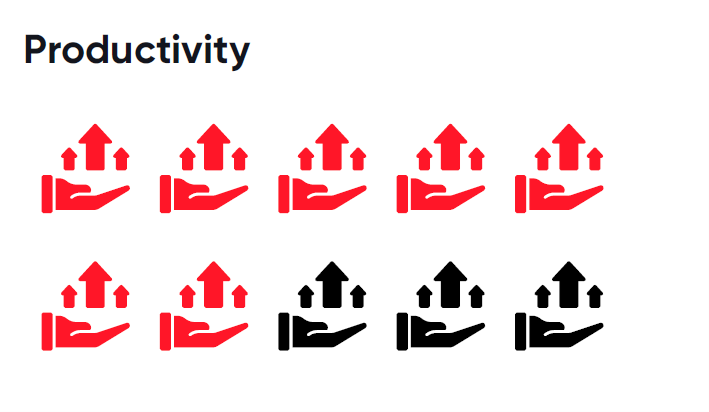
The image shows that organizations focusing on diversity, equity, inclusion, and belonging have seen improvements in work quality and employee productivity. When employees feel a sense of belonging, they are 4.3 times more likely to look forward to coming to work.

The correlation between DEIB and organizational loyalty is also noteworthy. Employees who experience a blend of diversity, equity, and inclusion are 3.4 times more likely to remain with their organization long-term. By enhancing workplace culture, companies can improve employee experiences, increase retention, and strengthen their reputation as an employer of choice.
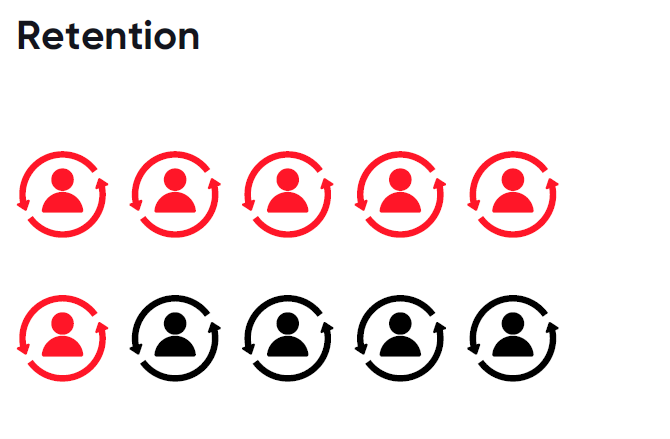
The image highlights that organizations prioritizing diversity, equity, inclusion, and belonging have seen reduced attrition rates among diverse groups. When employees feel a sense of belonging, they are 3.4 times more likely to stay with the organization long-term.

Enhancing Employee Well-being and Growth

Great workplaces in India are also fostering employee well-being and career growth. The report indicates that the best workplaces are rated significantly higher in areas such as psychological safety, team spirit, and work-life balance. Specifically, 85% of employees in these best workplaces feel a sense of belonging, compared to only 78% in other organizations. This strong sense of community is further strengthened by initiatives aimed at supporting mental health and enabling employees to learn from their mistakes. These programs help individuals feel safe, valued, and supported, leading to higher productivity and job satisfaction.
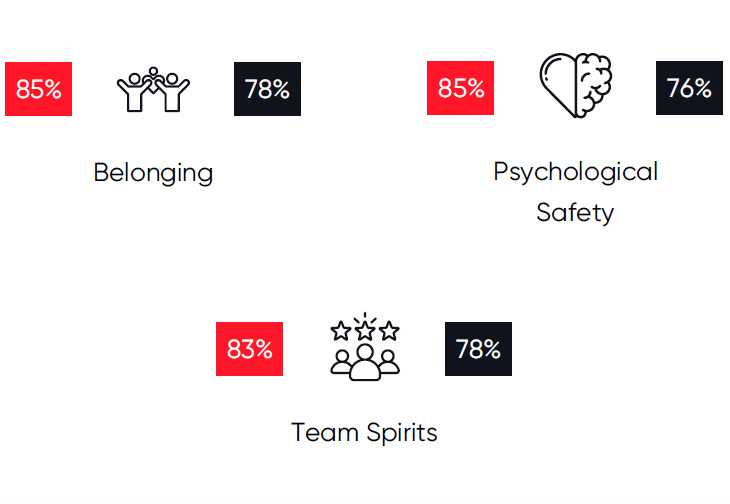
Best workplaces in DEIB show an increase in scores for belonging, psychological safety and team spirits.

Leadership development and career advancement are essential elements of DEIB-focused workplaces. In the best workplaces, 81% of employees report having access to growth opportunities and leadership training. Such practices empower individuals to advance within the organization, build relevant skills, and ultimately contribute to a more inclusive workplace culture. These initiatives create an environment where employees feel motivated and recognized, increasing their commitment to the company.
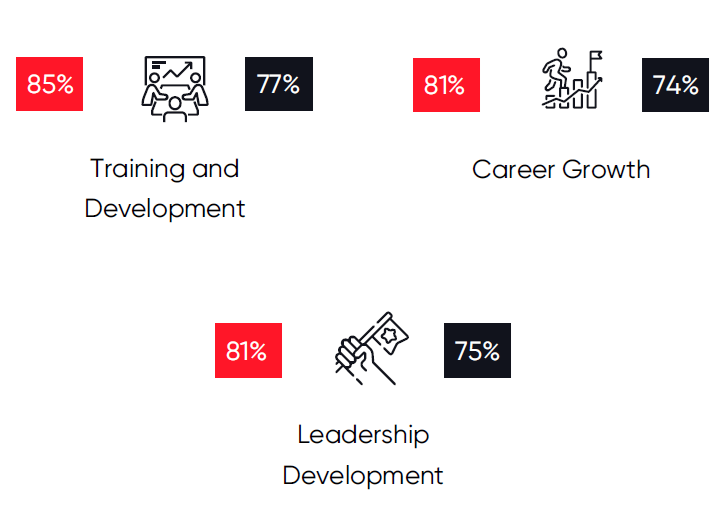
Employees at best workplaces feel very positive about their learning and development opportunities.

Addressing Representation Gaps and HEGs

Despite the progress, representation for Historically Excluded Groups (HEGs) remains an area where many organizations can improve. The report highlights gaps in workforce representation for groups such as LGBTQIA+ individuals, persons with disabilities, and veterans. Best practices from leading organizations include targeted hiring strategies, equitable pay structures, and leadership opportunities for HEGs. When companies take action to close these gaps, they make strides toward a truly inclusive environment.

Among the HEGs, the LGBTQIA+ community and persons with disabilities are two groups where representation often lags. Organizations that succeed in DEIB make a concerted effort to include these groups, not only in hiring but in career advancement and leadership roles. By fostering such inclusion, these organizations can bridge the gap between intent and action, providing equitable opportunities for all employees.

Building an Inclusive Culture through DEIB Initiatives

For DEIB initiatives to succeed, organizations must go beyond policymaking and foster an inclusive culture. The best workplaces are characterized by authenticity and transparency, with policies that actively support inclusion. Companies like Lowe’s India and Axis Bank are implementing impactful programs that enhance DEIB in meaningful ways. Axis Bank’s “HouseWorkIsWork” campaign, for example, addresses the challenges faced by homemakers reentering the workforce, tapping into an often-overlooked talent pool. Similarly, Lowe’s conducts interactive experiences to raise awareness about disabilities, including activities like “Dialogue in the Dark,” which educates employees on challenges faced by visually impaired individuals.

These inclusive practices are crucial for creating a workplace where everyone feels respected and valued. By fostering a culture of inclusivity, companies can unlock employees’ potential and promote a supportive work environment. Such initiatives illustrate that DEIB is not just a compliance measure but a cornerstone of long-term growth and success.

Overcoming Barriers to DEIB Implementation

Implementing DEIB is challenging, especially in diverse cultural landscapes like India. According to the report, legal, cultural, and economic barriers often hinder DEIB efforts. For example, outdated stereotypes about gender roles and stigmas associated with disabilities continue to persist in the workplace. To overcome these challenges, companies must adopt targeted strategies, including anti-discrimination policies and accessibility improvements, to create an environment where everyone can thrive.

One approach highlighted in the report is the creation of Employee Resource Groups (ERGs) for HEGs, which provide a platform for underrepresented employees to voice their concerns, build connections, and receive support. Additionally, organizations like Infosys have made significant strides in accessibility, implementing ramps, braille-enabled lifts, and gender-neutral washrooms across their campuses. Such structural changes address economic and cultural barriers, enabling employees from diverse backgrounds to succeed.

Creating Sustainable DEIB Impact through Leadership

True progress in DEIB requires leadership commitment and accountability. Inclusive leadership is essential for embedding DEIB principles throughout the organization. Leaders must model inclusive behaviors, actively listen to employees, and make transparent decisions that reflect their commitment to diversity. The report emphasizes the role of inclusive leaders who practice empathy, fairness, and allyship, creating an environment where diverse voices are valued.

Leaders who prioritize DEIB initiatives strengthen the company’s foundation and cultivate a workforce that feels valued and engaged. By embedding DEIB values in all levels of decision-making, companies not only foster a culture of belonging but also build resilience and adaptability for future challenges. This leadership-driven approach is integral for ensuring the sustainability of DEIB efforts.

Measuring and Tracking DEIB Progress

Tracking DEIB progress is crucial for maintaining momentum and identifying areas for improvement. According to the report, data collection on metrics such as gender diversity, pay equity, and promotion rates is essential for evaluating DEIB initiatives’ effectiveness. Organizations are encouraged to gather employee feedback, conduct regular audits, and monitor HEG representation. For instance, conducting annual equal-pay audits and publishing the findings, as seen in Fractal Analytics, helps maintain transparency and accountability in pay practices.

Monitoring progress allows organizations to align their DEIB goals with business outcomes, ensuring that inclusion efforts are not only impactful but sustainable. This approach also encourages continuous improvement, as companies can adapt their strategies based on feedback and emerging challenges.

The Broader Impact of DEIB on Society

Investing in DEIB has benefits beyond individual organizations. When businesses embrace diversity and inclusion, they contribute to broader societal change by creating opportunities for marginalized communities. The report highlights that 79% of organizations believe their DEIB efforts positively impact the communities they support, with employees reporting a sense of pride in their social contributions.
Organisations that invest in DEIB, are able to see direct impact on community outreach.

The alignment of DEIB initiatives with Sustainable Development Goals (SDGs), such as gender equality and decent work, illustrates how organizations can make a meaningful social impact. By addressing inequalities and promoting fair employment practices, companies contribute to a more just and inclusive society, amplifying the ripple effects of DEIB efforts across communities.

The Great Place To Work report underscores that DEIB is an essential strategy for creating supportive workplaces, fostering innovation, and achieving sustainable growth. The experiences of India’s best workplaces show that organizations that prioritize DEIB not only enhance their competitive advantage but also contribute to a fairer and more inclusive world. By continuing to advance DEIB practices, companies can unlock employees’ full potential, drive positive business outcomes, and make a lasting impact on society.

Get Certified to Showcase Your Commitment    

Achieving Great Place To Work Certification™ is an excellent way to demonstrate your organization’s commitment to employees’ overall well-being and experience. This Certification not only enhances your employer branding but also helps attract and retain top talent. It highlights to current and prospective employees that your organization values their overall well-being, fostering an environment where they feel appreciated and supported.

By implementing a culture of trust, respect, and collaboration, you can create a workplace where employees feel valued and connected. Certification also provides a benchmark for continuous improvement, helping you identify areas where you can further enhance employee well-being and overall workplace culture.

For All Summit Mumbai 2025: Vision to Value – Building Workplaces That Matter

Join us on February 6, 2025, in Mumbai for an enlightening day filled with insights on creating sustainable, humane, and inclusive workplaces. Learn from industry leaders about purpose-driven cultures, innovative HR practices, and adaptive leadership strategies. Get your passes today – https://testg.in/for-all-summit
Banner for registering for the Great Place To Work® For All™ Summit 2025

Today, psychological and emotional safety have emerged as crucial factors that define a positive work environment. This importance is especially pronounced for women, who often face unique challenges that affect their emotional and psychological well-being at work. India’s Best Workplaces for Women 2024 report by Great Place To Work® India highlights that when organizations commit to emotional safety for female employees, the results show increased retention, higher engagement, and a boost in overall workplace satisfaction. Creating a supportive environment where women feel safe, valued, and fairly treated is not only ethical but also beneficial for businesses, as it enhances productivity, commitment, and innovation.

Understanding Psychological and Emotional Safety

Psychological and emotional safety refers to an environment where employees feel secure, valued, and free to express their ideas without fear of negative consequences. For women, this safety encompasses fairness in opportunities, recognition, support for work-life balance, and trust in leadership. According to the report, organizations that excel in promoting psychological and emotional safety experience greater levels of employee engagement and well-being among their female workforce. Our report shows that when women experience a sense of belonging, they are over 6 times more likely to consider their workplace a “great place to work.”

Such findings underscore the importance of fostering an inclusive culture that not only values but also visibly supports women. Emotional safety enhances focus, productivity, and resilience, allowing female employees to bring their full potential to work.

Key Areas to Boost Psychological and Emotional Safety for Women

Fairness and Respect

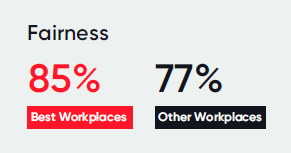
Fairness and respect in the workplace are foundational to emotional safety. They foster a sense of belonging and trust among employees, particularly women, who often encounter systemic biases. In the best workplaces, 85% of women feel they are treated with fairness, as compared to 77% in other organizations. Women in these supportive workplaces also reported an 11% higher sense of belonging, which directly correlates with retention and satisfaction. 

In the best workplaces, 85% of women feel they are treated with fairness, as compared to 77% in other organizations

Fairness in performance evaluations and opportunities for growth is essential. At the best workplaces, 83% of women feel fairly evaluated, which is comparable to the 84% satisfaction rate among men, highlighting a commitment to equity. This indicates that workplaces valuing fairness reduce the gender experience gap and encourage women to thrive by providing a level playing field in areas like promotions, role responsibilities, and performance recognition.

Work-Life Balance

For many women, balancing professional and personal responsibilities is a significant aspect of workplace satisfaction. 

Women in the best workplaces report having up to 9% more positive experiences related to work-life balance and retention drivers compared to those in other workplaces. These organizations offer benefits like mental health days, hybrid work options, and flexible hours that acknowledge and support women’s unique needs, helping them feel valued and understood.

Creating a work-life balance is essential not just for job satisfaction but also for mental well-being. Organizations that provide flexible working arrangements, paid parental leave, and affordable childcare options cultivate a culture that recognizes and supports the personal lives of female employees. Such policies reduce stress and increase loyalty, as women feel they can pursue a career without sacrificing family responsibilities.

Trust in Leadership

A culture of trust between leadership and employees is critical for fostering emotional safety. When female employees trust their leaders, they are more likely to be engaged and committed to their roles. Trust is a key driver of retention, with 87% of women at the best workplaces expressing trust in leadership, as opposed to 80% at other workplaces.

Organizations with high levels of trust also experience a higher retention rate (87%) among female employees, compared to 83% at other workplaces.

Actions such as transparent communication, addressing employee concerns, and demonstrating empathy help build trust in leadership. Leaders can also foster emotional safety by actively supporting career development through mentorship, skill-building opportunities, and recognition of contributions. These practices signal that leadership values the contributions of female employees, promoting loyalty and a sense of belonging.

Supportive Work Environment

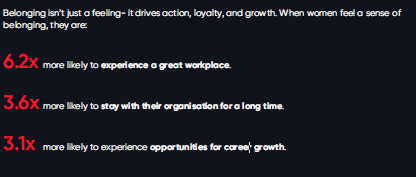
A supportive work environment empowers women to bring their authentic selves to work. Such environments are characterized by strong HR support, accessible resources, and inclusive policies. Women who feel part of an inclusive environment are 3.6 times more likely to stay long-term and 3.1 times more likely to see career growth opportunities.

Women who feel part of an inclusive environment are 3.6 times more likely to stay long-term and 3.1 times more likely to see career growth opportunities.

Best workplaces show 9% higher retention rates among women due to supportive policies such as mentorship programs, gender sensitivity training, and employee resource groups.

Inclusive workplaces with mentorship programs help women navigate career challenges and make upward mobility achievable. Employee resource groups, for example, offer platforms for women to share experiences, seek advice, and advocate for positive change within the organization. When companies implement gender sensitivity training, they cultivate empathy across the workforce, making the workplace a safe space for women to grow and contribute effectively.

Why Psychological and Emotional Safety Matters

Creating an environment of psychological and emotional safety for women is not just a moral imperative; it is a driver of tangible business outcomes. According to the Great Place To Work report, the benefits of promoting safety and inclusion include:

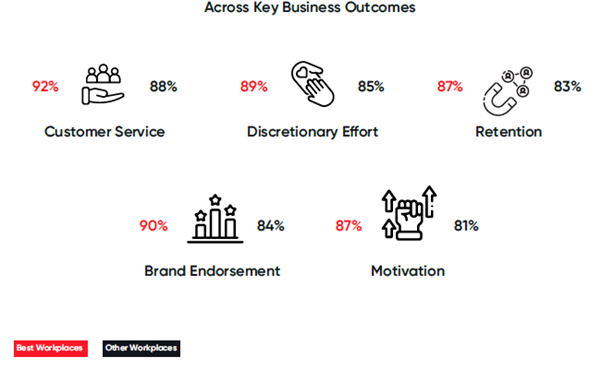
  • Higher brand loyalty and customer satisfaction: 90% of employees in the best workplaces are proud of their company’s brand, and 92% note high customer satisfaction due to a supportive work culture.
  • Increased discretionary effort and motivation: 89% of employees in these workplaces go beyond their job requirements to contribute, underscoring how an emotionally safe environment can drive performance.
Best Workplaces vs Rest

A workplace where women feel safe to be authentic and express their perspectives fosters a culture of trust and collaboration, leading to better business outcomes and a more dynamic workplace.

Practical Steps for Organizations

To implement effective practices for psychological and emotional safety, organizations should consider – 

  • Conduct Regular Feedback Sessions: Encourage open communication channels to understand the needs of female employees and assess workplace culture periodically.
  • Offer Mentorship Programs: Support career growth by pairing women with mentors who can guide them through challenges and career aspirations.
  • Adopt Flexible Work Policies: Implement hybrid and flexible work options to accommodate personal responsibilities.
  • Train Leaders for Empathy and Inclusivity: Educate leaders to recognize and address unconscious biases, respond empathetically, and foster inclusion at every level.
  • Supportive Infrastructure: Establish resource groups, accessible HR policies, and clear channels for reporting grievances, creating an infrastructure that visibly supports women’s professional and personal well-being.

Psychological and emotional safety is essential for cultivating an inclusive and productive workplace for women. Organizations can empower women to thrive and fully participate in the workforce by ensuring fairness, respect, and support at every level. When women feel safe and valued, they contribute with greater confidence, fostering a culture of innovation and success. It’s time for organizations to step up, create emotionally safe environments, and recognize that supporting women is integral to building a thriving, forward-thinking workplace for all.

Get Certified to Showcase Your Commitment    

Achieving Great Place To Work Certification is an excellent way to demonstrate your organization’s commitment to employees’ overall well-being and experience. This Certification not only enhances your employer branding but also helps attract and retain top talent. It highlights to current and prospective employees that your organization values their overall well-being, fostering an environment where they feel appreciated and supported. 

By implementing a culture of trust, respect, and collaboration, you can create a workplace where employees feel valued and connected. Certification also provides a benchmark for continuous improvement, helping you identify areas where you can further enhance employee well-being and overall workplace culture.

For All Summit Mumbai 2025: Vision to Value – Building Workplaces That Matter

Join us on February 6, 2025, in Mumbai for an enlightening day filled with insights on creating sustainable, humane, and inclusive workplaces. Learn from industry leaders about purpose-driven cultures, innovative HR practices, and adaptive leadership strategies.

Get your passes today – https://testg.in/for-all-summit
Banner for registering for the Great Place To Work® For All™ Summit 2025

Non-governmental organizations (NGOs) play a pivotal role in shaping India’s socio-economic landscape. Often referred to as the backbone of civil society, NGOs contribute significantly across various sectors, from education and healthcare to skill development and environmental conservation. They work diligently to bridge social gaps, uplift marginalized communities, and create lasting change. This extensive engagement translates into a substantial economic impact as well: the NGO sector contributes INR 3.56 trillion annually to India’s GDP, representing approximately 2% of the nation’s economic output. 

NGOs provide critical support to underserved communities, mobilizing resources and expertise to drive improvements in quality of life and public welfare. This work is made possible by a dedicated workforce that often finds purpose and pride in contributing to social progress. Our India’s Best NGOs to Work For report highlights how NGOs support societal wellbeing. 

The Growing Commitment to Workplace Excellence

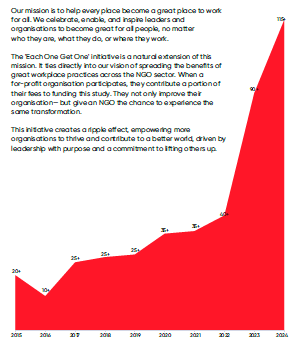
As NGOs expand their reach, they increasingly recognize the importance of cultivating workplaces that attract and retain talent. Participation in Great Place To Work® Certification reflects this shift, with over 115 NGOs involved in 2024, up from around 40 in 2022. This growth highlights a new focus on workplace culture as a crucial part of effectively serving communities.

Participation in Great Place To Work certification reflects this shift, with over 115 NGOs involved in 2024, up from around 40 in 2022.

This commitment has led to tangible outcomes in employee satisfaction and retention, with a 7% higher retention sentiment compared to others. This is crucial, given that 60% of NGO employees have a tenure of less than two years, which impacts organizational stability. Certified NGOs are building environments that emphasize purpose and pride—93% of employees feel positively about their societal contribution, and 91% feel proud to share their affiliation. This alignment between personal values and work enhances loyalty and builds a resilient workforce beyond monetary incentives. 

Addressing Challenges in the NGO sector 

Despite the positive culture and values-driven mission, the NGO sector faces challenges with retention and fair compensation. According to the report, approximately 60% of employees have a tenure of less than two years, indicating high turnover that can impact the consistency and continuity of NGO operations. Furthermore, nearly one in three employees feel that they are not compensated fairly, which can be a barrier to long-term retention. Addressing these challenges through initiatives like fair pay policies and improved career growth paths is essential for creating a sustainable workforce in the NGO sector. 

The 5 Key Drivers of Employee Satisfaction (‘5 GEARS’)

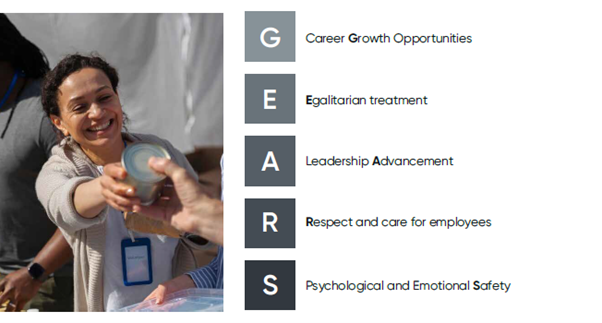
To achieve workplace excellence, the top NGOs implement a unique framework known as the “5 GEARS.” This framework encapsulates the five core drivers that contribute to a thriving workplace culture within the sector – 

The gear framework

Career Growth Opportunities 

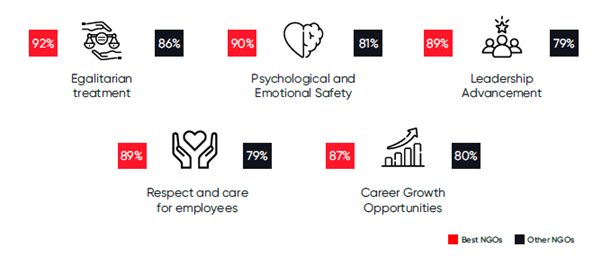
Best NGOs focus on structured growth paths, offering ample learning and development platforms. According to the report, 87% of employees in top NGOs feel their career growth needs are met, in comparison to 79% in other NGOs. This emphasis on growth ensures that employees feel valued and see a future within the organization. 

Egalitarian Treatment

Fairness and equity are central tenets of high-trust high – performance cultures. Top NGOs reported that 90% of employees feel they are treated with equality and fairness, versus 81% in other NGOs. This approach not only improves morale but also strengthens a culture of inclusivity across diverse roles and functions.

Leadership Advancement

Recognizing and cultivating leadership talent internally is a hallmark of the best NGOs. The report highlights that 89% of employees in leading NGOs believe they have ample opportunities for leadership advancement, compared to 79% in others. Leadership development initiatives include mentorship programs, skills training, and leadership coaching, ensuring a robust pipeline of future leaders.

Respect and Care for Employees

Compassion and respect form the foundation of employee relationships in top NGOs. With 92% of employees feeling respected and cared for at their workplace (compared to 86% in other NGOs), this component is essential in building a trusting, loyal workforce.

Psychological and Emotional Safety

The best NGOs prioritize creating an environment where employees feel emotionally and psychologically secure. In top organizations, 89% of employees feel safe in expressing their concerns and ideas, while this figure is 79% in other NGOs. Such an environment fosters open communication and psychological well-being, both crucial for employee engagement and productivity

Best vs Rest

The Role of  ‘Each One, Get One’ in Scaling Workplace Culture

The Each One, Get One initiative is a distinctive program that exemplifies how the Great Place To Work certification’s benefits can be extended across the NGO sector, promoting a healthier, more engaging workplace culture for organizations of all sizes and resources. This initiative operates on a simple yet powerful model: when a for-profit organization participates in the certification process, a portion of their fees is directed towards funding the certification for an NGO. This sponsorship enables non-profits, often constrained by limited budgets, to access the same insights, tools, and workplace transformation programs as their corporate counterparts.

The impact of Each One, Get One is transformative, fostering a ripple effect that enables more NGOs to implement high-trust, high-performance workplace practices. By giving NGOs the resources to prioritize their workplace culture, the initiative empowers these organizations to boost employee satisfaction, reduce turnover, and strengthen mission delivery. In turn, each certified NGO becomes an ambassador of good workplace practices, setting an example within the sector and encouraging others to follow suit. This collective uplift not only enhances the work environment for NGO employees but also leads to more stable and effective organizations, ultimately amplifying their societal impact.

The ongoing efforts within the NGO sector to cultivate excellent workplace environments are not just milestones; they are setting new benchmarks that inspire change across industries. By focusing on values-driven work, purpose alignment, and employee satisfaction, NGOs are creating models of organizational culture that other sectors can emulate. As they continue to evolve, these organizations stand poised to drive positive change not only within the NGO sector but also across the broader socio-economic landscape, leaving an indelible impact on India’s development. 

Get Certified to Showcase Your Commitment    

Achieving Great Place To Work Certification is an excellent way to demonstrate your organization’s commitment to employees’ overall wellbeing and experience. This Certification not only enhances your employer branding but also helps attract and retain top talent. It highlights to current and prospective employees that your organization values their health, happiness, and overall wellbeing.    

By implementing a culture of trust, respect, and collaboration, you can create a workplace where employees feel strong, healthy, and connected. Certification also provides a benchmark for continuous improvement, helping you identify areas where you can further enhance employee well-being and overall workplace culture.  

For All Summit 2025: Vision to Value – Building Workplaces That Matter

Join us on February 6, 2025, in Mumbai for an enlightening day filled with insights on creating sustainable, humane, and inclusive workplaces. Learn from industry leaders about purpose-driven cultures, innovative HR practices, and adaptive leadership strategies.

Get your passes today – https://testg.in/for-all-summit
Banner for registering for the Great Place To Work® For All™ Summit 2025

In an era where workplace diversity has evolved from aspiration to imperative, India’s Best Workplaces are setting in women’s empowerment. The landscape of corporate India is undergoing a remarkable transformation, with progressive organizations recognizing that gender diversity isn’t just about meeting quotas—it’s about fostering environments where women can truly thrive and lead. This transformation is reshaping organizational cultures and creating new standards for workplace excellence.

The Numbers Tell a Compelling Story 

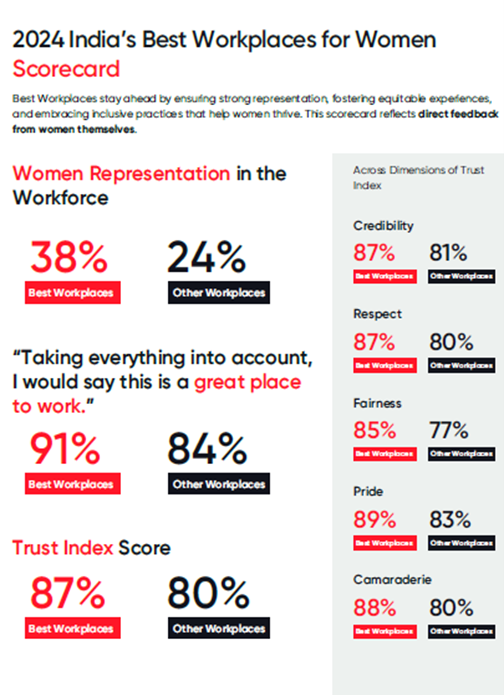
The stark contrast between Best Workplaces and other organizations reveals a telling narrative. With women comprising 38% of their workforce—significantly higher than the 24% seen in other workplaces—these leading organizations demonstrate their commitment to gender diversity through action, not just words. This commitment translates directly into workplace satisfaction, with 91% of women in Best Workplaces rating their organizations as “great places to work” compared to 84% in other workplaces.

2024 India’s Best Workplaces for Women Scorecard

These statistics aren’t just numbers—they represent thousands of women finding fulfillment and success in their professional lives. The higher Trust Index score of 87% in Best Workplaces, compared to 80% in other organizations, indicates a fundamental difference in how women experience their work environment, from daily interactions to career development opportunities.

The Power of Belonging: A Catalyst for Transformation

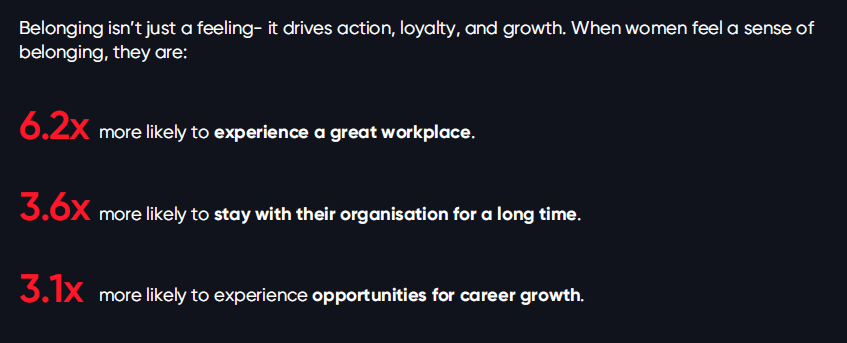
Perhaps the most striking finding is the profound impact of creating environments where women feel they truly belong. Organizations that successfully balance diversity, equity, and inclusion witness an 11% higher sense of belonging among their female employees. This isn’t merely a feel-good metric—it translates into tangible outcomes. Women who experience this sense of belonging are 6.2 times more likely to consider their workplace exceptional, 3.6 times more likely to commit to long-term careers with their organizations, and 3.1 times more likely to see clear paths for career advancement.

When Organisation get the Balance Right, Belonging Strengthens, Leading to a Transformed Culture

The ripple effects of strong belonging extend beyond individual satisfaction. When women feel genuinely integrated into their workplace community, they’re more likely to contribute innovative ideas, take on leadership roles, and mentor others, creating a virtuous cycle of empowerment and growth.

Blueprint for Success: Measuring What Matters

Best Workplaces are adopting sophisticated approaches to tracking and improving women’s workplace experiences. Their metrics span the entire employee lifecycle, from recruitment to leadership development:

Leadership and Retention

Forward-thinking organizations are moving beyond basic headcount metrics. They’re examining women’s participation in strategic discussions, tracking the promotion of women to senior roles from within, and monitoring the effectiveness of flexible work arrangements. Critical attention is paid to post-maternity return rates and the use of support services, ensuring that parenthood doesn’t become a career obstacle.

The most successful organizations are also monitoring the frequency of women’s inclusion in key meetings and strategy discussions, recognizing that visibility and voice are crucial components of leadership development.

Development and Growth

Success in women’s empowerment requires a deliberate focus on growth opportunities. Best Workplaces track participation in leadership programs, monitor the gender distribution in promotion pools, and ensure equitable access to recognition and rewards. This systematic approach helps identify and nurture high-potential female talent, creating robust leadership pipelines.

Recruitment and Onboarding Excellence

Progressive organizations are reimagining their talent acquisition strategies, focusing on gender-balanced candidate pools and diverse interview panels. They track the gender ratio of applicants, shortlisted candidates, and new hires, particularly for leadership positions. Special attention is paid to early engagement scores and retention rates by gender, ensuring that women feel supported from day one.

Innovation in Action: Leading Practices from Top Organizations

Several organizations are pioneering innovative approaches to women’s empowerment:

Addressing the Broken Rung 

Max Life Insurance’s ROAR program tackles a critical challenge in women’s career progression—the transition to first-time management roles. By focusing on communication skills, executive presence, and leadership capabilities, the program helps women overcome self-limiting beliefs and build strong foundations for leadership careers. The program’s emphasis on practical skills like power dressing, body language, and elevator pitches demonstrates a comprehensive approach to leadership development.

Supporting Mid-Career Transitions

R1 RCM Global Private Limited’s Winspire program demonstrates the power of targeted intervention at crucial career junctures. This seven-month development initiative has achieved remarkable success, with 40% of participants advancing to senior roles, proving that structured support can significantly impact career trajectories. The program’s combination of classroom sessions, self-paced learning, and senior leader interactions creates a comprehensive learning experience.

Comprehensive Maternity Support

Happiest Minds’ MoMentum program takes a holistic approach to supporting working mothers through three crucial phases: pre-maternity preparation, during-leave engagement, and post-maternity transition. This comprehensive support system helps talented women navigate one of the most challenging periods in their careers while maintaining their professional momentum. The program’s inclusion of mental health support and peer networking through WhatsApp groups shows attention to both practical and emotional needs.

Building Leadership Pipelines

Tata AIG’s Blue-League Journey exemplifies how organizations can systematically develop women leaders. Their four-month transformative program, focusing on personal growth, people management, execution, and business acumen, creates a structured pathway for high-potential women to advance into leadership roles. The program’s competitive selection process and comprehensive curriculum demonstrate a serious commitment to leadership development.

Fostering Community and Connection

Voya India’s MAAERI Women’s Network Council shows how organizations can create powerful platforms for women to connect, learn, and grow. Through panel discussions with senior leaders and sessions addressing critical topics like unconscious bias, the initiative helps women navigate workplace challenges while building strong professional networks.

What Will It Take to Create Real Impact?

While Best Workplaces have shown impressive progress in women’s empowerment, creating lasting change requires a systematic approach across multiple dimensions. Here’s a comprehensive framework for organizations seeking to make a real difference:

Track and Manage experience, Sensitizing People Managers, Measure and communicate key and Leadership Commitment

1. Track and Manage Experiences

Organizations must go beyond surface-level metrics to truly understand women’s workplace experiences. This requires:

  • Establishing Robust Feedback Mechanisms: Creating anonymous channels where women can voice concerns and suggestions without fear of retribution. Psychological safety is crucial for gathering honest feedback that can drive meaningful change.
  • Implementing Focus Groups and Listening Sessions: Regular sessions where women can share their experiences and expectations directly with leadership create valuable dialogue and ensure that initiatives are aligned with real needs.

2. Sensitizing People Managers

People managers play a pivotal role in shaping workplace experiences and retention decisions. Key focus areas include:

  • Addressing Unconscious Bias: Regular training sessions for all employees, especially people managers, help identify and mitigate unconscious biases that can affect decisions around hiring, promotions, and day-to-day interactions.
  • Life Stage Sensitivity: People managers must understand and support women during critical life stages and personal milestones. Their responses during these crucial moments often influence women’s decisions to stay with or leave an organization. This understanding should extend to providing flexible arrangements and support systems when needed.

3. Measure and Communicate Impact

What gets measured gets managed. Organizations should:

  • Set Clear, Measurable Goals: Establish specific targets for women’s representation at various levels, success metrics for women-specific initiatives, and engagement metrics for women at work.
  • Implement Regular Reporting: Conduct quarterly reviews to assess progress against these goals, ensuring transparency and accountability. This regular monitoring allows organizations to adjust strategies promptly when needed.

4. Demonstrate Leadership Commitment

Leadership commitment is the cornerstone of successful women’s empowerment initiatives:

  • Clear Communication: Leaders must clearly articulate their commitment to diversity and inclusion, creating a culture that genuinely values women’s contributions.
  • Resource Allocation: Demonstrate commitment through concrete actions by allocating specific budgets and resources for women’s development initiatives.
  • Leading by Example: Leaders set the organizational tone through their actions—or inaction. They can foster an inclusive culture by:
    • Actively sponsoring women in their careers
    • Challenging biases when they observe them
    • Using inclusive language consistently
    • Ensuring equal opportunities for growth and advancement
    • Modeling behaviors that support women’s professional development

Driving Business Excellence Through Women’s Empowerment

The data is clear: organizations that excel in women’s empowerment aren’t just doing the right thing—they’re building more successful businesses. Higher trust index scores (87% in Best Workplaces versus 80% in others) indicate stronger organizational cultures. These companies are better positioned to attract and retain top talent, foster innovation through diverse perspectives, and build more resilient organizations.

Moreover, organizations with strong women’s empowerment initiatives often see improvements in decision-making, innovation, and customer understanding, as diverse perspectives lead to more comprehensive solutions and strategies.

Beyond Numbers to Lasting Impact

The journey toward true workplace equality requires more than policies and programs—it demands a fundamental shift in organizational culture. India’s Best Workplaces are showing that when organizations commit to genuine change, the results are transformative. They’re creating environments where women don’t just participate—they thrive, lead, and shape the future of work.

As we look ahead, the message is clear: women’s empowerment in the workplace isn’t just a gender issue—it’s a business imperative that shapes organizational success in the modern economy. Organizations that recognize and act on this reality today will be the leaders of tomorrow. The blueprint for success exists; the challenge now lies in scaling these proven practices across industries and organizations to create a more equitable and prosperous future for all.

Get Certified to Showcase Your Commitment

Achieving Great Place To Work Certification™ is an excellent way to demonstrate your organization’s commitment to employees’ overall wellbeing and experience. This Certification not only enhances your employer branding but also helps attract and retain top talent. It highlights to current and prospective employees that your organization values their health, happiness, and overall wellbeing.    

By implementing a culture of trust, respect, and collaboration, you can create a workplace where employees feel strong, healthy, and connected. Certification also provides a benchmark for continuous improvement, helping you identify areas where you can further enhance employee well-being and overall workplace culture.  

For All™ Summit 2025 Mumbai: Vision to Value – Building Workplaces That Matter

Join us on February 6, 2025, in Mumbai for an enlightening day filled with insights on creating sustainable, humane, and inclusive workplaces. Learn from industry leaders about purpose-driven cultures, innovative HR practices, and adaptive leadership strategies.

Get your passes today – https://testg.in/for-all-summit

Banner for registering for the Great Place To Work® For All™ Summit 2025

In an era where organizational success hinges on innovation and adaptability, one truth stands increasingly clear: companies that empower women don’t just promote equality—they catalyze extraordinary business outcomes. While the dialogue around women’s participation in the workforce has intensified, recent data reveals both promising developments and persistent challenges that demand our attention. The historical contributions of women as the backbone of economies and societies have often gone unrecognized, but today’s organizations are beginning to understand that when women are empowered to participate fully, the ripple effects transform entire industries.

The Current Landscape: Progress and Plateaus

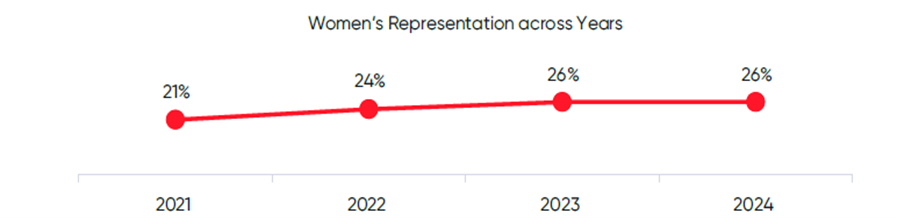
Womens representation across years

The journey of women in the workforce tells a story of both advancement and stagnation. After steady growth from 2021 to 2023, women’s representation has hit a concerning plateau at 26%, with merely 16% occupying executive or C-suite positions. This stagnation signals a crucial reality: passive progress is no longer sufficient to drive meaningful change. The steep decline in workforce participation over the last decade, driven by cultural expectations, deep-rooted social norms, and caregiving responsibilities, highlights the complexity of the challenge we face.

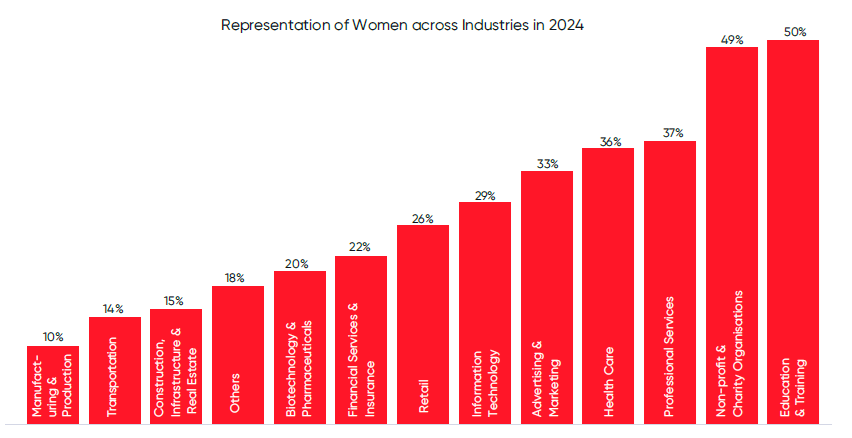
Representation of Women across Industries in 2024

The disparity becomes even more pronounced across sectors. While education and non-profit organizations lead with nearly 50% women representation, traditional male-dominated industries like manufacturing, transportation, and construction continue to lag significantly behind.

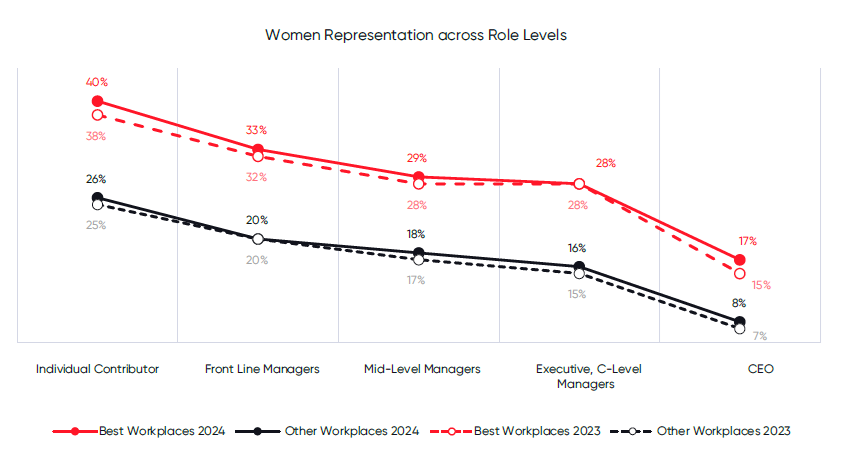
Women Representation across Role Levels

More troubling still is the World Economic Forum’s projection that achieving gender parity in economic participation could take up to 131 years at the current pace. This timeline serves as a stark reminder that transformative action is needed now.

Beyond Numbers: The Experience Gap 

Raw representation statistics tell only part of the story. Recent sentiment analysis reveals a growing emotional disconnect in women’s workplace experiences. A concerning trend shows fewer women feeling appreciated or believing in management’s commitment to their words. Only 65% feel they receive fair compensation from their company’s profits, highlighting a widening chasm between leadership and employees. This disconnect is further amplified by increasing perceptions of favoritism and workplace politics.

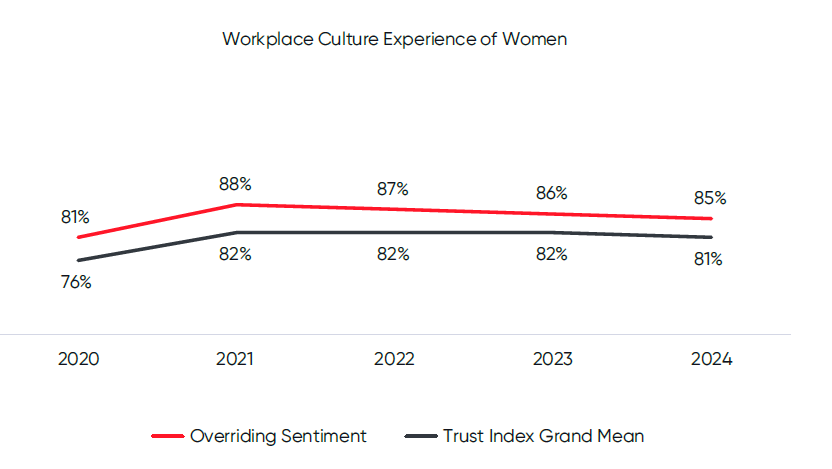
Workplace Culture Experience of Women

While 95% of women report feeling physically safe at work, true engagement stems from deeper factors: feeling valued, heard, and treated fairly.

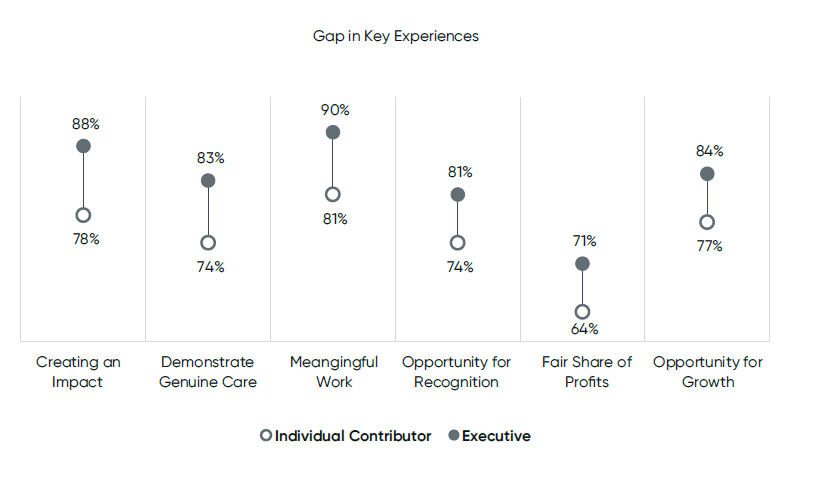
Gap in Key Experiences

The transition from individual contributors to leadership positions remains a significant hurdle, evidenced by a 7% gap in growth opportunities between executives (84%) and individual contributors (77%). This disparity in career development opportunities underscores the need for more equitable advancement pathways across all organizational levels.

Understanding the Retention Challenge 

Social and workplace conditions often contribute to women’s workforce attrition. The Global Gender Gap Report indicates this is a widespread issue across industries, particularly in countries like India. Research consistently shows that fairness, growth opportunities, and recognition are key drivers affecting women’s intent to stay in the workplace. Organizations must recognize that creating an environment where women can thrive requires addressing these fundamental aspects of the work experience.

Best Workplaces: Setting the Gold Standard

What sets Best Workplaces apart in this landscape? The answer lies in their comprehensive approach to women’s empowerment. These organizations have demonstrated that supporting women’s advancement isn’t just about meeting quotas—it’s about fostering an environment where women can thrive at every level. Their success is built on understanding that having women as role models across all levels is crucial for building a strong pipeline of leadership talent.

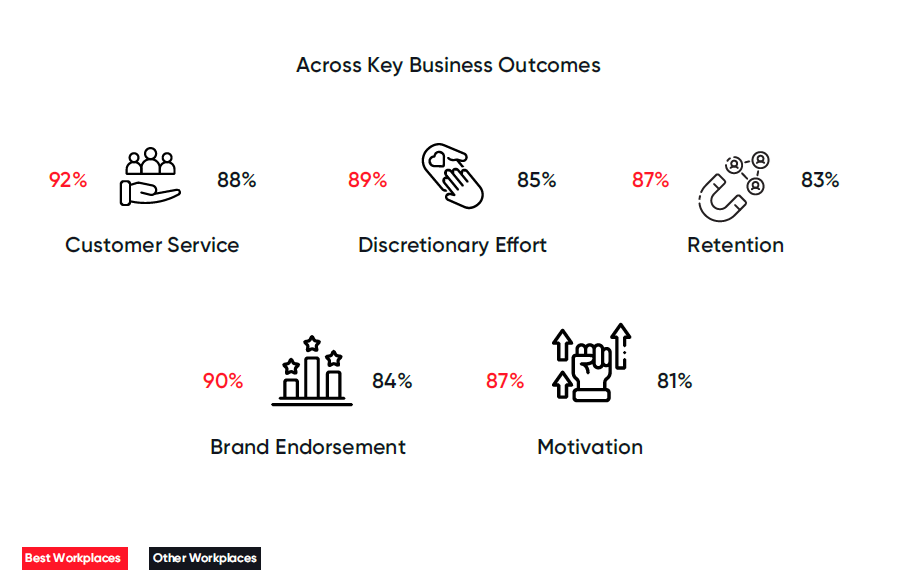
Experiences of Women Employees Across Key Business Outcomes

The results speak volumes: Best Workplaces boast twice the number of women CEOs compared to other organizations. Their success extends beyond leadership demographics, with 90% of employees expressing pride in their company’s brand and 92% reporting high customer satisfaction. Perhaps most tellingly, 87% of employees indicate strong intent to stay, while 89% consistently go above and beyond in their contributions. These organizations report up to 9% more positive experiences in key areas that drive retention compared to other workplaces.

The Blueprint for Change

Creating an inclusive workplace requires a strategic, multi-faceted approach that addresses both systemic barriers and individual needs:

1. Strategic Recruitment

Successful organizations implement targeted recruitment strategies, including:

  • Setting clear diversity targets aligned with organizational goals
  • Using gender-neutral language in job postings to eliminate unconscious bias
  • Implementing blind hiring processes to ensure fair evaluation
  • Developing comprehensive returnship programs for women rejoining the workforce
  • Showcasing success stories of women within the organization to inspire others

2. Engagement and Development

Retention hinges on creating an environment where women can flourish:

  • Offering flexible work arrangements that accommodate various life stages
  • Providing equal growth opportunities through transparent promotion processes
  • Establishing mentorship programs that connect women with senior leaders
  • Creating women’s networks and resource groups for peer support
  • Implementing focused leadership development initiatives
  • Ensuring equal access to high-visibility projects and opportunities
  • Providing comprehensive support for work-life integration

3. Measurement and Accountability

Progress requires regular monitoring and adjustment:

  • Establishing robust feedback mechanisms at all organizational levels
  • Conducting regular focus groups to understand women’s experiences
  • Setting measurable goals with clear timelines and accountability
  • Maintaining transparent reporting on diversity metrics
  • Analyzing retention data to address attrition causes
  • Implementing regular pay equity audits
  • Tracking promotion rates and career progression patterns

The Business Case for Women’s Empowerment

The impact of women’s empowerment extends far beyond social responsibility. Best Workplaces consistently demonstrate superior outcomes in:

  • Customer service excellence through diverse perspectives
  • Brand loyalty from both employees and customers
  • Employee discretionary effort and innovation
  • Workplace motivation and team collaboration
  • Innovation and problem-solving through diverse thinking
  • Market understanding and product development
  • Overall organizational resilience and adaptability

Looking Ahead: The Path Forward

As we navigate the evolving workplace landscape, organizations must move beyond surface-level initiatives to create lasting change. This requires:

1. Leadership Commitment:

  • Beyond verbal support, leaders must allocate resources and lead by example
  • Regular communication of commitment to diversity and inclusion
  • Active participation in mentorship and sponsorship programs
  • Personal accountability for diversity goals

2. Cultural Transformation:

  • Organizations need to address unconscious biases through comprehensive training
  • Create systems that support women through various life stages
  • Foster an environment where speaking up is encouraged and valued
  • Develop inclusive policies that consider diverse needs and perspectives

3. Sustainable Progress:

  • Regular measurement and communication of key metrics
  • Continuous adjustment of strategies based on feedback and results
  • Integration of diversity goals into business strategy
  • Development of long-term talent pipelines

The message is clear: organizations that genuinely commit to women’s empowerment don’t just contribute to social progress—they position themselves for sustained success in an increasingly competitive business landscape. As we look to the future, the question isn’t whether to prioritize women’s empowerment, but how quickly organizations can adapt to this imperative for change.

The time for incremental progress has passed. Organizations must take bold steps to create workplaces where women don’t merely participate but lead, innovate, and transform. In doing so, they won’t just be supporting women’s advancement—they’ll be securing their own path to excellence in the modern business world. The success of Best Workplaces proves that when organizations create truly inclusive environments, everyone wins—employees, customers, and the bottom line.

Get Certified to Showcase Your Commitment    

Achieving Great Place To Work® Certification™ is an excellent way to demonstrate your organization’s commitment to employees’ overall wellbeing and experience. This Certification not only enhances your employer branding but also helps attract and retain top talent. It highlights to current and prospective employees that your organization values their health, happiness, and overall wellbeing. 

By implementing a culture of trust, respect, and collaboration, you can create a workplace where employees feel strong, healthy, and connected. Certification also provides a benchmark for continuous improvement, helping you identify areas where you can further enhance employee well-being and overall workplace culture.

For All Summit 2025: Vision to Value – Building Workplaces That Matter

Join us on February 6, 2025, in Mumbai for an enlightening day filled with insights on creating sustainable, humane, and inclusive workplaces. Learn from industry leaders about purpose-driven cultures, innovative HR practices, and adaptive leadership strategies.

Get your passes today – https://testg.in/for-all-summit 
Banner for registering for the Great Place To Work® For All™ Summit 2025

In an increasingly interconnected and globalized world, organizations are recognizing that Diversity, Equity, Inclusion, and Belonging (DEIB) aren’t just buzzwords—they are foundational pillars for success. Companies that prioritize DEIB are not only fulfilling a moral and ethical responsibility but are also unlocking enormous business potential.

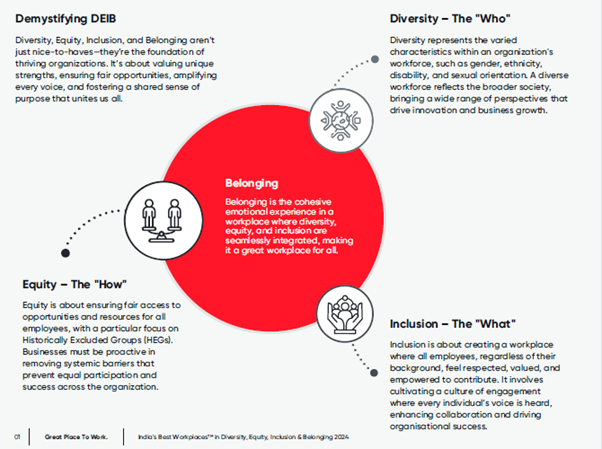
Demystifying DEIB

In the India’s Best Workplaces in DEIB   2024 infographic  we see how organizations that embed DEIB into their core culture consistently outperform their peers. These companies experience higher employee engagement, greater innovation, and stronger financial results. But the true power of DEIB lies in its ability to make employees feel valued, respected, and seen—an outcome that benefits both individuals and businesses alike.

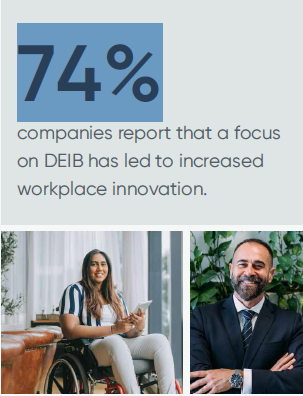
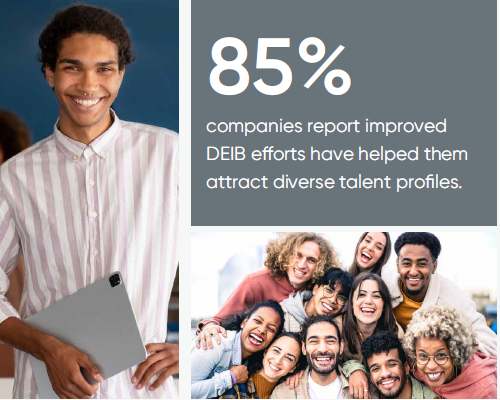
As businesses navigate the challenges of a modern, dynamic workforce, embracing DEIB is no longer a choice—it’s a necessity. The data shows that 74% of companies report a direct link between their focus on DEIB and increased workplace innovation, and 85% say DEIB efforts have helped them attract diverse talent profiles. Clearly, DEIB is a catalyst for growth, driving not only business results but also positive societal impact.

74% companies report that a focus on DEIB has led to increased workplace innovation.

Understanding DEIB: The Key Components

Diversity – The “Who”

Diversity refers to the different characteristics that employees bring to the workplace, including but not limited to gender, ethnicity, age, disability, sexual orientation, and cultural backgrounds. Diversity goes beyond mere representation; it’s about harnessing the unique experiences and perspectives of employees to drive innovation and business growth.

A diverse workforce mirrors the broader society and customer base, giving organizations a competitive edge in understanding and meeting the needs of diverse markets. As highlighted in the 2024 report, 85% of companies report that their DEIB initiatives have helped them attract a broader and more diverse pool of talent. By fostering diversity, organizations not only gain a variety of perspectives but also enhance their capacity to innovate, solve problems creatively, and reach untapped markets.

85% companies report improved DEIB efforts have helped them attract diverse talent profiles.

In today’s workplace, diversity is not just a ‘nice-to-have’—it’s a business imperative. When organizations actively recruit, hire, and retain a diverse workforce, they create a dynamic environment where differences become strengths, fueling fresh ideas and creative problem-solving.

Equity – The “How”  

Equity is about creating a fair playing field where all employees, particularly those from historically excluded groups (HEGs), have access to the same opportunities and resources. Unlike equality, which treats everyone equally, equity recognizes that different people face different barriers and challenges and therefore need tailored support to thrive.

Equity in the workplace involves removing systemic barriers—whether they are in hiring practices, promotion criteria, or daily interactions—that prevent certain groups from fully participating and succeeding in the organization. Companies that embrace equity are proactive in identifying and dismantling these barriers to ensure that everyone, regardless of their background, has a fair chance to succeed.

The India’s Best Workplaces in DEIB 2024 report emphasizes that equity is not a one-time initiative but an ongoing commitment. Equity is the key to building an inclusive environment where historically marginalized groups can contribute their fullest potential, resulting in better business outcomes for the organization as a whole.

When employees feel that the playing field is level, their sense of trust and loyalty increases, which is why workplaces that champion equity see better employee retention and engagement.

Inclusion – The “What”

Inclusion refers to how well an organization incorporates the diverse voices and perspectives of its workforce into everyday interactions, decision-making, and company culture. It’s not enough to just have diverse teams—inclusion ensures that all employees feel respected, valued, and empowered to contribute to the organization’s success, regardless of their background.

Inclusion involves creating a culture where employees from all walks of life feel safe, respected, and valued for who they are. This means cultivating an environment where everyone’s voice is heard and where diverse perspectives are genuinely considered in business decisions. The India’s Best Workplaces in DEIB 2024 report reveals that when diversity, equity, and inclusion are successfully integrated, employees are 3.8 times more likely to describe their workplace as a great place to work. Inclusion doesn’t just improve employee satisfaction—it directly impacts an organization’s ability to succeed.

In inclusive workplaces, leadership teams actively engage with employees, seek out diverse perspectives, and foster collaboration. Inclusion helps to enhance psychological safety, where employees feel comfortable taking risks, speaking up, and being their authentic selves without fear of judgment or retaliation.

Belonging – The Outcome

Belonging is the emotional experience that arises when diversity, equity, and inclusion are fully realized within the organization. It’s about creating a sense of connectedness and shared purpose, where every employee feels they truly matter to the organization. When employees feel they belong, they are more engaged, motivated, and loyal to their workplace.

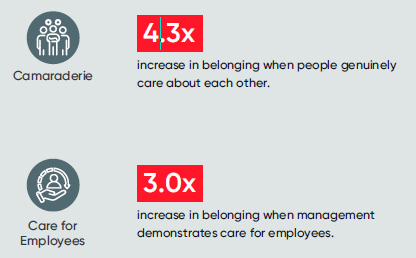
The report highlights the impact of belonging, showing that employees are 4.6 times more likely to feel a sense of belonging when the workplace environment is psychologically and emotionally healthy. Furthermore, when management demonstrates care for employees, the sense of belonging increases by 3.0 times, and when colleagues genuinely care about each other, belonging increases by 4.3 times. 

Data on building belongingness

Belonging is the result of an integrated DEIB strategy, where employees are not just included but are an integral part of the organization’s community. When belonging is present, employees are more likely to be engaged, innovative, and committed to the organization’s long-term success.

DEIB is not just a moral imperative, it is a business necessity. As India’s Best Workplaces in DEIB 2024 report demonstrates, companies that prioritize diversity, equity, inclusion, and belonging consistently outperform their competitors across key business metrics. DEIB drives innovation, attracts top talent, strengthens brand loyalty, and leads to better overall business performance.

For businesses aiming to stay ahead in an increasingly competitive market, embedding DEIB into the core of their strategy is crucial. Not only does it foster a healthier, more engaged workforce, but it also fuels sustainable growth and success. To thrive in today’s rapidly changing world, organizations must create an environment where everyone, regardless of their background, feels valued and empowered to contribute. The result is a workplace where both employees and the business can flourish together.

Get Certified to Showcase Your Commitment    

Achieving Great Place To Work Certification is an excellent way to demonstrate your organization’s commitment to employees’ overall well-being and experience. This Certification not only enhances your employer branding but also helps attract and retain top talent. It highlights to current and prospective employees that your organization values their health, happiness, and overall well-being.    

By implementing a culture of trust, respect, and collaboration, you can create a workplace where employees feel strong, healthy, and connected. Certification also provides a benchmark for continuous improvement, helping you identify areas where you can further enhance employee well-being and overall workplace culture.  

For All Summit 2025: Vision to Value – Building Workplaces That Matter

Join us on February 6, 2025, in Mumbai for an enlightening day filled with insights on creating sustainable, humane, and inclusive workplaces. Learn from industry leaders about purpose-driven cultures, innovative HR practices, and adaptive leadership strategies.

Get your passes today – https://testg.in/for-all-summit
Banner for registering for the Great Place To Work® For All™ Summit 2025

Diversity, equity, inclusion and belonging (DEIB) have become critical priorities for organizations seeking to create positive workplace cultures and drive sustainable success. Our research at Great Place To Work India shows us that DEIB initiatives can profoundly shape company culture, fostering innovation, enhancing employee engagement, and improving business outcomes. Let’s explore how DEIB efforts impact workplace culture and examine some best practices companies can adopt.

The Impact of DEIB on Workplace Culture 

When implemented thoughtfully and consistently, diversity and inclusion initiatives can transform workplace culture in several key ways:

Fostering Innovation and Creativity

Diverse teams bring together a wider range of perspectives, experiences, and ideas.  By creating an inclusive environment where all voices are heard and valued, companies can unlock greater creativity and problem-solving capabilities.

Enhancing Employee Engagement and Belonging  

DEIB efforts help create a culture where employees feel respected, valued, and empowered to bring their authentic selves to work. This sense of belonging drives higher engagement, job satisfaction, and retention.

Improving Decision-Making and Performance

Diverse teams have been shown to make better decisions and outperform homogeneous groups. Companies with strong DEIB cultures can make more informed choices and drive better business results by reducing groupthink and considering a broader range of perspectives.

Building Trust and Psychological Safety

Inclusive cultures foster greater trust between employees and leadership. When people feel psychologically safe to express themselves without fear of negative consequences, it leads to more open communication, collaboration, and innovation.

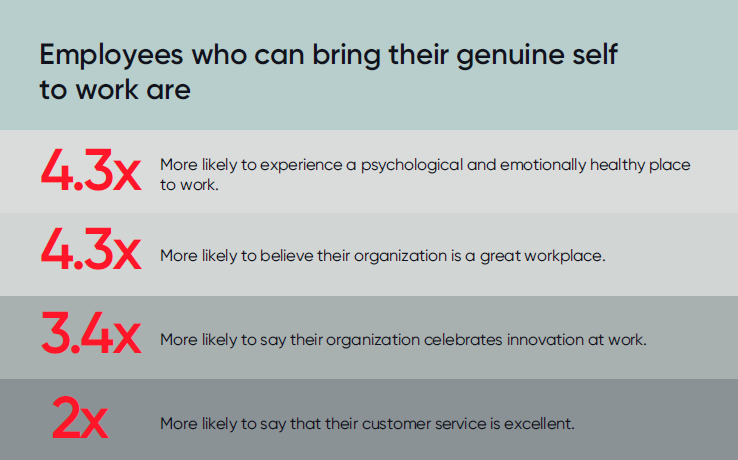
Employees who can bring their genuine self to work are more engaged

Best Practices for Shaping an Inclusive Culture

Leadership Commitment and Accountability 

DEIB efforts must be championed from the top, with leaders playing a visible role in driving change.  Leaders must not only model inclusive behaviors but also tie executive compensation to diversity and inclusion metrics.

For instance, NatWest Group India has set a strong precedent by forming a dedicated Diversity and Inclusion team with structured workstreams targeting various aspects of DEIB. This approach has allowed NatWest to take a comprehensive approach to inclusion, ensuring accountability at the leadership level.

Comprehensive Training and Education

Ongoing training is critical for building an inclusive workplace. DEIB education, particularly around unconscious bias, inclusive behaviors, and cultural competence, can significantly shape employees’ decision-making.

An example is Fractal Analytics, which implemented a three-pillar approach focused on equity in promotions. By mitigating bias and promoting transparent communication, the company created an environment where diverse employees feel valued and recognized for their contributions.

Inclusive Hiring and Promotion Practices

Structured, bias-mitigating processes for recruitment and promotion ensure equal opportunities for all candidates. Utilizing diverse interview panels, standardized evaluation criteria, and inclusive job descriptions are effective strategies.

For example, S&P Global employs its “Effective Interview Skills training” program to prepare hiring teams to conduct fair and structured interviews. Similarly, Vindhya e-Infomedia Private Limited stands out for its inclusive hiring policies, creating a workspace “Accessible for all” with ramps, Braille signage, and audio instructions in elevators to support employees with disabilities. This holistic approach to inclusivity in hiring and work environment design sets a gold standard for accessibility.

Addressing Microaggressions and Exclusionary Behaviors

Building an inclusive culture requires addressing microaggressions and exclusionary behaviors head-on. Organizations should empower employees to speak up against such incidents and offer training on bystander intervention. Establishing clear processes for reporting and addressing these behaviors is critical.

Employee Resource Groups (ERGs)

ERGs foster a sense of community and belonging, providing employees from diverse backgrounds with a platform to connect and support one another. These groups can play a pivotal role in shaping company policies and practices. Mastercard’s Business Resource Groups, serves as a powerful example of how ERGs can promote inclusion and influence broader company initiatives. By securing executive sponsorship and providing resources to these groups, companies can help ensure that ERGs drive meaningful change within the organization.

Embracing Inclusion has a significant impact on employee wellbeing

Transparent Communication and Feedback Mechanisms

Open channels for communication and feedback are essential to building a culture of trust and inclusion. Companies must encourage employees to share feedback, report concerns, and contribute ideas related to DEIB initiatives. Regularly communicating progress on diversity goals and initiatives helps maintain engagement and accountability.

In practice, Akamai Technologies India Private Limited has established clear communication mechanisms, particularly in its remote work policies, remote onboarding support, and wellness programs. This focus on transparency ensures that employees feel connected and supported, even in a virtual environment.

Celebrating Diversity and Fostering Cross-Cultural Understanding

Organizations should regularly celebrate the diverse cultures, identities, and experiences within their workforce. Encouraging employees to share their unique perspectives can promote greater understanding and foster inclusion.

Inclusive Policies and Benefits

Inclusion extends beyond day-to-day interactions and should be reflected in a company’s policies and benefits. Supporting employees from diverse backgrounds with policies such as flexible work arrangements, parental leave, and mental health support is critical. Western Union, for instance, demonstrates a strong commitment to pay equity and transparent compensation practices, ensuring that all employees, regardless of background, are fairly compensated and provided with opportunities for advancement. Additionally, Akamai Technologies has implemented flexible work policies and wellness programs to support the diverse needs of its remote employees.

Embracing Equity has a significant impact on employee wellbeing

Measurement and Accountability

To drive meaningful progress, organizations must establish clear metrics to track the success of their DEIB initiatives. Regularly assessing these efforts through data allows companies to refine strategies and hold leaders accountable for results.

Inclusive Design Thinking

Inclusive design thinking means applying diverse perspectives in the development of products, services, and internal processes. This approach fosters an environment where decisions reflect the needs of all employees and customers. Forming cross-functional teams that prioritize inclusive design helps avoid unintentionally alienating any group.

Diversity, equity, inclusion, and belonging initiatives have the power to profoundly shape workplace culture, driving innovation, engagement, and business success. By adopting best practices and committing to long-term DEIB strategies, companies can create cultures where all employees feel valued, empowered, and able to contribute their best work. In today’s competitive business landscape, prioritizing DEIB is not just the right thing to do—it’s a strategic imperative for building high-performing, resilient organizations.

Get Certified to Showcase Your Commitment    

Achieving Great Place To Work Certification is an excellent way to demonstrate your organization’s commitment to employees’ overall wellbeing and experience. This Certification not only enhances your employer branding but also helps attract and retain top talent. It highlights to current and prospective employees that your organization values their health, happiness, and overall wellbeing.    

By implementing a culture of trust, respect, and collaboration, you can create a workplace where employees feel strong, healthy, and connected. Certification also provides a benchmark for continuous improvement, helping you identify areas where you can further enhance employee well-being and overall workplace culture.  

For All Summit 2025: Vision to Value – Building Workplaces That Matter

Join us on February 6, 2025, in Mumbai for an enlightening day filled with insights on creating sustainable, humane, and inclusive workplaces. Learn from industry leaders about purpose-driven cultures, innovative HR practices, and adaptive leadership strategies. 

Get your passes today – https://testg.in/for-all-summit 
Banner for registering for the Great Place To Work® For All™ Summit 2025
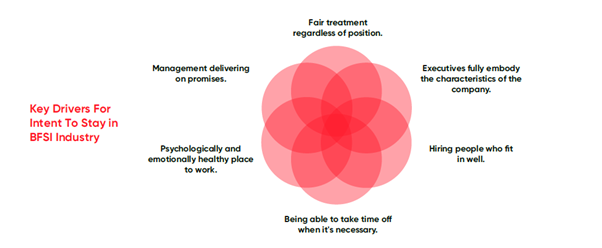
The modern workplace is a dynamic landscape, constantly evolving to reflect the ever-changing needs of a diverse workforce. In this environment, achieving Diversity, Equity, Inclusion, and Belonging (DEIB) is no small feat. It’s akin to assembling a complex puzzle with interconnected pieces. Each element, valuable, contributes to a larger picture: a workplace that fosters success promotes employee well-being, and ultimately thrives in today’s competitive landscape.

Beyond Diversity: Belonging as the Cornerstone

Imagine a magnificent building. Diversity, Equity, and Inclusion represent the strong foundation upon which it stands. However, without a framework to connect these elements, the building remains incomplete. Belonging acts as that framework, providing the structure and stability needed for sustainable growth.
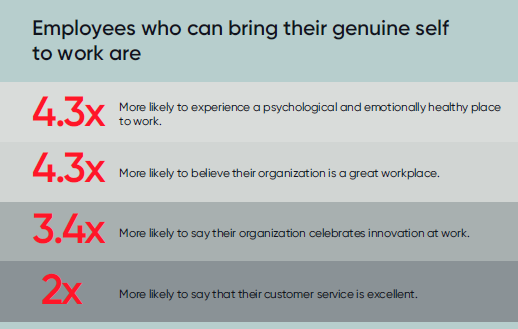
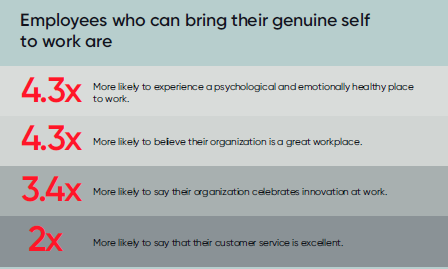
Employees who can bring their genuine self to work are 4.3X more likely to experience a psychological and emotionally healthy place to work. 4.3X more likely to believe their organization is a great workplace. 3.4X more likely to say their organization celebrates innovation at work. 2X more likely to say that their customer service is excellent.

At Best Workplaces™, they follow a simple belief: to succeed, one needs to bring together different pieces to create a place where everyone feels welcome, valued, and empowered to do their best work. This means going beyond simply having a diverse workforce. It’s about fostering an environment where individuals feel comfortable bringing their unique perspectives, talents, and experiences to the table. This creates a vibrant tapestry of ideas, leading to a more successful and innovative workplace.

The Power of Feeling Connected

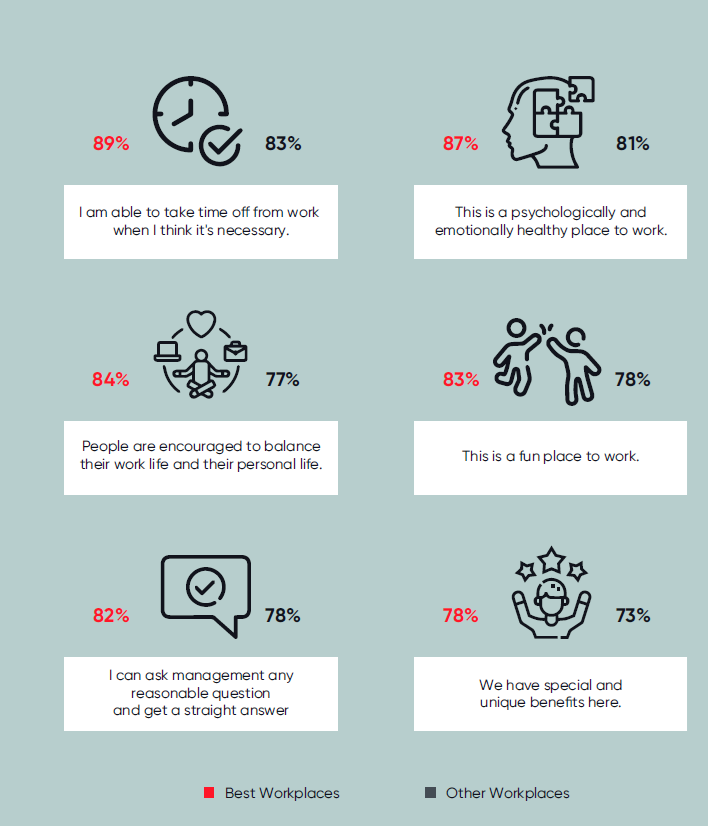
Belonging is the ultimate goal of DEIB efforts. It’s more than just physical presence; it’s the feeling of being truly connected to your colleagues and valued as an equal member of the team. Best Workplaces prioritize employee well-being and create a psychologically healthy, fun, and open culture that promotes work-life balance and offers unique benefits. This fosters a sense of security and encourages employees to bring their whole selves to work, leading to greater engagement and productivity.

Best Workplaces prioritize employee well-being, promote work-life balance, and offer unique benefits, fostering a psychologically healthy, fun, and open culture.

Leaders Championing Belonging

Leaders are increasingly recognizing the value of belonging. This shift in mindset has sparked the development of targeted strategies to cultivate a sense of connection within teams. Psychological safety, the feeling of being able to express oneself without fear of negative consequences, has emerged as a critical component. When employees feel safe to share ideas and take risks, creativity flourishes, and innovation thrives.

The Art of Belonging

Art has always been a powerful tool for self-expression, allowing us to explore our identities and connect with others on a deeper level. This power extends to the workplace as well. By embracing artistic expression, we can create avenues for employees to share their authentic selves, fostering a sense of connection and belonging. It allows individuals to showcase their unique talents and perspectives, building respect and appreciation for diversity.

Expressing Identity Through Art

Imagine a workplace where data analysts can showcase their award-winning nature photography alongside their statistical reports. Or a space where a programmer finds solace in composing music during breaks, later sharing their original pieces with colleagues. Artistic expression allows employees to share their passions and interests beyond their professional roles. This creates a more holistic understanding of everyone, fostering empathy and building stronger bonds between colleagues.

Sharing Creates a Sense of Belonging

Trust is a cornerstone of any successful workplace relationship. A key element of this trust is respect. When employees feel respected by their leaders and peers for who they are, a sense of belonging flourishes. At Best Workplaces, our Trust Index™ Survey measures if employees feel they can be their full selves at work. This includes understanding if leaders show a genuine interest in their employees’ lives – their hobbies, passions, and even their favorite foods. By taking the time to learn about their employees as individuals, leaders can reinforce this sense of belonging and create a more positive work environment.

Encouraging Artistic Expression at Work

The good news is that nurturing artistic expression doesn’t require a complete overhaul of your workplace culture. Here are a few ways to get started:

  • Create a Psychologically Safe Environment: Foster open communication and encourage employees to share their ideas without fear of judgment. This can be achieved through team-building exercises, anonymous feedback channels, and active listening during meetings.
  • Bring Art and Creativity into the Workplace: Organize field trips to art galleries or museums related to your industry. Host workshops with local artists who can teach employees new skills, such as painting, pottery, or even improv comedy. Feature employee artwork in common areas, creating a vibrant and welcoming space.
  • Embrace Deep Work: Many creative pursuits require focused attention. Schedule dedicated times for “deep work,” where employees can minimize distractions and delve into projects that require intense focus and innovation.
  • Celebrate Employee Achievements: Recognize and celebrate employee achievements, both big and small. This could include highlighting artistic endeavors in company newsletters, showcasing employee artwork during team meetings, or even hosting talent shows or art exhibitions.

Remember, artistic expression isn’t just for artists. By encouraging employees to explore their creative sides, you can unlock a wealth of potential. Studies have shown that fostering creativity in the workplace leads to a number of benefits, including:

  • Enhanced Problem-Solving: Approaching challenges from a more creative perspective can lead to innovative solutions and improved decision-making.
  • Increased Employee Engagement: When employees feel their ideas are valued, and they have opportunities to be creative, they become more invested in their work.
  • Improved Communication and Collaboration: Artistic expression can break down communication barriers and encourage collaboration across teams.
  • Reduced Stress and Improved Well-being: Engaging in creative activities can be a powerful stress reliever, leading to happier and healthier employees.

By fostering a culture that embraces artistic expression, you’re not just creating a more vibrant workplace; you’re laying the foundation for a more successful and innovative organization. When each employee feels like a valued member of the team, with the freedom to express their unique talents and perspectives, the entire organization thrives. Let’s build a framework for success together, where belonging isn’t just a word but a lived experience for everyone.

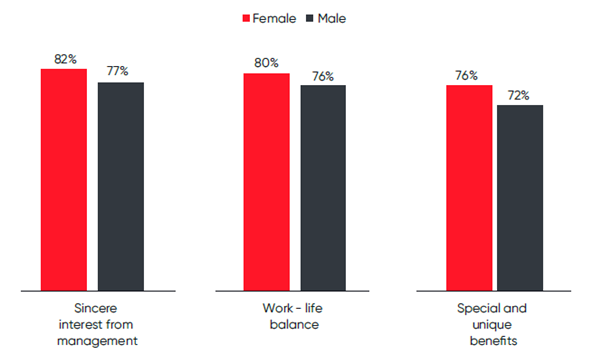
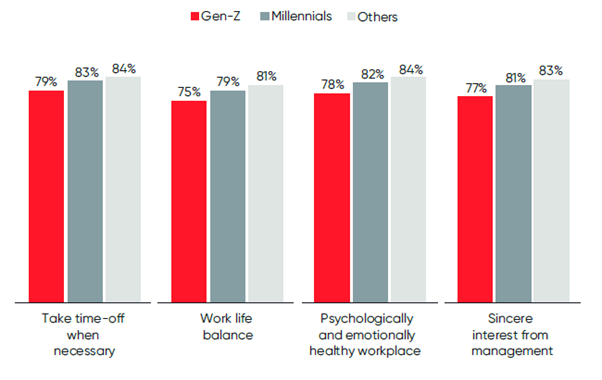
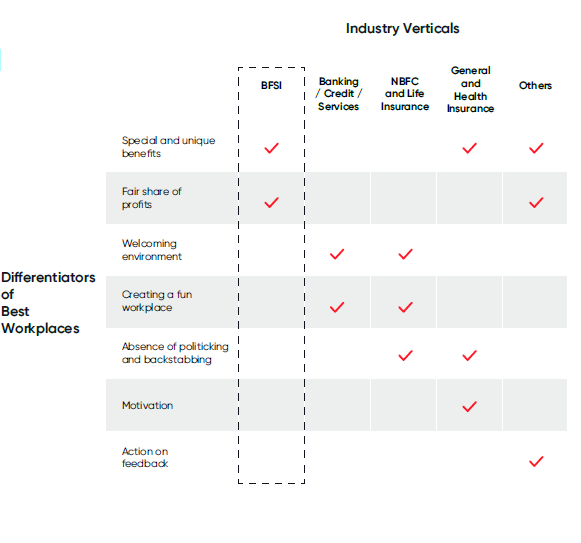
The BFSI sector in India is experiencing significant growth, with a strong focus on hiring and expansion. Despite this, workplace perceptions show a noticeable decline, particularly regarding employee trust and fairness. Women report feeling overlooked for special recognition and less satisfied with workplace equity than men. Similarly, younger employees, especially Gen Z, express a lower intent to stay long-term and perceive less fairness in pay than older generations. While the industry is praised for safety and competent management, dissatisfaction stems from perceived unfair profit-sharing, favoritism among managers, and workplace politics. Amid these challenges, fostering a caring work environment is emphasized to enhance employee satisfaction, loyalty, and productivity, urging BFSI entities to prioritize compassion and inclusivity.

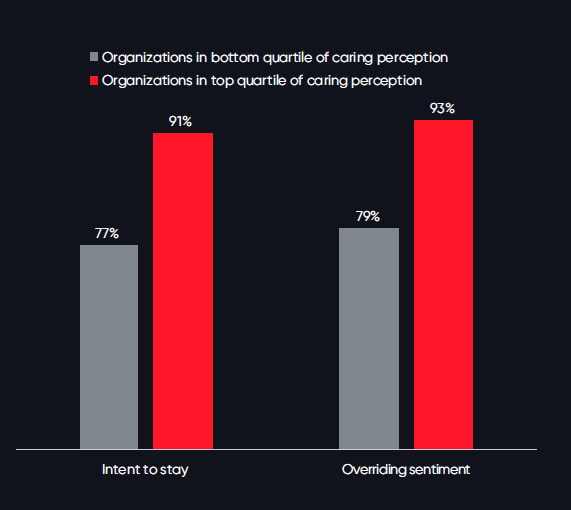
A pressing necessity at present is prioritizing care within the workplace, particularly in organizations within the BFSI sector. It remains paramount for these entities to steadfastly concentrate on cultivating a nurturing work environment, recognizing it as a fundamental catalyst for fostering workplace culture and ensuring employee satisfaction.

Equity Perceptions across Gender & Generations

In the BFSI industry, most employees, comprising 4 out of 5, hold positive perceptions regarding workplace equity. However, a notable gender disparity emerges, with female employees expressing a 5% lower satisfaction level regarding equity than their male counterparts. Similarly, while nearly 80% of Gen-Z and Millennial employees report satisfaction with workplace equity, a discernible generational gap exists. Specifically, Gen-Z employees exhibit a 6% lower perception of fair pay than their older peers, such as Gen-X and Baby Boomers. These findings underscore the importance of addressing gender and generational equity concerns to foster an inclusive and supportive workplace environment in the BFSI sector.

Focusing on Care in the Workplace – Across Genders

Male employees tend to perceive their organization as more caring than their female counterparts on average. To enhance the experience of women employees, organizations should prioritize demonstrating genuine interest, enhancing work-life balance, and offering tailored and distinctive benefits. Particularly in the BFSI sector, female employees express a heightened requirement for sincere attention from management, improved work-life equilibrium, and specialized perks.

Sincere interest from management is 82% for female and 77% for male. Work - life balance for female is 80% and male 76%. Special and unique benefits for female is 76% and male its 72%.

Focusing on Care in Workplace – Across Generations

On aspects related to a caring work environment (a key driver for the BFSI industry), Millennials and Gen-Z employees report lower perception in 5/7 sentiments (i.e., -1% lower on average). Millennials and Gen-Z employees in the BFSI industry report a higher need for sincere interest from management, a psychologically and emotionally healthy workplace, work-life balance, and taking time off when necessary.

Millennials and Gen-Z 
employees in the BFSI industry 
report a higher need for 
sincere interest from 
management, a psychologically 
and emotionally healthy 
workplace, work-life balance, 
being able to take time off 
when necessary.

Maximizing Workplace Satisfaction in the BFSI Sector

Enhancing Employee Retention through Care and Benefits

Leading organizations in the BFSI sector outpace others by 9% in equitably sharing profits and offering special and unique benefits. Moreover, the gap in the Trust Index™ score between these top-tier workplaces and others averages 4%. These top performers go beyond industry standards by tailoring workplace initiatives to fit their vertical, resulting in a distinctively positive experience for their employees.

Best Workplaces In BFSI Lead
By 9% In Fair Share Of Profits And 
Special & Unique Benefits.

Long-Term Commitment Despite Slight Dip

Although 84% of BFSI employees desire to stay long-term, this figure lags 1% below the all-industry average for 2024. However, cultivating a healthy, equitable workplace environment can significantly boost employee retention in the BFSI sector. Prioritizing well-aligned hiring practices, executive authenticity, psychological well-being, flexibility for necessary time off, and dependable management commitments contribute to this positive outcome.

A healthy, fair workplace prioritizing well-aligned hiring, executive authenticity, psychological well-being, flexibility for 
necessary time o, and reliable management promises enhances employee retention in the BFSI industry.

The Payoff of Prioritizing Care

Organizations perceived as caring, wherein managers demonstrate genuine interest in employee well-being and provide supportive benefits, witness remarkable workplace outcomes. On average, entities ranking in the top quartile for caring report a 14% higher intent among employees to remain with the company, underscoring the substantial benefits of fostering a caring workplace culture.

On average, organizations in the top quartile of caring report 
14% higher intent to stay and overriding sentiment.

Learnings from Best Workplaces

Promoting Work-Life Balance at Future Generali India Insurance Company

Future Generali India Insurance Company prioritizes work-life balance by offering flexible work arrangements, particularly beneficial for women before and after maternity. Employees can avail of options such as working from home, capped at 2 days per week and 5 days per month, without the option to accumulate or carry forward unused days. Additionally, the policy prohibits selecting Mondays and Fridays or two consecutive days unless exceptionally approved.

The Flexi Work Arrangement allows employees to adjust their start and end times within core hours and opt for reduced or part-time hours. Moreover, the company supports working from the nearest office location, aligning with the gender diversity goals of the Generali Group. Future Generali has introduced period leave, extended paternity leave to 30 days, and mandated various safety measures for female employees working late to further support employees.

Fostering Authentic Connections at Angel One Limited

The Core Program of Angel One Limited. Through CORE managers and leaders emerge as agents of change.

Cultivating a Culture of Care at Tata AIG General Insurance

Tata AIG General Insurance has implemented impactful programs focusing on collaboration, effective communication, demonstrating care, and prioritizing the overall employee experience.

While the BFSI sector in India experiences growth, challenges in maintaining workplace equity persist. Gender and generational disparities require attention, but prioritizing care and inclusivity can enhance employee satisfaction and retention. Leading organizations demonstrate the benefits of equitable practices and tailored initiatives. Moving forward, emphasizing empathy and collaboration will be vital for sustained success in the BFSI industry. Visit us here to learn more. 

Every few years, a fresh wave of individuals enters the workforce, each bringing its own unique blend of characteristics, traits, and values. In the past, Baby Boomers prioritized job security, Generation X emphasized achieving a balance between work and personal life alongside professional advancement, and currently, Millennials and Generation Z place importance on various aspects such as a company’s ethical stance and maintaining a healthy work-life balance. These distinctions significantly shape how employees interact with each other and how they are managed within organizations.

According to Johns Hopkins, a significant portion of the workforce currently comprises Baby Boomers (19%), Generation X (35.5%), and Millennials (39.4%). With individuals from this section reaching 65 every day, by 2030, it’s projected that Generation Z will constitute approximately 30% of the workforce. Their innovative perspectives on work and technology are poised to significantly impact our work environments in the near future. Hence, recognizing and appreciating the similarities as well as the distinctions is essential for employers seeking to create inclusive environments where diverse talents can thrive, ultimately driving innovation and success. 

Greater Diversity, Equity, Inclusion & Belonging (DEIB) 

Gen Z views DEIB as an aspiration and an indispensable cornerstone for a workplace that resonates with its core values and fosters its vision of a more equitable future. Furthermore, Great Place To Work® research underscores the profound impact of DEIB initiatives on employees’ sense of workplace wellness, with those in inclusive environments being 4x more likely to perceive their workplace as psychologically healthy. By prioritizing diversity, equity, inclusion, and belonging (DEIB), organizations attract and retain top Gen Z talent and cultivate an environment where all employees can thrive, innovate, and contribute their fullest potential to the organization’s collective success.

Recognize the importance of diversity beyond traditional demographics by including neurodiversity alongside gender, race, and sexual orientation in DEI programs. Demonstrating a commitment to understanding and supporting Gen Z’s diverse workforce strengthens retention efforts.

The image showing 2x more likely to say that their customer service is excellent. 3.4x more likely to say their organization celebrated innovation at work. 4.3x more likely to believe their organization is a great workplace. 4.3x more likely to experience a psychological and emotionally healthy place to work.

Focus on Flexibility & Mental Health

Gen Z values work-life balance and autonomy in the workplace. Despite their willingness to work hard, they seek flexible schedules to accommodate personal needs and career development. Research indicates that 73% of Gen Z employees prefer permanent flexible work options, such as remote or hybrid arrangements. These alternatives enhance productivity and alleviate stressors like heavy workloads and poor work-life balance, contributing to improved mental health. Employers can support Gen Z’s holistic well-being by embracing flexible work models while fostering a more engaged and productive workforce.

Gen Z employees prioritize access to mental health services and a workplace culture that fosters well-being. This entails establishing stigma-free environments and integrating mental health initiatives across the organization to cater to personal and professional wellness needs. Moreover, when employees do not experience burnout, they are twice more likely to be happier and contribute more to the organization.

The image shows that when employees do not experience burnout, they are 2x more likely to want to work at their organization for a long time, put in extra effort to get the job done, quickly adapt to changes needed for organization's success and call their workplace a great workplaces.

Focus on Engagement & Fair Pay

Engagement activities play a pivotal role in the workplace, especially when it comes to Gen Z employees. By incorporating engaging activities into the workplace culture, companies can foster a sense of belonging and loyalty among Gen Z employees.

Commitment to equal pay reinforces employer attractiveness to Gen Z. Offering fair compensation aligns with their values and increases the likelihood of employee retention.

The image shows at Best Workplaces when women are involved in decision-making they are 2x more likely to say they work at a great workplace, proud to tell others about their workplace, they look forward to coming to work here and strongly endorse their company to their friends and family as a great place to work.

Gen Z employees seek career advancement and financial security, valuing mentorship and training programs. They prefer companies offering guidance, development opportunities, and supportive leadership.

As today’s young employees ascend into future leadership roles, companies must adopt innovative strategies to accommodate the needs of Generation Z employees. By gaining a deeper understanding of their perspectives and adapting accordingly, organizations can bridge generational gaps and foster environments conducive to the success and satisfaction of all employees. Visit us here to learn more.

Camera red icon

LIVE WEBINAR WITH Q & A

certification-badge-2026-rhc4efc9ny04x7lz17jff7guyhsup5b0yvrou4vd72

The Certification Advantage: Why Partner with Great Place To Work®

How partnering with Great Place To Work can strengthen your people strategy, and drive business outcomes through data-driven insights and Certification.

prasad-kachraj

Prasad Kachraj

Managing Director, Great Place To Work, India

23rd September 2026  |  4.00 PM - 4.30 PM IST

Register Now