Building a Thriving Culture: Celebrations Your Company Should Embrace

Confident business team

Reading Time: 5 minutes

Celebrations in the workplace are more than just a break from routine; they are essential to nurturing a culture of trust, camaraderie, and engagement. Recognizing achievements, milestones, and values sends a powerful message to employees about what the organization values and strives for. According to Great Place To Work®’s report on India’s Best Companies to Work For, companies that celebrate shared milestones and individual achievements foster a stronger sense of connection and pride, creating a workplace where employees feel supported and motivated. Here’s a closer look at five celebrations that leading organizations use to strengthen their culture, and how they can be applied to your workplace.

Celebrate Milestones and Anniversaries

Milestones such as work anniversaries, birthdays, and personal achievements provide perfect opportunities to show appreciation. Recognizing these moments reinforces an employee’s sense of loyalty and commitment. According to the India’s Best Companies to Work For 2024 report, organizations that mark these events build stronger bonds with their employees. 

For example, at Intercontinental Hotels Group, team members recognize outstanding service through initiatives like the “Power Ringer.” During this celebration, employees publicly acknowledge exceptional service by ringing a bell to show appreciation, creating a ripple effect of positivity and camaraderie across the team. This simple gesture not only uplifts the individual being recognized but also strengthens team morale by encouraging employees to express gratitude openly. 

Similarly, at Orient Cement, employees participate in the “Dahi Handi Way,” a unique tradition where employees collaborate to solve problems and celebrate each other’s successes. Recognizing both personal and team milestones with enthusiasm creates an environment of mutual respect and reinforces the notion that the company values long-term contributions and growth. Acknowledge anniversaries or project completion milestones in a way that reflects the team’s unique culture. This can be as simple as an in-office shout-out, a digital badge on internal platforms, or a team lunch, small gestures that convey appreciation meaningfully.

Retention is largely driven by employees feeling a sense of purpose. This commitment to purpose not only boosts retention but also strengthens the company’s employer brand, making it an attractive choice for new hires.

Promote Diversity and Inclusion by Celebrating Unique Cultures

Creating an inclusive culture where all employees feel valued is essential, and celebrations can play a key role in promoting diversity and inclusion. Celebrating diverse cultural backgrounds not only fosters understanding but also strengthens the bonds between employees, contributing to a more harmonious work environment.
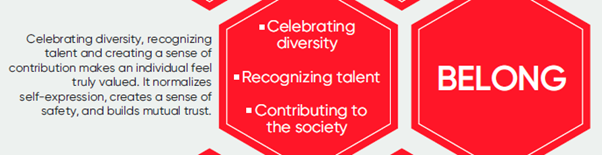
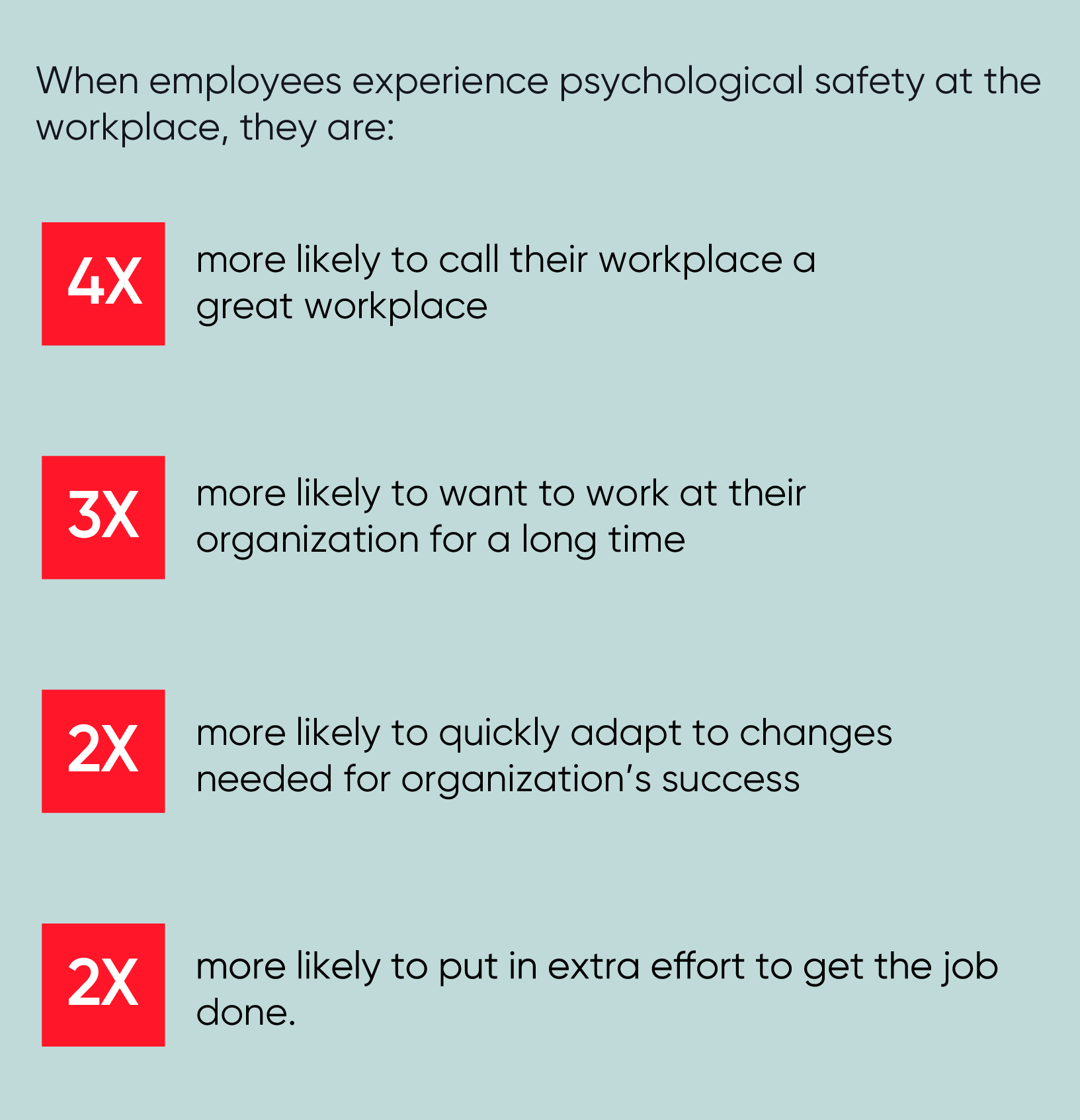
Celebrating diversity, recognizing talent, and creating a sense of contribution makes an individual feel truly valued. It normalizes self-expression, creates a sense of safety, and builds mutual trust.

Employee Resource Groups (ERGs) are instrumental in organizing celebrations that honor the unique traditions, experiences, and contributions of different groups within the workforce. For instance, several companies highlighted in the report have established ERGs to celebrate cultural events and raise awareness about diverse backgrounds. By acknowledging and respecting these differences, ERGs help create a sense of belonging and recognition for all employees.

Empower ERGs or small groups within the organization to lead cultural celebrations. This could involve setting up a calendar of multicultural events or hosting inclusive office gatherings. Companies foster an environment of acceptance and appreciation by giving employees the chance to celebrate their backgrounds.

Highlight Core Values Through Meaningful Celebrations

Aligning celebrations with the organization’s core values enhances a company’s culture by giving employees tangible examples of what those values look like in action. Celebrating values-driven achievements or organizing events that reflect the company’s mission can help employees connect more deeply with the organization’s purpose. 

Bajaj Finance, for example, emphasizes trust by offering employees the option to choose their salary payment cycle, whether monthly or fortnightly. This celebration of financial autonomy is a simple but powerful gesture that demonstrates the organization’s commitment to understanding and supporting employees’ financial needs. By doing so, Bajaj Finance reinforces its core values of trust and respect in a way that directly impacts employees’ lives.

Identify values that resonate with your team and look for ways to celebrate them. If community involvement is a core value, consider organizing an annual day of service or setting up donation drives. These events can strengthen employees’ commitment to the company’s mission.

Acknowledge Individual Excellence

Individual achievements deserve special recognition, as they motivate employees and encourage a sense of pride and ownership in their work. Personal celebrations foster a positive work environment, inspire loyalty, and can improve job satisfaction.

The India’s Best Companies to Work For 2024 report highlights organizations that go the extra mile to acknowledge individual excellence. For instance, PGP Glass Pvt. Ltd. introduced the ASTITVA program to recognize the achievements of employees with disabilities, reinforcing an inclusive culture that values every team member’s unique talents. This recognition goes beyond typical employee rewards by honoring the distinct contributions of individuals and fostering a culture of inclusivity and respect.

Establish individual recognition programs that celebrate various aspects of excellence, whether it’s a specific skill, an outstanding project, or unique contributions. Personalized recognition, like tailored awards, team shout-outs, or even a dedicated “Employee of the Month” program, can help employees feel valued and appreciated for their hard work.

Celebrate Innovation and Progress

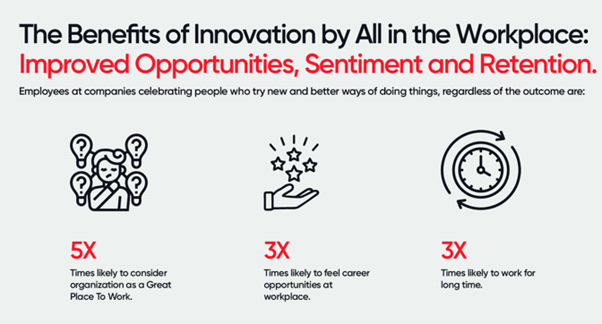
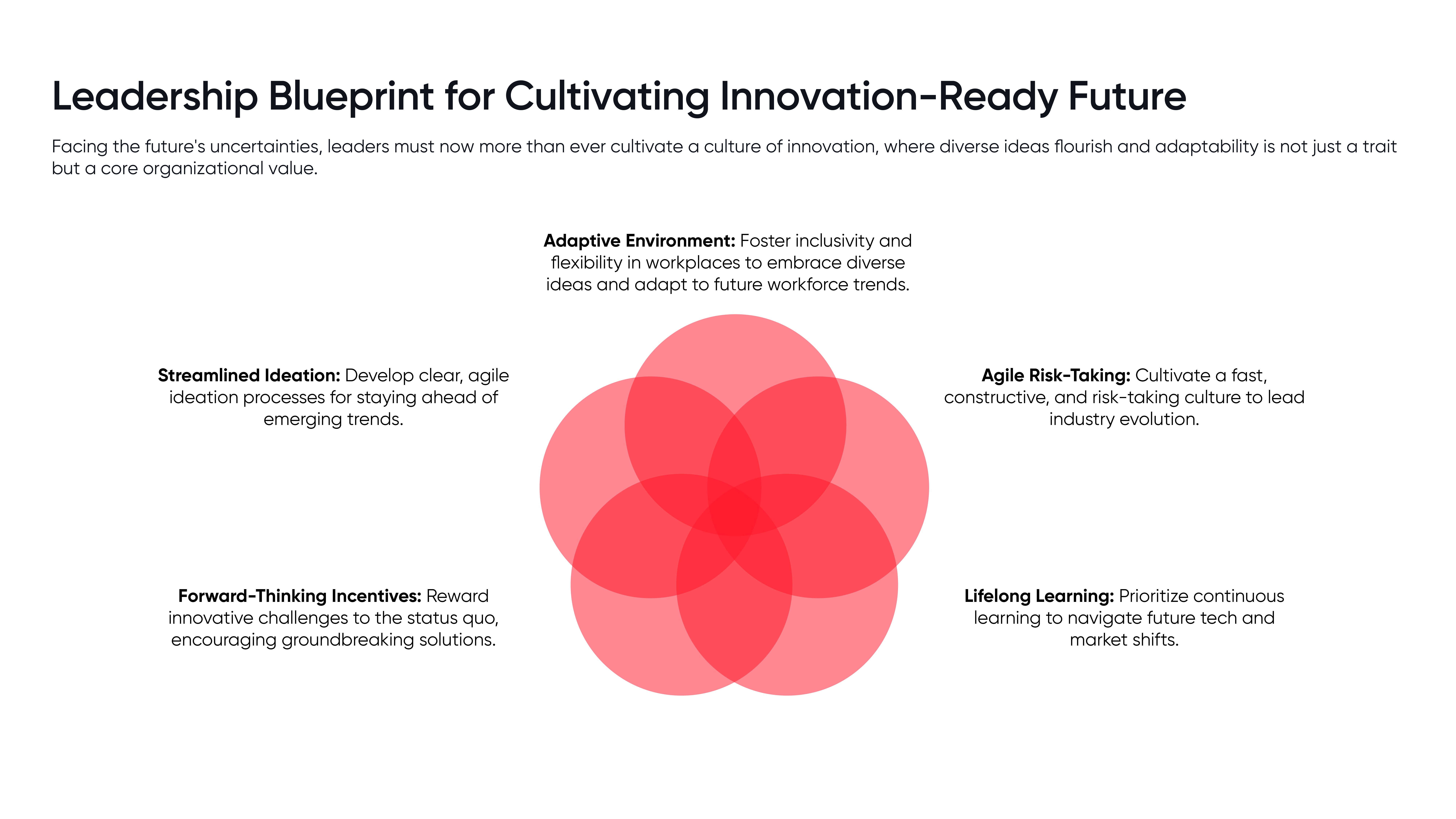
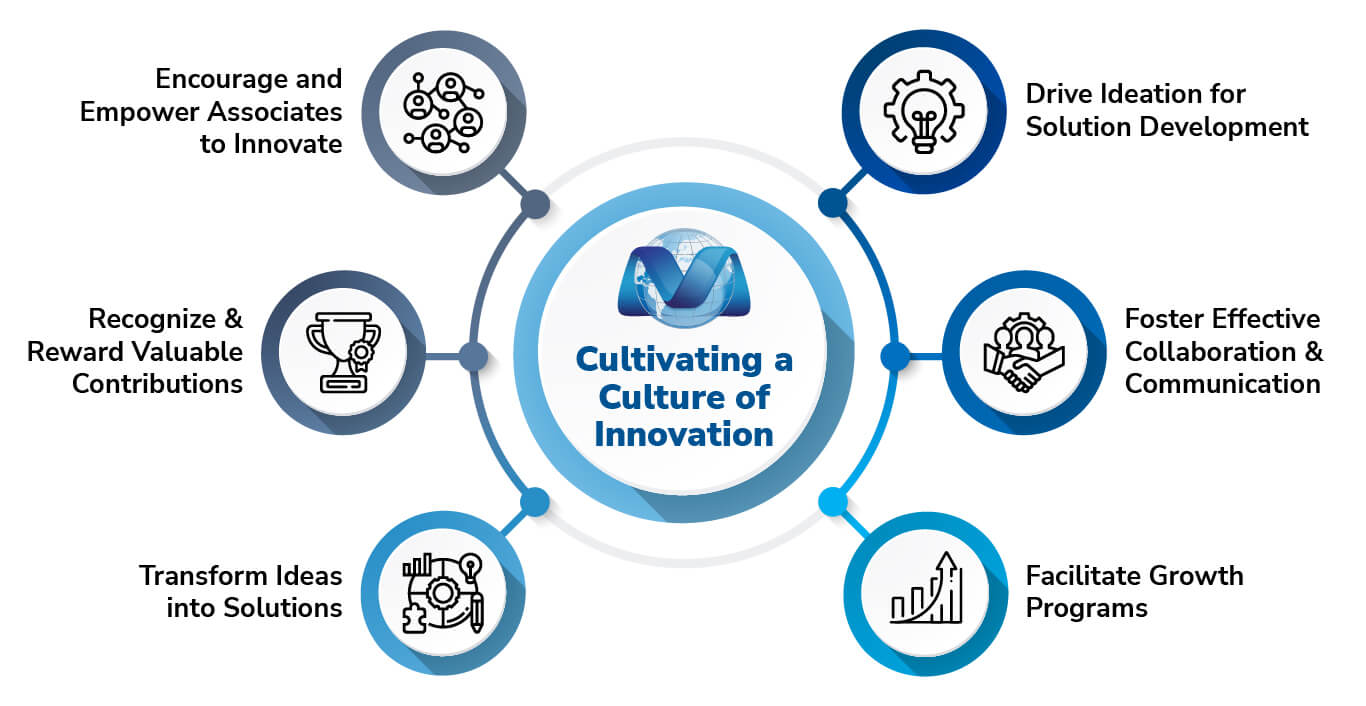
Recognizing innovation and progress within the organization can inspire creativity and encourage employees to think outside the box. Celebrations centered around innovation demonstrate that the company values new ideas and is willing to support creative problem-solving efforts.

Enhanced Customer Service and Brand Reputation

Employees who feel supported and valued are more likely to deliver excellent customer service. The report finds that 89% of employees at the best mid-size workplaces in India believe their customers would rate their service as ‘excellent.’ This reflects a virtuous cycle where a positive internal culture translates into high levels of customer satisfaction. 
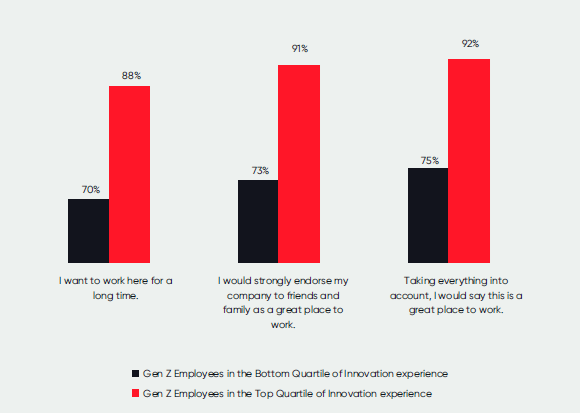
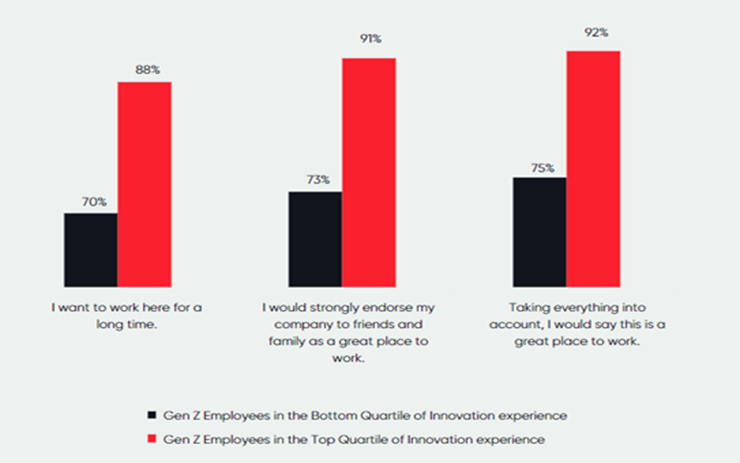
Gen Z employees with higher and more positive experience with innovation at their workplace take a lead of 18% in willingness to stay.

At ISS Facility Services India, the “Innovation Roundtable” was introduced to foster a culture of collaboration and forward-thinking. This event brings together thought leaders from different industries to discuss sustainable innovation, offering employees a platform to share and develop their own ideas. With a focus on collaboration and sustainability, the Innovation Roundtable reflects ISS Facility Services’ commitment to continuous improvement and progress. 

Hold regular innovation events or competitions to recognize and reward employees who bring fresh ideas. Encouraging employees to participate in these activities can reinforce a growth mindset and help them feel valued for their contributions to the company’s success.

Celebrations might seem like small gestures, but they leave a lasting impact, promoting a workplace culture where employees feel valued, connected, and motivated. By embracing these five celebrations, companies can cultivate a positive culture that not only strengthens employee loyalty but also drives long-term success.

Get Certified to Showcase Your Commitment

Achieving Great Place To Work Certification is an excellent way to demonstrate your organization’s commitment to employees’ overall well-being and experience. This Certification not only enhances your employer branding but also helps attract and retain top talent. It highlights to current and prospective employees that your organization values their overall well-being, fostering an environment where they feel appreciated and supported.

By implementing a culture of trust, respect, and collaboration, you can create a workplace where employees feel valued and connected. Certification also provides a benchmark for continuous improvement, helping you identify areas where you can further enhance employee well-being and overall workplace culture. 

Equity in the Workplace: A Pillar for Organizational Success

Multi ethnic client and manager make deal, handshaking, express respect

Reading Time: 5 minutes

In today’s competitive and evolving workplace, equity is more than just a buzzword; it’s a fundamental requirement for fostering an environment where all employees can thrive. In the financial services industry, especially within the Banking, Financial Services, and Insurance (BFSI) sector, there is a growing recognition that equitable practices are crucial for long-term success. The “India’s Best Workplaces in BFSI 2024” report sheds light on this, showcasing how equity impacts employee satisfaction, organizational culture, and performance.

Understanding Equity in the Workplace

Equity in the workplace refers to the fair treatment of all employees, ensuring that everyone has equal access to opportunities, rewards, and resources, regardless of gender, age, position, or background. Unlike equality, which promotes identical treatment, equity recognizes individual needs and adjusts resources accordingly to eliminate barriers to success.

For companies in the BFSI sector, prioritizing equity means creating policies that address the unique challenges faced by different demographics, thereby fostering a culture where everyone feels valued. A focus on equity not only improves job satisfaction but also drives productivity, enhances loyalty, and creates a more dynamic workplace.

Equity in BFSI: Gender and Generational Perspectives

The BFSI sector has made strides in promoting equity, yet data from the 2024 report reveals disparities in employee experiences, particularly across gender and generational lines.

Gender-Based Differences in Equity Perception

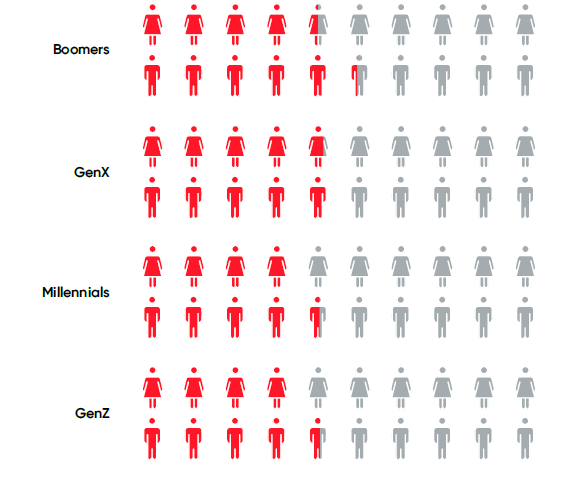
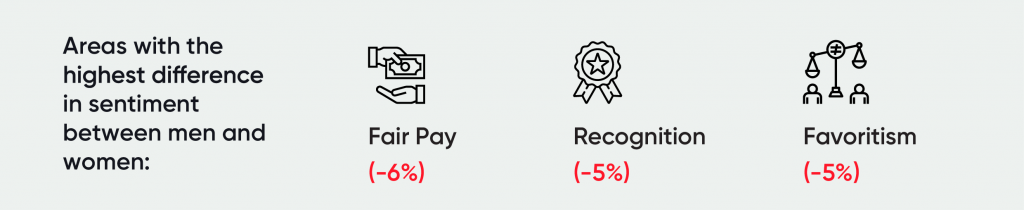
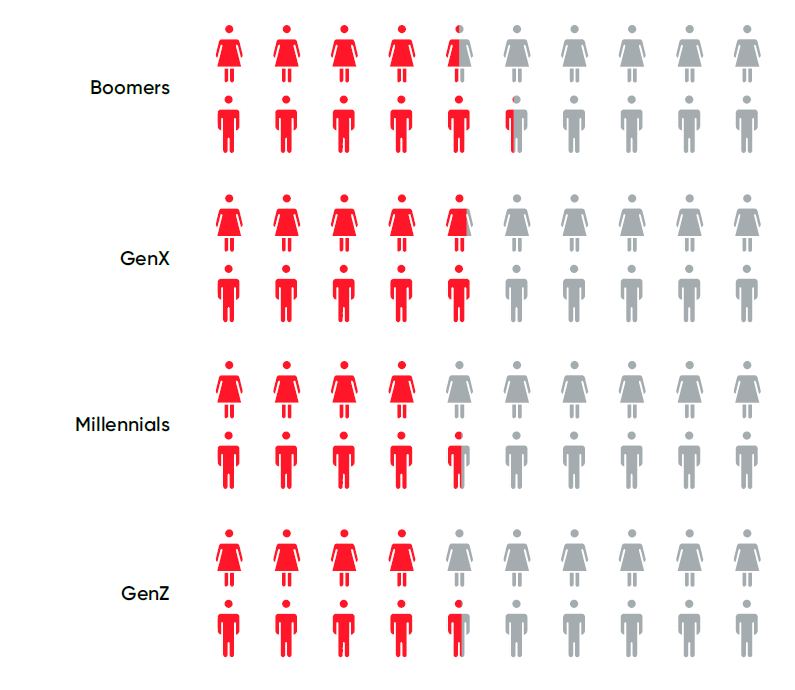
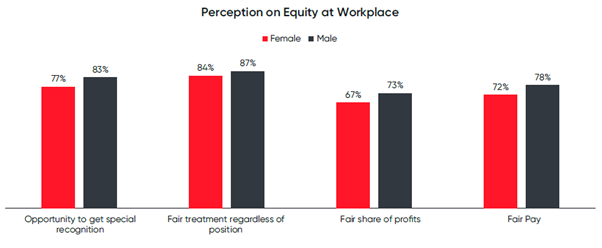
The report indicates that while four out of five BFSI employees feel positively about workplace equity, female employees report a lower satisfaction rate than their male counterparts. Specifically, women are five percentage points less satisfied with workplace equity. This discrepancy spans multiple aspects, including fair pay, recognition, and treatment regardless of position.

Perception of equity at the workplace

Recognition: Women in the BFSI sector are less likely to feel they receive special recognition. The report states that one in four female employees perceives a lack of recognition opportunities, which can impact motivation and job satisfaction. Recognition is essential for fostering a sense of accomplishment, and a lack of it can lead to disengagement, particularly for women striving to balance multiple roles.

Fair Pay and Profit Sharing: Another significant area where gender inequity persists is in compensation. The report shows that women are less likely to feel they receive a fair share of profits and fair pay. Fair compensation is a core component of equity, as it acknowledges the value of each employee’s contributions, regardless of gender. Addressing pay disparities is critical for ensuring women feel equally valued and motivated.

Workplace Culture and Bias: Gender bias remains a challenge in the BFSI sector, with some women reporting a lack of opportunities compared to their male colleagues. This perception highlights the need for ongoing efforts to address unconscious biases in promotion and recognition processes, ensuring fair opportunities for advancement.

Generational Variations in Equity Perception

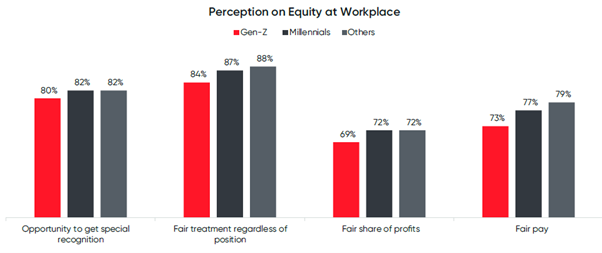
In addition to gender, the report reveals generational differences in equity perceptions. Gen Z employees, who represent a growing demographic in the BFSI sector, report lower satisfaction with fair pay compared to their older counterparts. 

Perception on Equity at Workplace

Fair Pay for Younger Employees: Nearly 80% of Gen Z and Millennial employees are generally satisfied with equity at work; however, Gen Z employees report a 6% lower perception of fair pay. For younger employees who may be balancing student loans and early career expenses, perceptions of unfair compensation can significantly impact retention. Addressing this generational gap in satisfaction can help prevent attrition and promote loyalty among younger talent.

Recognition and Growth Opportunities: Both Gen Z and Millennials emphasize the importance of fair recognition and growth opportunities. Ensuring that younger employees feel recognized and have access to advancement opportunities is vital for fostering a sense of belonging and loyalty. Organizations that prioritize equitable practices across generations are better positioned to retain top talent and support career development.

Addressing Gender-Based Equity Needs in the BFSI Workplace

Focusing on Care in Workplace - Across Genders

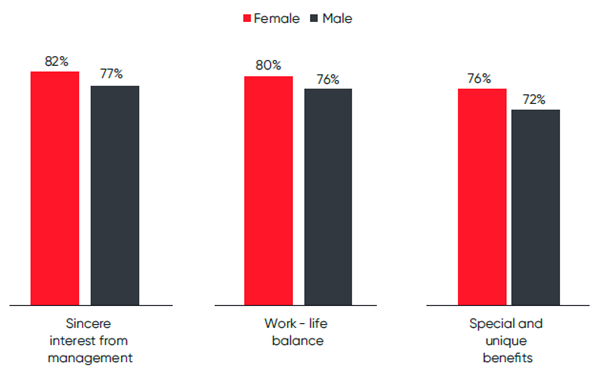
Sincere Interest from Management: According to the data, 82% of female employees feel that they receive sincere interest from management, compared to 77% of male employees. This five-point difference indicates a gap in how supported women feel by their leaders. Organizations can bridge this gap by fostering transparent communication, mentorship programs, and leadership training that emphasizes empathy and support.

Work-Life Balance: Work-life balance is another crucial area where female employees report a higher need, with 80% indicating satisfaction compared to 76% of male employees. Given that women often face greater demands related to family and caregiving responsibilities, BFSI organizations should prioritize flexible work policies that allow for a healthy balance, ensuring women can thrive both personally and professionally.

Special and Unique Benefits: Finally, women show a slightly higher need for unique benefits, with 76% reporting satisfaction versus 72% of male employees. This indicates a demand for tailored benefits that cater specifically to women’s needs, such as parental support, healthcare benefits, and career development opportunities targeted at addressing gender-specific challenges in the workplace.

Equity Across Generations: Understanding the Needs of Gen Z and Millennials

Focusing on Care in Workplace - Across Generations

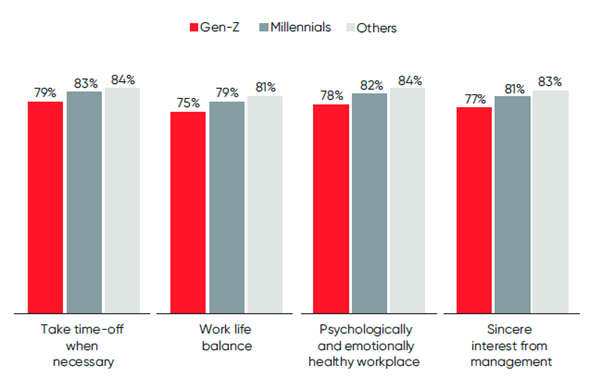
Taking Time Off When Necessary: Only 79% of Gen Z employees feel they can take time off when needed, compared to 83% of Millennials and 84% of older employees. This discrepancy suggests that younger employees may feel pressured to constantly perform or may lack the confidence to request time off, potentially impacting their work-life balance and overall mental health. Organizations could promote a culture that normalizes taking breaks to avoid burnout, especially for younger employees early in their careers.

Work-Life Balance: The report shows that only 75% of Gen Z employees feel satisfied with their work-life balance, compared to 81% of older generations. This gap highlights the need for flexible scheduling options and remote work policies to accommodate the lifestyle preferences of younger workers, who prioritize balance and personal development.

Psychologically and Emotionally Healthy Workplace: A psychologically and emotionally supportive workplace is essential for employee well-being. While 78% of Gen Z employees perceive their workplace as healthy in this regard, Millennials (82%) and older employees (84%) feel slightly more supported. The BFSI sector could implement mental health programs, counseling services, and stress management workshops to address this generational gap.

Sincere Interest from Management: Gen Z employees feel the least satisfied in terms of management’s genuine interest in their growth, with 77% expressing positive sentiment compared to 81% of Millennials and 83% of other generations. Providing mentorship programs, feedback channels, and career development resources could help younger employees feel more valued and connected to their leaders.

Achieving workplace equity is an ongoing process that requires commitment from all levels of an organization. By focusing on transparent practices, recognizing individual contributions, addressing biases, and providing supportive work environments, BFSI companies can create a culture where every employee feels valued and empowered.

In a world where talent is one of the most valuable assets, companies that champion equity are not only building better workplaces—they’re setting the standard for the future of the BFSI sector.

Get Certified to Showcase Your Commitment

Achieving Great Place To Work Certification is an excellent way to demonstrate your organization’s commitment to employees’ overall well-being and experience. This Certification not only enhances your employer branding but also helps attract and retain top talent. It highlights to current and prospective employees that your organization values their overall well-being, fostering an environment where they feel appreciated and supported.

By implementing a culture of trust, respect, and collaboration, you can create a workplace where employees feel valued and connected. Certification also provides a benchmark for continuous improvement, helping you identify areas where you can further enhance employee well-being and overall workplace culture. 

The Power of Culture: How a Thriving Workplace Drives Business Success 

Group of young people discussing in the co-working office

Reading Time: 4 minutes

In an era of intense competition and economic unpredictability, businesses are increasingly focused on the impact of their workplace culture on performance. Research from Great Place To Work® demonstrates a powerful link between a positive culture and strong business outcomes. From retention and innovation to customer satisfaction and employee well-being, the influence of culture is clear. This blog explores how a vibrant workplace culture contributes to organizational success. 

Higher Retention and Employee Advocacy

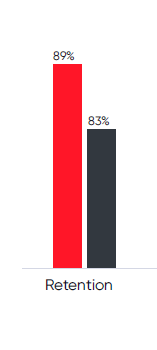
High employee turnover can be costly in lost revenue, lowered morale, and reduced productivity. According to Great Place To Work India’s 2024 report on mid-sized organizations, retention and employee advocacy are high in companies with strong cultures. The best mid-size workplaces show a 6% higher retention rate than others. Employees are also more likely to recommend their company to friends and family, reinforcing a reputation that attracts top talent and reduces hiring costs.  

The best mid-size workplaces show a 6% higher retention rate than others.

Retention is largely driven by employees feeling a sense of purpose. This commitment to purpose not only boosts retention but also strengthens the company’s employer brand, making it an attractive choice for new hires.

Increased Productivity Through Collaboration

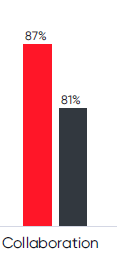
Organizations that prioritize collaboration create cultures where employees are more productive. The 2024 report found that 87% of employees at leading mid-size workplaces believed that their subordinates were collaborative. When employees feel supported, they are more willing to go the extra mile, driving organizational productivity.

The 2024 report found that 87% of employees at leading mid-size workplaces believed that their subordinates were collaborative.

Research shows that camaraderie is a key factor in promoting discretionary effort among employees. Teams that cooperate and support each other tend to work harder, fostering an environment where productivity thrives. A culture that encourages teamwork allows companies to maintain high performance even in challenging times.

Boosted Employee Engagement and Organizational Commitment

Engagement is the heartbeat of any successful organization, driving motivation and loyalty. Companies with strong cultures excel in fostering engagement, which ultimately boosts organizational performance. Great Place To Work India’s 2024 data shows that in top mid-size workplaces, employees are significantly more engaged, with 88% feeling proud to share that they work there. When employees are proud of their organization, they are more likely to remain committed, support company goals, and advocate for the brand.

Employee engagement is driven by trust, transparency, and recognition. Great workplaces maintain open communication channels, provide feedback opportunities, and recognize individual achievements regularly. This leads employees to feel that their work is valued, making them more invested in their roles. Engaged employees bring energy and innovation to their work, positively impacting both the company culture and bottom line. 

For organizations, fostering engagement means prioritizing initiatives like career development, employee recognition programs, and leadership transparency. When leaders actively show that they value employee contributions, it builds loyalty, reduces turnover, and creates a resilient workforce capable of thriving through challenges. Ultimately, engaged employees drive organizational growth and success, making engagement a vital component of workplace culture.

Higher Levels of Innovation and Agility

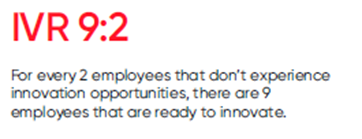
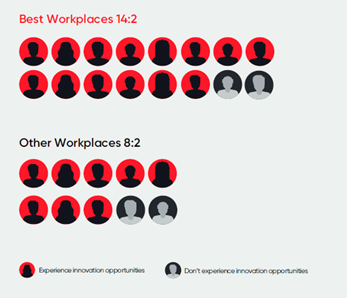
As the market evolves, businesses need to innovate to stay competitive. Leading mid-size workplaces have fostered environments where employees feel empowered to share new ideas. This is reflected in the high Innovation Velocity Ratio (IVR) reported in the study, with nine employees consistently engaging in meaningful innovation for every two who do not. 

For every 2 employees that don’t experience innovation opportunities, there are 9 employees that are ready to innovate.

Agility is another essential trait in today’s business environment. By encouraging experimentation and learning from failure, these workplaces are better positioned to meet new challenges, driving sustained growth.

Stronger Employee Well-being and Work-Life Balance

Work-life balance and mental well-being are critical components of a great workplace culture. Best mid-size workplaces provide resources and policies that support psychological safety and balance.

This emphasis on well-being is not just beneficial for employees but also for the organization. By preventing burnout and promoting mental health, companies reduce absenteeism, maintain productivity, and foster loyalty. Investing in a healthy work environment is ultimately an investment in long-term business stability.

Enhanced Customer Service and Brand Reputation

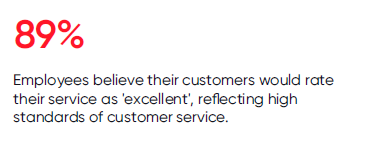
Employees who feel supported and valued are more likely to deliver excellent customer service. The report finds that 89% of employees at the best mid-size workplaces in India believe their customers would rate their service as ‘excellent.’ This reflects a virtuous cycle where a positive internal culture translates into high levels of customer satisfaction. 

The report finds that 89% of employees at the best mid-size workplaces in India believe their customers would rate their service as ‘excellent.’

Satisfied customers often become brand advocates, which enhances the company’s reputation and drives business success. When employees take pride in their work and feel part of a meaningful mission, they naturally extend that enthusiasm to customer interactions, strengthening the brand.

The data from Great Place To Work India’s 2024 report underscores that workplace culture isn’t just a human resources issue, it’s a core business strategy. Companies that prioritize fair evaluations, employee care, and authentic leadership build environments where employees thrive. By focusing on these key drivers, organizations can unlock their workforce’s full potential, driving both employee satisfaction and business success.

For leaders, this means not just fostering a positive culture but actively measuring and refining it. As the workplace landscape evolves, organizations that adapt by investing in their culture will see lasting benefits. In today’s market, a positive culture is not only a competitive advantage but a business imperative.

Get Certified to Showcase Your Commitment

Achieving Great Place To Work Certification is an excellent way to demonstrate your organization’s commitment to employees’ overall well-being and experience. This Certification not only enhances your employer branding but also helps attract and retain top talent. It highlights to current and prospective employees that your organization values their overall well-being, fostering an environment where they feel appreciated and supported.

By implementing a culture of trust, respect, and collaboration, you can create a workplace where employees feel valued and connected. Certification also provides a benchmark for continuous improvement, helping you identify areas where you can further enhance employee well-being and overall workplace culture. 

Need of the Hour: Building Gender Equity at the Workplace

Happy Employees

Reading Time: 5 minutes

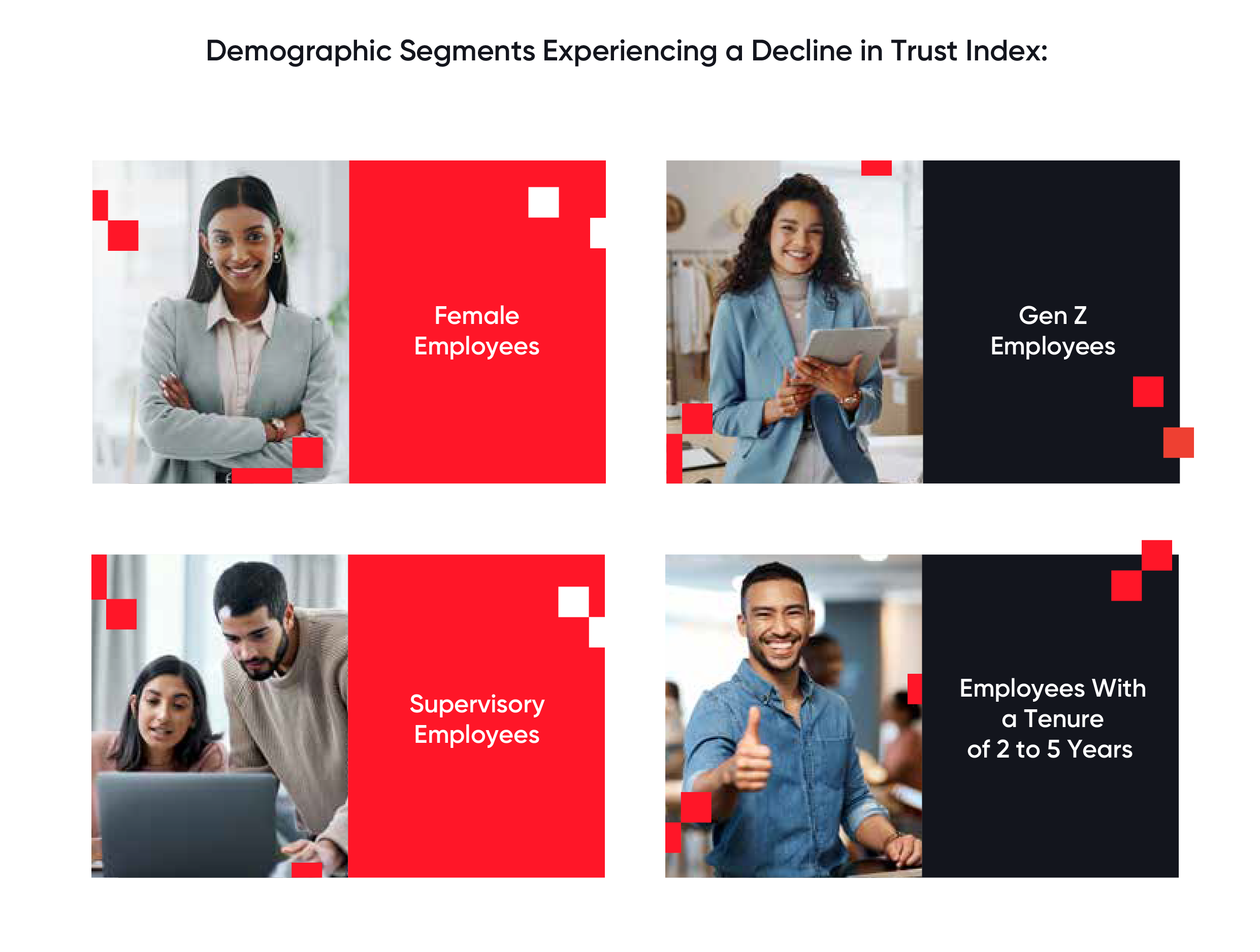
The Great Place To Work® report on India’s Best Workplaces in Retail 2024 report has unveiled a concerning trend in workplace dynamics. While organizations maintain high overall workplace satisfaction scores, there’s a notable gender gap that demands immediate attention. Female employees’ perception of their workplace culture has dropped by 4% , a significant decline that signals the urgent need for more focused efforts in building truly equitable workplaces.

Female employees' perception of their workplace has dropped by 4% - a significant decline that signals the urgent need for more focused efforts in building truly equitable workplaces.

The economic implications of these gender disparities cannot be overlooked. Organizations face reduced employee engagement among female staff, higher turnover rates, and lost productivity. Perhaps most critically, they miss out on the innovation potential that comes with fully engaged, equitably treated female employees.

Building Blocks of Gender Equity

The data reveals an intriguing paradox in workplace perceptions. Both male and female employees report they don’t perceive overt gender bias at their workplaces, with 90% of men and 87% of women agreeing they’re treated fairly, regardless of gender. However, a deeper examination uncovers substantial disparities beneath this surface-level agreement.

In the retail sector, both male and female employees believe they are treated fairly regardless of their gender.

This disparity manifests across several critical areas. Women consistently report lower satisfaction with fair pay and profit sharing, express concerns about management favoritism, and feel more affected by workplace politics. They also perceive fewer opportunities for career advancement. These findings suggest that while organizations may have successfully eliminated obvious forms of gender discrimination, subtle barriers and systemic inequities continue to impact women’s workplace experiences significantly.

Leading organizations have recognized these challenges and are implementing comprehensive strategies to build more equitable workplace cultures. 

Visibility and Recognition

A key focus area is visibility and recognition. Progressive companies are creating platforms where women can share their experiences and stories, ensuring they have adequate visibility with top leadership. These organizations understand that recognition isn’t just about acknowledging achievements – it’s about creating an environment where women feel valued and heard.

Meaningful Onboarding

The importance of meaningful onboarding has emerged as another crucial factor. The report emphasizes that an employee’s comfort in bringing their full self to work is significantly influenced by their initial experiences with the organization. Forward-thinking companies are designing inclusive onboarding programs that address women’s specific needs and concerns. They’re providing early access to mentorship opportunities and creating clear pathways for growth and development from day one.

Leadership Development

Leadership development has become a cornerstone of gender equity initiatives. The best workplaces focus on identifying high-potential women who might not see their own leadership capabilities. They’re creating structured development programs specifically for women leaders and providing sponsorship opportunities with senior leaders. These programs acknowledge that building leadership capacity requires both skill development and confidence building.

Pay Equity Initiatives

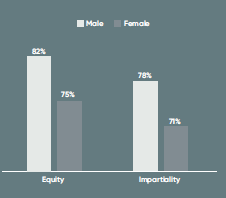
Pay equity initiatives have taken center stage in many organizations’ equity efforts. Progressive companies are conducting regular pay equity audits and implementing transparent pay scales. They’re addressing historical pay disparities through targeted adjustments and creating clear compensation frameworks that eliminate bias. These efforts recognize that pay equity is both a moral imperative and a key driver of employee satisfaction and retention.  Women’s perception in key areas of equity and impartiality lags by almost 7% compared to that of their male colleagues.

Women's perception in key areas of equity and impartiality lags by almost 7% compared to that of their male colleagues.

Flipkart’s Programs for Women’s Career Continuity and Growth

Case studies from industry leaders offer valuable insights into effective gender equity initiatives. 

Career Development Programs

Flipkart, for example, has implemented a comprehensive suite of programs addressing women’s needs throughout their career journey. Their Catalyze program offers a six-month development journey using the GROW model, specifically designed to prepare women for leadership roles. The company’s GirlsWannaCode initiative empowers women in technology through targeted skill development, while their innovative Flip Forward program helps women restart their careers after breaks. These programs demonstrate the importance of addressing gender equity at every career stage.

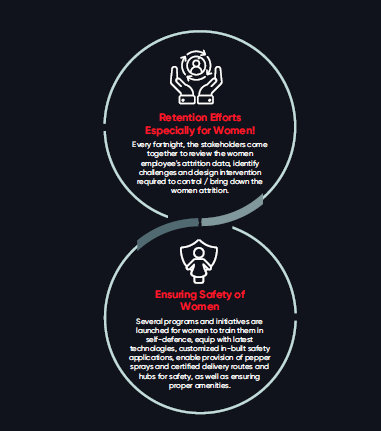
Flipkart's Commitment to Safety, Equality, and Inclusivity

Safety and Retention

Safety and retention have emerged as crucial focus areas in Flipkart’s approach. The company conducts regular reviews of women’s attrition data to identify and address challenges proactively. They’ve implemented comprehensive safety measures, including self-defense training and certified delivery routes, recognizing that physical safety is fundamental to workplace equity. Their custom-built safety applications and infrastructure show how technology can be leveraged to support gender equity goals.

Building a Sustainable Framework

Creating lasting change requires organizations to focus on cultural transformation at a deep level. This involves challenging unconscious biases through regular training and awareness programs. 

Cultural Transformation

Successful organizations are creating Employee Resource Groups that support women’s professional growth and fostering environments where speaking up about inequities is not just permitted but encouraged. The establishment of zero-tolerance policies for harassment and discrimination sends a clear message about organizational values.

Structural Changes

Structural changes play a vital role in supporting gender equity initiatives. Organizations must review and revise policies that might inadvertently disadvantage women. This includes creating flexible work arrangements that support work-life integration and implementing family-friendly policies that support both parents. Progressive companies are establishing clear metrics for measuring progress in gender equity, recognizing that what gets measured gets improved.

Leadership Accountability

Leadership accountability has emerged as a critical factor in successful gender equity initiatives. Organizations are setting specific, measurable goals for improving gender equity and including these metrics in leadership performance evaluations. Regular reporting on progress toward equity goals ensures sustained attention to these issues. Perhaps most importantly, leadership teams are being called upon to actively champion and model inclusive behaviors.

The future of workplace equity depends on leadership teams recognizing that this is not just a human resources initiative but a strategic priority that requires ongoing attention and resources. By making gender equity central to their organizational strategy and backing that commitment with concrete actions, organizations can create lasting change that benefits all employees and drives sustainable success.

Get Certified to Showcase Your Commitment

Achieving Great Place To Work Certification is an excellent way to demonstrate your organization’s commitment to employees’ overall well-being and experience. This Certification not only enhances your employer branding but also helps attract and retain top talent. It highlights to current and prospective employees that your organization values their overall well-being, fostering an environment where they feel appreciated and supported.

By implementing a culture of trust, respect, and collaboration, you can create a workplace where employees feel valued and connected. Certification also provides a benchmark for continuous improvement, helping you identify areas where you can further enhance employee well-being and overall workplace culture. 

For All Summit Mumbai 2025: Vision to Value – Building Workplaces That Matter

Join us on February 6, 2025, in Mumbai for an enlightening day filled with insights on creating sustainable, humane, and inclusive workplaces. Learn from industry leaders about purpose-driven cultures, innovative HR practices, and adaptive leadership strategies.

Get your passes today – https://www.greatplacetowork.in/for-all-summit

For All Summit 2025 Mumbai Banner

Moving towards clean energy with trust-based leadership 

Solar panel installer with drill installing solar panels

Reading Time: 4 minutes

As celebrated on January 26, International Day of Clean Energy marks the founding date of the International Renewable Energy Agency (a global intergovernmental agency). The objective of this day is to raise awareness, advocate clean and renewable energy sources, and unite all stakeholders to help advance the sustainability mission. This, however, is a very recent phenomenon for the world; before the 1800s (before the Industrial Revolution), humans mainly relied on biomass as an energy source.

Clean Energy Initiatives in India

For India, the clean energy movement has taken significant attention in the last few decades, and it remains a topic of high importance and priority. In alignment with the clean energy transition, India became one of the first countries to set up a Ministry of Non-conventional Energy Sources (Ministry of New and Renewable Energy (MNRE) in 1992. Since then, many initiatives have been launched to advance energy transition to achieve net zero by 2070 and meet 50% of electricity needs from non-fossil sources by 2030. Solar energy has grown at a 36.5% CAGR, while investments in EVs, wind energy, and other energy storage systems total billions annually.

SEBI’s recent directive of mandating the top 250 listed companies to give disclosures on ESG metrics for their value chain partners in annual reports from the financial year 2024-25 has become a significant indicator of India’s more prominent role in clean energy. Today, Deloitte India’s ESG Preparedness 2023 survey shows that 88% of Indian businesses believe sustainability regulations will impact their operations, and nearly 90% think ESG reporting boosts brand reputation. However, only 27% feel well-prepared to meet ESG requirements.

Need for leaders to build trust

Going ahead, for a promising path to net zero, a significant transition is essential. This involves Indian companies embedding sustainability into core strategies, driving innovation through green technologies, and improving climate disclosures to secure green financing.

Similarly, with the population as the most remarkable growth driver, India will need the collective effort of its entire workforce to drive action and propel the future toward clean energy goals. Companies must keep their employees engaged and motivated to address challenges, devise solutions, and succeed in the energy transition.

Leaders, too, must evolve alongside reshaping themselves to transform businesses for the better. Thus, success in every endeavour may eventually hinge on leaders’ ability to build trust, which lies at the core of the relationship between leaders and employees. Great Place To Work® India research, based on responses from over 200+ leaders from the industry roundtable, suggests that the biggest foundational challenge in creating a great employee experience is in establishing a unique environment that fosters trust.

With a strong foundation of trust, leaders will find it easier to make people move the needle on sustainability. Top employers, as measured by employee satisfaction and attractiveness to talent, have significantly higher ESG scores than their peers. Employers with highly satisfied employees score higher on ESG performance (14 percent higher) than global average employers.

Likewise, enabling trust empowers leaders to create a spirit of pride and camaraderie. When all employees experience trust, it fosters an environment of innovation and drives financial success. Both are critical to finding new, sustainable solutions and ensuring the necessary financial resources to scale the clean energy transition. Hence, to meet sustainability goals, organizations need leaders to build workplace trust.

“About 3.4 billion people in the world work somewhere.
Wouldn’t it make sense if we started there and if we created this great environment for people where they work?”

– Tony Bond, Chief diversity and innovation officer, Great Place To Work

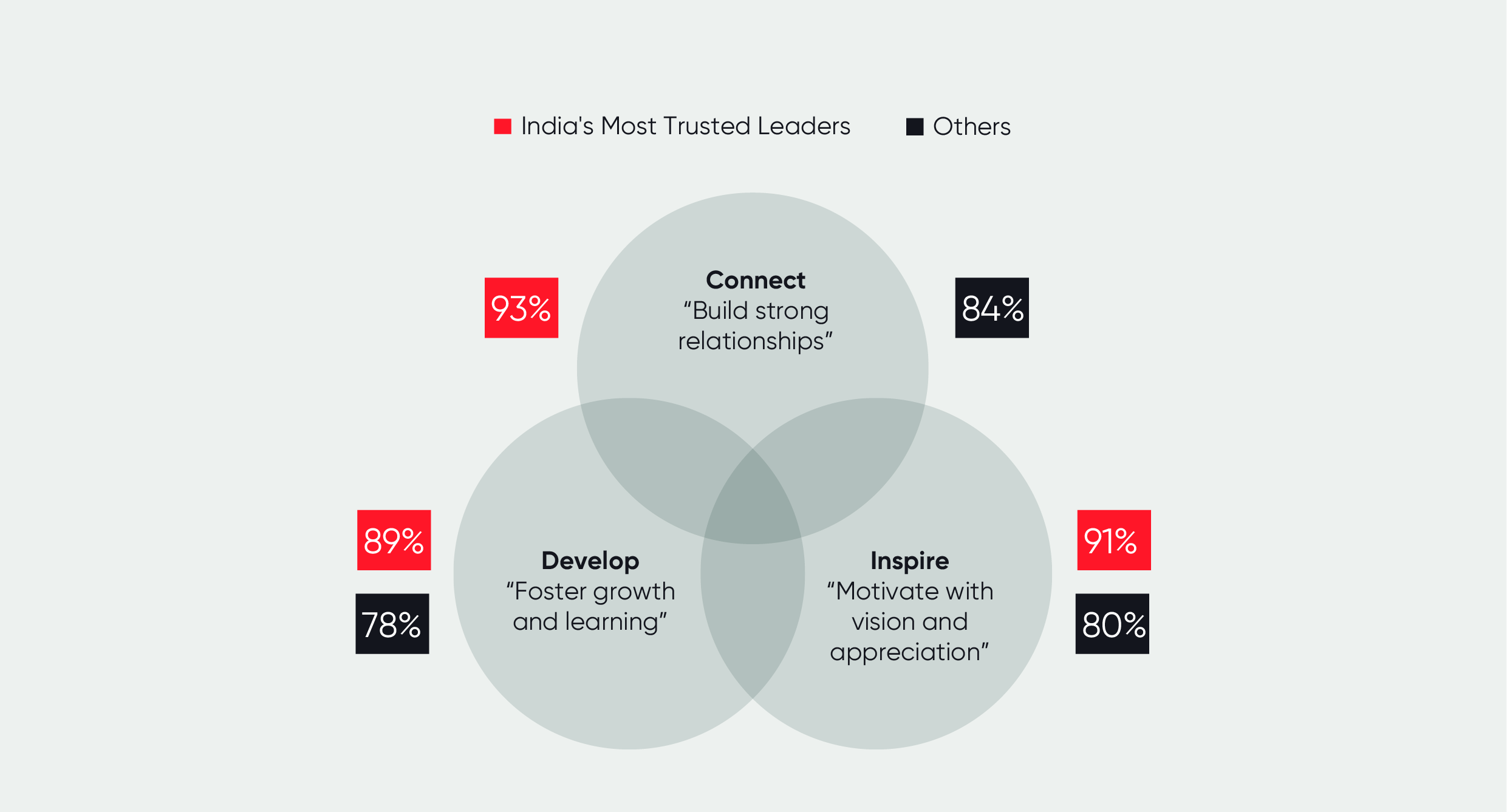
Authored by Gurab Virk, Great Place To Work India’s report on India’s Most Trusted Leaders 2024 shares an insightful perspective on how leaders can enable this transition successfully.

Three Essentials to Make Sustainability Stick

Create Sustainability Ambassador Programs

Establish a Sustainability Ambassador program where employees volunteer to champion environmental initiatives within the company. These ambassadors can lead projects, raise awareness, and drive engagement in sustainability practices.

Develop ERG-driven Innovation Labs

Set up Innovation Labs where employee resource groups can propose and develop projects contributing to the company’s ESG objectives. Provide resources, mentorship, and funding for the best ideas to bring them to fruition.

Implement a Stakeholder Collaboration Approach

Move beyond traditional stakeholder management to a more collaborative approach for stakeholder acceptance of ESG goals. This involves employees, customers, suppliers, communities, and the environment in decision-making.

Get Certified to Showcase Your Commitment

Achieving Great Place To Work Certification™ is an excellent way to demonstrate your organization’s commitment to employees’ overall well-being and experience. This Certification not only enhances your employer branding but also helps attract and retain top talent. It highlights to current and prospective employees that your organization values their overall well-being, fostering an environment where they feel appreciated and supported.

By implementing a culture of trust, respect, and collaboration, you can create a workplace where employees feel valued and connected. Certification also provides a benchmark for continuous improvement, helping you identify areas where you can further enhance employee well-being and overall workplace culture. 

For All Summit Mumbai 2025: Vision to Value – Building Workplaces That Matter

Join us on February 6, 2025, in Mumbai for an enlightening day filled with insights on creating sustainable, humane, and inclusive workplaces. Learn from industry leaders about purpose-driven cultures, innovative HR practices, and adaptive leadership strategies.

Get your passes today – https://www.greatplacetowork.in/for-all-summit

For All Summit Banner

Why Authenticity Matters to Gen Z: The Role of Culture and Values 

Indian girl using a digital tablet at metro station.

Reading Time: 6 minutes

Gen Z, born between the mid-1990s and early 2010s, is often called the “digital-native” generation. Unlike Millennials, who witnessed the internet’s evolution, Gen Z grew up surrounded by high-speed internet, smartphones, and social media. This immersion in technology, along with growing social and environmental awareness, shapes their worldview and career expectations.

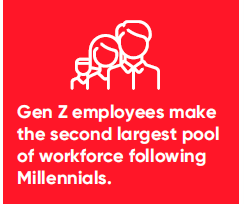
Gen Z employees make the second largest pool of the workforce, following Millennials

Gen Z’s familiarity with technology makes them adaptable and quick to leverage digital tools to streamline work processes. According to the Great Place To Work® report on India’s Best Companies To Work For 2024, many companies notice Gen Z’s demand for innovation and digital transformation at work. 

Understanding Gen Z’s Work Preferences

Flexibility and Autonomy 

Unlike previous generations, Gen Z views flexibility not as a perk but as a basic requirement. They value remote work options, flexible hours, and autonomy to make decisions within their roles. The India’s Best Companies To Work For 2024 report highlights that Gen Z’s desire for flexibility correlates with their productivity and motivation. They are 18% more likely to stay with an organization that offers them autonomy and flexibility, making this a critical retention factor. 

Work-Life Balance

Work-life balance is more than a buzzword for Gen Z; it’s a priority. This generation grew up witnessing the burnout associated with ‘hustle culture’ and seeks roles that respect their mental and physical well-being. According to the report, companies that emphasize employee wellness, mental health support, and clear boundaries between work and personal life tend to have higher satisfaction scores among Gen Z employees.  They prefer employers who understand that mental health is essential for sustained productivity.

Digital Savvy and Innovation-Driven

Gen Z’s natural comfort with technology means they look for workplaces that embrace digital tools and continuous innovation. They expect quick, digital solutions in their workflow and find satisfaction in environments where technology plays a central role. Data from the report reveals that organizations offering Gen Z employees the chance to engage in innovation see an 18% increase in loyalty, advocacy, and overall job satisfaction. This statistic underlines how a culture that encourages innovation retains digitally savvy talent.

Why Authenticity Matters to Gen Z

Cultural Fit

Gen Z seeks a culture that values diversity, equity, and inclusion (DEI). This generation has a heightened awareness of social issues and expects employers to reflect similar values in the workplace. They want to feel seen and respected as individuals and look for companies where DEI is practiced, not just promoted. The report mentions that when Gen Z feels they can bring their “authentic selves” to work, they are 2.8 times more likely to remain motivated. This statistic emphasizes the importance of an inclusive culture where employees feel safe and valued.

The report mentions that when Gen Z feels they can bring their “authentic selves” to work, they are 2.8 times more likely to remain motivated.

Trust in Leadership  

Trustworthiness and integrity in leadership are paramount for Gen Z. The report finds that Gen Z employees are 2.6 times more likely to stay motivated if they see management delivering on promises and practicing transparency. Authentic leadership fosters trust, creating a positive atmosphere that resonates with Gen Z. When leaders are open and accountable, Gen Z feels more invested in their roles and the organization’s success.

The report finds that Gen Z employees are 2.6 times more likely to stay motivated if they see management delivering on promises and practicing transparency.

Brand Values Alignment

Gen Z is driven by a sense of purpose and expects their employers to act on ethical and sustainable practices. According to the India’s Best Companies To Work For 2024 report, Gen Z employees prioritize working for brands that align with their values, especially regarding social and environmental issues. They are more likely to endorse and stay with companies whose missions resonate with their beliefs, emphasizing the importance of corporate social responsibility (CSR) in attracting and retaining Gen Z talent. 

Keeping Gen Z Motivated and Engaged

Clear Pathways for Growth 

Gen Z employees are highly focused on career development and look for transparent pathways to advance within their organizations. They appreciate well-defined progression plans and opportunities to upskill, as it assures them that their career growth aligns with the company’s vision. According to the report, organizations that provide clear growth trajectories and skills training have seen increased satisfaction among Gen Z employees, who value mentorship and tangible pathways to advancement.

Opportunities for Innovation

Gen Z thrives in environments that encourage creativity and continuous learning. A culture that welcomes new ideas and promotes collaborative brainstorming sessions is essential for keeping Gen Z engaged. The India’s Best Companies To Work For 2024 report emphasizes that workplaces offering high innovation experiences see an 18% improvement in retention, brand endorsement, and satisfaction levels among Gen Z employees. This indicates that fostering creativity and adaptability in the workplace is key to engaging this generation.

Frequent Feedback and Recognition  

Unlike previous generations, Gen Z values regular feedback over annual reviews. They seek immediate insights to fine-tune their performance and are motivated by recognition. Companies that implement real-time feedback and reward systems tend to see higher engagement levels among Gen Z employees. The report supports this by highlighting the positive impact of continuous feedback, which empowers Gen Z to grow within their roles and contributes to a sense of purpose and achievement.

Leveraging Gen Z’s Strengths for Business Success

Embracing Digital Transformation  

Gen Z’s digital fluency enables them to drive technological advancements in the workplace. Their comfort with digital tools and eagerness to experiment with new tech solutions make them valuable assets in companies undergoing digital transformation. The report notes that companies integrating digital workflows see increased productivity and innovation as Gen Z employees streamline processes and introduce more efficient ways of working.  Leveraging this strength can help organizations stay competitive and adaptable in a rapidly changing landscape.

Gen Z employees with higher and more positive experience with innovation at
their workplace, take a lead of 18% in willingness to stay, brand endorsement and
positive workplace culture perception.

Entrepreneurial Thinking  

Gen Z has a distinct entrepreneurial mindset, often challenging conventional practices with fresh ideas and solutions. This generation appreciates workplaces that encourage autonomy and support out-of-the-box thinking. Companies that tap into Gen Z’s entrepreneurial spirit benefit from innovative solutions and a creative approach to problem-solving. The report emphasizes that Gen Z employees are 2.8 times more likely to feel motivated in organizations that allow them to bring their authentic, entrepreneurial selves to work.

Brand Ambassadors  

As social media natives, Gen Z employees can be effective brand advocates. They naturally align with companies that share their values and can amplify the brand’s mission online. According to the report, when Gen Z employees feel authentically connected to their workplace, they are more likely to endorse the company publicly. This alignment not only enhances brand reputation but also attracts like-minded talent, fostering a cycle of positive brand reinforcement.

Engaging Gen Z in the workplace requires a combination of authenticity, flexibility, and inclusivity. Companies that recognize Gen Z’s unique values and motivations are better positioned to attract and retain this generation, which in turn contributes to a more dynamic and innovative workplace.

To cultivate a Gen Z-friendly workplace, leaders should focus on building a culture that values transparency, supports professional growth, and aligns with social and environmental values. By addressing Gen Z’s expectations, organizations can create workplaces where these young employees thrive, innovate, and drive long-term success.

Get Certified to Showcase Your Commitment

Achieving Great Place To Work Certification is an excellent way to demonstrate your organization’s commitment to employees’ overall well-being and experience. This Certification not only enhances your employer branding but also helps attract and retain top talent. It highlights to current and prospective employees that your organization values their overall well-being, fostering an environment where they feel appreciated and supported.

By implementing a culture of trust, respect, and collaboration, you can create a workplace where employees feel valued and connected. Certification also provides a benchmark for continuous improvement, helping you identify areas where you can further enhance employee well-being and overall workplace culture. 

For All Summit Mumbai 2025: Vision to Value – Building Workplaces That Matter

Join us on February 6, 2025, in Mumbai for an enlightening day filled with insights on creating sustainable, humane, and inclusive workplaces. Learn from industry leaders about purpose-driven cultures, innovative HR practices, and adaptive leadership strategies.

Get your passes today – https://www.greatplacetowork.in/for-all-summit

Unleashing Creativity: How the Best Workplaces Foster a Culture of Innovation 

Colleagues working together

Reading Time: 5 minutes

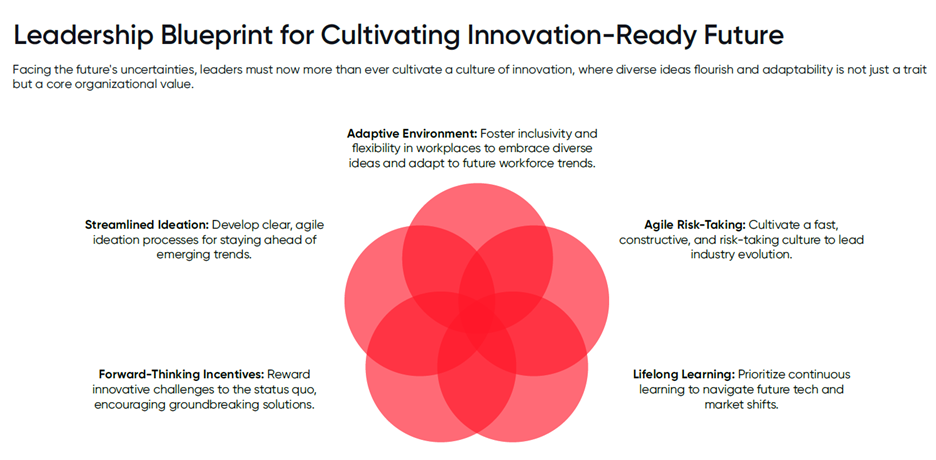
In today’s fast-paced business landscape, organizations that prioritize workplace innovation culture are setting themselves apart from the competition. These forward-thinking companies understand that fostering an environment where creativity thrives is not just a nice-to-have – it’s a necessity for long-term success. Let’s explore how the best workplaces and innovation go hand in hand, and what leaders can do to cultivate this powerful combination.

The Power of a Workplace Innovation Culture

At its core, a workplace innovation culture is one that empowers every employee to contribute ideas, take calculated risks, and drive positive change. It’s a mindset that permeates every level of the organization, from entry-level staff to C-suite executives. When done right, this approach can lead to groundbreaking products, streamlined processes, and a more engaged workforce.

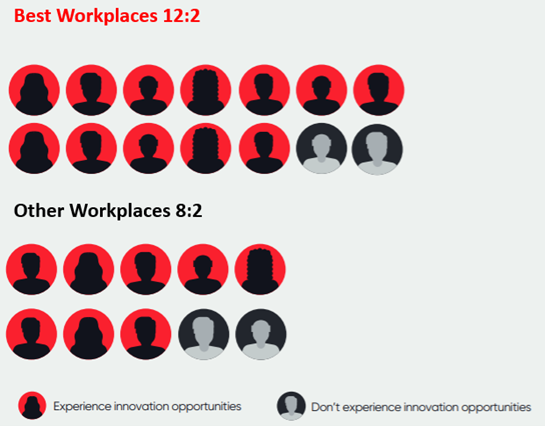
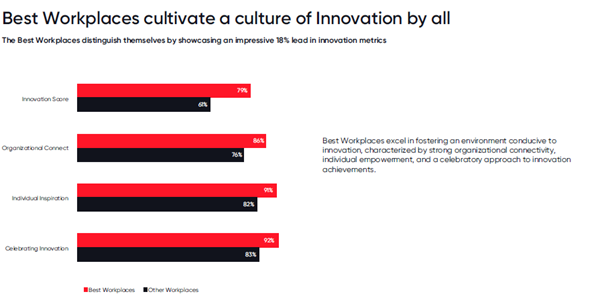
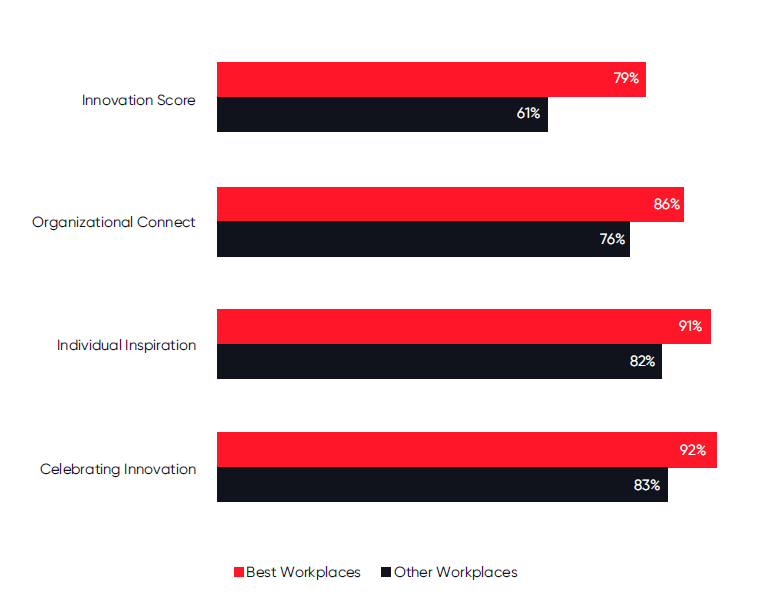
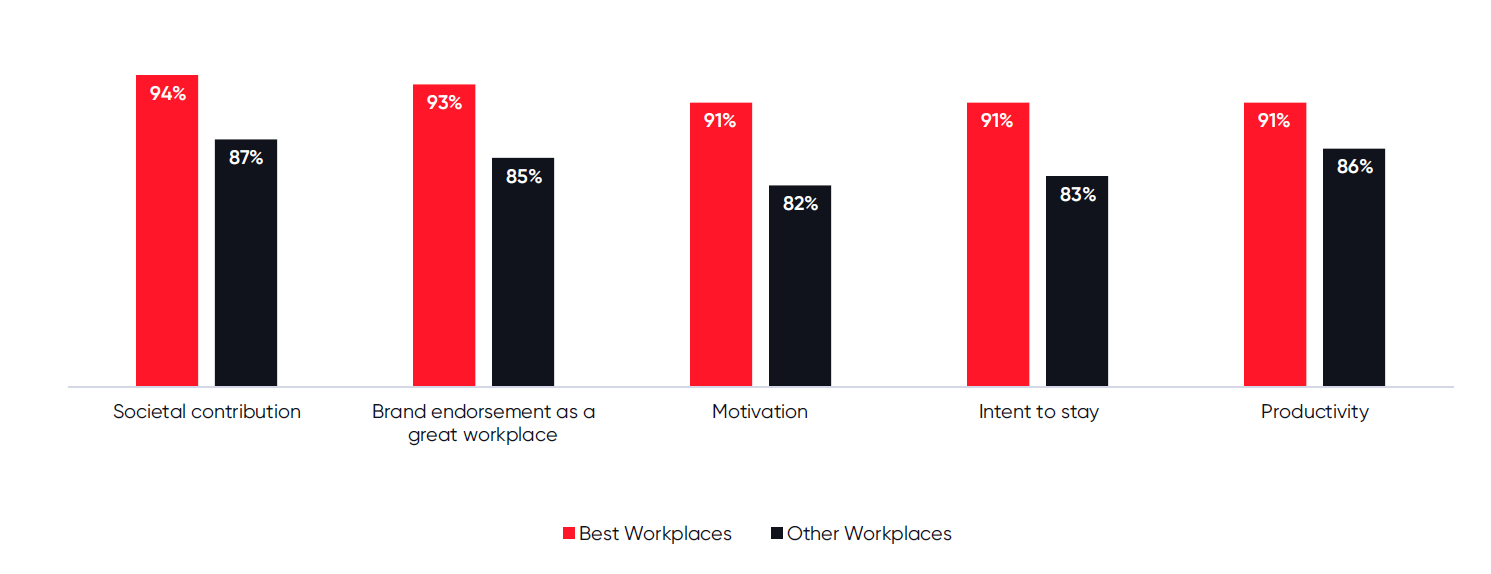
Innovation ratio between Best Workplaces and Other Workplaces

Research consistently shows that companies with strong innovation cultures outperform their peers. According to a recent study, organizations recognized as “Best Workplaces” demonstrate a significantly higher capacity for innovation compared to their counterparts. This advantage translates into tangible benefits, including increased market share, improved employee retention, and enhanced adaptability in the face of industry disruptions.

Key Elements of Innovation-Driven Workplacestion Day 

1. Leadership That Inspires

Innovation starts at the top. Leaders in the best workplaces understand that their role is not just to manage, but to inspire. They paint a compelling vision of the future and invite their teams to help bring it to life. These leaders:

– Communicate clearly and often about the importance of innovation

– Lead by example, demonstrating a willingness to embrace new ideas

– Provide the resources and support necessary for innovation to flourish

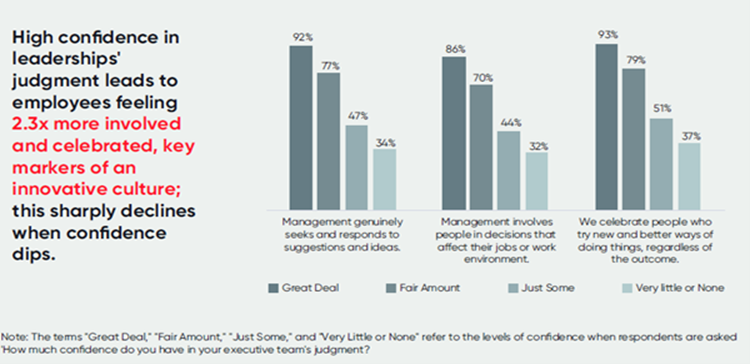
Confidence in leadership leading to higher innovation in best workplaces.

2. Psychological Safety

For employees to feel comfortable sharing novel ideas, they need to know that failure is not only accepted but expected as part of the innovation process. The best workplaces create an atmosphere of psychological safety where team members can take risks without fear of ridicule or punishment. This safety net encourages experimentation and learning from mistakes.

3. Cross-Functional Collaboration

Innovation rarely happens in a vacuum. The most innovative companies break down silos and encourage collaboration across departments. They create opportunities for diverse teams to come together, share perspectives, and tackle challenges collectively. This cross-pollination of ideas often leads to unexpected and exciting breakthroughs.

4. Continuous Learning and Development

In a rapidly evolving business environment, stagnation is the enemy of innovation. The best workplaces prioritize ongoing learning and development for all employees. This might include:

– Regular training sessions on emerging technologies

– Mentorship programs that pair experienced innovators with up-and-coming talent

– Resources for self-directed learning and skill development

5. Recognition and Rewards

Innovative thinking should be celebrated and rewarded. The best workplaces understand the power of positive reinforcement and create systems to recognize both big wins and small improvements. This could involve financial incentives, public acknowledgment, or opportunities for career advancement tied to innovative contributions.

The Gen Z Factor: Attracting Tomorrow’s Innovators

As the workforce continues to evolve, companies are recognizing the unique value that Gen Z employees bring to the table when it comes to innovation. Born into a world of rapid technological advancement, this generation is naturally inclined towards creative problem-solving and digital fluency.

Contribution of Gen Z in Innovation

The best workplaces are tailoring their innovation strategies to engage and retain Gen Z talent. This includes:

– Providing cutting-edge tools and technologies

– Offering flexible work arrangements that support work-life integration

– Creating opportunities for meaningful impact and social responsibility

Research indicates that organizations excelling in workplace innovation see an 18% advantage in Gen Z retention and positive brand perception. By fostering an environment where young professionals can thrive and contribute their unique perspectives, these companies are securing their innovative edge for years to come.

Measuring Innovation Culture Success

While cultivating a workplace innovation culture is crucial, it’s equally important to measure its effectiveness. Best workplaces employ various metrics to gauge their innovation prowess:

– Number of new ideas generated and implemented

– Time-to-market for new products or services

– Employee engagement scores related to innovation initiatives

– Revenue generated from recent innovations

By tracking these key performance indicators, organizations can continually refine their approach and ensure they’re creating an environment that truly fosters creativity and forward thinking.

Strategies for Building Your Own Innovation Powerhouse

Ready to transform your workplace into an innovation incubator? Here are some actionable steps to get started:

  1. Conduct an Innovation Audit: Assess your current culture and identify areas for improvement.
  2. Invest in Employee Development: Launch programs that enhance creative thinking and problem-solving skills across all levels of the organization.
  3. Create Innovation Spaces: Designate physical or virtual areas where teams can collaborate and brainstorm freely.
  4. Implement an Idea Management System: Develop a structured process for collecting, evaluating, and implementing employee ideas.
  5. Foster Open Communication: Encourage regular feedback sessions and transparent discussions about the company’s innovation goals and progress.
  6. Embrace Failure as a Learning Opportunity: Share stories of “productive failures” and the lessons learned from them.
  7. Partner with External Innovators: Collaborate with startups, universities, or industry disruptors to inject fresh perspectives into your organization.

The Future of Workplace Innovation

As we look ahead, it’s clear that the most successful companies will be those that can adapt quickly and innovate consistently. By fostering a workplace innovation culture, organizations can position themselves at the forefront of their industries, ready to tackle whatever challenges the future may bring.

Remember, building a culture of innovation is not a one-time effort but an ongoing journey. It requires commitment, patience, and a willingness to evolve. But for those companies willing to invest in creating truly innovative workplaces, the rewards – in terms of employee satisfaction, market leadership, and long-term success – are well worth the effort.

In conclusion, the best workplaces understand that innovation is not just about breakthrough technologies or revolutionary products. It’s about creating an environment where every employee feels empowered to contribute their best ideas and drive positive change. By prioritizing a workplace innovation culture, these organizations are not just preparing for the future – they’re actively shaping it.

Get Certified to Showcase Your Commitment

Achieving Great Place To Work® Certification™ is an excellent way to demonstrate your organization’s commitment to employees’ overall wellbeing and experience. This Certification not only enhances your employer branding but also helps attract and retain top talent. It highlights to current and prospective employees that your organization values their health, happiness, and overall wellbeing.    

By implementing a culture of trust, respect, and collaboration, you can create a workplace where employees feel strong, healthy, and connected. Certification also provides a benchmark for continuous improvement, helping you identify areas where you can further enhance employee well-being and overall workplace culture.  

For All Summit 2025: Vision to Value – Building Workplaces That Matter

Join us on February 6, 2025, in Mumbai for an enlightening day filled with insights on creating sustainable, humane, and inclusive workplaces. Learn from industry leaders about purpose-driven cultures, innovative HR practices, and adaptive leadership strategies.

Get your passes today – https://www.greatplacetowork.in/for-all-summit 

Banner for registering for the Great Place To Work® For All™ Summit 2025

A Closer Look at How Innovation in the Workplace Looks Like in Different Industries

Reading Time: 5 minutes

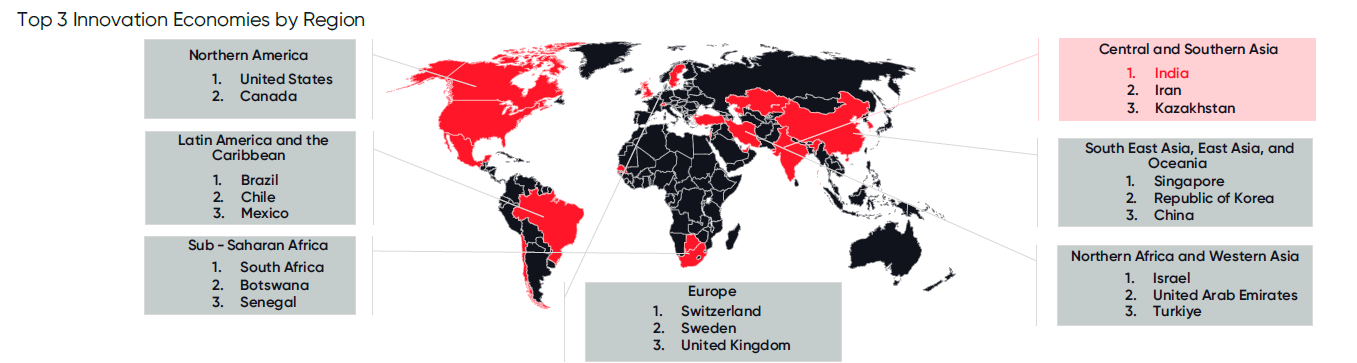
The Great Place To Work® India’s Best Workplaces™ Building a Culture of Innovation by All 2024 report showcases India’s ascent on the global innovation stage. This study highlights the critical role of fostering innovation in the workplace, a key driver of India’s progress towards becoming an innovation powerhouse. Despite India’s impressive 40th position in the Global Innovation Index 2023, the report reveals a slight 2% dip in the perceived culture of innovation within organizations, emphasizing the ongoing challenges and opportunities in this journey. 

The Power of Inclusive Innovation in the Workplace

The report emphasises the importance of inclusivity, collaboration, and trust in nurturing a culture of innovation. Best Workplaces distinguishes itself with an 18% lead in innovation metrics, demonstrating the transformative power of environments where every voice is heard and ideas are celebrated. However, the study also points out unique challenges faced by younger generations and women in accessing innovation opportunities, highlighting the need for more equitable practices. 

Innovation readiness at Best Workplaces outpaces others

A strong correlation between workplace satisfaction and innovation culture emerges from the data. As employees’ positive perceptions of their work environment increase, so does the organization’s capacity for innovation. This relationship is further reinforced by the 5%-9% higher positive perception of key performance indicators reported by employees at Best Workplaces, illustrating the tangible benefits of fostering a culture of innovation in the workplace.

How Different Industries Cultivate Innovation in the Workplace

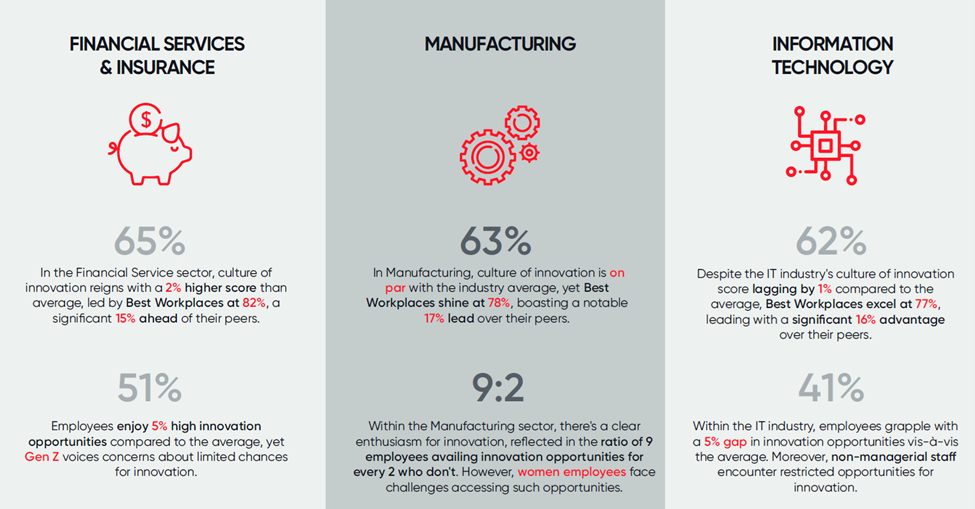
Financial Services & Insurance

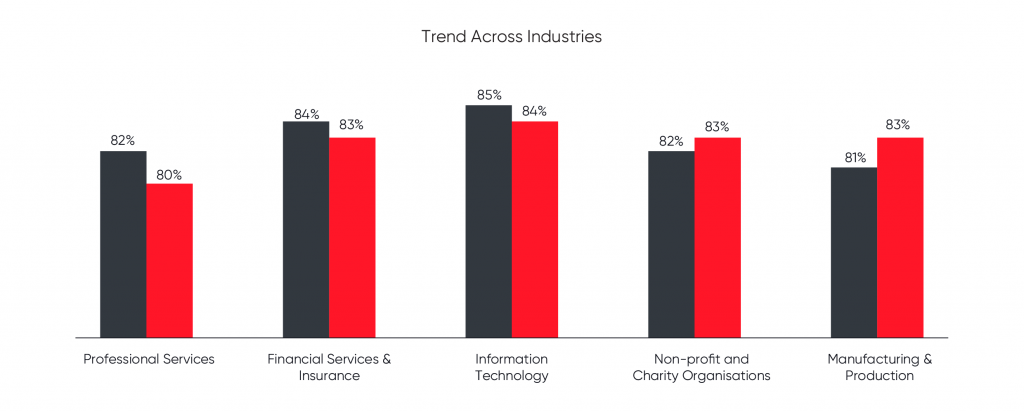
The financial services and insurance sector emerges as a frontrunner in fostering a culture of innovation. This sector demonstrates a strong commitment to creative thinking and progressive practices, setting a benchmark for other industries.

With a 65% culture of innovation score, the financial services and insurance sector outperforms the overall average by 2%. This indicates a sector-wide emphasis on embracing new ideas, technologies, and methodologies. Financial institutions are increasingly recognizing the need to innovate in response to changing customer expectations, digital disruption, and regulatory challenges.

The report reveals that the Best Workplaces in this sector significantly outperform their peers, achieving an impressive 82% innovation score— a substantial 15% lead. This gap underscores the effectiveness of these organizations in creating environments that nurture creativity and forward-thinking. 

The data shows that 51% of employees in the sector enjoy high innovation opportunities. This suggests that over half of the workforce feels empowered to contribute ideas and participate in innovative projects. Such engagement is crucial for maintaining a competitive edge in a rapidly evolving financial landscape.

Innovation at Financial Services & Insurance

Manufacturing

The manufacturing sector shows a commitment to innovation while facing unique challenges. With a 63% innovation culture score, it aligns with the industry average, indicating a steady focus on progressive practices.

Best Workplaces in manufacturing stand out significantly, achieving an 78% score and leading their peers by 17%. This substantial gap suggests these companies have successfully implemented strategies to foster innovation despite traditional industry constraints.

The 9:2 ratio of innovation opportunities is particularly noteworthy, indicating that for every two employees who don’t experience innovation opportunities, nine do. This high ratio reflects a strong overall engagement in innovative practices across the sector.

Innovation at manufacturing Industry

However, the report highlights a critical issue: women employees face challenges in accessing innovation opportunities. Addressing the challenges could involve targeted programs for women in manufacturing, diversity and inclusion training, and re-evaluating innovation processes to ensure equal access.

Information Technology

Surprisingly, the IT sector lags slightly in innovation culture with a 62% score, 1% below the overall average. This contradiction is striking, given the industry’s reputation for cutting-edge technology and rapid advancements.

Despite this overall lag, Best Workplaces in IT excels with a 77% score, maintaining a 16% advantage over peers. This disparity suggests a significant gap between leading companies and the rest of the sector in fostering innovation.

Innovation in the IT Industry

The report indicates that 41% of employees face a 5% gap in innovation opportunities compared to the average. This statistic points to potential systemic issues in how innovation in the workplace is approached across the IT industry.

Moreover, non-managerial staff faces limited opportunities to contribute to innovation, underscoring the need for a more inclusive approach that empowers employees at all levels to drive progress.

Overcoming Challenges for Gen Z, Millennials, and Women

Innovation opportunities for Gen Z, Millennials, and women have stalled at just 40%, revealing a significant gap in their ability to engage in and drive innovation within the workplace. Despite their potential, these groups are being left behind, signaling the need for more inclusive and equitable practices to unlock their full capabilities.

Gen Z and Millennials: Despite their potential, these younger generations face obstacles like limited work experience, lack of access to resources, and different workplace expectations compared to older generations. This means they might not be getting the chances they need to innovate and grow. Companies need to understand these challenges to help these groups reach their full potential and meet the changing needs of the workplace.

Women in the Workplace: Although gender equality has improved, women are still underrepresented in leadership roles and fields that drive innovation, such as technology and STEM (Science, Technology, Engineering, and Mathematics). Issues like unconscious bias and unequal access to opportunities are holding women back from fully participating in and succeeding in innovation-driven projects.

Innovation Opportunities Stagnate for Gen Z, Millennials, and Women

While India’s innovation landscape is making significant strides, there is still some work to be done. Empowering every individual—regardless of generation or gender—to contribute to innovation is a necessity and a strategic advantage. By bridging these gaps, organizations can unlock the full potential of their diverse workforce, ensuring sustained growth and a competitive edge on the global stage.

Get Certified to Showcase Your Commitment 

Achieving Great Place To Work Certification is an excellent way to demonstrate your organization’s commitment to employees’ overall wellbeing and experience. This Certification not only enhances your employer branding but also helps attract and retain top talent. It highlights to current and prospective employees that your organization values their health, happiness, and overall wellbeing. 

By implementing a culture of trust, respect, and collaboration, you can create a workplace where employees feel strong, healthy, and connected. Certification also provides a benchmark for continuous improvement, helping you identify areas where you can further enhance employee well-being and overall workplace culture.

5 Ways to Make Every Employee Feel Like a Valued Teammate

Confident business lady on a wheelchair for a seminar.

Reading Time: 5 minutes

In today’s rapidly changing business environment, the inclusion of all employees, regardless of their role, is more important than ever. Employee inclusion not only fosters a positive workplace culture but also strengthens the overall resilience of an organization. When every team member feels valued and included, companies are better equipped to navigate economic uncertainties and challenges.

Research from Great Place To Work® highlights the significant impact of prioritizing employee experience. During the Great Recession from 2007 to 2009, companies that focused on creating a positive experience for every employee not only avoided the severe impacts of the economic downturn but actually thrived. These companies posted a remarkable 14.4% gain in stock performance, demonstrating that a commitment to employee inclusion and respect translates into tangible business success.

What sets these successful companies apart? It’s their dedication to making every employee feel like a valued teammate. This blog will explore five key practices that help achieve this goal. By implementing these strategies, organizations can ensure that all employees feel respected, included, and motivated to contribute their best efforts, ultimately leading to greater organizational resilience and success.

Foster a Culture of Innovation

Encouraging innovation should not be limited to the C-suite; it should be a company-wide initiative that invites ideas from all levels of the organization. When employees at every level feel that their ideas are valued and can lead to real change, it fosters a more engaged and motivated workforce. This inclusive approach to innovation not only enhances the quality and diversity of ideas but also builds a sense of ownership and commitment among employees.

Sun Pharma, recognized for being one of India’s Best Employers Among Nation- Builders exemplifies this practice through its Ideathon initiative. Ideathon is a structured process designed to gather qualitative ideas aimed at driving process improvements and generating indirect business benefits. The goal is to create a culture where individuals, especially those at the grassroots level, feel empowered to contribute innovative ideas that can be nurtured and developed into successful initiatives.

This program encourages participation from all levels of the organization, ensuring that innovation is not just a top-down directive but a continuous, collaborative effort. By promoting continuous change and improvement, Ideathon helps to cultivate a dynamic and forward-thinking workplace environment.

Recognize and Celebrate Extra Effort for All Roles

Recognizing and celebrating contributions from employees at all levels is crucial for fostering a positive work environment. It’s important to acknowledge the efforts of employees across the organization, not just those in high-profile positions or leadership roles. By consistently recognizing and celebrating the extra effort of employees, you reinforce their value and encourage ongoing dedication and hard work.

Recognition should be an inclusive practice that reflects the diverse contributions of all employees. When employees see that their efforts are acknowledged, it boosts their morale and enhances their sense of belonging within the organization. This inclusive approach to recognition helps build a more engaged and motivated workforce.

Ensure Fair Pay and Benefits

Equitable benefits and pay are fundamental to making employees feel valued and respected. When employees perceive disparities in compensation and benefits, it can lead to feelings of resentment and demotivation. Ensuring fairness in pay and benefits across different roles is essential for maintaining a cohesive and motivated workforce. Equitable compensation practices demonstrate to employees that their contributions are recognized and valued, fostering a sense of loyalty and commitment to the organization.

Best Workplaces Elevating Women’s Workplace Culture Experience

Eliminate Favoritism and Bias

Favoritism and bias can significantly undermine the effectiveness of an organization and erode employee trust. When certain individuals are given preferential treatment based on relationships rather than merit, it creates a perception of unfairness and inequality. This can lead to decreased morale among employees who feel overlooked or undervalued, resulting in disengagement and diminished productivity.

Favoritism and bias in evaluations and promotions also undermine the principles of meritocracy and equal opportunity. When decisions are influenced by personal biases rather than objective criteria, it can prevent deserving employees from advancing and achieving their full potential. This not only affects individual employees but can also hinder overall organizational performance and growth.

To maintain trust and promote equality within the organization, it is essential to ensure that evaluations and promotions are conducted fairly and transparently. Implementing clear, objective criteria for performance assessments and career advancement helps to mitigate the effects of favoritism and bias. By adhering to standardized processes and communicating expectations clearly, organizations can foster a culture of fairness and meritocracy, ensuring that all employees feel valued and have equal opportunities for growth and recognition.

Recognize the Human Story Behind Every Employee

Understanding and appreciating the unique stories and backgrounds of each employee is crucial for building a supportive and inclusive workplace. Every individual brings their own experiences, perspectives, and strengths to the organization. Recognizing these personal stories helps to humanize the workplace, fostering a sense of belonging and respect among employees. When employees feel seen and valued for who they are beyond their job roles, it enhances their engagement and commitment to the organization.

Sharing personal stories within the organization fosters deeper connections and appreciation among team members. When employees are encouraged to bring their whole selves to work, it not only boosts their morale but also enhances their productivity. Feeling valued and understood enables employees to perform at their best, contributing more effectively to the organization’s success. By creating opportunities for employees to share their unique stories and experiences, companies can cultivate a more inclusive and empathetic work environment, driving both individual and collective growth.

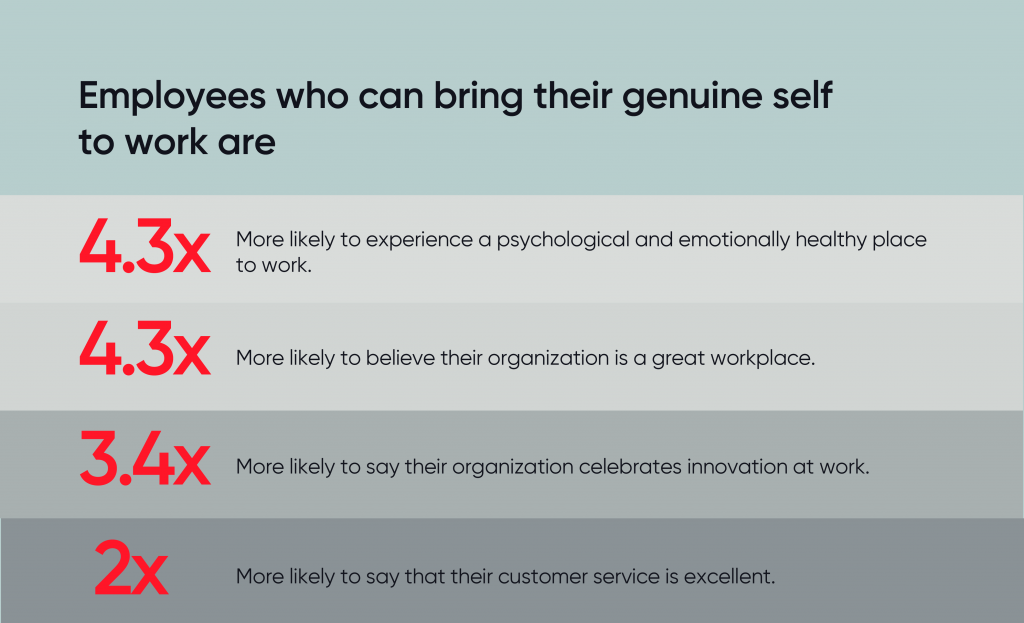
Employees who can bring their genuine self to work are more productive.

Creating a workplace where every employee feels valued and included is not just a matter of ethical responsibility; it’s a strategic step that drives organizational success. By fostering a culture of innovation, ensuring fair pay and benefits, recognizing and celebrating contributions, eliminating favoritism and bias, and appreciating the human stories behind each employee, companies can build a resilient and motivated workforce. These practices help create an environment where employees are engaged, productive, and committed to the company’s mission.

The impact of these efforts is profound: not only do they enhance employee satisfaction and retention, but they also lead to improved organizational performance and resilience, especially during challenging economic times. As you implement these strategies, remember that the key to success lies in genuine, consistent efforts to value every team member. When employees feel respected and included, they are more likely to go above and beyond, driving your organization to new heights. Investing in your employees is investing in your future. By making every employee feel like a valued teammate, you create a thriving, dynamic workplace that can weather any storm and emerge stronger. Visit us here to learn more.

Team Leader Roles and Responsibilities: How Caring Leaders Drive High Performance

A leader discussing work with the employee.

Reading Time: 6 minutes

Key Takeaways:

1. Team leader roles and responsibilities include balancing performance goals with employee well-being.

2. Flexibility and autonomy are essential responsibilities of modern team leaders because investing in employee well-being drives engagement and retention.

3. Caring leaders are the architects of high-performance workplaces as they create environments where employees can invest their best efforts.

Team leader roles and responsibilities go beyond task management—they include creating a culture of care, trust, and high performance. When leaders show genuine care, it significantly boosts employee performance. “People invest in their work when they feel valued,” says Michael C. Bush, CEO of Great Place To Work®. This care is evident when leaders take the time to understand and listen to their employees’ experiences, both in and out of the workplace. 

Caring is one of the nine high-trust leadership behaviors and signals to employees that their leaders are invested in their overall well-being, not just their job performance. Aiming for everyone in the organization to succeed professionally and receive recognition is not enough.

Leaders who demonstrate a high level of care for their employees inquire about workload and work-life balance. They focus on creating inclusive and welcoming environments where everyone feels they belong. They prioritize employee well-being and take the time to understand each individual’s goals and needs.

Here’s how top workplaces ensure their managers lead with empathy and foster inclusive environments where everyone can thrive.

What Are the Key Roles and Responsibilities of a Team Leader?

Some of the team leader’s roles and responsibilities are explained below in detail:

Foster an environment where everyone can excel

Team leaders who truly care about their employees make a concerted effort to identify and dismantle barriers that may be hindering their progress. This process involves thoroughly assessing the workplace’s equity to ensure that all individuals, regardless of their role or background, have equal opportunities to grow, develop, and thrive. It’s about providing opportunities and creating an inclusive environment where everyone feels valued and supported.

When employees can bring their true selves to work, their productivity and engagement significantly increase. Authenticity fosters a sense of belonging, which in turn boosts morale and motivation. Employees who feel accepted and valued are more likely to contribute creatively and work collaboratively, driving innovation and improving overall performance. When people don’t have to hide parts of their identity, they can focus their energy on their tasks and goals, leading to a more dynamic and effective workplace.

To effectively address the barriers that some employees face, it is essential to thoroughly analyze workplace data. This involves collecting and disaggregating data to understand how different experiences and backgrounds intersect and contribute to inequalities within the workforce. By examining this data, organizations can identify specific areas where interventions are needed and develop targeted strategies to address these issues.

Employees who bring their genuine self to work are more productive

Offer flexibility for employees navigating complex lives outside of work.

Research by Great Place To Work has shown that employees who have the freedom to choose where they work are:

– Three times more likely to remain with the company

– 14 times less likely to “quit and stay”

However, this doesn’t mean that remote work is the best option for every workplace. The key takeaway is the importance employees place on flexibility.

There are numerous ways to provide flexibility to employees, accommodating their diverse needs and responsibilities. Employers can offer flexible work hours, allowing employees to adjust their start and finish times to better fit their personal schedules. Remote work options can enable employees to work from home or other locations, reducing commute time and allowing for a better work-life balance. Flexible leave policies, such as extended parental leave, bereavement leave, and personal days, help employees manage significant life events without the added stress of work obligations. Job sharing and part-time opportunities can also provide alternatives for those who need to reduce their hours while maintaining their roles. By implementing these flexible arrangements, companies can create a more supportive and productive work environment, leading to increased employee satisfaction and retention.

Invest in Employee Well-being 

Investing in employee well-being is crucial for creating a thriving, productive workforce. When employees suffer from burnout, loneliness, or other challenges, they may feel neglected by leadership, leading to disengagement and reduced performance. Companies must prioritize physical and mental health initiatives to foster a sense of well-being, demonstrating a genuine commitment to their employees’ overall well-being. 

Great Place To Work research points out that psychologically safe individuals contribute more towards organizational success

A key component of this commitment is investing in leadership training and development. Leaders play a pivotal role in shaping the work environment and influencing employee morale. By equipping leaders with the skills and knowledge to support their teams effectively, companies can create a culture of care and support. Training should focus on empathy, active listening, and strategies for recognizing and addressing signs of stress or burnout among employees.

Great workplaces also emphasize the importance of building connections among colleagues. Facilitating strong interpersonal relationships within the workplace can mitigate feelings of loneliness and isolation, fostering a sense of community and belonging. Regular one-on-one meetings between employees and their managers are essential for maintaining open lines of communication. These meetings allow managers to check in on their team members’ well-being, offer support, and promptly address any concerns.

Leave room for autonomy and innovation

A hallmark of caring leadership is the ability to foster an environment where autonomy and innovation thrive. By granting employees the freedom to make decisions and explore new ideas, leaders not only demonstrate trust but also pave the way for enhanced creativity and performance.

Caring leaders understand that micromanagement stifles initiative and morale. Instead, they delegate responsibilities and empower team members to take ownership of their tasks. This approach encourages a sense of accountability and motivation, as employees feel their contributions are valued and impactful. When individuals have the autonomy to make decisions within their areas of expertise, they are more likely to bring fresh perspectives and solutions to the table.

Autonomy and innovation go hand in hand with continuous learning. Caring leaders invest in the development of their employees by offering opportunities for training, mentorship, and skill-building. They encourage curiosity and the pursuit of knowledge, understanding that a well-informed team is better equipped to innovate. By fostering an environment where learning is prioritized, leaders ensure that their teams remain agile and adaptable to new challenges and opportunities.

Benefits of Innovation in workforce are 3 fold

Conclusion

Caring leadership is not just a management style; it’s a transformative approach that can drive high performance and sustainable success in any organization. By showing genuine care and empathy, leaders can significantly boost employee morale and productivity. When leaders listen to their employees’ experiences and understand their needs, they create an environment where everyone feels valued and supported. This care manifests in various ways, from offering flexibility and fostering inclusivity to investing in employee well-being and encouraging autonomy and innovation.

High-Trust High- Performance leadership behaviors are the bedrock of creating a thriving workplace. Leaders who prioritize the well-being of their employees cultivate a sense of belonging and security, which in turn leads to higher engagement and performance. By promoting flexibility, leaders acknowledge the complex lives of their employees, allowing them to balance work and personal responsibilities effectively. Inclusivity ensures that every team member has equal opportunities to grow and succeed, while continuous learning and innovation keep the organization agile and competitive.

Caring team leaders have a few important roles and responsibilities, and they are the architects of high-performance workplaces. They create environments where employees are not only willing but eager to invest their best efforts. The impact of such leadership extends beyond individual job performance; it shapes the entire organizational culture, making it a place where everyone can excel and feel proud to be a part of. By embracing the principles of caring leadership, organizations can unlock their full potential and achieve lasting success.

Visit us here to learn more. 

Frequently Asked Questions

1. What are the main responsibilities of a team leader?

Team leaders are responsible for guiding their teams, fostering trust, ensuring inclusion, and supporting employee well-being while driving performance goals.

2. How can team leaders show they care about employees?

By listening actively, offering flexibility, and creating an inclusive environment where employees feel valued and supported.

3. Why is empathy important in leadership?

Empathy builds trust, reduces turnover, and improves engagement, making teams more productive and innovative.

4. How can team leaders balance performance goals with employee well-being?

Team leaders can balance these priorities by setting clear objectives while fostering a supportive environment. This includes offering flexibility, promoting open communication, and ensuring workloads are manageable so employees can thrive without burnout.

The Landscape of Mid-Size Organizations in India

Three employees working together.

Reading Time: 4 minutes

Mid-sized organizations are the backbone of India’s economic growth, playing a vital role in GDP contribution, exports, and job creation. These organizations contribute over 29% of India’s GDP and account for 50% of the country’s total exports. They are instrumental in the manufacturing sector, producing one-third of the output and employing over 110 million people. This makes them crucial to the economy and significant in creating employment opportunities across both urban and rural areas.

Recognizing the importance of mid-sized organizations, the Indian government has introduced various supportive schemes and initiatives. Programs such as SME Samadhaan, Udyog Aadhaar, and Mudra aim to provide financial assistance, simplify regulatory processes, and promote innovation within the sector. This governmental support is essential in helping mid-sized organizations overcome challenges and thrive in a competitive business environment.

For mid-sized organizations in India, it is critical to focus on enhancing business competence, nurturing leadership development, and optimizing employee benefits. Providing a fair share of profits and ensuring transparent, merit-based advancement opportunities are key strategies for sustaining a positive workplace culture. Excelling in these areas not only benefits employees but also drives business success, as evidenced by the performance of Best Workplaces.
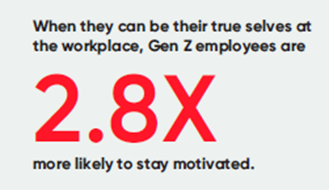
Minor Decline in Workplace Experience for Employees in Mid-Sized Organizations

In 2024, the workplace culture experience among mid-sized organizations in India saw a slight decline of 1%. The Trust Index score for these workplaces also experienced a minor decrease of 1% compared to 2023, bringing it to 83%. While this decline is modest, it underscores the importance for organizations to focus on maintaining and enhancing employee trust and satisfaction. Despite these challenges, employees continue to regard their organizations as great places to work, reflecting the resilience of workplace culture.
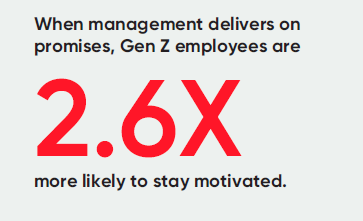
Minor Decline in Workplace Experience for Employees in Mid-Sized Organizations.

The trend varies across industries. Major sectors like IT, BFSI, and Professional Services experienced a decline of 1-2%, while industries such as NGOs and Manufacturing saw an increase of 1-2% in employee experience compared to last year.

The graph shows the trend across industries. Sectors like IT, BFSI, and Professional Services experienced a decline of 1-2%, while industries such as NGOs and Manufacturing saw an increase of 1-2% in employee experience compared to last year.

Decline in Workplace Sentiment Among Key Demographics

Even though most areas of workplace culture have remained stable at an overall level, we observed a decline in a few sentiments among key employee demographic groups.

Decline in Workplace Sentiment Among Key Demographics.

Women Employees Seek Fairer Pay, Recognition and Less of Favouritism.

Areas with the highest difference in sentiment between men and women: Fair Pay (-6%), Recognition (-5%), and Favoritism (-5%).

When organizations address these issues, female employees are:

Strengths to Sustain: What’s Working for Mid-size Workplaces

Despite a slight decline in overall workplace culture scores in 2024, mid-sized organizations in India continue to excel in critical areas such as employee pride, ethical management practices, and a welcoming environment. These strengths, combined with high levels of management competence, form a robust foundation that supports a positive and productive work environment.

For every 2 employees that don’t experience innovation opportunities, there are 9 employees ready to innovate, highlighting the potential for growth in fostering a more innovative workplace culture.
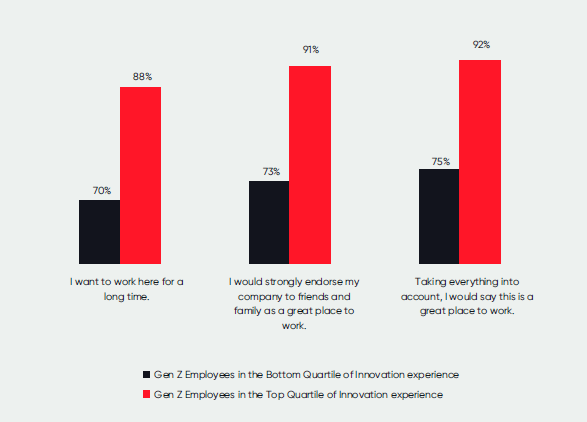
Key highlights include:

These statistics demonstrate the resilience and strength of mid-sized organizations in India, showcasing their ability to maintain a high workplace culture standard even amidst challenges.

Mid-size organizations in India demonstrate a resilient workplace culture, underscored by high levels of safety, fairness, and management competence. These attributes foster an environment where employees feel valued and supported. Maintaining and building upon these strengths is crucial for mid-size organizations to enhance employee satisfaction, drive innovation, and remain competitive.

Mid-sized organizations in India showcase a resilient and dynamic workplace culture, even amidst slight overall scores decline. Key strengths, including high levels of employee pride, ethical management practices, and a welcoming environment, provide a robust foundation for these organizations. By addressing areas such as innovation opportunities and demographic-specific concerns, mid-sized companies can further enhance employee satisfaction and drive business success. The continued focus on maintaining high standards of workplace culture is essential for sustaining growth, fostering innovation, and remaining competitive in India’s rapidly evolving economic landscape. Visit us here to learn more.

4 Leadership Lessons That Apply to Any Business

4 plants with 4 pots stuck on a wall.

Reading Time: 4 minutes

Today, effective leadership is more critical than ever. Great leaders drive their organizations toward success and create an environment where team members thrive. Leadership isn’t about wielding the power to command; it’s about the profound ability to nurture and inspire those around you. Effective leaders build trust, foster a positive work culture, and drive collective success.

The Importance of Good Leadership in Business

Good leadership is crucial to the success and sustainability of any business. Effective leaders provide direction, inspiration, and clarity, ensuring that all team members understand and work toward the organization’s goals. They set the tone for the company culture, influencing the work environment and employee morale. Good leadership fosters a positive and productive workplace where employees feel valued, motivated, and engaged.

Leadership is also pivotal in decision-making and strategic planning. Competent leaders can analyze complex situations, make informed decisions, and steer the company through challenges and opportunities. Their ability to adapt to changing circumstances and drive innovation is essential for maintaining a competitive edge in the market.

Qualities of a trusted leader - A continuous learner, A team player, Genuine, Ethical, Courageous, Inclusive, Resilient, Approachable, Humble and Credible.

Moreover, strong leadership is vital for building and maintaining relationships, both within and outside the organization. Leaders who communicate effectively and demonstrate integrity and empathy can build trust with employees, customers, and partners, leading to stronger collaborations and customer loyalty.

Good leadership directly impacts a business’s overall performance and growth. It enables the organization to achieve its vision, foster a collaborative and innovative culture, and navigate the complexities of the business world, ensuring long-term success and sustainability.

1. Empowerment and Delegation

Empowerment and delegation are crucial aspects of effective leadership, serving as the backbone of a motivated and high-performing team. Empowering team members involves giving them the authority and confidence to make decisions within their roles. This not only boosts their confidence and morale but also encourages a sense of ownership and accountability. Delegation, on the other hand, involves assigning tasks and responsibilities to team members, and trusting them to complete these tasks autonomously.

When employees feel empowered, they are more likely to be innovative, taking the initiative to propose new ideas and solutions. This culture of innovation leads to improved problem-solving and efficiency.

Leadership Blueprint for Cultivating Innovation-Ready Future - Facing the future's uncertainties, leaders must now more than ever cultivate a culture of innovation, where diverse ideas flourish and adaptability is not just a trait
but a core organizational value. Adaptive Environment: Foster inclusivity and
flexibility in workplaces to embrace diverse
ideas and adapt to future workforce trends. Streamlined Ideation: Develop clear, agile
ideation processes for staying ahead of
emerging trends. Forward-Thinking Incentives: Reward
innovative challenges to the status quo,
encouraging groundbreaking solutions. Lifelong Learning: Prioritize continuous
learning to navigate future tech and
market shifts. Agile Risk-Taking: Cultivate a fast,
constructive, and risk-taking culture to lead
industry evolution.

Moreover, empowered employees are generally more motivated and engaged, which enhances overall productivity and job satisfaction. Delegation allows leaders to focus on strategic planning and high-priority tasks, optimizing resource allocation and operational effectiveness.

2. Flexibility and Adaptability

In today’s fast-paced business world, flexibility and adaptability are essential traits for effective leadership. Leaders must be prepared to pivot strategies and approaches in response to new challenges, market shifts, and emerging opportunities. This agility enables businesses to remain competitive and resilient, even in the face of unexpected disruptions.

The benefits of adaptability are significant. An adaptable leader can quickly identify and respond to changes in the business environment, ensuring that the organization remains relevant and ahead of the curve. This proactive stance helps in seizing new opportunities, mitigating risks, and maintaining a competitive edge. Furthermore, adaptable leaders inspire confidence and trust within their teams, fostering a culture of continuous improvement and innovation.

3. Clear Communication and Vision

Clear communication and a strong vision are foundational elements of effective leadership. Clear communication involves conveying information, expectations, and feedback in a way that is easily understood by all team members. A strong vision provides a sense of direction and purpose, guiding the organization toward its long-term goals.

Effective communication fosters trust among team members and between leadership and staff, creating a transparent and cohesive work environment. It ensures that everyone is aligned with the organization’s objectives, reducing misunderstandings and enhancing collaboration. A compelling vision, on the other hand, motivates and inspires employees, providing them with a shared sense of purpose and direction. When team members understand the bigger picture, they are more likely to be engaged and committed to their work.

Great people managers, connect, develop & inspire. India's Most Trusted Leaders score 93% to Connect, 89% to Develop and 91% to Inspire compared to others with 84% to Connect, 78% to Develop and 80% to Inspire.

4. Emotional Intelligence

Emotional intelligence (EQ) is a critical leadership trait that involves understanding and managing one’s emotions and the emotions of others. Leaders with high EQ are adept at handling interpersonal relationships judiciously and empathetically, which is essential for building a cohesive and motivated team.

The benefits of emotional intelligence in leadership are profound. Leaders who exhibit high EQ can create a positive work environment by recognizing and addressing the emotional needs of their team members. This fosters a sense of trust and loyalty, leading to improved team dynamics and collaboration. Moreover, emotionally intelligent leaders are better equipped to handle stress and conflict, making them more resilient in challenging situations.

Good leadership is the cornerstone of any successful business. These leadership strategies are not just theoretical concepts but practical tools that can transform a business. Implementing these strategies will help leaders cultivate a positive workplace, foster innovation, and navigate the complexities of the business world, ensuring sustained growth and success for their organizations.

Visit us here to learn more.

Job Seekers Are 15X More Likely To Choose Certified Great Workplaces

Collage of Best Workplaces with Great Place To Work Certification Badge.

Reading Time: 4 minutes

In today’s competitive job market, attracting top talent requires more than just offering a competitive salary and a good benefits package. Job seekers are increasingly discerning, seeking out workplaces that offer a positive and fulfilling work environment. According to our recent studies, job seekers are 15 times more likely to choose certified Great Workplaces over those that are not. This trend highlights the growing importance of workplace culture, employee satisfaction, and organizational values in the decision-making process of potential employees. Certified Great Workplaces stand out by fostering environments where employees feel valued, engaged, and inspired. In this blog, we’ll explore why job seekers are gravitating towards these certified workplaces and how organizations can leverage this trend to attract and retain the best talent in the industry.

The role of trust in great workplaces

Before we delve into the impact of trust on workplace dynamics, it’s essential to understand its significance in earning the Great Place To Work Certification. Our model is founded on the principle that trust is the cornerstone of an exceptional workplace. This is the key factor we evaluate when assessing companies for Certification. Through our Trust Index™ Survey, we gauge employees’ trust in their leaders, their sense of respect, and their overall workplace satisfaction.

Our research consistently shows that trust creates a pleasant work environment and drives substantial business success. Employees who trust their company are more engaged, productive, and loyal. Consequently, companies that achieve our Certification excel in trust, giving them a competitive edge.

Our research consistently shows that trust creates a pleasant work environment and drives substantial business success.

How companies Certified by Great Place To Work eclipse the typical workplace

Our research indicates that Certified (high-trust) companies distinguish themselves by having better leadership, more equitable promotion processes, and higher levels of employee engagement, with a significant number of employees expressing excitement about coming to work. These companies excel in retaining and engaging employees and promoting adaptability more effectively than the average workplace:

Achieving Certification has become a national benchmark for a positive company culture. For a company to be certified, at least 70% of its employees must affirm it’s a great workplace. 
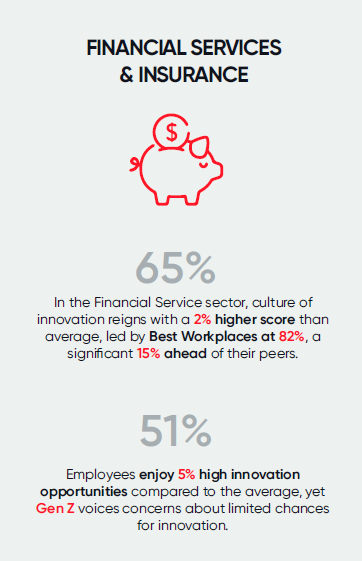
Companies that cultivate trust-based workplaces fundamentally transform the landscape. They create environments where employees genuinely want to be, which in turn drives business success. When trust is at the core of a workplace, it leads to higher employee satisfaction, engagement, and productivity, ultimately resulting in flourishing businesses.

Certified great workplaces pay and promote their people fairly 

Certified Great Workplaces are distinguished by their commitment to fair pay and equitable promotion practices. They ensure that all employees are compensated fairly for their contributions and have clear, unbiased paths to career advancement. This focus on fairness fosters trust and loyalty and contributes to a more motivated and engaged workforce.

Great workplaces provide a sense of purpose and pride

Our research into top employee retention strategies has revealed that purpose and pride are the most critical factors influencing an employee’s decision to remain with an organization. Employees are:

When leaders inspire their employees to take pride in their work and find meaningfulness in their roles, they cultivate a happier and more motivated workforce. At Certified Great Workplaces, employees experience these empowering conditions, leading to higher retention rates and a more engaged team.

Employer brands that stand out from the crowd 

Certified companies have employer brands that truly stand out from the crowd. These organizations are recognized for their commitment to creating exceptional workplace environments characterized by trust, fairness, and respect. By prioritizing employee well-being, fair compensation, and clear career advancement paths, certified companies attract top talent and foster loyalty and engagement among their workforce. This strong, positive employer brand sets them apart in a competitive job market, making them desirable workplaces and driving their overall success.

Great workplaces offer more opportunities for innovation

Great workplaces offer more opportunities for innovation by fostering an environment where creativity and new ideas are encouraged and valued. These workplaces cultivate a culture of trust and open communication, where employees feel safe to take risks and experiment without fear of failure. By providing resources, support, and recognition for innovative efforts, great workplaces empower their employees to think outside the box and contribute to the company’s growth and success. This emphasis on innovation drives business advancements and enhances employee engagement and satisfaction, making the organization a dynamic and forward-thinking place to work.

The Best Workplaces distinguish themselves by showcasing an impressive 18% lead in innovation metrics.

For both job seekers and HR managers, opting for Great Place To Work Certification proves to be a wise choice. It results in enhanced job satisfaction, heightened employee engagement, and a sustained positive work atmosphere. Embracing workplace certification boosts job seekers’ prospects of encountering excellent leadership and enables HR managers to utilize this certification as a powerful tool for attracting and retaining top talent within their respective industries. Visit here to learn more.

Nurturing Creativity: Best Practices for Fostering Innovation Across Industries

Innovation

Reading Time: 6 minutes

Innovation is the lifeblood of any organization, propelling it forward in a dynamic landscape. But fostering a culture of creativity and innovation isn’t magic. It requires deliberate effort, supportive leadership, and a nurturing environment. This article explores best practices for nurturing creativity and fostering innovation across various industries, drawing inspiration from leading companies like Juniper Networks, Cadence Design Systems, Reliance Nippon Life Insurance Company (RNLIC), Mahindra, and Flipkart.

Cultivating Creative Confidence: Examples Across Industries

In the Financial Service sector, innovation reigns with a 2% higher score than average, led by Best Workplaces at 82%, a significant 
15% ahead of their peers. Employees enjoy a 5% surplus in innovation 
opportunities compared to the average, yet Gen Z voices concerns about limited chances for innovation. In Manufacturing, innovation on par with the industry average, yet Best Workplaces shine at 78%, boasting a notable 17% lead over their peers. Within the Manufacturing sector, there's a clear enthusiasm for innovation, reflected in the ratio of 9 
employees availing innovation opportunities for every 2 who don't. However, women employees face 
challenges accessing such opportunities. Despite the IT industry's innovation score 
lagging by 1% compared to the average, Best Workplaces excel at 77%, leading with a significant 16% advantage over their peers. Within the IT industry, employees grapple with a 5% gap in innovation opportunities vis-à-vis the average. Moreover, non-managerial staff 
encounter restricted opportunities for innovation.

Information Technology (IT):

Banking, Financial Services and Insurance (BFSI):

Manufacturing:

E-commerce:

Key Takeaways for Building a Culture of Innovation

Adaptive Environment. Agile Risk-Taking. Lifelong Learning. Forward-Thinking Incentives. Streamlined Ideation.

These industry-specific examples highlight some key takeaways for building a culture of innovation:

Fostering a Growth Mindset

In addition to the key takeaways mentioned above, nurturing a growth mindset is crucial for fostering a culture of innovation. A growth mindset encourages the belief that skills and abilities can be developed through effort and learning. This is essential for innovation because it allows employees to embrace challenges, persevere through setbacks, and continuously learn and improve. Organizations can promote a growth mindset by providing opportunities for professional development, encouraging experimentation, and rewarding employees for their effort and learning, not just for achieving perfect results.

The Road to Innovation: A Continuous Journey

Building a culture of innovation is not a one-time event; it’s an ongoing process that requires continuous effort and dedication. By implementing the best practices highlighted in this article and fostering a growth mindset within the organization, companies across all industries can empower their employees, cultivate creativity, and unlock the power of innovation to achieve sustainable success in a dynamic and ever-evolving world.

Beyond the Examples: Universal Strategies for Innovation

While the previous sections focused on specific industry examples, several key strategies can be applied universally to foster a culture of innovation:

By adopting these universal strategies alongside industry-specific best practices, organizations can create a thriving innovation ecosystem that propels them towards long-term success.

In Conclusion:

Innovation is the key to surviving and thriving in today’s competitive landscape. By fostering a culture of creativity, empowering employees, and implementing effective innovation programs, organizations can unlock their full potential and drive positive change. The journey towards a truly innovative organization is continuous, but the rewards of a successful innovation culture are undeniable. So, take the first step today, nurture creativity within your teams, and embark on the path to a brighter and more innovative future.

Unleashing India’s Hidden Innovation Powerhouse: Why Gen Z, Millennials & Women Hold the Key

Why Gen Z, Millennials & Women Hold the Key

Reading Time: 3 minutes

India’s ascent as an innovation leader is undeniable. Boasting a score of 38.1 on the 2023 Innovation Index, the country showcases a burgeoning tech ecosystem that excels at transforming knowledge and technology into tangible solutions. This progress is further bolstered by significant investments in human resources and digital infrastructure, laying the groundwork for a future powered by innovation.

Top 3 Innovation Economies by Region

However, a closer look reveals a crucial element missing from the equation – a truly inclusive innovation culture. Despite a vibrant ecosystem, the perception of innovation culture in India dipped by 2% in 2024, reaching 63%. This indicates a need to bridge the gap between potential and reality.
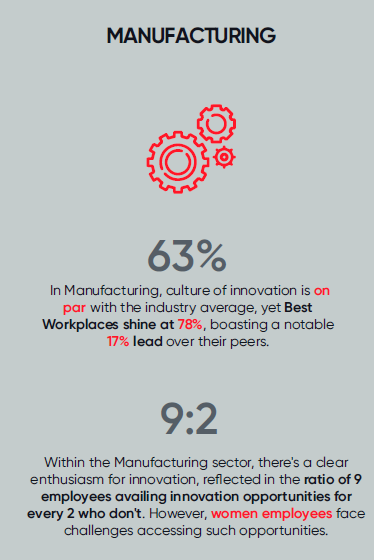
Innovation Thrives on Inclusivity

Best Workplaces Vs Other Workplaces

Innovation thrives in an environment where every idea finds a voice. Collaboration across all levels, trust, and structured pathways for ideation are the cornerstones of such a culture. Organizations that foster this environment – Best Workplaces™ as identified in our recent India’s Best Workplaces Building a Culture of Innovation by All 2024 report – demonstrate an impressive 18% lead in innovation metrics. They excel at creating a space for connection, empowering individuals, and celebrating innovation achievements.
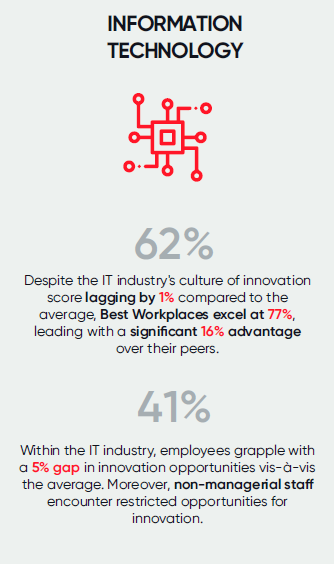
The Untapped Potential: Gen Z, Millennials & Women

Here’s where a critical disconnect emerges. At a concerning 40%, innovation opportunities stagnate for Gen Z, Millennials, and Women. These demographics, brimming with potential, often face roadblocks like limited work experience, restricted access to resources, and differing workplace expectations compared to their senior counterparts. Recognizing these dynamics is crucial for organizations aiming to harness the full potential of their workforce and adapt to the evolving needs of the innovation landscape.

For women, the picture is even more concerning. Despite strides towards gender equality, women remain underrepresented in leadership and innovation-driven fields like technology and STEM. Unconscious bias and unequal access to opportunities continue to hinder their participation and success in innovative endeavors.

This lack of inclusivity has a ripple effect. Best Workplaces exhibit nearly double the readiness to innovate compared to others. This readiness signifies the ability to provide employees with meaningful opportunities to innovate. However, when Gen Z, Women, and non-managerial staff report limited opportunities, it highlights a glaring need for equitable resource distribution and support systems that nurture creativity across all levels.

Building Bridges: Fostering an Inclusive Innovation Culture

The answer lies in a fundamental shift towards inclusive and equitable innovation practices. Organizations must create a space where everyone feels empowered to contribute. Here are some key steps:

The Power of a Connected and Satisfied Workforce

The correlation between workplace satisfaction and a thriving innovation culture is undeniable. Employees at Best Workplaces report a 5 to 9% higher positive perception of key performance indicators. This highlights a significant relationship between a strong culture of innovation and enhanced employee satisfaction with organizational performance.

Investing in an inclusive innovation culture isn’t just about social responsibility; it’s a strategic imperative. By empowering Gen Z, Millennials, and Women, organizations unlock a wealth of talent and perspectives, fostering a more vibrant and dynamic innovation ecosystem. This, in turn, fuels future growth and propels India towards becoming a true innovation powerhouse.

Remember, innovation is not a privilege for a select few; it’s the collective spark that ignites progress. By embracing inclusivity, we can unlock India’s full innovation potential and illuminate the path to a brighter future.

Harnessing the Power of AI: MOURI Tech’s Revolutionary Impact on Various Industries

harnessing the power of ai mouri tech's revolutionary impact on various industries banner

Reading Time: 3 minutes

According to Great Place To WorkⓇ ’s research, to cultivate a culture of Innovation By All, it is crucial for organizations to align their innovation practices with employee experiences. This alignment is essential to bridge the gap between the innovation approach and the desired outcomes.

MOURI Tech (P) Limited’s culture reflects this philosophy in many ways, which has enabled it to be one of the Top 50 Companies (in the Large category) in India’s Best Workplaces Building a Culture of Innovation by All 2023 list.

As a Global Enterprise Solutions company operating under the motto ‘Employee First. Customer Foremost’, MOURI Tech’s journey toward innovation has been both challenging and rewarding, marked by bold moves and strategic decisions. By Investing heavily in R&D, and embracing a “fail-fast” mentality, MOURI Tech provided its employees with the necessary freedom and resources to pursue ambitious projects.

MOURI Tech has made significant strides in innovation over the years. One of the key milestones in its innovation journey was the launch of its Artificial Intelligence (AI)-powered platform in 2018 to help businesses automate and streamline their operations using AI and ML algorithms. This platform has been a game-changer for many of MOURI Tech’s customers, enabling them to improve operational and business efficiencies, achieve significant cost savings, and gain a competitive edge in their respective industries.

Anil-Yerramreddy_GlobalCEO
“Innovators push the boundaries of what is possible, transforming industries and reshaping the future. At the heart of MOURI Tech’s success lies our unwavering commitment to fostering a Culture of Innovation, further amplified by the transformative power of AI. At MOURI Tech, we fuel this synergy, inspiring a revolution that transcends industries – shaping an era of possibilities.”
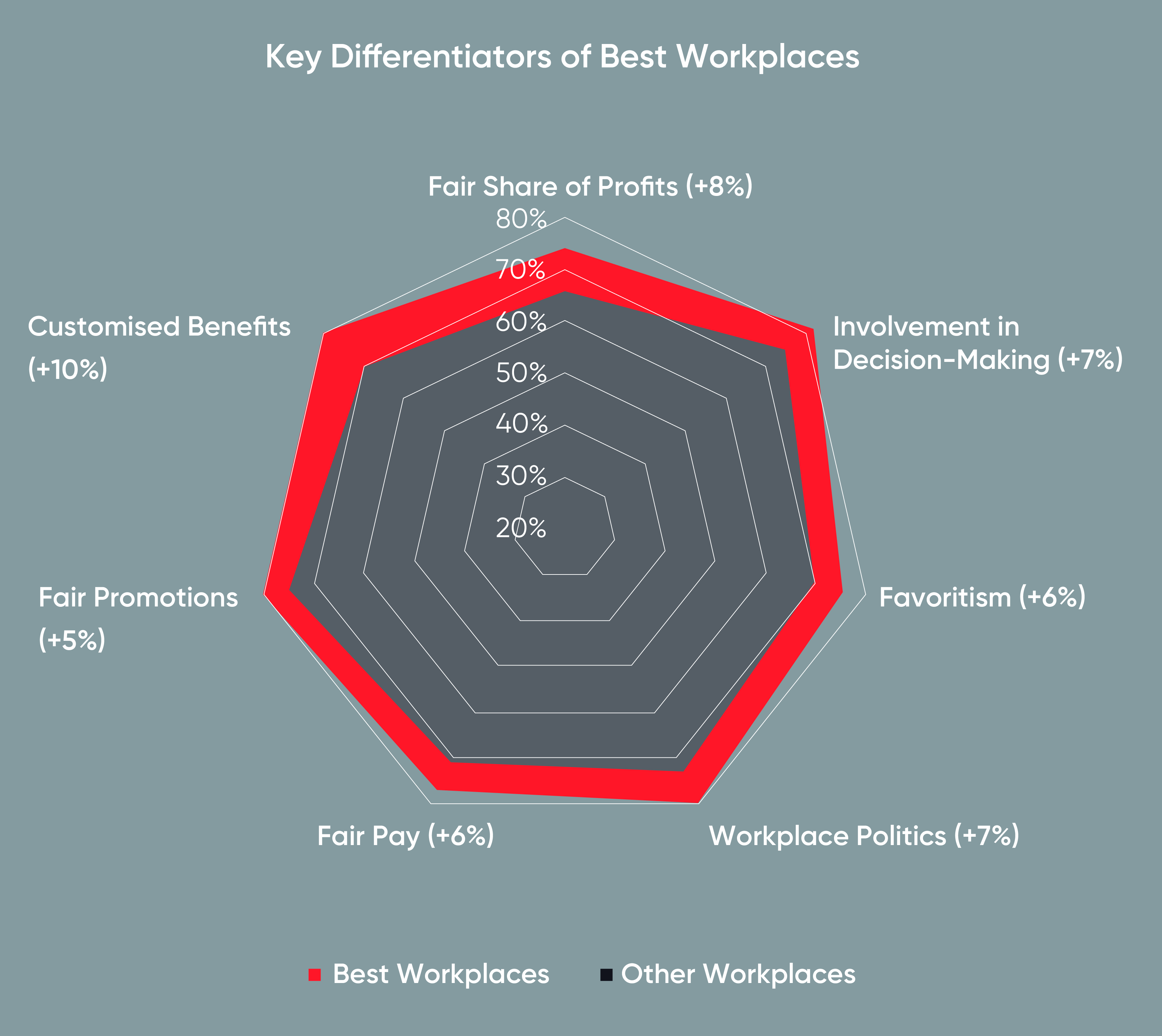
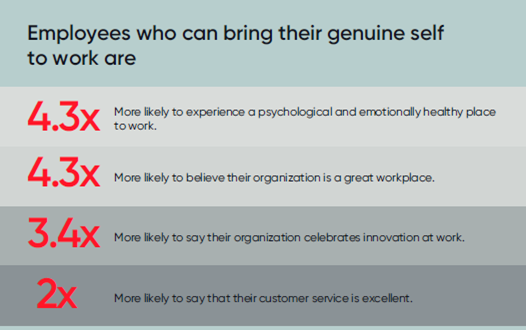
Anil Yerramreddy,

Global CEO, MOURI Tech

A major factor in MOURI Tech’s success in innovation has been its culture of experimentation and risk-taking approach. The company encourages its associates (as employees are referred to, here) to think outside the box and explore new ideas and concepts. Leaders here believe that the best ideas come from people who are involved directly with customers, suppliers, and products on a daily basis. MOURI Tech’s Ideation Platform has paved the way for the development of several innovative products & solutions for the clients, thereby helping MOURI Tech to maintain a consistent level of competitiveness.

mouri tech innovation blog-infographic

Here are a few examples of the impact made:

  • As reviewing multiple contracts was becoming a challenge owing to the rapid organizational growth, the Recruitment and AI teams collaborated and came up with an AI-enabled process that could wrap up reviews in 80% less time and with 40% more accuracy.
  • The Recruitment and AI teams also came together to develop an AI-based Resume Scoring Solution to decrease profile screening time by 90%.
  • An idea shared by an associate, about developing a solution that helps read through emails and create a Customer Sales Order form, thus bypassing the need to read through a huge number of emails from a vendor for orders. This has been well received in the market as an efficient, employable product.

As the technology landscape continues to evolve, MOURI Tech is well-positioned to lead the way in innovation and help organizations across the globe achieve their digital transformation goals and through it, sustained growth.

Learn more about MOURI Tech (P) Ltd, a Great Place to Work.