We all know that one employee at every workplace who has been there “forever”. Be it experiencing leadership changes, system evolutions or cultural shifts – they’ve been through it all. Yet, they still remain, keeping things together. We don’t see them merely as employees, but as the steady hands and knowledge keepers.
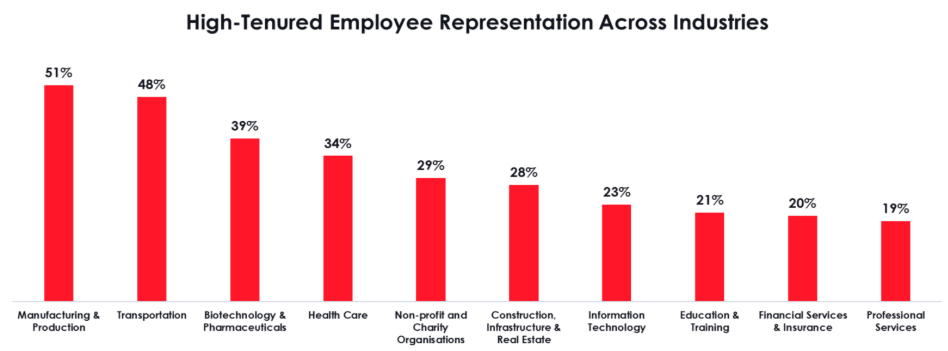
This snapshot highlights how long-tenured employees are found across many industries, carrying knowledge that fuels both growth and resilience.
But here’s the question: Does staying long enough in an organization always mean staying engaged? Or can it sometimes also signal complacency?
This blog elaborates on this conflict and suggests ways to create a great experience for your long-tenured employees. The goal is simple: build a culture that makes sure everyone excels.
Ultimately, this blog is an urge to make long-tenured employees “strategic assets” rather than silent burdens by fostering a workplace culture that keeps them motivated, developed, and involved. Let’s start with why there is merit in doing so.
Why Long-Tenured Employees are your secret weapon?
Long-tenured employees’ staying power isn’t just about loyalty; it’s about the value they bring every day.
Here’s why they matter:
- Culture Carriers: From keeping traditions alive to helping new hires, they carry the legacy and are the true ambassadors of your long-lasting culture.
- Knowledge Hubs: Need to know why a process exists or how a client relationship is developed? Chances are, they have the answers. Their historical insights prevent repeat mistakes and fill critical gaps.
- Mentors and Guides: In fast-moving environments, they provide something priceless: consistency. They are the typical ‘been there done that’ kind of employees, and that experience means your newcomers will have mentors and guides to look up to.
- Trusted Allies: Years of delivering results build trust. When the stakes are high, these employees are most likely your go-to problem solvers.
When long tenure slips into complacency?
Loyalty is worth celebrating, but what happens when long tenure starts feeling like a comfort zone? For some, familiarity can gradually lead to resistance. It’s not they lack ability; but just that change seems less thrilling and more tiring after years of routine.
An organization can watch out for these signs of complacency:
- Holding onto old methods instead of trying new ones.
- Viewing new ideas as, “I know it will be a waste of time.”
- Being reluctant to step outside familiar boundaries.
In contrast to this, newer employees are often proactive, with bold ideas, and a willingness to take risks. This fast-paced approach can be unsettling for those who have been around longer, especially when different communication styles and comfort with technology come into play.
A catch here is: Consistent performance doesn’t necessarily mean that someone isn’t as engaged. Even though many experienced employees keep things running, their dependability is often misinterpreted as a lack of ambition. So maybe the problem isn’t tenure, but the culture surrounding it. When growth slows down, even the most committed people can tend to lose the motivation.
Employee feedback shows this clearly:
- “I’ve been here since 2013 and my salary remains the same; no raises, no benefits.”
- “Promotion policies keep changing. It’s confusing.”
- “Seven years in Trade Finance but still stuck in the same role.”
- “Over 100 awards, yet they don’t count during promotions.”
These voices tell a bigger story: complacency isn’t necessarily a personal flaw; it’s often a cultural outcome. When tenure starts feeling like a dead end, instead of opening new doors, employee engagement starts fading. Recognizing this is the first step toward change.
Role Of Organizational Culture
Culture can make-or-break an employee’s experience, especially for those who have been around for a while. It often decides whether they stay curious or start thinking, “Why bother? This is how we’ve always done it.”
Growth feels like an open road. But stagnation? Like a traffic jam you can’t escape.
Here’s the difference:
| Growth Culture | Stagnant Culture |
| Encourages curiosity and learning | Resists change and innovation |
| Supports career mobility | Reinforces silos and outdated norms |
| Creates psychological safety | Discourages risk-taking and new ideas |
And the data, from the Great Place To Work® research, prove it:
- Recognition matters – 85% of the long-tenured employees at Best Workplaces™ believe “Everyone has an opportunity to get special recognition.”
- Learning counts – 88% agree that training and development opportunities are available where growth is prioritized.
- Career and promotions clarity – 88% say “There are opportunities here for my career growth.”
How to keep loyalty active, not passive
To turn tenure into an advantage and utilize these employees as “assets”, they need to feel valued and ready for what’s next. Here’s what organizations can do for them:
Recognition that feels personal
Make recognition personal by celebrating contributions in meaningful ways, not just anniversary milestones. A handwritten note or a mention in a team meeting can have a big impact.
Reverse mentoring
Pair seasoned employees with younger colleagues for a two-way exchange. This is where wisdom meets fresh ideas, and everyone walks away smarter.
Career movements can be lateral
Progress isn’t always synonymous to climbing the ladder. Taking on new projects or roles, through lateral moves, can continue to spark curiosity and help keeps skill fresh.
Leadership storytelling
Sharing the “why” behind any work done can help employees feel connected to the purpose and impact. Thus makes the contribution feel meaningful, especially when explained by leaders.
Measure what matters
Focus what truly counts: do you see your culture fuelling the most experienced talent or draining them?
Key Metrics to look out for:
- Learning & Development Participation: High enrolment indicates a growth encouraging culture.
- Internal Mobility: While frequent role changes can show agility; too much stagnation may suggest rigidity.
- Recognition Frequency: When employees experience regular appreciation, it calls for an inclusive culture.
- Engagement Scores: Strong cultural indicators like “I feel valued” and “I see growth opportunities.” can help drive the engagement value.
- Retention Risk: If attrition rises among tenured employees, it’s time to take relevant measures.
Complacency: A personal trait or a cultural outcome?
“Long-term employees lose ambition or resist change because of personal issues” can be an easy thought. But there’s always greater reality to the story.
The truth is that culture matters a lot. When an organization pushes its employees, acknowledges their contributions, and grows with them, tenure becomes valuable. However, when culture becomes stagnant, even the most loyal ones can lose interest.
So the important question isn’t, “Why are employees complacent?” It’s, “What kind of culture have we created?”
A growth-driven culture turns experience into a springboard for success. A stagnant one, on the other hand, slowly pushes talent out of the door. So, where does your workplace stand?