
This report explores how India’s pharmaceutical, biotechnology, and healthcare industries balance rapid growth with mounting challenges and provides a practical action guide to address workplace culture imperatives.
India’s Pharmaceutical Industry
The pharmaceutical industry in India has been a global leader, with a CAGR of 9.43%, contributing over 2% to the country’s GDP. The growth, however, also comes with complex challenges that require workplaces to ensure both strategic and cultural transformation today. Numerous macroeconomic forces, including stricter global regulations, higher costs of noncompliance, and falling prices for generic drugs, are prompting leaders to rethink their strategies to sustain.
There is also a shortage of skilled professionals in advanced research, regulatory affairs, and quality management, which directly impacts innovation and competitiveness. Add to this the risk of supply chains becoming overly dependent on certain regions, and the pressure on companies is evident.
These key industry challenges point us to the workplace imperatives for this sector:
- Strict regulations and zero-error tolerance create a high-pressure environment where precision is critical.
- Falling prices demand innovation in products and processes.
- Digital tools like AI can speed drug discovery and improve efficiency, yet resistance to change often delays progress.
- Talent attraction and retention shortages make it hard to hire. Additionally, retaining and developing experts in R&D and compliance increases the workload for existing teams and limits their capacity for innovation.
Building Credibility Through Consistency
Recent industry developments have demonstrated how quickly confidence can weaken when standards are assumed rather than enforced. The pharmaceutical industry competes not only on scientific innovation and scale but also on the confidence that its products, processes, and decisions are reliable.
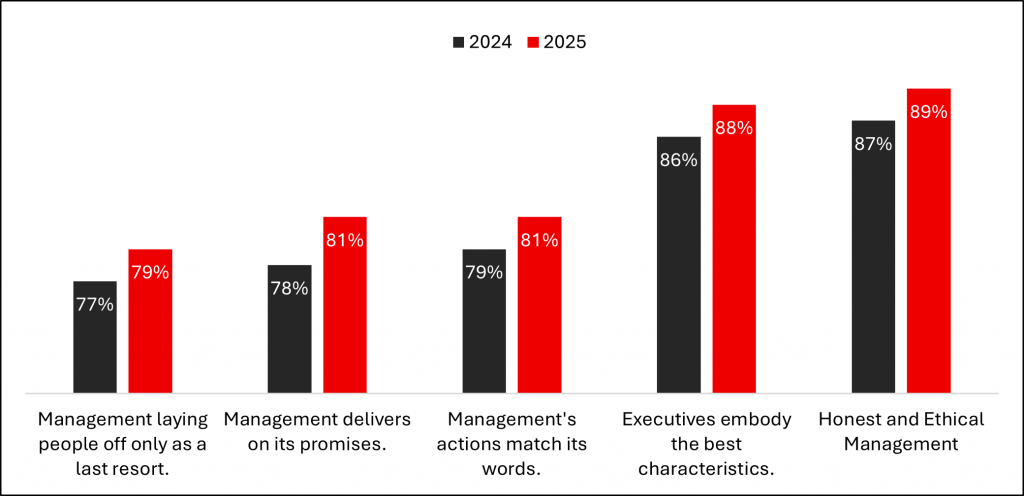
Given this environment, leadership plays a crucial role as the primary source of assurance. Promisingly, there has been a 2-3% improvement in employees’ perceptions of management integrity across all areas of pharmaceutical workplaces.
Integrity-Led Leadership: The Cultural Key to Employee Retention
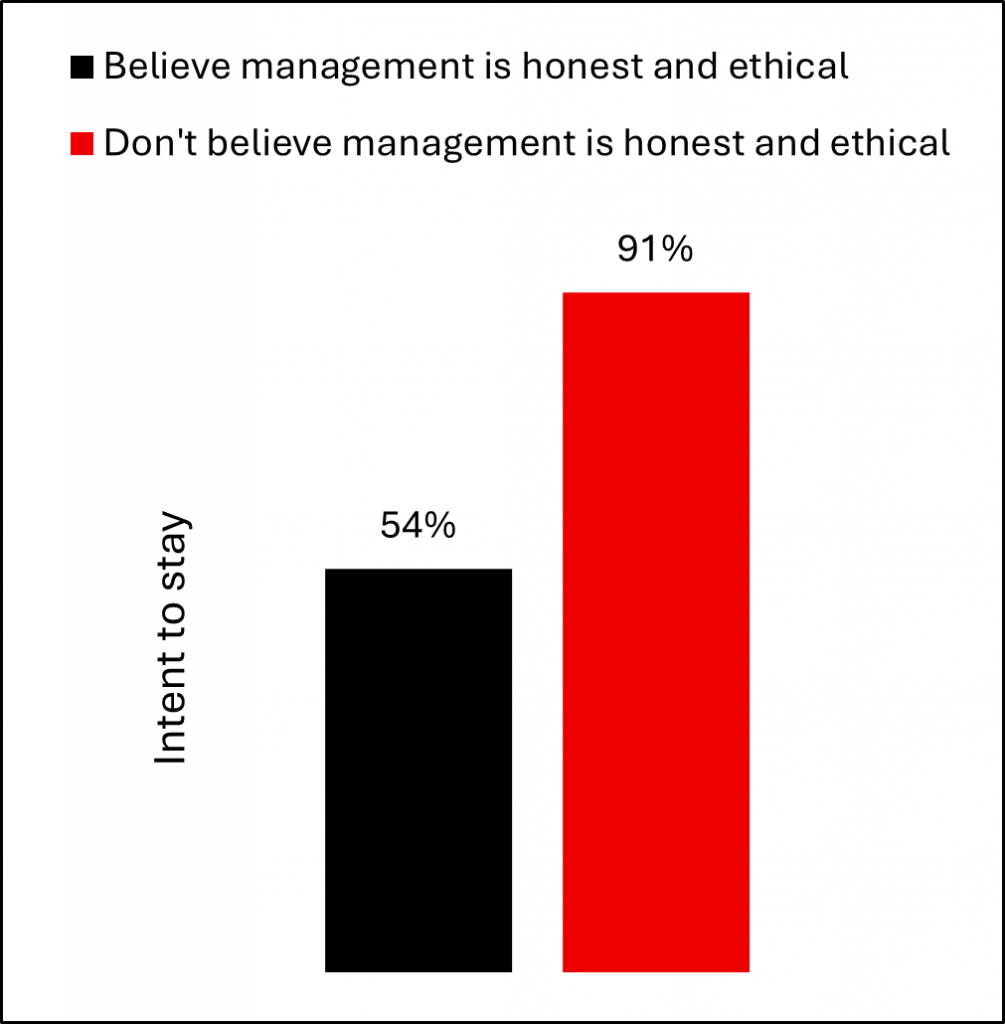
To overcome these internal challenges, especially talent shortages and the need for innovation, integrity-led leadership is critical. Employees follow signals more than handbooks. When leaders consistently uphold standards, even when inconvenient, integrity becomes part of the culture rather than merely a compliance checkbox.
Our research shows trust improves retention and engagement:
- Intent to stay jumps 37% more when employees believe management is ethical.
- 1 in 2 employees stay longer when they have confidence in leadership.
How should leaders address these challenges in a way that improves employee experience?
TRUST
This framework links compliance clarity, innovation culture, digital confidence, talent development, and leadership integrity through actions that foster employees’ sense of safety, value, and empowerment. When employees trust leadership and see integrity in action, retention rises, collaboration improves, and innovation becomes natural.
T: Transparency in Compliance
- Focus on linking patient safety and pride in quality to communicate why compliance matters beyond the rule book.
- Share audit learnings openly; celebrate teams that prevent issues early.
- Ensure platforms are created where town halls and Ask Me Anything sessions create safe spaces to have discussions around regulations.
R: Reinforce Innovation Mindset
- Encourage idea-sharing forums where employees propose cost-saving or product improvement ideas.
- Recognize small wins in innovation, not just significant breakthroughs, and make creativity part of daily work.
- Break silos with cross-functional innovation squads to solve real problems collaboratively.
U: Upskill for Digital Confidence
- Ensure tech-fears are reduced through small-format learning and hands-on training.
- Create collaboration initiatives that bring together technology and non-tech team members to build trust.
- Share success stories of team members where digital adoption was successful.
S: Support Talent Growth & Belonging
- Focus on developing growth opportunities and career paths for technical experts.
- Provide mentorship and rotational programs to keep learning exciting and reduce burnout.
- Develop a culture of appreciation, especially in high-pressure roles in the organisation.
T: Trust Through Integrity-Led Leadership
- Ensure leaders embody the best characteristics that model ethical decision making consistently across all levels of organisation.
- Create celebrations where these values are showcased and measure trust scores, and events where employees are seen speaking up or communicating with straight answers.
- Reward leadership behaviours that demonstrate fairness in decision making.
India’s Biotechnology Industry
India’s Biotechnology Industry is the 3rd-largest market in the Asia-Pacific Region, accounting for around 3% of the global biotech market. During COVID-19 this sector reinforced it’s role as a reliable global partner by rapidly developing and supplying vaccines, diagnostics and medical devices. India’s Bioeconomy is set to reach a value of US$300 billion by the year 2030 with the strong support of the government and rising private investments that lead to collaboration among academia, industry and government.
However, the rapid scientific growth is making it harder for companies to keep pace with the global innovation rate as local resources such as domestic capital and skilled workforce aren’t growing fast enough. The workforce faces pressure to deliver results due to extensive development timelines and high failure rates. In addition, gaps in translational research and clinical development capabilities slow down the journey from lab to market.
These key industry challenges point us to the workplace imperatives for this sector:
- The fast-changing scientific landscape is creating a high-pressure environment for the employees in which they are expected to learn and adapt as quickly as possible.
- Extensive timelines and high failure rates highlight the need to embrace experimentation and learn from setbacks without fear.
- The transition from research to clinical development slows down when different teams like R&D, regulatory and operations do not have strong collaboration systems.
- Limited access to skilled professionals and resistance to change make it harder to build agile, innovation-ready teams.
The Workforce Reality: Building Skills, Battling Change
6% increase in employee perception of being offered training and development opportunities as compared to last year.
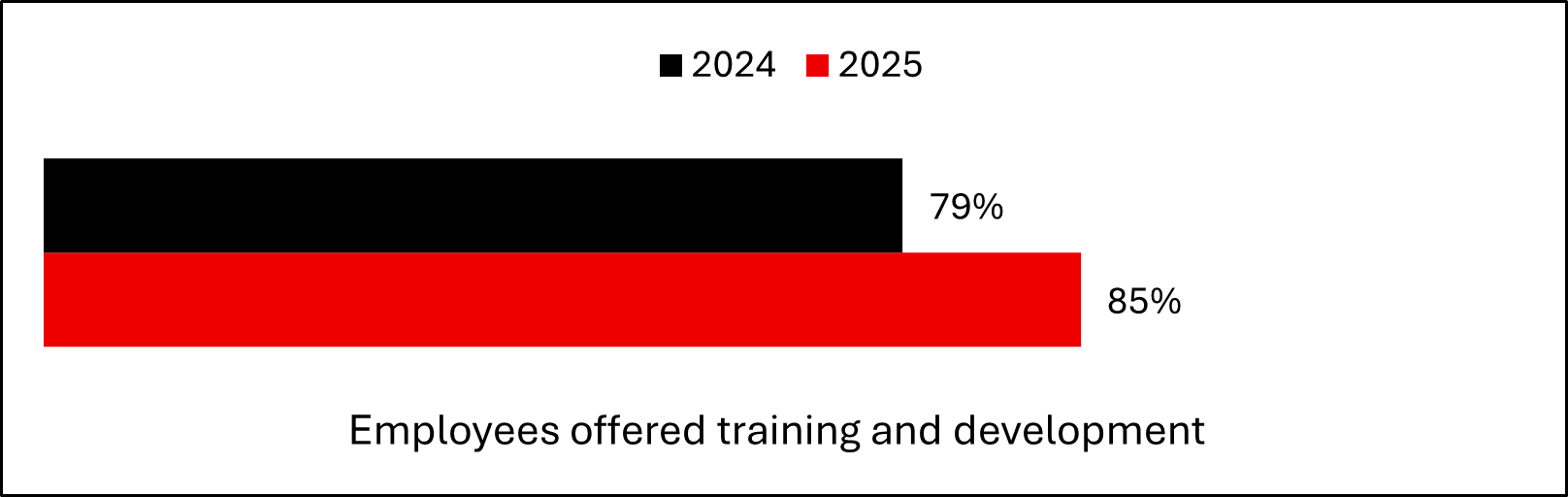
The industry has advanced employee development to build skilled teams that support innovation and compliance, emphasising ongoing learning to stay updated with fast scientific and regulatory changes.
1 in 5 employees report difficulty in adapting to workplace change. For organisations to successfully navigate continuous change, they need to foster resilience by ensuring transparent communication, demonstrating strong leadership, and implementing efficient management practices.
Training + Adaptability: The Cultural Key to Workforce Resilience
In order to address the biotech industry’s internal challenges, especially the pace of scientific change and the need for an agile workforce, there is a need for a culture where adaptability and learning are non-negotiable. Employees respond to an environment that makes growth easy and change more comfortable. When leaders encourage learning and demonstrate adaptability, these behaviours become part of everyday work rather than just a temporary measure.
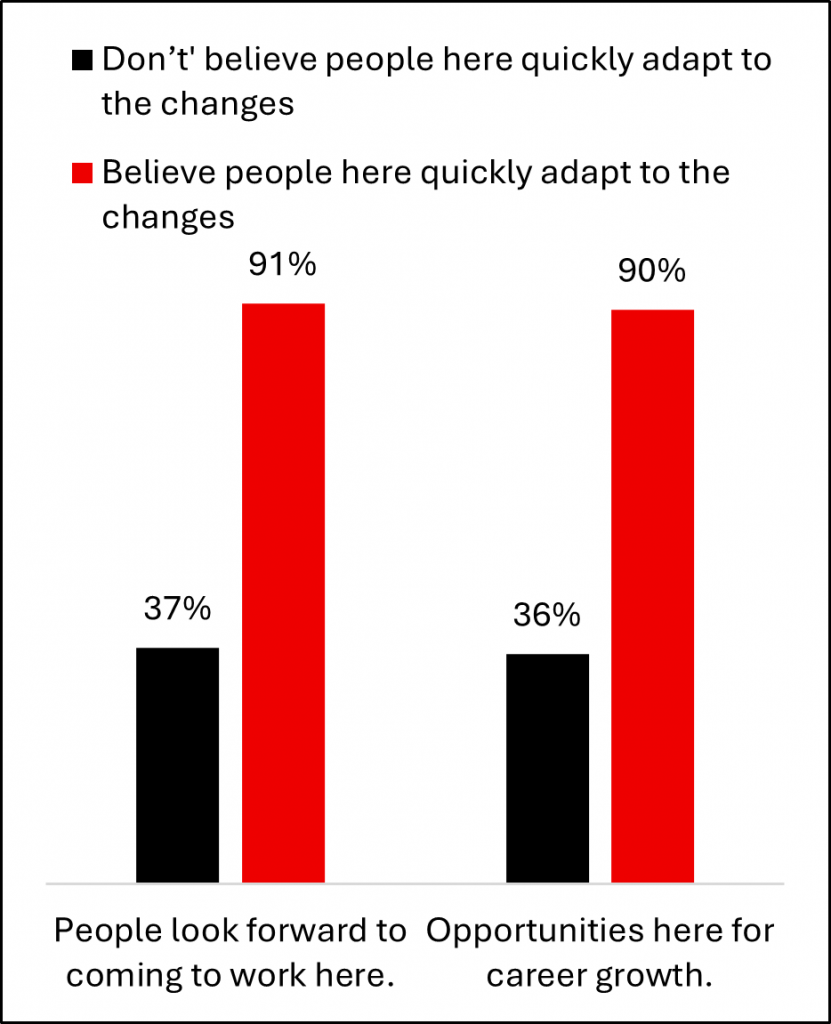
- Employees with access to training and development experience report 33% higher innovation opportunities at work, strengthening the connection between learning and innovation success.
- Teams that adapt quickly to change see 54% greater positivity toward career growth, compared to those that struggle.
For biotech organizations, embedding training and adaptability into leadership is about more than skill-building it’s about creating a workplace where employees feel equipped to handle disruption and confident in their future. When learning is continuous and adaptability is celebrated, companies turn uncertainty into progress and position themselves for sustainable innovation.
How should leaders address this in ways that improve employee experience and drive innovation?
ADAPT
This framework will assist you in transforming learning and adaptability into everyday habits and help tackle the real constraints such as scientific innovation rate, uncertainity, translation gaps and specialised supply chains. When the team feels valued, safe and equipped it improves retention, collaboration and innovation simultaneously.
A: Accelerate Learning
- Share Science-to-Impact Insights in team meetings, why new discoveries matter for patients and the pipeline.
- Use bite-size learning moments (10-minute updates, micro-modules) embedded in daily work.
- Recognize teams that share learnings early across functions.
D: De-risk Innovation
- New experiments should be used as a stepping stone to move forward and learn from mistakes
- Apply lean stage-gates with clear go/no-go criteria (scientific signal, CMC readiness).
- Celebrate small wins that move ideas forward, not just breakthroughs.
A: Advance Translation
- Hold cross-functional knowledge sharing team meetings before handing over the projects.
- Use plain-language playbooks for data, signoffs, and timelines.
- Organize demo days to review readiness together.
P: Partnered Supply Resilience
- Conduct short weekly meetings to analyse and prevent risks or shortages early.
- Build multi-vendor options for critical components and consumables.
T: Thrive with Adaptability
- Pair teams with buddy programs to model change readiness and share quick wins.
- Use pulse checks to measure change-readiness and speak-up rates.
- Reward flexible, collaborative behaviours that enable faster adoption of new processes.
India’s Healthcare Industry
India’s healthcare sector is one of the country’s largest and rapidly growing industries, in terms of both revenue and employment. This industry contributes 2.5% to India’s GDP and employs more than 4.7 million people, prepared for sustained growth. India has a competitive edge due to the high number of skilled professionals and cost-effective treatment options. Medical procedures in India cost only a fraction of what they do in the Western countries which leads to the rise in medical tourism, positioning India as a global healthcare destination. With a strong focus on innovation and increased investment in research and development, India continues to attract patients and R&D projects worldwide, reinforcing its position as a leading player in the global healthcare ecosystem.
Although regulatory compliance is becoming more stringent, with patient safety and data privacy under scrutiny. Operating costs are rising while payment systems and competitive pricing are reducing profits. There aren’t enough skilled employees in key areas such as nursing, diagnostics and specialised care, which puts quality service at risk. In addition, using digital health tools and telemedicine requires employees to keep building new skills and adapt culturally. These factors, combined with supply chain vulnerabilities for medical equipment and drugs, create a complex environment for healthcare organizations.
These challenges shape how work happens inside healthcare organizations:
- Regulatory compliance and a patient safety culture require the healthcare teams to operate under strict clinical protocols and data privacy regulations.
- New technologies such as telemedicine, AI-based diagnostics, and electronic health records are growing fast. This highlights the need for the teams to stay open to learning and be flexible in how they work.
- Long hours, emotional strain, and high-pressure environments in hospitals and clinics lead to burnout. Building a culture that prioritizes mental health, resilience, and support systems is critical for retention and quality care.
Capability + Care: The Culture Blueprint for High-Quality Healthcare
The healthcare industry is under constant pressure of staff shortages, growing patient expectations and fast digital change. Tackling these challenges requires a culture focused on skills, strong systems and supportive leadership. When employees feel prepared and valued, they deliver safer, better care.
Why this matters:
- 1 in 5 healthcare employees report that their workplace does not support emotional well-being fuelling burnout and stress.
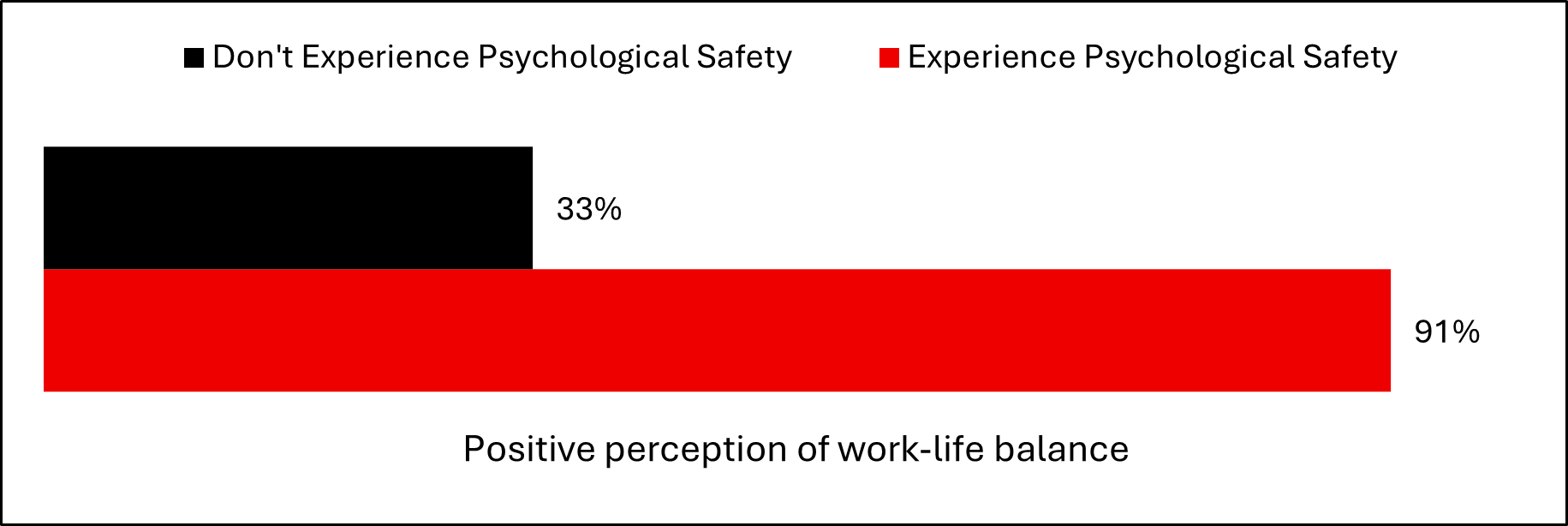
- Teams with psychological safety are far more likely to maintain a healthy work-life balance (+58%), keeping staff engaged and improving patient outcomes.
For healthcare organizations, this means:
- Continuous training on safety and compliance so staff feel confident and competent.
- Upskilling teams to adapt to digital tools like telemedicine and electronic health records.
- Fostering a supportive environment where employees can speak up, share concerns, and manage workload effectively.
When these practices become part of everyday work, hospitals and clinics can reduce errors, enhance patient experience, and sustain a healthy, motivated workforce.
How should leaders address this in ways that improve employee experience and drive innovation?
CARE+
This framework will help teams in embedding safety, adaptability, and patient-centric practices into daily routines. This will create a culture where compliance and innovation coexist, improving care quality and reducing risks.
C: Compliance & Safety Culture
- Start daily short safety huddles to review risks and share quick wins.
- Use visual reminders (posters/checklists) for hand hygiene and medication safety.
- Encourage speak-up moments in every shift, normalize reporting near misses.
A: Adapt & Innovate
- Run weekly “What’s Not Working?” huddles to gather improvement ideas.
- Pilot one small digital tool (e.g., telehealth scheduling or e-consent) with a single unit.
R: Responsive, Patient-Centric Care
- Implement bedside teach-back for patient instructions (takes two extra minutes).
- Use whiteboards in rooms for care plans and next steps to keep patients informed.
- Create a fast-track lane for standard procedures to reduce wait times.
E: Energize Workforce Well-Being
- Schedule micro-breaks and rotate tasks to reduce fatigue.
- Set up a peer-support buddy system for emotional check-ins.
- Simplify admin: one-click templates for common notes.
+ Build Capability & System Discipline
- Offer mini microlearning sessions during shift changes (safety, digital tips).
- Create a skills board in the break room, track who is trained on what.
- Leaders do weekly walkarounds to reinforce priorities and listen to staff concerns.
Authors
Suraj Jadhav – Sr. Consultant
Anushka Byadagi – Sr. Analyst