
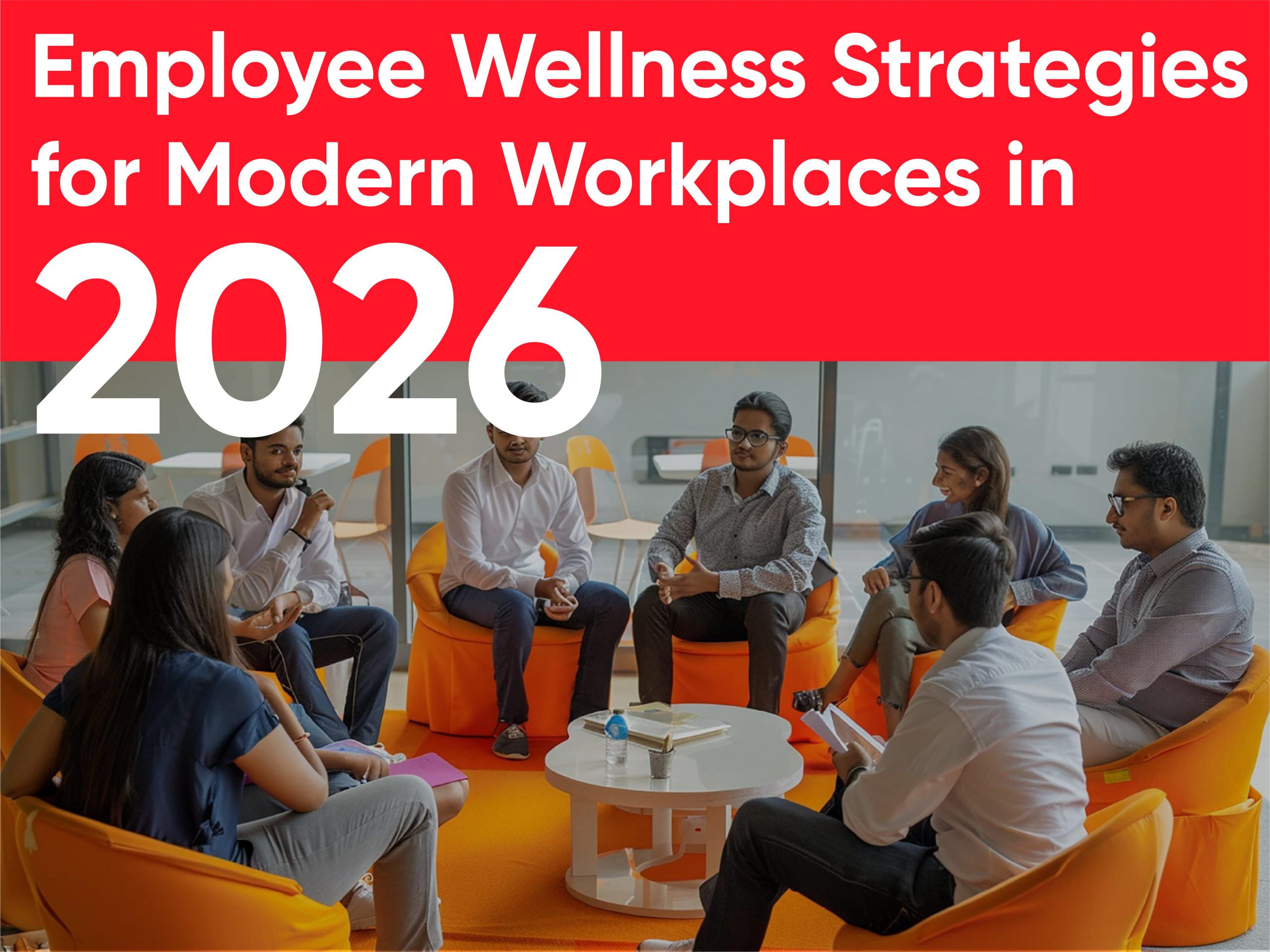
Companies today are including employee wellness as part of their growth strategy, since it is directly tied to improved productivity, business continuity, customer lifetime value (CLV), and brand reputation. Leaders today acknowledge that employee wellness is a set of carefully thought-out strategies that help future-proof the business.
In 2026, the onus for ensuring employee wellness is no longer restricted to the HR department, and this is due to many factors. The way employees approach work has taken a new direction with the advent of technology, options like hybrid workplaces, and changing lifestyles. Adding to this is a mix of various generations and a diverse workforce with different outlooks.
All these factors can lead to employee burnout, financial pressures, physical fatigue, and performance pressure, unless employee wellness takes center stage. As per a recent study. ‘Nearly two-thirds of Gen Z employees (65%) are at low wellness, higher than other generations.’ Another study reveals, ‘Best Workplaces maintain a consistent 2 – 4 % advantage across all core wellness drivers, with the largest gap in motivation for work (4%).’
This article will focus on defining employee wellness, the factors to consider, and strategies for getting it right.
What are Employee Wellness Strategies?
Employee wellness strategies are structured, well-planned, long-term plans designed to improve the overall employee experience that leads to greater well-being. Along with engagement activities, wellness strategies consider deep-rooted changes in the leadership approach and organizational culture to align with the business purpose and goals.
Wellness strategies will focus on supporting employees at various levels, including:
- Physical well-being, focusing on safety, health, fitness, sporting events, etc.
- Mental health support like counseling, wellness workshops, support groups, etc.
- Financial well-being to encourage better personal fund management, dealing with taxation, etc.
- Social engagement through group activities and outings to foster team spirit.
- Emotional help when employees face difficulties in their work or home environment.
- Career counseling and advisory services to help plan career paths and identify training requirements.
The goal of wellness strategies is to provide employees with an atmosphere where they feel supported and encouraged to perform to their fullest potential. At Great Place to Work®, we help companies assess current wellness levels to better strategize for wellness.
Why Do Companies Need Robust Employee Wellness Strategies in Today’s Environment?
Workplaces today are at a unique juncture, where you have generations working together, hybrid models becoming the norm, digital technologies evolving, and Artificial Intelligence driving many work processes. The erstwhile employee wellness strategies must be tweaked, updated, and changed to serve the needs of today’s workforce.
Also Read: 25 Best Health and Wellness Activities for Employees
According to a report, ‘Employees who experience wellness are 2 times more likely to stay longer, put in extra effort, adapt quickly, and innovate compared to those who don’t.’ Here are some of the main reasons that employee wellness strategies are critical for business growth and success:
#1 Changing workforce:
The workforce today is a mix of genders, ages, orientations, and backgrounds, which means that what worked a few years back will not work today. One of the biggest evolutions we have seen in the past two decades is immense. Technology has made communication easier and more convenient, enabling people to work from home. While this is convenient for people with home-related responsibilities, it also isolates them from the camaraderie and interactions at work. All these changes require companies to formulate wellness strategies to suit the evolving needs.
#2 Evolving awareness:
Unlike in the past, employees today are more aware of their needs and expectations regarding support from the company. Women employees want to work for organizations that support them through various stages of life, such as marriage and motherhood, without limiting their growth. The younger generation expects support for their emotional and social well-being from their workplace. At the same time, people of different orientations are more open about their choices and want support from the workplace.
#3 Retention and motivation:
Companies have started to realize that while there are many skilled and qualified candidates out there, recruitment is a long-drawn process; one that they need to help by increasing retention and motivation. Having the right mix of employee wellness strategies will help motivate and retain the existing workforce. This, in turn, means a marked uptick in productivity and savings for recruitment costs. People look for factors like Employee Resource Groups that help them stay motivated.
#4: Employer branding
In today’s competitive world, where information is available at the tap of a button, potential candidates are more likely to research the company before joining. Moreover, the competition for the right talent is also intense out there. Keeping these factors in mind, it becomes critical for companies to build a genuine brand. Employer branding has become more than sharing a few press releases or posting on social media. It is about being authentic and showcasing how the company cares for its employees; having an employee wellness strategy is the way to go.
#5 Empowering from within:
The right employee wellness strategy is the best way to empower employees to be their best selves. Physical wellness ensures that employees are fit and ready to put in their best efforts. Mental, emotional, and social wellness enables individuals to self-motivate, be more productive, and maintain work-life balance. The right financial wellness strategy will encourage employees to plan their finances well and work without financial worries haunting them.
Why Do Companies Need Robust Employee Wellness Strategies in Today’s Environment?
Workplaces today are at a unique juncture, where you have generations working together, hybrid models becoming the norm, digital technologies evolving, and Artificial Intelligence driving many work processes. The erstwhile employee wellness strategies must be tweaked, updated, and changed to serve the needs of today’s workforce.
According to a report, ‘Employees who experience wellness are 2 times more likely to stay longer, put in extra effort, adapt quickly, and innovate compared to those who don’t.’ Here are some of the main reasons that employee wellness strategies are critical for business growth and success:
#1 Changing workforce:
The workforce today is a mix of genders, ages, orientations, and backgrounds, which means that what worked a few years back will not work today. One of the biggest evolutions we have seen in the past two decades is immense. Technology has made communication easier and more convenient, enabling people to work from home. While this is convenient for people with home-related responsibilities, it also isolates them from the camaraderie and interactions at work. All these changes require companies to formulate wellness strategies to suit the evolving needs.
#2 Evolving awareness:
Unlike in the past, employees today are more aware of their needs and expectations regarding support from the company. Women employees want to work for organizations that support them through various stages of life, such as marriage and motherhood, without limiting their growth. The younger generation expects support for their emotional and social well-being from their workplace. At the same time, people of different orientations are more open about their choices and want support from the workplace.
#3 Retention and motivation:
Companies have started to realize that while there are many skilled and qualified candidates out there, recruitment is a long-drawn process; one that they need to help by increasing retention and motivation. Having the right mix of employee wellness strategies will help motivate and retain the existing workforce. This, in turn, means a marked uptick in productivity and savings for recruitment costs. People look for factors like Employee Resource Groups that help them stay motivated.
#4: Employer branding
In today’s competitive world, where information is available at the tap of a button, potential candidates are more likely to research the company before joining. Moreover, the competition for the right talent is also intense out there. Keeping these factors in mind, it becomes critical for companies to build a genuine brand. Employer branding has become more than sharing a few press releases or posting on social media. It is about being authentic and showcasing how the company cares for its employees; having an employee wellness strategy is the way to go.
#5 Empowering from within:
The right employee wellness strategy is the best way to empower employees to be their best selves. Physical wellness ensures that employees are fit and ready to put in their best efforts. Mental, emotional, and social wellness enables individuals to self-motivate, be more productive, and maintain work-life balance. The right financial wellness strategy will encourage employees to plan their finances well and work without financial worries haunting them.
How to Create the Right Employee Wellness Strategy?
The right employment strategy needs to have a solid foundation built on the organization’s mission, vision, purpose, and values, with a certain flexibility to adapt to changing requirements. The right strategy should involve an analysis of the current situation, leadership involvement, and employees’ requirements.
Step #1: Analyze the current situation
When creating the right employee strategy, it is crucial to understand what the competition is doing. This step offers an insight into what similar companies are doing. The place to start this process is by joining industry-related associations, checking these companies’ on social media, and reviewing ratings and feedback on job sites. Accessing publicly available reports can also be another source.
Step #2: Understanding employees’ needs
This step could involve impromptu discussions, employee surveys conducted through a third party, and events like town halls. Another source could be the employee records on people hired and retained, years of service, and gaps. For instance, if the records show increased attrition among middle management, that could be an area to focus on.
Alternatively, if women employees leave after a certain time, there could be either marital stress or lack of advancement. In physically demanding jobs, the focus could be on injuries or fatigue from repetitive tasks. Examining attrition rates among remote workers could provide insight into mental and social wellness needs. With older workers, it could be about financial wellness. Younger employees may need mental wellness initiatives.
Step #3: Define wellness goals
What the company hopes to achieve through its employee wellness programs may depend on the industry, the organization’s size, and employees’ profiles. Generally speaking, wellness goals include reducing attrition, improving engagement, increasing productivity, supporting work-life balance, and fostering a viable, flourishing environment. It is important to quantify these goals and set KPIs to measure the efficacy of these strategies.
Step #4: Getting leadership buy-in
The next step would be to share the findings with the leadership group and present the way forward. Employee wellness strategies work well when leadership is involved and committed to their implementation. A visible adoption of wellness-related initiatives by leadership encourages employees to believe in and adopt them.
As per a study it has been seen, ‘Among women, Gen Z, and early-tenured employees, the groups with the lowest overall wellness perception, ‘Management’s actions match its words’ is the lowest-scoring wellness driver across all three segments. This pattern is consistent across segments, making leadership follow-through the most commonly lower-rated driver among low-wellness groups.’ This finding highlights the importance of leadership buy-in.
Some examples include the leadership teams:
- Maintaining work-life balance
- Encouraging use of wellness resources
- Committing to physical and mental wellness
- Normalizing discussions about mental health
- Accepting flexible working hours
Step #5: Build resources, launch, and evaluate
Once the employee wellness strategies are in place, it is crucial to have resources to enable usage. These could include the following:
- Creating a space for physical activities and offering company-sponsored gym memberships at a discounted rate.
- Setting up a panel of qualified counselors and mentors who can help employees work on their career paths and get the required support.
- Some mental health professionals affiliated with the company offer support to employees in times of need.
- Qualified finance and taxation experts to guide professionals on the best way to save money and build financial resources.
- Means for people from diverse backgrounds and different interests to form employee resource groups.
- A committee that will be in charge of organizing social activities for employees to participate in, mingle, and get to know each other.
The launch process can involve internal communications, setting up intranet resources, and sharing at an event. The evaluation process needs to be data-based and supported by surveys, discussions, and wellness checks.
What Are the Pillars That Support a Complete Employee Wellness Strategy?
Employee wellness strategies can be divided into six pillars. It considers all aspects that ensure that employees are happy, healthy, fit, secure, engaged, and motivated.
The six pillars of employee wellness strategy
| Wellness pillars | What it entails |
|---|---|
| Physical and health |
The focus is on the physical and health aspects of the employees’ wellness. Under this aspect, the company offers:
|
| Mental and emotional |
Companies support employees in maintaining their emotional well-being through facilities like:
|
| Financial |
Managing finances can be difficult, especially for young professionals or people with multiple responsibilities. Companies can help employees by:
|
| Social |
As humans, we have an inherent need to connect and interact with others. Companies support this by:
|
| Career |
Employees are most motivated when they know they have a clear advancement path defined. Organizations offer:
|
Common Employee Wellness Strategy Mistakes to Avoid
Here are some common mistakes to avoid while implementing employee wellness strategies.
- Assuming that a boilerplate or templated employee wellness strategy will work for all companies.
- Putting the complete ownership of wellness initiatives on the human resources department
- Having no defined metrics to track the success of the employee wellness programs
- Focusing on one easy-to-achieve and more visible aspect like offering gym or workout facilities
- Leadership not fully committing to the wellness initiatives invalidating the entire initiative
What Are the Best Employee Wellness Strategies for Remote and Hybrid Teams?
The wellness strategies that a company adopts varies as per the type of organization and its needs, remote and hybrid teams being a case in point due to the way they work.
Often, teams that work from different locations and away from each other may experience some of these:
- A feeling of being isolated
- Fatigue due to overuse of digital technology
- Work and life boundaries becoming unclear
- Too many meetings and over-communication
- Lack of social interaction with colleagues
Some wellness tips for remote and hybrid teams:
- Setting strict work timings and cutting down communication outside of those hours
- Encourage the team to cut down on frequent meetings to reduce information overload
- Schedule and enforce regular breaks to ensure that employees have chance to relax
- Have regular virtual team-building activities to improve teamwork and encourage socializing
- Start online wellness challenges like meditation, exercises together to promote camaraderie
- Sponsor and provide proper ergonomic workstations for those who work remotely
- Offer counseling support and mental wellness talks to keep the morale of the team up
- Train team leaders to identify burnout symptoms and empower them with the tools to deal with it
How to Make Employment Wellness Strategies a Part of the Company Vision?
Employee wellness strategies are an essential part of the company’s growth and work towards ensuring that the company stays on course. The starting point for this is to understand where the company stands, what it needs to grow, and crafting strategies to ensure that it happens.
It is time for organizations to acknowledge that what worked earlier may not work now because the entire business landscape has changed and people want to make informed choices. A good salary and benefits are just the starting point; employees want companies to commit to their overall wellness. To do this, companies must evaluate their culture and seek employee feedback to understand what must be included in the employee wellness strategy.
Get started with the Great Place To Work team. Click here to connect with us
Frequently Asked Questions
What are the key factors to consider for employee wellness?
Apart from basics like a competitive remuneration package and safe environment, companies must consider emotional, social, mental, career, and physical well-being of its employees. People need to know that they are supported and valued to perform better.
What metrics should be used to measure the success of a wellness strategy?
Organizations can generally measure the success of their wellness strategy by looking factors like reduced attrition, lower recruitment costs, decreased absenteeism, an uptick in customer satisfaction, improved productivity, and positive feedback in employee surveys.
What differentiates a wellness program from a wellness strategy?
A wellness program is a single activity or a set of activities, such as a meditation session, that falls under the overall wellness strategy. A wellness strategy takes on a broader outlook and considers various factors to ensure that it aligns with the overall company strategy.
What is the cost of an employee wellness strategy?
The cost of planning, creating, and launching an employee wellness strategy will depend on the scope of the strategy, size of the organization, and type of activities and benefits provided under it. Some parts of the employee strategy will cost less like implementing flexible work hours while others like offering a discount on a gym membership may cost more.
Will an employee wellness strategy work for scattered, diverse, and hybrid teams?
Yes, it will work for all kinds of teams. In fact, a well-thought-out employee strategy becomes crucial for remote and hybrid teams. The right initiatives can ensure that the team works well together despite differences in work location, hours, and limited in-person interactions.