In today’s fast-paced business landscape, organizations that prioritize workplace innovation culture are setting themselves apart from the competition. These forward-thinking companies understand that fostering an environment where creativity thrives is not just a nice-to-have – it’s a necessity for long-term success. Let’s explore how the best workplaces and innovation go hand in hand, and what leaders can do to cultivate this powerful combination.

The Power of a Workplace Innovation Culture

At its core, a workplace innovation culture is one that empowers every employee to contribute ideas, take calculated risks, and drive positive change. It’s a mindset that permeates every level of the organization, from entry-level staff to C-suite executives. When done right, this approach can lead to groundbreaking products, streamlined processes, and a more engaged workforce.
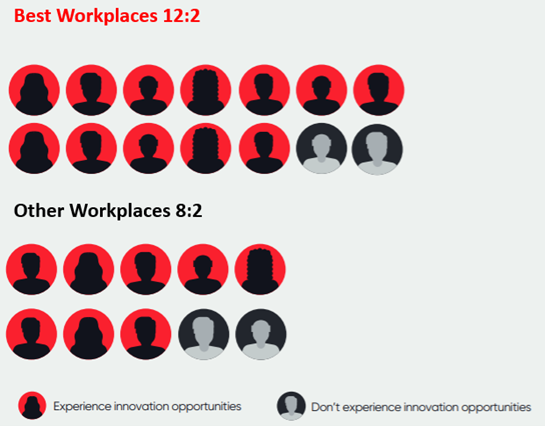
Innovation ratio between Best Workplaces and Other Workplaces

Research consistently shows that companies with strong innovation cultures outperform their peers. According to a recent study, organizations recognized as “Best Workplaces” demonstrate a significantly higher capacity for innovation compared to their counterparts. This advantage translates into tangible benefits, including increased market share, improved employee retention, and enhanced adaptability in the face of industry disruptions.

Key Elements of Innovation-Driven Workplacestion Day 

1. Leadership That Inspires

Innovation starts at the top. Leaders in the best workplaces understand that their role is not just to manage, but to inspire. They paint a compelling vision of the future and invite their teams to help bring it to life. These leaders:

– Communicate clearly and often about the importance of innovation

– Lead by example, demonstrating a willingness to embrace new ideas

– Provide the resources and support necessary for innovation to flourish
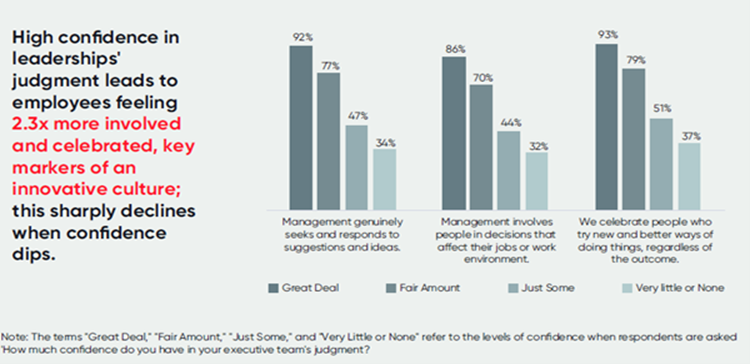
Confidence in leadership leading to higher innovation in best workplaces.

2. Psychological Safety

For employees to feel comfortable sharing novel ideas, they need to know that failure is not only accepted but expected as part of the innovation process. The best workplaces create an atmosphere of psychological safety where team members can take risks without fear of ridicule or punishment. This safety net encourages experimentation and learning from mistakes.

3. Cross-Functional Collaboration

Innovation rarely happens in a vacuum. The most innovative companies break down silos and encourage collaboration across departments. They create opportunities for diverse teams to come together, share perspectives, and tackle challenges collectively. This cross-pollination of ideas often leads to unexpected and exciting breakthroughs.

4. Continuous Learning and Development

In a rapidly evolving business environment, stagnation is the enemy of innovation. The best workplaces prioritize ongoing learning and development for all employees. This might include:

– Regular training sessions on emerging technologies

– Mentorship programs that pair experienced innovators with up-and-coming talent

– Resources for self-directed learning and skill development

5. Recognition and Rewards

Innovative thinking should be celebrated and rewarded. The best workplaces understand the power of positive reinforcement and create systems to recognize both big wins and small improvements. This could involve financial incentives, public acknowledgment, or opportunities for career advancement tied to innovative contributions.

The Gen Z Factor: Attracting Tomorrow’s Innovators

As the workforce continues to evolve, companies are recognizing the unique value that Gen Z employees bring to the table when it comes to innovation. Born into a world of rapid technological advancement, this generation is naturally inclined towards creative problem-solving and digital fluency.
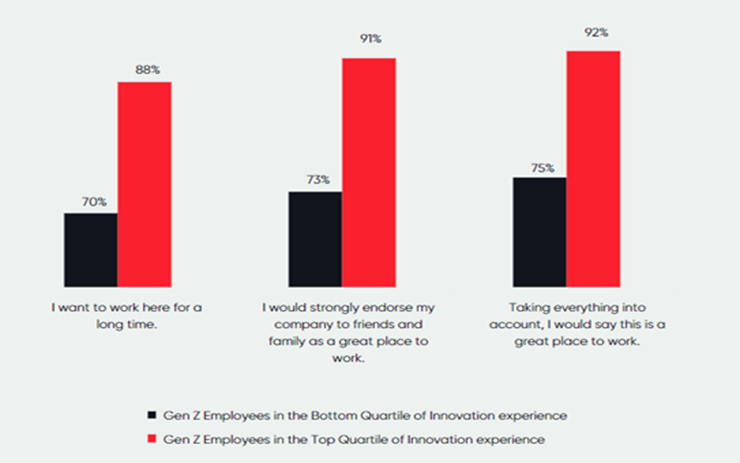
Contribution of Gen Z in Innovation

The best workplaces are tailoring their innovation strategies to engage and retain Gen Z talent. This includes:

– Providing cutting-edge tools and technologies

– Offering flexible work arrangements that support work-life integration

– Creating opportunities for meaningful impact and social responsibility

Research indicates that organizations excelling in workplace innovation see an 18% advantage in Gen Z retention and positive brand perception. By fostering an environment where young professionals can thrive and contribute their unique perspectives, these companies are securing their innovative edge for years to come.

Measuring Innovation Culture Success

While cultivating a workplace innovation culture is crucial, it’s equally important to measure its effectiveness. Best workplaces employ various metrics to gauge their innovation prowess:

– Number of new ideas generated and implemented

– Time-to-market for new products or services

– Employee engagement scores related to innovation initiatives

– Revenue generated from recent innovations

By tracking these key performance indicators, organizations can continually refine their approach and ensure they’re creating an environment that truly fosters creativity and forward thinking.

Strategies for Building Your Own Innovation Powerhouse

Ready to transform your workplace into an innovation incubator? Here are some actionable steps to get started:

  1. Conduct an Innovation Audit: Assess your current culture and identify areas for improvement.
  2. Invest in Employee Development: Launch programs that enhance creative thinking and problem-solving skills across all levels of the organization.
  3. Create Innovation Spaces: Designate physical or virtual areas where teams can collaborate and brainstorm freely.
  4. Implement an Idea Management System: Develop a structured process for collecting, evaluating, and implementing employee ideas.
  5. Foster Open Communication: Encourage regular feedback sessions and transparent discussions about the company’s innovation goals and progress.
  6. Embrace Failure as a Learning Opportunity: Share stories of “productive failures” and the lessons learned from them.
  7. Partner with External Innovators: Collaborate with startups, universities, or industry disruptors to inject fresh perspectives into your organization.

The Future of Workplace Innovation

As we look ahead, it’s clear that the most successful companies will be those that can adapt quickly and innovate consistently. By fostering a workplace innovation culture, organizations can position themselves at the forefront of their industries, ready to tackle whatever challenges the future may bring.

Remember, building a culture of innovation is not a one-time effort but an ongoing journey. It requires commitment, patience, and a willingness to evolve. But for those companies willing to invest in creating truly innovative workplaces, the rewards – in terms of employee satisfaction, market leadership, and long-term success – are well worth the effort.

In conclusion, the best workplaces understand that innovation is not just about breakthrough technologies or revolutionary products. It’s about creating an environment where every employee feels empowered to contribute their best ideas and drive positive change. By prioritizing a workplace innovation culture, these organizations are not just preparing for the future – they’re actively shaping it.

Get Certified to Showcase Your Commitment

Achieving Great Place To Work® Certification™ is an excellent way to demonstrate your organization’s commitment to employees’ overall wellbeing and experience. This Certification not only enhances your employer branding but also helps attract and retain top talent. It highlights to current and prospective employees that your organization values their health, happiness, and overall wellbeing.    

By implementing a culture of trust, respect, and collaboration, you can create a workplace where employees feel strong, healthy, and connected. Certification also provides a benchmark for continuous improvement, helping you identify areas where you can further enhance employee well-being and overall workplace culture.  

For All Summit 2025: Vision to Value – Building Workplaces That Matter

Join us on February 6, 2025, in Mumbai for an enlightening day filled with insights on creating sustainable, humane, and inclusive workplaces. Learn from industry leaders about purpose-driven cultures, innovative HR practices, and adaptive leadership strategies.

Get your passes today – https://testg.in/for-all-summit 
Banner for registering for the Great Place To Work® For All™ Summit 2025

In today’s competitive business landscape, fostering a positive workplace culture has become more crucial than ever. As organizations strive to create environments where employees thrive, being recognized as a Great Place To Work® has emerged as a significant milestone. This Certification not only validates your commitment to cultivating an exceptional workplace culture but also opens doors to numerous benefits for your organization. 

As we approach Certification Nation Day, it’s time to reflect on the journey that led to this achievement and celebrate the positive impact it has on your workplace culture. In this blog post, we’ll explore creative ways to commemorate your Great Place To Work Certification™ and delve into the myriad benefits that come with this prestigious recognition. 

The Significance of Great Place To Work Certification 

Before we dive into celebration ideas, let’s take a moment to understand why the Great Place To Work Certification is such a remarkable achievement. This globally recognized Certification is awarded to organizations that demonstrate exceptional workplace cultures based on extensive employee feedback and rigorous evaluation criteria. 

The Certification process involves a comprehensive assessment of various aspects of your workplace culture, including trust, respect, fairness, pride, and camaraderie. By earning this Certification, your organization has proven its commitment to creating an environment where employees feel valued, supported, and motivated to give their best. 

Creative Ways to Celebrate Your Certification on Certification Nation Day 

Certification Nation Day is the perfect opportunity to showcase your achievement and reinforce the positive workplace culture that earned you this recognition. Here are some innovative ideas to celebrate your Great Place To Work Certification: 

  • Host a Company-Wide Virtual or In-Person Celebration 

Organize a special event to bring all employees together. This could be a virtual gathering for remote teams or an in-person celebration at the office. Use this opportunity to thank your team for their contributions to creating a great workplace culture. 

  • Launch a Social Media Campaign 

Create a dedicated hashtag and encourage employees to share their favorite aspects of working at your company. This not only boosts morale but also serves as authentic employer branding. 

  • Unveil a Workplace Culture Wall 

Designate a prominent space in your office to showcase your certification and highlight key elements of your workplace culture. Include employee testimonials, photos, and company values to create a visual representation of what makes your organization special. 

  • Organize a “Culture Champions” Recognition Program 

Identify and celebrate employees who exemplify your company’s values and contribute significantly to the positive workplace culture. This can be an excellent way to reinforce desired behaviors and attitudes. 

  • Implement a “Random Acts of Kindness” Challenge 

Encourage employees to perform small acts of kindness for their colleagues throughout the day. This fosters a sense of community and reinforces the supportive aspects of your workplace culture. 

  • Create a Certification Celebration Video 

Produce a short video featuring employees sharing what they love about working at your company. This can be shared internally and on social media platforms to showcase your workplace culture to a broader audience. 

  • Offer Professional Development Opportunities 

Celebrate by investing in your employees’ growth. Provide access to online courses, workshops, or mentoring sessions aligned with individual career goals and company values. 

  • Host a “Workplace Culture Fair” 

Set up booths or virtual rooms representing different aspects of your workplace culture (e.g., diversity and inclusion, work-life balance, innovation). Employees can visit each station to learn more and participate in related activities. 

  • Launch a “Culture Ambassador” Program 

Select employees to serve as culture ambassadors, responsible for organizing regular events and initiatives that reinforce your workplace values throughout the year. 

The Benefits of Being Great Place To Work Certified 

Achieving Great Place To Work Certification is more than just a badge of honor. It comes with a host of benefits that can significantly impact your organization’s success. Let’s explore some of the key advantages: 

  • Enhanced Employer Brand and Talent Attraction
    In today’s competitive job market, top talent is often drawn to companies with strong workplace cultures. The Great Place To Work Certification serves as a powerful signal to potential candidates that your organization prioritizes employee well-being and satisfaction. This can lead to:
    • Increased quality and quantity of job applicants 
    • Reduced recruitment costs 
    • Improved employer brand visibility 
  • Improved Employee Engagement and Retention
    Certified organizations often experience higher levels of employee engagement, which can have a cascading effect on various aspects of the business. Benefits include:
    • Lower turnover rates
    • Increased productivity
    • Higher levels of employee satisfaction and loyalty
  • Positive Impact on Customer Satisfaction
    A strong workplace culture often translates to better customer experiences. Engaged employees are more likely to go above and beyond for customers, resulting in:
    • Improved customer satisfaction scores
    • Increased customer loyalty
    • Positive word-of-mouth referrals
  • Boosted Financial Performance
    Research has consistently shown a correlation between great workplace cultures and financial success. Certified organizations often enjoy:
    • Higher revenue growth
    • Increased profitability
    • Better stock market performance (for public companies)
  • Increased Innovation and Adaptability
    Companies with strong workplace cultures tend to foster environments where employees feel safe to share ideas and take calculated risks. This can lead to:
    • Higher rates of innovation
    • Improved problem-solving capabilities
    • Greater adaptability to market changes
  • Enhanced Credibility and Reputation
    The Great Place To Work Certification is globally recognized and respected. It can significantly enhance your organization’s credibility among various stakeholders, including:
    • Investors and shareholders
    • Partners and suppliers
    • Industry peers and competitors
  • Benchmarking and Continuous Improvement
    The Certification process provides valuable insights into your workplace culture, allowing you to:
    • Identify areas of strength and opportunities for improvement
    • Benchmark against other high-performing organizations
    • Set clear goals for ongoing cultural development
  • Improved Work-Life Balance
    Many certified organizations prioritize work-life balance, leading to:
    • Reduced employee stress and burnout
    • Increased job satisfaction
    • Improved overall employee well-being
  • Stronger Alignment with Company Values
    The certification process often helps organizations articulate and reinforce their core values, resulting in:
    • Greater employee alignment with company mission and goals
    • Improved decision-making at all levels of the organization
    • A more cohesive and unified workforce

Sustaining and Improving Your Workplace Culture 

While celebrating your Great Place To Work Certification is important, it’s equally crucial to view this achievement as a steppingstone rather than a final destination. Here are some strategies to help you maintain and further improve your workplace culture: 

  • Regular Employee Feedback 

Implement ongoing feedback mechanisms to stay attuned to employee needs and concerns. This could include pulse surveys, town hall meetings, or anonymous suggestion boxes. 

  • Leadership Development

Invest in developing leaders who can effectively embody and promote your workplace culture. Provide training on emotional intelligence, inclusive leadership, and effective communication. 

  • Continuous Learning and Development 

Foster a culture of continuous learning by providing resources and opportunities for employees to grow both personally and professionally. 

  • Diversity, Equity, and Inclusion Initiatives

Commit to ongoing efforts to create a diverse, equitable, and inclusive workplace where all employees feel valued and respected. 

  • Work-Life Integration Programs

Regularly assess and update your work-life balance initiatives to ensure they meet the evolving needs of your workforce. 

  • Recognition and Reward Systems

Develop and refine systems to recognize and reward employees who exemplify your company values and contribute to a positive workplace culture. 

  • Technology and Infrastructure

Invest in tools and technologies that support collaboration, communication, and productivity, especially in hybrid or remote work environments. 

  • Corporate Social Responsibility

Engage in meaningful corporate social responsibility initiatives that align with your company values and allow employees to contribute to broader societal goals. 

Conclusion 

Achieving Great Place To Work Certification is a significant milestone that deserves to be celebrated. By implementing creative celebration ideas on Certification Nation Day, you not only commemorate this achievement but also reinforce the positive workplace culture that earned you this recognition. 

The benefits of being a Great Place To Work Certified organization extend far beyond the celebration day. From attracting top talent and improving employee engagement to enhancing financial performance and fostering innovation, positive impacts ripple through every aspect of your business. 

As you bask in the glow of your certification, remember that maintaining and improving your workplace culture is an ongoing journey. By staying committed to your employees’ well-being, continuously seeking feedback, and adapting to evolving needs, you can ensure that your organization remains a great place to work for years to come. 

Celebrate your success, but also use this moment as a catalyst for further growth and improvement. After all, a truly great workplace culture is one that never stops evolving and striving for excellence. To get Certified, connect with us at: Get Certified – Great Place To Work® 

For All Summit 2025: Vision to Value – Building Workplaces That Matter 

Join us on February 6, 2025, in Mumbai for an enlightening day filled with insights on creating sustainable, humane, and inclusive workplaces. Learn from industry leaders about purpose-driven cultures, innovative HR practices, and adaptive leadership strategies.  

Get your passes today – https://testg.in/for-all-summit 
Banner for registering for the Great Place To Work® For All™ Summit 2025

As the workplace continues to evolve, one might wonder, “What will the future of workplace culture look like?” Will it be driven by technology, shaped by new leadership styles, or defined by a continued focus on employee well-being? These aren’t just topics for discussion—they’re crucial challenges that today’s business leaders must tackle to stay competitive in a rapidly changing world.

This is where the Great Place To Work® For All™ Summit comes in. As the largest and most sought-after summit in India focused on workplace culture, it aims to build a community of business leaders dedicated to creating exceptional workplaces. The summit offers unmatched learning and networking opportunities, allowing participants to engage with leaders from the best workplaces worldwide who have cultivated a High-Trust, High-Performance Culture.
In this blog, we’ll have a recap of the For All Summit 2024 and explore the main themes and sessions at the For All Summit 2025.

Summit 2024 Recap – 3Ts of Workplace Culture

The For All Summit 2024 was a compelling showcase of how the 3Ts—Talent, Technology, and Trust—are pivotal in shaping India’s future. The summit’s theme underscored the critical role these elements play in driving economic growth, addressing societal challenges, and building sustainable, inclusive organizations.

India’s recent economic success can be attributed to its dynamic workforce, a thriving startup ecosystem, and progressive government initiatives. These factors have collectively propelled India towards becoming a global economic powerhouse. However, challenges such as a potential global economic slowdown, geopolitical instability, and technological disruptions persist. Despite these hurdles, India’s resilience shines brightly. The nation is on a promising trajectory, aiming to become the world’s 3rd largest economy, with a strong emphasis on technological transformation, inclusive development, and innovation, as evidenced by its leadership in the G20 priorities.

For India to fully realize its potential, it’s essential to cultivate a workplace environment that harnesses the power of talent, embraces cutting-edge technology, and builds trust. By doing so, organizations can foster a culture of high performance and inclusivity, contributing not only to their own growth but also to the betterment of society as a whole.

Key Discussions at the For All Summit 2024

The For All Summit 2024 featured a series of engaging sessions led by some of the most respected voices in their fields. One of the highlights was a session by Mr. Amitabh Kant, G20 Sherpa appointed by the Government of India. Drawing from his extensive experience in public policy-making, governance, and economics, Mr. Kant offered a comprehensive perspective on India’s growth journey. He emphasized the critical role of Talent and Trust in propelling India towards becoming an economic superpower and one of the world’s largest economies.

In a session titled “Why and How to Build Trust,” insights were shared by Gautam Aggarwal, Division President, South Asia, and Joseph Fernandes, SVP – HR from Mastercard Inc. This session, moderated by Akshat Shah, VP Sales & Client Experience at Great Place To Work® India, delved deep into the strategies for building trust within organizations, highlighting its significance in creating a cohesive and high-performing work environment.

The summit also offered a unique opportunity to explore the inspiring journey of Sumit Agarwal, a Neurodiverse Entrepreneur & Founder of PR Signal. In a session moderated by Anita Borate, Practice Head, Culture 4D, Great Place To Work® India, attendees were captivated by Sumit’s story of resilience and innovation, demonstrating how diverse talents can lead to groundbreaking success.

Breakout room sessions provided a platform for more focused discussions, with industry speakers sharing their insights on a variety of topics. Post this was “India’s Trust in its Talent,” which featured a discussion led by PV Sindhu, moderated by Balbir Singh, CEO of Great Place To Work® India. Sindhu’s insights into the role of talent in shaping India’s future resonated deeply with the audience.

The day concluded with an enlightening session on “Inside the Boardroom: Delivering Greater Value to ALL Stakeholders.” Atul Dhawan, with three decades of experience at Deloitte India, shared his expertise as a former Chairperson and seasoned board veteran. Complementing his insights, Dr. Punita Kumar-Sinha, a leading Independent Director in the country, provided a unique perspective from her board positions in prominent companies within the BFSI industry, emphasizing the importance of delivering value to all stakeholders.

These sessions, rich with insights and practical takeaways, made the For All Summit 2024 an invaluable experience for all who attended, reaffirming the importance of the 3Ts in driving India’s transformation.

For All Summit 2025 – Vision to Value : Building Workplaces That Matter

As renowned corporate advisor R Gopalakrishnan said at one of our events, India needs SHE enterprises – short for Sustainable, Humane and Enlightened. These three aspects can be linked to a single source – a strong vision. Imagine a workplace driven by a powerful vision, where Purpose ignites passion in every employee. All employees want leaders who build workplaces that matter.

Great Leaders understand that a powerful vision, rooted in the organization’s core values, in turn, drives increased overall organizational and employee value.

As India Inc. gears up for exponential growth, visionary leaders know that turning Vision into Value depends as much on ‘who’ and ‘how’ as it does on ‘from’ and ‘to.’ They recognize that employees, as culture ambassadors, are vital in building impactful workplaces. Our study of India’s Most Trusted Leaders shows that purpose is a powerful motivator—employees who find meaning in their work are 3.2 times more likely to stay and 3.4 times more likely to recommend their company. Leaders who prioritize employee experience by evolving traditional practices, building relevant capabilities, and fostering a sense of belonging are not just enhancing retention—they’re also paving the way for future leaders. Our research confirms this: organizations that excel in leadership development see a 3.2 times higher likelihood of employees staying, proving the business case for investing in their people.

Deep dive into the themes of the For All Summit 2025

Our study of the Best Workplaces shows a growing trend: companies are moving away from strict policies and focusing on clear, shared values. These values help guide decisions, encourage creativity, and give employees the power to take action.

At the For All Summit 2025, we’ll explore this shift with sessions, strategies, and success stories that break down what’s needed for this journey.

Building a modern and thriving workforce: This section will elaborate on key aspects of attracting and retaining talent in a changing environment.

  • Understanding why Purpose is essential
  • Creating opportunities for growth and development for all
  • Innovating in HR and personalizing employee experience

Designing a Successful Future of Work: This section will elaborate on key practical aspects of building a modern workplace that matters to all.

  • Investing in Diversity, Equity, Inclusion & Belonging
  • Re-evaluating traditional workplace structures
  • Making hybrid models work effectively

Developing leadership in an evolving workplace: This section will elaborate on the role of leadership in shaping the future of work.

  • Unlocking adaptive leadership that secures high trust
  • Encouraging leaders to develop a roadmap for future leaders
  • Equipping leaders to navigate the complexities of a modern workforce

The For All Summit, true to its name, believes that the future of work is For All, transcending identity, geography, background and other differentiating factors. It is a unified source of inspiration for workplace culture enthusiasts to learn from leaders who have steered their organizations through challenges and delivered sustained business performance.

Why should you attend The For All Summit 2025? 

Connect : Join an energizing community of visionary leaders of award-winning great workplaces, Great Place To Work culture experts, and thought leaders in HR and across industries.

Innovate: Learn how the most innovative organizations are creating new solutions and strategies to meet the changing needs of their people and businesses in the most challenging times

Lead: Transform into a better and more inspired leader. You’ll return to work ready to lead and equipped with a strengthened community, fresh ideas, and best practices that you can implement immediately.

The For All Summit 2025 is a pivotal opportunity for leaders to bridge vision and values, shaping workplaces that truly matter. Don’t miss the chance to connect with top leaders, innovate with cutting-edge practices, and evolve into a leader who inspires and delivers.

Ready to shape the future of work? Register now for the For All Summit 2025 and join a community dedicated to creating workplaces where vision and values drive success.

In today’s competitive corporate landscape, the well-being of employees has become a top priority for leading organizations. Recognizing that their greatest assets are their people, India’s Best Employers Among Nation Builders have implemented exemplary practices that prioritize employee wellness. These initiatives cater to the holistic health of their employees, addressing physical, mental, and emotional well-being. By focusing on employee wellness, these companies create supportive and inclusive environments that foster productivity, engagement, and overall job satisfaction. In this blog, we will explore some of the outstanding initiatives implemented by India’s Best Employers Among Nation-Builders 2024. 

Focus on DEIB & Women

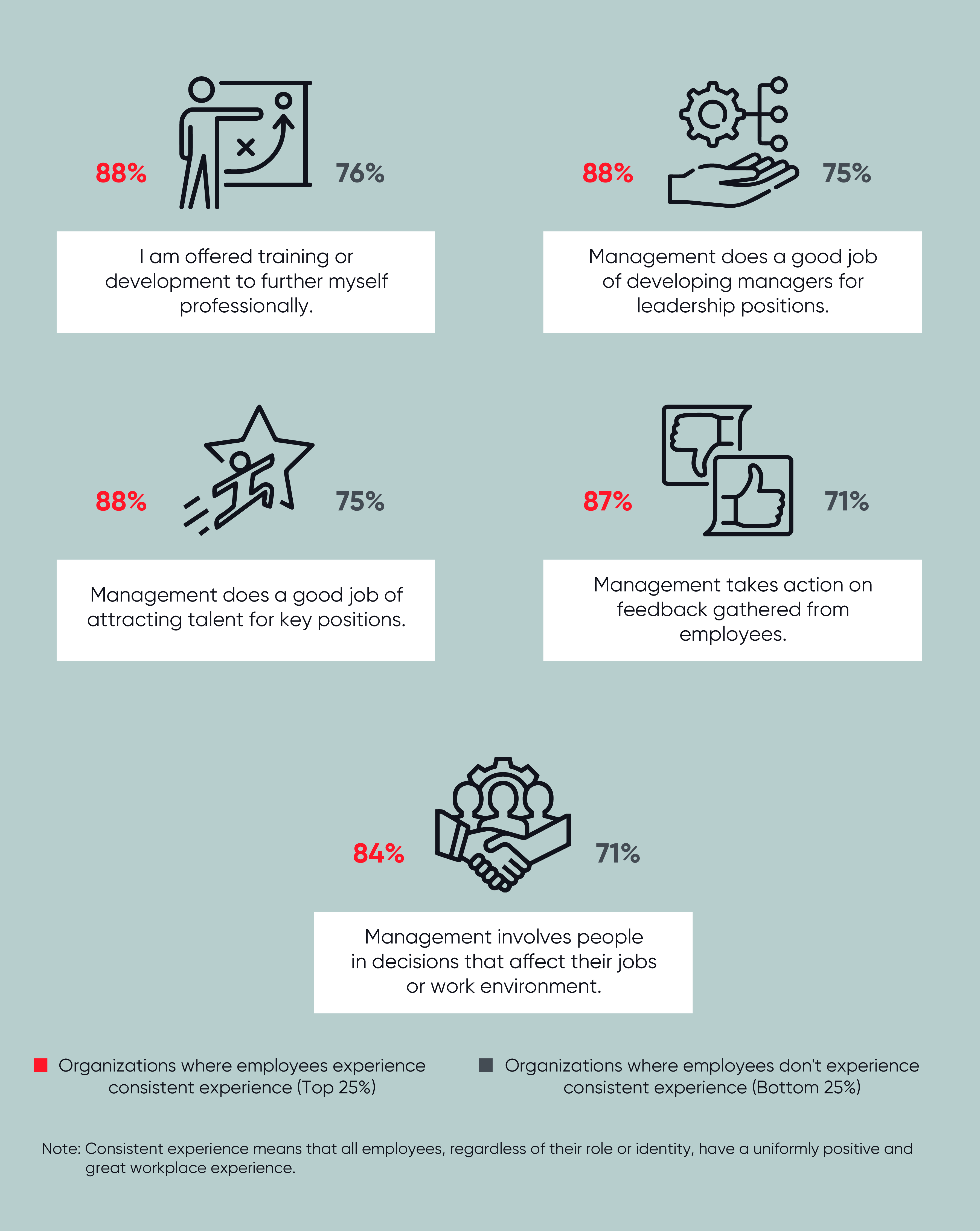
Diversity & Inclusion are essential for creating a workplace where every employee feels valued and empowered. India’s Best Employers Among Nation-Builders 2024 recognize the importance of Diversity, Equity, Inclusion, and Belonging (DEIB), particularly regarding the representation and support of women. These companies have made significant strides in ensuring that their DEIB initiatives are not just policies on paper but are actively implemented and fostered within their organizational culture. Prioritizing a ‘For All’ experience results in a 14% increase in employee perceptions, regarding professional & leadership development, employee involvement in decision-making.

DEIB are essential for creating a workplace where every employee feels valued and empowered.

These initiatives underscore the necessity for companies to make extra efforts towards DEIB and women’s inclusion. Creating dedicated forums for women to voice their concerns and aspirations, offering platforms that recognize and celebrate their achievements, and ensuring leadership support are critical components of these efforts. Such measures not only enhance the sense of belonging among women employees but also drive overall organizational success by leveraging the diverse perspectives and talents within the workforce.

CK Birla Group’s DEI Leadership Connect with Women

The CK Birla Group has implemented a unique initiative known as Diversity Dialogues. This interactive session brings DEI leaders together with all women employees of GMMCO, a CK Birla company, to discuss matters pertinent to women in the workplace. These quarterly meetings cover topics such as job enhancement opportunities, suggestions for workplace improvements, career growth exploration, and leadership support. By gathering inputs from these sessions and sharing them with the CK Birla Group’s DEI forums, the organization ensures that actionable steps are taken to address concerns and promote the interests of women employees.

JSW’s Springboard Initiative

JSW has introduced the Springboard initiative, which highlights the success stories of women within the organization. By showcasing the journeys of dynamic women who have made significant contributions to JSW, this initiative not only celebrates their achievements but also provides inspiration and practical tips for other women aspiring to break through the glass ceiling. These stories serve as powerful agents for peer-to-peer learning, fostering a culture of encouragement and empowerment among women employees.

Focus on Work-Life Balance

Maintaining a healthy work-life balance has become crucial for the well-being and productivity of employees. Work-life balance refers to the equilibrium between professional responsibilities and personal life, allowing employees to pursue personal interests and spend quality time with their families. Companies that prioritize work-life balance tend to have more engaged, satisfied, and loyal employees, which ultimately contributes to the organization’s success.

Achieving a good work-life balance is essential for several reasons. Firstly, it is crucial for mental and physical health, as overworking can lead to stress, burnout, and various health issues, while a balanced lifestyle helps reduce stress and maintain overall health. Secondly, employees who can balance their work and personal lives are generally more productive and perform better at work, as they are more creative and motivated. 

Additionally, companies that support work-life balance are more likely to retain their employees, leading to high retention rates that save costs associated with recruitment and training. Lastly, a supportive work environment that promotes work-life balance increases employee satisfaction and morale, contributing to a positive workplace culture.ife balance increases job satisfaction and morale, leading to a positive workplace culture.

Steel Authority of India (SAIL)’s Shorter Working Period Scheme

SAIL has taken a proactive step to enhance work-life balance through its “Shorter Working Period Scheme.” This policy allows employees to opt for a reduced working period to pursue philanthropic or voluntary activities aimed at societal development. By offering such flexibility, SAIL acknowledges the diverse needs and aspirations of its employees, including women, and supports them in balancing their professional and personal lives effectively. This initiative not only benefits the employees but also encourages a culture of social responsibility and community engagement.

Programs like SAIL’s Shorter Working Period Scheme play a significant role in fostering a healthy work environment. They provide employees with the flexibility to manage their time better, reducing stress and preventing burnout. These programs also reflect the company’s commitment to employee well-being, making it an attractive workplace for current and prospective employees.

Focus on Health & Wellbeing

Today, the challenges posed by modern lifestyles, such as long working hours, increased stress, and sedentary habits, necessitate a proactive approach to maintaining physical and mental health. 

Employee health and well-being have a direct impact on productivity, engagement, and retention. When employees feel physically and mentally well, they are more likely to perform at their best, contribute creatively, and remain committed to their organization. Moreover, a healthy workforce reduces healthcare costs and absenteeism, leading to overall organizational efficiency.

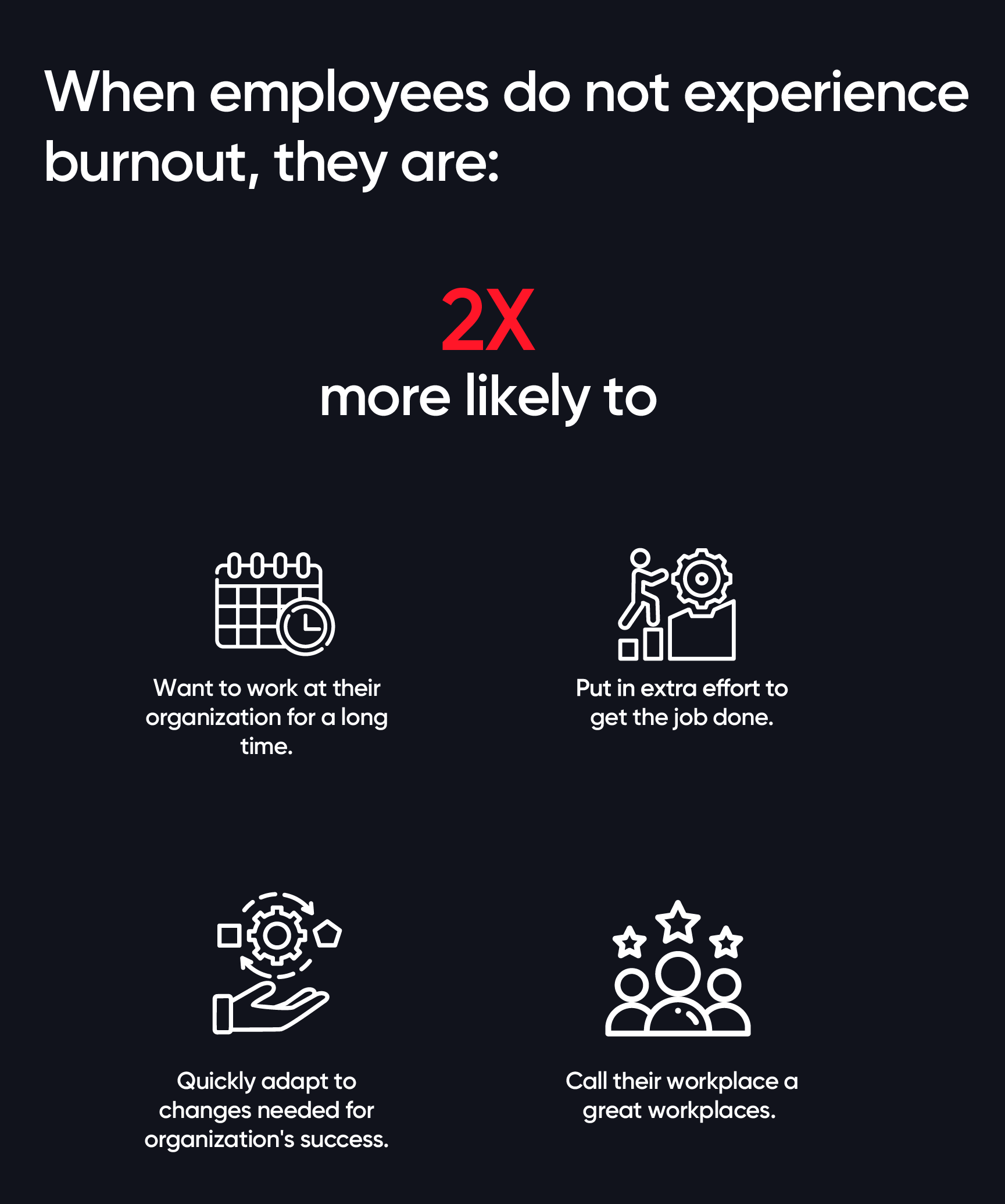
When employees do not experience burnout, they are more productive

Leading companies recognize that the well-being of their employees is integral to their overall success and sustainability. They have implemented comprehensive health and wellness programs that not only address immediate health concerns but also foster long-term wellness and resilience.

HDFC Bank’s Wellness Newsletter

HDFC Bank, under its ‘HDFC Bank Cares’ initiative, publishes a Wellness Newsletter aimed at raising awareness about the importance of health and wellbeing. The newsletter serves as an educational tool, featuring health advisories, informative articles, health tips, and updates. By consistently highlighting health-related topics, HDFC Bank keeps the conversation about wellness ongoing, encouraging employees to take proactive steps toward maintaining their health.

Infosys’ HALE (Health Assessment and Life Enrichment) Program

Infosys has taken significant steps to counter the adverse effects of busy schedules and sedentary lifestyles through its HALE program. HALE addresses both physical and mental health, focusing on employee safety, leisure, and work-life balance. The program provides a proactive approach to health and life enrichment, aiming to increase awareness and promote overall well-being. By fostering a safe work environment and improving productivity levels, HALE ensures that employees are not only healthy but also capable of balancing their personal and professional lives effectively.

India’s top nation builders have demonstrated that investing in employee wellness is not just a moral imperative but a strategic advantage. By prioritizing DEIB, health and well-being, and work-life balance, these companies ensure that their employees are healthy, motivated, and engaged. Through innovative programs and policies, they create workplaces where employee wellness is at the forefront, driving organizational success and sustainability. By setting a benchmark in employee wellness, these leading organizations exemplify how caring for employees can lead to a thriving, productive, and positive workplace. Visit us here to learn more. 

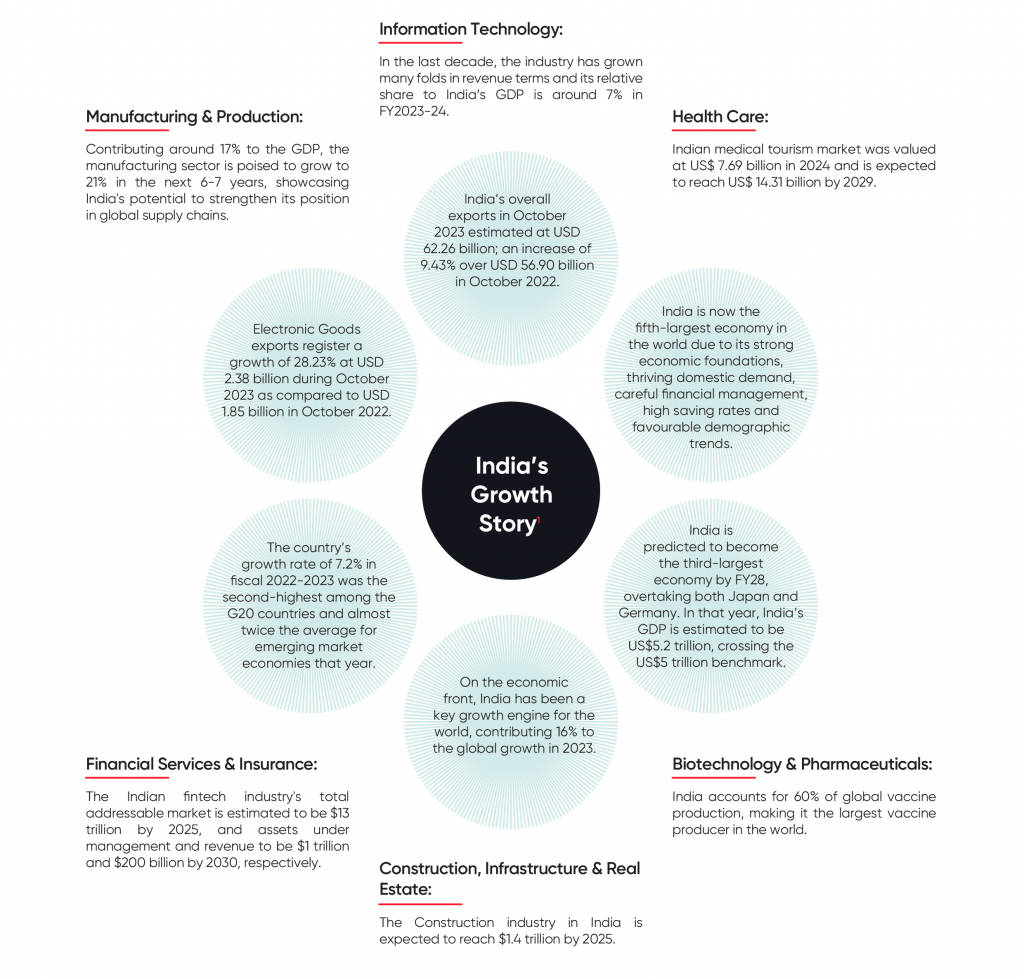
Our recent report on India’s Best Employers Among Nation Builders highlights impressive economic strides India has made and its projected future growth. Best Employers among Nation-Builders have set an indelible mark by contributing a global annual revenue of Rs. 18,00,000Cr.+, boosting an employee headcount of 10L. These exemplary employers have collectively generated an astounding global annual revenue of Rs. 18,00,000 crore and boosted employment with a workforce exceeding 10 lakh. From export growth and global economic contributions to sectoral advancements in manufacturing, financial services, biotechnology, healthcare, information technology, and construction, we’ll dive into the extraordinary impact of these organizations.

 India’s Growth Story 

India’s economic progress in recent years has been remarkable. Substantial growth in various sectors has been driven by the contributions of the nation’s leading employers, who are recognized as India’s Best Employers Among Nation – Builders. These organizations play a pivotal role in this economic transformation. 

Export Growth 

  • Electronic Goods Exports: In October 2023, India registered a 28.23% growth in electronic goods exports, reaching USD 2.38 billion, up from USD 1.85 billion in October 2022. This surge reflects the enhanced capabilities and global competitiveness of India’s manufacturing sector, which is bolstered by innovative practices and investments from leading employers. 
  • Overall Exports: India’s overall exports in October 2023 were estimated at USD 62.26 billion, marking a 9.43% increase from USD 56.90 billion in October 2022. This growth underscores the diverse and dynamic nature of India’s export sectors, including textiles, pharmaceuticals, and IT services, driven by companies that foster a culture of excellence and innovation

Global Economic Contribution 

  • Key Growth Engine: On the global stage, India contributed 16% to global growth in 2023. This significant contribution highlights India’s role as a major player in the global economy, supported by the strategic initiatives and robust performances of its leading corporations. 
  • Future Economic Projections: India is predicted to become the third-largest economy by FY28, overtaking both Japan and Germany, with an estimated GDP of USD 5.2 trillion. This projection is a testament to the strategic foresight and sustainable practices adopted by the nation’s top employers, which are instrumental in driving long-term economic growth.

 Domestic Economic Strength 

  • Growth Rate: In fiscal year 2022-2023, India achieved a growth rate of 7.2%, the second-highest among G20 countries and nearly double the average for emerging market economies. This impressive growth rate is reflective of the effective leadership, resilient business strategies, and innovative approaches of the nation’s best employers. 
  • Economic Foundations: India is now the fifth-largest economy in the world, thanks to its strong economic foundations, thriving domestic demand, careful financial management, high saving rates, and favorable demographic trends. The report highlights how leading organizations contribute to these foundations through their commitment to sustainable growth, employee development, and community engagement. 

Sectoral Contributions 

  • Contributing around 17% to the GDP, the manufacturing sector is poised to grow to 21% in the next 6-7 years. This growth showcases India’s potential to strengthen its position in global supply chains, supported by companies that invest in cutting-edge technologies and workforce skills development. 

Manufacturing & Production 

  • The Indian fintech industry is projected to have a total addressable market of $13 trillion by 2025. By 2030, assets under management are expected to reach $1 trillion, with revenue estimated at $200 billion. 

Financial Services & Insurance 

  • India is the largest vaccine producer globally, accounting for 60% of the world’s vaccine production. 

Biotechnology & Pharmaceuticals 

  • The Indian medical tourism market, valued at $7.69 billion in 2024, is anticipated to grow to $14.31 billion by 2029. 

Health Care 

  • Over the past decade, the health care industry has seen substantial revenue growth. Its contribution to India’s GDP stood at around 7% in FY2023-24. 

Information Technology 

  • The Indian construction industry is projected to reach a market size of $1.4 trillion by 2025. 

Construction, Infrastructure & Real Estate 

  • The construction industry in India is forecasted to achieve a market value of $1.4 trillion by 2025. 

These organizations are recognized not only for their economic contributions but also for their leadership in creating positive workplace cultures, fostering innovation, and driving social change. They are pivotal in shaping a prosperous future for India by setting benchmarks for excellence and inspiring other businesses to follow suit. 

Driving Economic and Social Impact

The Ministry of Corporate Affairs reports that there are more than 1.6 million active companies in India as of November last year. However, very few of these companies make a significant impact on the Indian economy. Recognized by Great Place To Work®, the Best Employers among Nation-Builders distinguish themselves by driving the country’s GDP growth, exports, and employment far more effectively than their peers. These organizations are steadfast in their vision of making India a great place to work for all, proactively contributing to social change and environmental sustainability. 

Our research finds that employees at the Best Employers among Nation-Builders take immense pride in their work and its contribution to society. These companies actively provide their employees with opportunities for growth and development, ensuring a safe and meaningful work environment. 

Employee Pride and Trust 

A remarkable 84% of employees at the Best Employers among Nation-Builders take pride in their work, their job, and their organization. In 2024, the Trust Index Grand Mean at these organizations rose by 1%, reaching an impressive 79%. Additionally, 83% of employees believe that, considering everything, their workplace is great for them. These figures highlight the strong sense of pride and trust that employees feel, underscoring the positive work environments fostered by these leading employers. 

The Trust Index Grand Mean at Best Employers among Nation-Builders
rose by 1% in 2024, reaching 79%. Additionally, 83% of employees say that taking
everything into account, it’s a great workplace for them.

Workplace Satisfaction Among Female Employees 

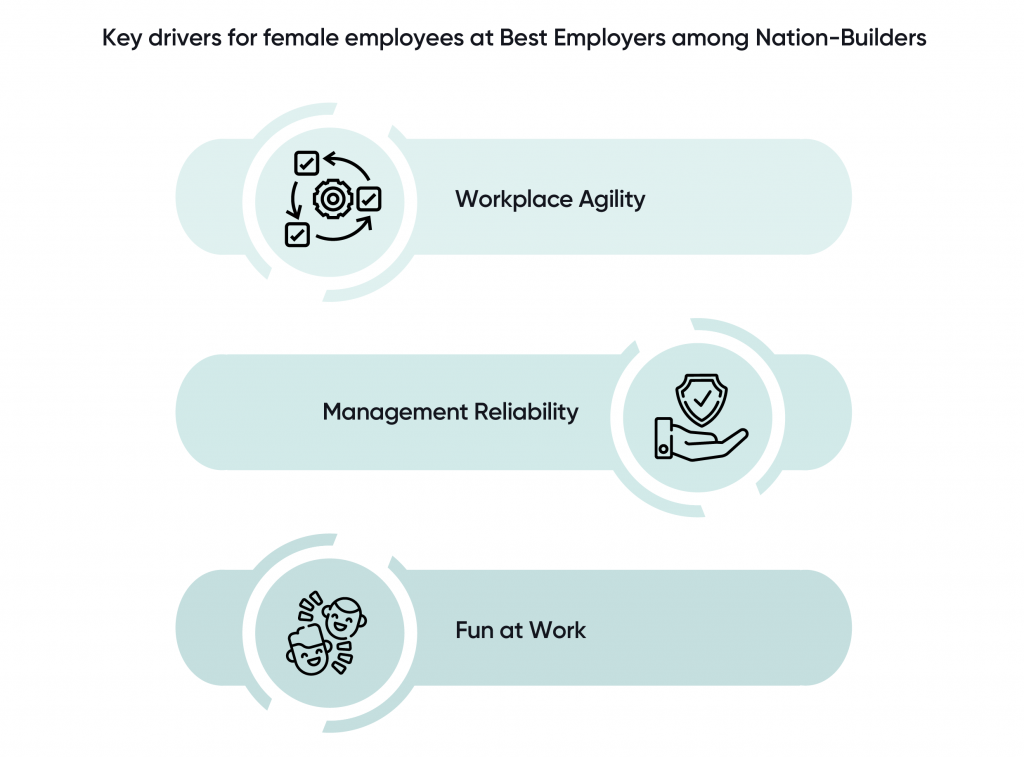
In 2024, the Best Employers among Nation-Builders employ over 200,000 female employees, with 78% of them reporting that, considering everything, it’s a great workplace. This satisfaction rate is 5% lower than that of male employees. Our research highlights that a reliable, fun, and agile workplace are key drivers of satisfaction for female employees at these leading organizations. 

However, areas of improvement for female employees remain fairness in pay, fair share and workplace politics compared to male peers. 

Gen Z Workplace Satisfaction 

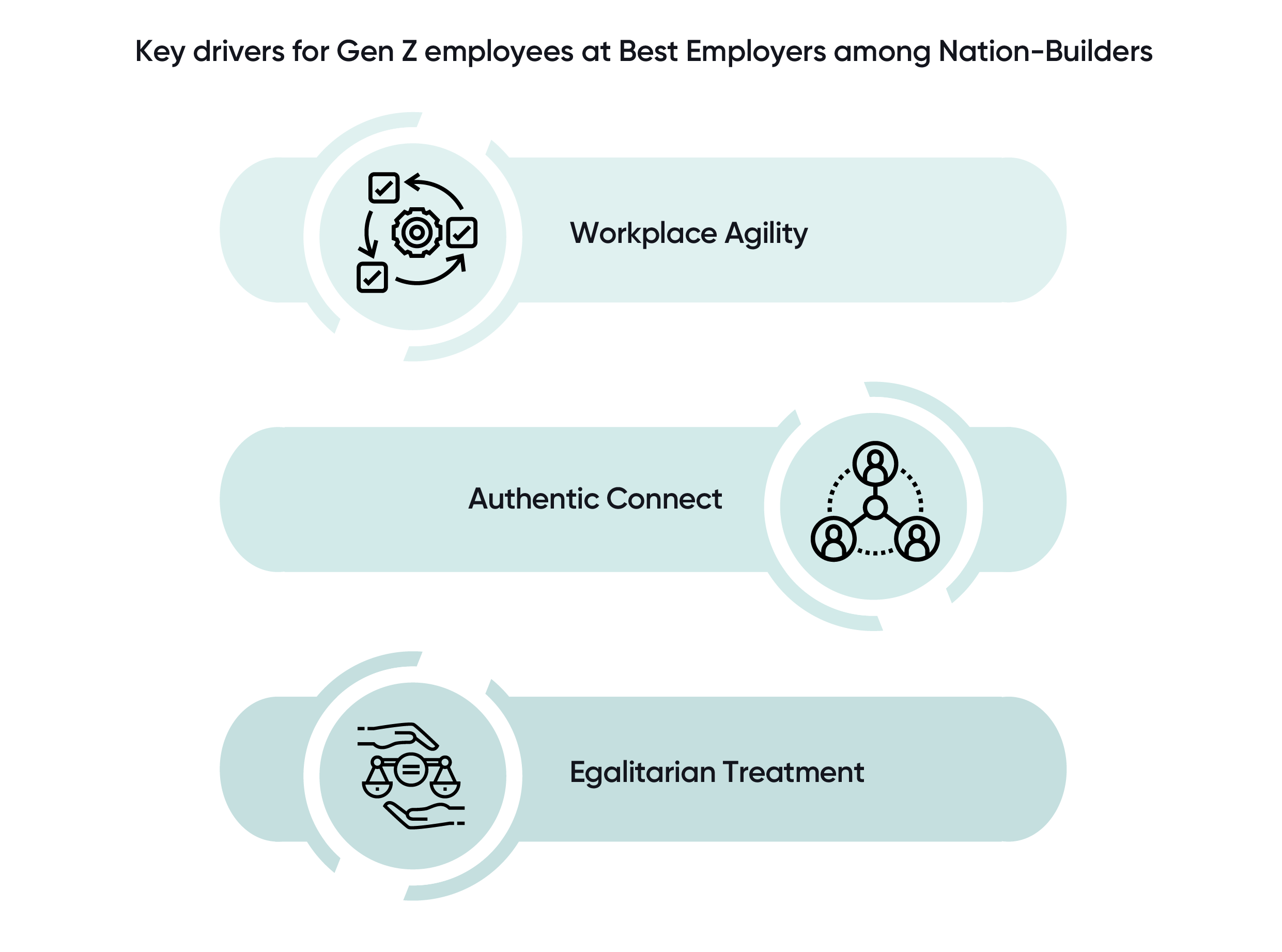
In 2024, the Best Employers among Nation-Builders employ over 190,000 employees who are 25 years old or younger, with 79% of them stating that, taking everything into account, it’s a great workplace. Our research indicates that an agile work environment, authentic connections, and egalitarian treatment are key drivers of workplace satisfaction for Gen Z employees at these leading organizations. 

Additionally, compared to others, Gen Z employees feel less positive about staying in the organization for a long time, making a difference, and being in a psychologically and emotionally healthy workplace.

Key Drivers for Gen Z - Workplace Agility, Authentic Connect and Egalitarian Treatment

Employee Pride and Perception Improvements at Best Employers Among Nation-Builders

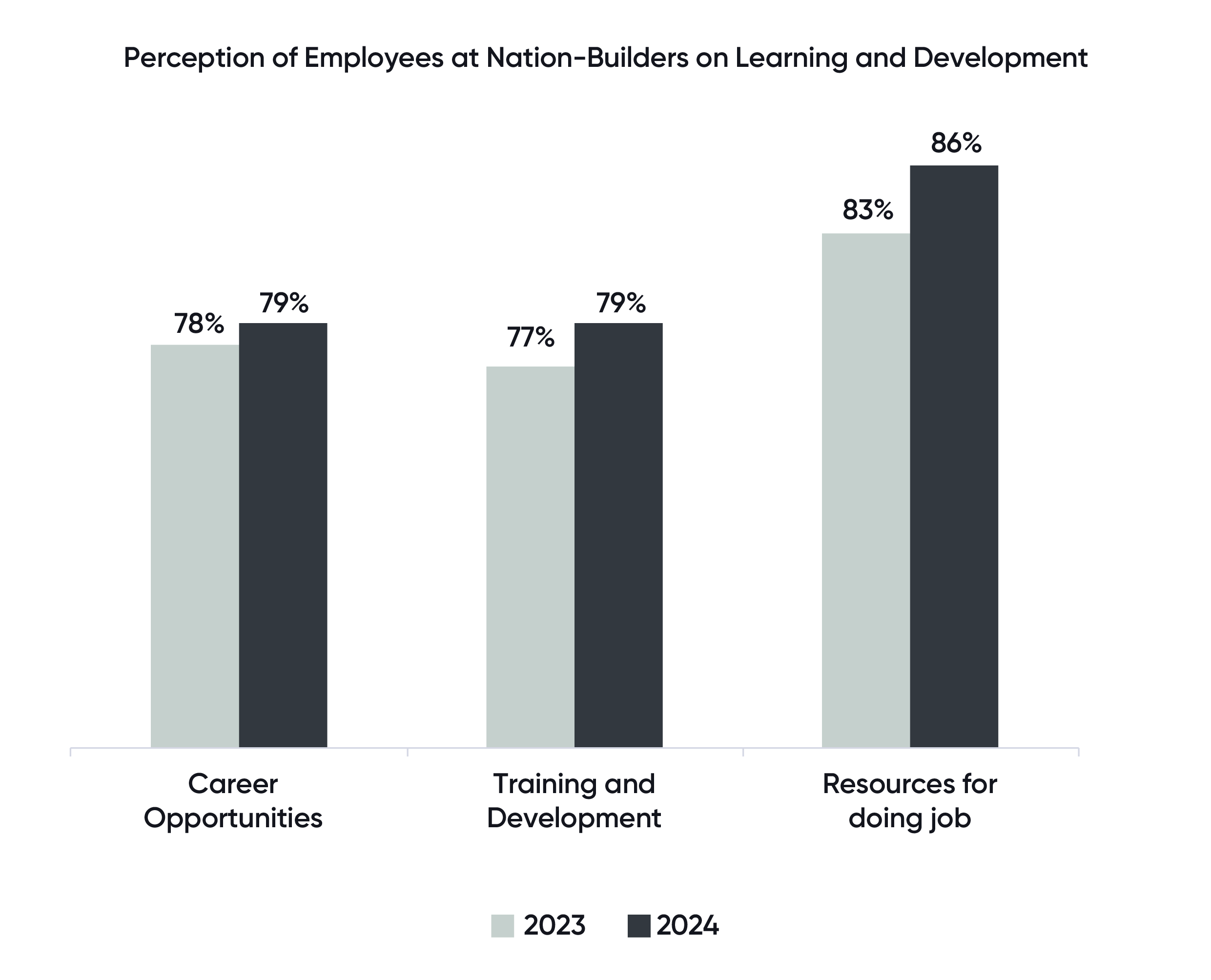
In 2024, 88% of employees at the Best Employers among Nation-Builders are proud to tell others where they work. Employee perceptions have improved by 1-3% compared to 2023 in areas such as career opportunities, training and development, and resource availability.

Furthermore, training and development initiatives play a crucial role for Best Employers among Nation-Builders, where, on an average, every employee experiences 100+ hours of training per year.

Perception of Employees - 
Career Opportunities: 78% in 2023 and 79% in 2024
Training and Development: 77% in 2023 and 79% in 2024
Resource for doing job: 83% in 2023 and 86% in 2024

The Best Employers among Nation-Builders are not just driving India’s economic growth but are also setting new benchmarks for workplace excellence. Through innovative practices and strategic foresight, these organizations foster a sense of pride and trust among their employees, ensuring that they feel valued and engaged. Their exemplary practices serve as an inspiration for other businesses, highlighting the importance of aligning economic success with employee well-being and societal impact. Visit us here to learn more.

Mid-sized organizations are crucial to India’s economic growth, contributing over 29% to the GDP, 50% to exports, and employing over 110 million people. In 2024, there was a minor decline in workplace culture for mid-sized organizations, with the Trust Index score dropping by 1% to 83%. Despite this, employees still regard their workplaces positively.

Cultural Landscape of Mid-size Organizations

The decline varied across industries, with sectors like IT and BFSI experiencing a 1-2% decrease, while NGOs and Manufacturing saw a 1-2% increase. Key demographics, especially women, showed a need for fairer pay, recognition, and less favoritism. Addressing these issues could lead to greater career growth opportunities and long-term retention for female employees.

Mid-sized organizations’ strengths include high levels of employee pride, ethical management, and a welcoming environment. Notably, 89% of employees rate their management as competent, feel welcomed, believe their service is excellent, and are proud of their workplace. Additionally, 88% feel management is honest and ethical and that their organization contributes positively to society.

Mid-sized organizations demonstrate resilience through high standards of workplace culture, which is essential for employee satisfaction, innovation, and competitiveness in India’s evolving economy. Addressing innovation opportunities and demographic-specific concerns can further enhance their success.

Key Drivers of the Mid-size Workforce in 2024

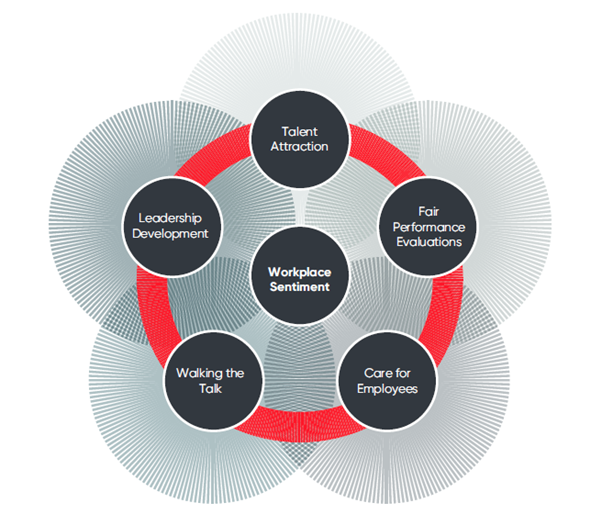
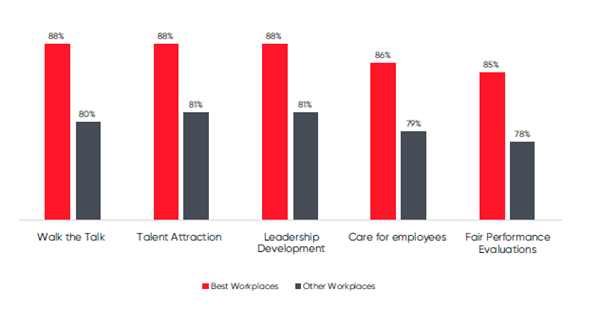
Our research finds that, in 2024, Fair Performance Evaluations, Care for Employees, Walking the Talk, Leadership Development, and Talent Attraction are key drivers of workplace satisfaction for employees in mid-size organizations. 

These drivers reflect a need for a balanced emphasis across various management practices. Fair Performance Evaluations promote transparency and a sense of value, while Care for Employees fosters a sense of belonging. Walking the Talk builds trust by aligning leadership actions with stated values.

Investing in Leadership Development ensures a stable leadership pipeline and fosters growth. Effective and efficient Talent Attraction ensures cultural alignment and fresh innovation while minimizing disruption. When leaders and organizations prioritize these drivers, they collectively shape vibrant workplaces where employees flourish, contributing to organizational success and sustainability.

Key Drivers of the Mid-size Workforce in 2024

Importance of Investing in Key Drivers

Best Workplaces, scoring an average of 7% higher on these key drivers than Other Workplaces, underscore the importance of the right vision and effective implementation of these aspects to cultivate a thriving workplace culture. 

When organizations focus on these key drivers, employees are:

  • 4X more likely to say that they experience a great workplace.
  • 4X more likely to say that they look forward to going to work.
  • 3X more likely to express a desire to remain with the organization long-term.
  • 2X more likely to say that people are willing to go the extra mile to get their work done.

Best Workplaces Exhibit Great Workplace Experience

The Trust Index Score for Best Workplaces stands at 89%, compared to 83% at other workplaces. This 6-point difference underscores the greater levels of trust employees have in Best Workplaces. Furthermore, 92% of employees at Best Workplaces report experiencing a great workplace culture, which is 6% higher than the satisfaction rate at other workplaces.

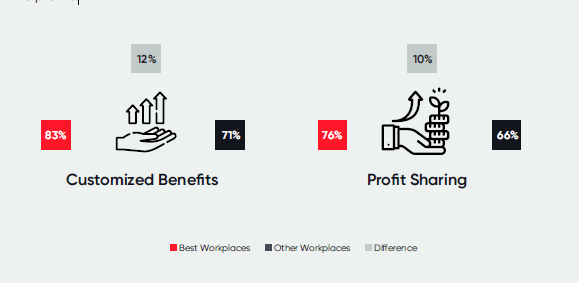
Best Workplaces typically score higher in areas like unique benefits, fair compensation, work-life balance, employee involvement in decision-making, responsiveness to feedback, seamless transitions, an enjoyable work environment, professional development opportunities, and minimizing office politics. These factors set them apart from other workplaces. The most significant gaps are in providing special and unique benefits and ensuring employees receive a fair share of the profits.

Best Workplaces Exhibit Great Workplace Experience

Business Outcomes of Being a Great Mid-size Workplace

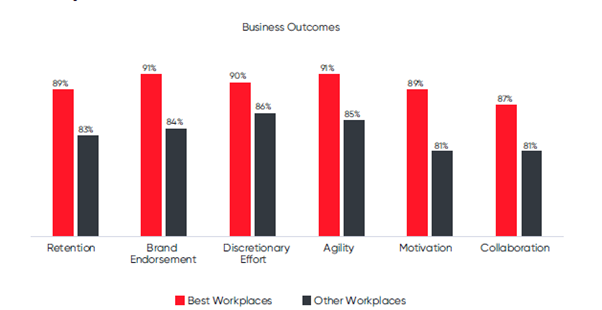
On average, Best Workplaces demonstrate 6% higher Retention, Brand Endorsement, Discretionary effort, Agility, Motivation, and Collaboration levels than Other Workplaces.

This underscores that fostering a great workplace culture not only benefits employees but also significantly enhances business outcomes.

Business Outcomes of Being a Great Mid-size Workplace

As mid-size organizations in India navigate the evolving workplace culture landscape, proactive measures are crucial for sustained success and competitiveness. By implementing targeted interventions for specific demographic segments and tailoring strategies to industry specifics, organizations can effectively address challenges and seize growth opportunities. Prioritizing key drivers such as fair performance evaluations, employee care, authentic leadership, leadership development, and talent attraction sets the stage for creating vibrant, inclusive workplaces where employees thrive. Continuous feedback mechanisms and adherence to best practices enable organizations to adapt and evolve, driving long-term engagement and success.

Looking ahead, mid-size organizations should embrace these strategic recommendations to shape a future where workplace culture, a cornerstone of organizational identity, accelerates business outcomes. By fostering environments that prioritize fairness, empathy, and talent development, organizations can attract and retain top talent while encouraging a culture of innovation and collaboration. These efforts will position mid-size organizations as industry leaders, driving positive change and contributing to the overall growth and prosperity of the Indian business landscape. Visit us here to learn more.

The Indian economy is on a phenomenal growth trajectory. Expected to reach a staggering $7 trillion by 2030, it presents unparalleled opportunities for businesses and individuals. But in this dynamic landscape, what truly sets successful companies apart? Our latest India’s Best Companies To Work For 2024 report reveals a compelling truth: a strong workplace culture is the secret sauce for achieving sustainable success.

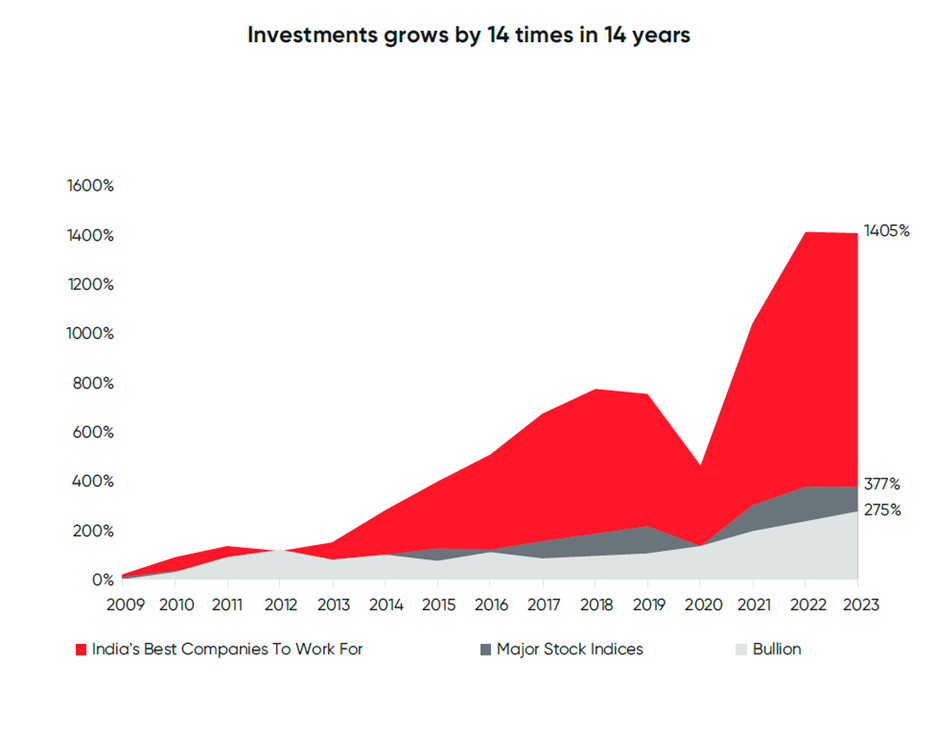
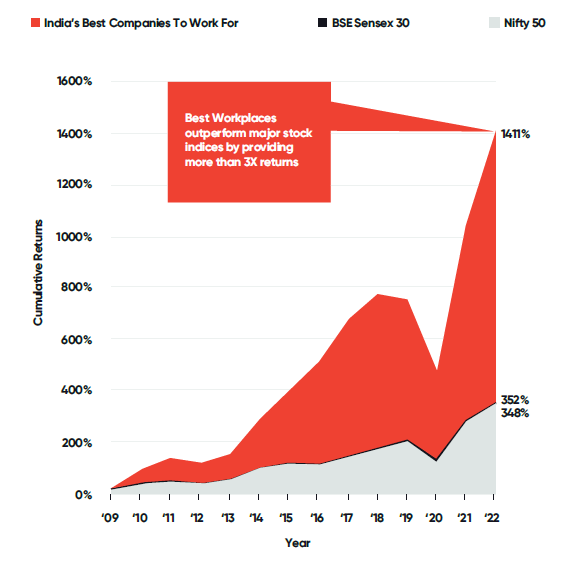
The report unveils a powerful connection between employee experience and financial performance. A study by RSM demonstrates that investing in India’s Best Companies To Work For has yielded a remarkable ~14X return on the initial investment for shareholders. This outperforms both bullion and stock indices by a factor of 3.73, highlighting the tangible financial benefits of fostering a positive work environment.

Trusting in Best Workplaces yields 14X returns

However, creating a great workplace goes beyond just numbers. It’s all about creating an environment where workers feel appreciated, empowered, and motivated to give their best effort. Our research delves into several key aspects that define a thriving work environment:

The Fairness Factor: A Critical Gap

Significant inconsistencies in experience of fairness.

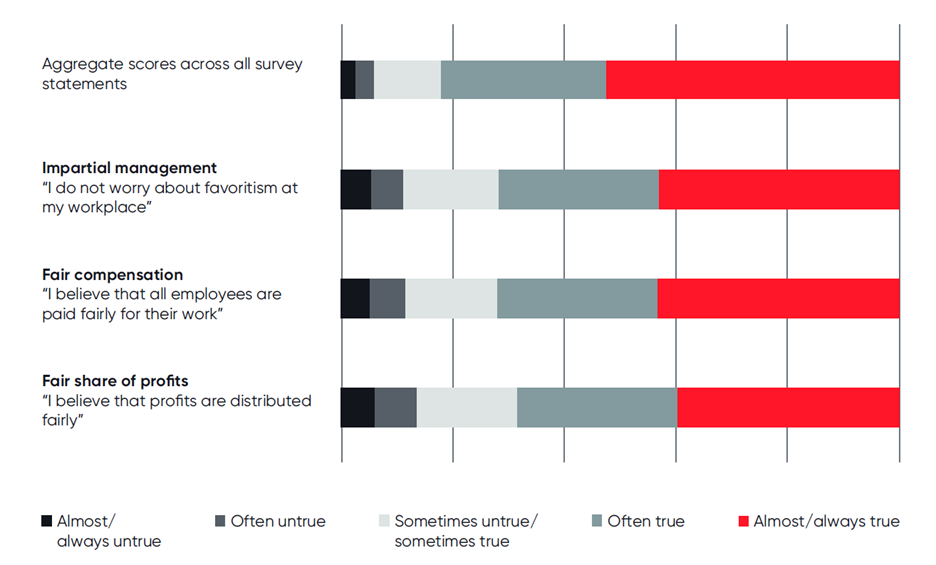
While every individual experiences workplace culture slightly differently, a significant inconsistency emerges in the area of fairness. Employees report discrepancies in favoritism by managers, fair compensation, and a fair share of profits. This lack of perceived fairness can negatively impact employee morale and potentially lead to higher attrition. Interestingly, these concerns are more pronounced among women employees, highlighting the need for focused efforts toward achieving pay parity and a genuinely equitable work environment.

Gen Z: The Innovation Engine

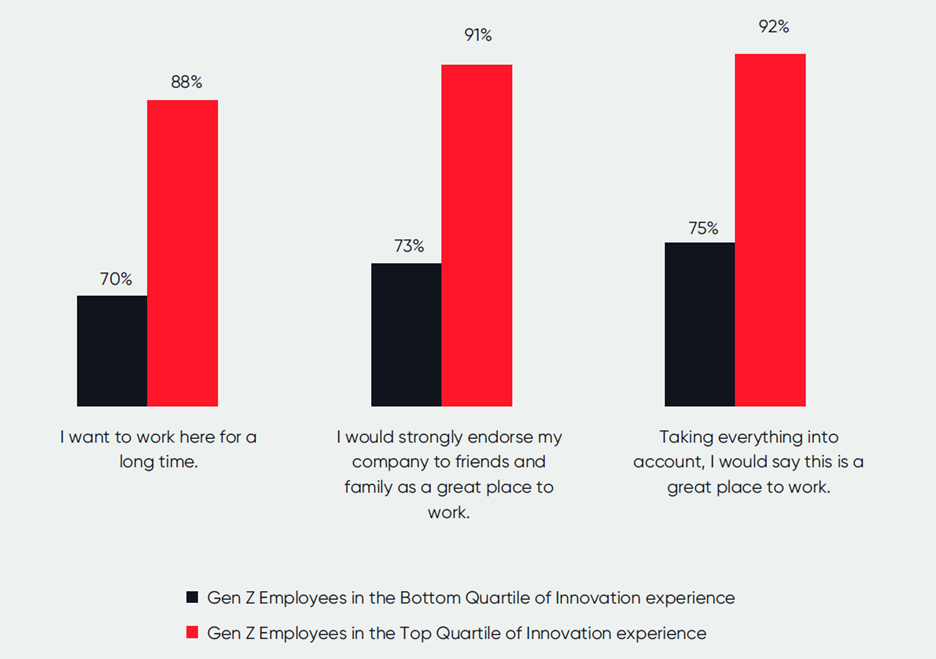
Gen Z thrives in innovative workplaces, leading to higher retention and satisfaction.

Generation Z, the digital-native generation, is entering the workforce in large numbers. Our research identifies them as a key driver of innovation. When Gen Z employees have a positive experience with innovation at work, they are 18% more likely to stay with their current employer, advocate for the company, and perceive the workplace culture positively. This emphasizes how crucial it is to create an atmosphere that values innovation, creativity, and experimentation.

Authenticity: The New Workplace Currency

The traditional notion of work as simply a job is evolving. Today, employees seek a workplace that allows them to be their authentic selves. Our findings reveal that when employees feel comfortable bringing their true selves to work, they are 3.1 times more likely to stay motivated. Leaders who prioritize authenticity create a space where employees feel valued, respected, and empowered to contribute their unique perspectives.

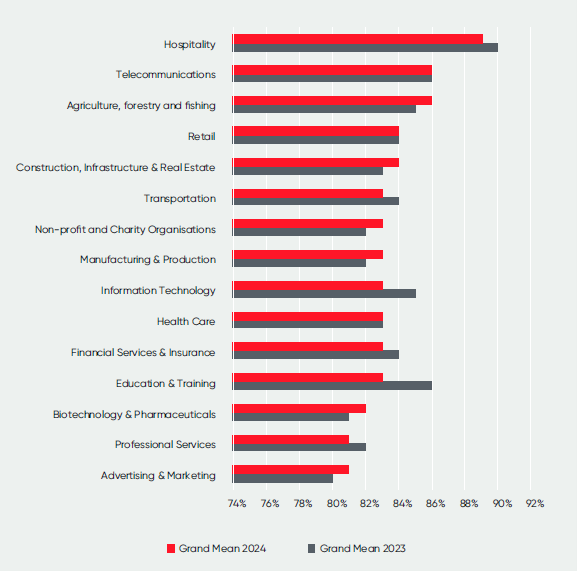
Mix of perceptions in the Trust Index Grand Mean for most major industries

The report also examines how workplace culture experiences vary across different industries. While industries like IT, Hospitality, and Financial Services show a dip in the Trust Index Grand Mean (a measure of overall employee experience), the decline is most prominent in the Education and Training sector. Conversely, industries like Non-profits, Biotech & Pharmaceuticals, and Advertising & Marketing have witnessed a slight improvement.

Leadership Imperative: Addressing the Diversity Gap

Regardless of an employee’s role, gender, tenure, or generation, leaders play a key role in providing a constant and healthy workplace culture. The report highlights specific demographics that require focused attention:

  • Job Role:

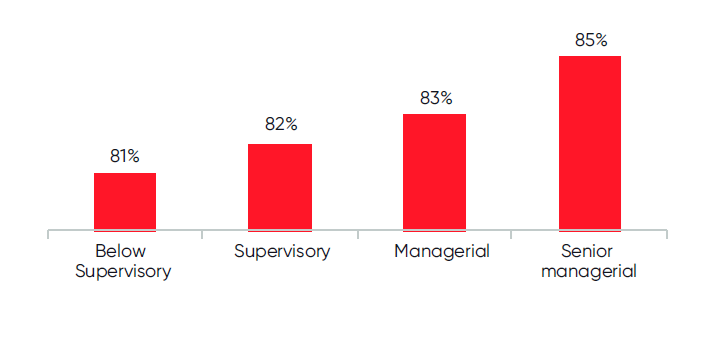
There’s a positive correlation between employee experience and job roles. As employees progress in their careers, their experience with the company culture improves.

  • Tenure:
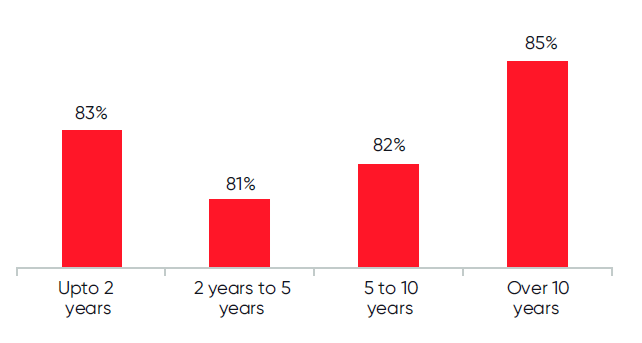
Employee culture experience dips mid-career, but rebounds for long-term employees.

Interestingly, employees new to an organization (within 2 years) report a high initial experience, followed by a dip in satisfaction between 2-5 years. This suggests a potential onboarding and mid-career support gap that needs to be addressed. The trend then reverses, with the highest tenure employees reporting the best workplace experience.

  • Generation:
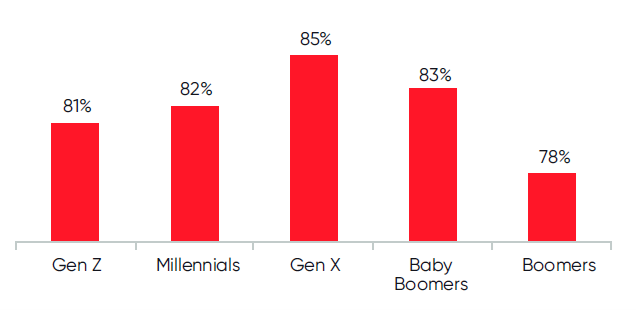
Work culture survey finds Gen X thrives, while Millennials and Gen Z seek improvement.

Gen X employees report the most positive experience, while there’s significant room for improvement for Gen Z and Millennials.

  • Gender:
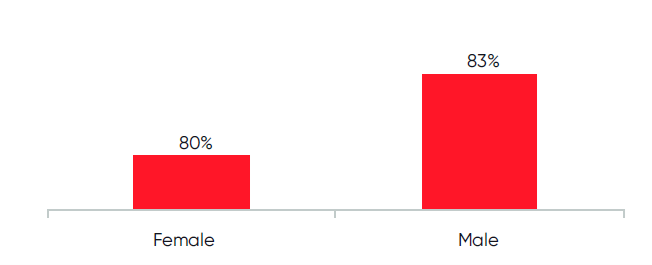
Men report more positive work culture than women.

A concerning trend reveals that male employees report a more positive cultural experience than their female counterparts. This emphasizes the necessity of focused efforts to establish a more welcoming and equal work environment for women.

Empowering Gen Z: Keeping the Spark Alive

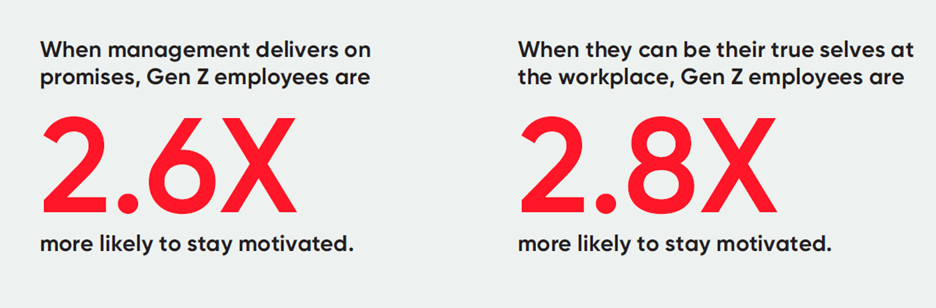
Gen Z thrives under leaders who deliver and embrace authenticity.

With their strong awareness and access to opportunities, Gen Z employees require specific strategies to stay motivated. Our research suggests that Gen Z thrives when management delivers on promises and when they feel comfortable expressing their authentic selves at work. Companies can significantly improve Gen Z retention by fostering a culture of transparency and encouraging employees to be their true selves.

Psychological Safety for Women: Key Drivers

The report also explores factors that contribute to the psychological and emotional well-being of women employees. It identifies several key areas where leaders can focus their efforts:

  • Supportive Work Environment: Fostering a culture of support and collaboration where women feel comfortable seeking help and guidance from colleagues and mentors.
  • Respectful Communication: Encouraging open communication and ensuring all voices, regardless of gender, are heard and valued.
  • Work-Life Balance: Implementing flexible work arrangements and policies that enable women to manage their professional and personal.
  • Trust in Leadership: When leaders’ actions align with their words, and they consistently deliver on promises, it fosters trust. In such environments, leadership welcomes diverse perspectives, even if they challenge existing views. They effectively address employee concerns, making employees feel safe and confident in their leadership’s trustworthiness.

Taking Action: Building a Culture that Thrives

The insights from our India’s Best Companies To Work For 2024 report paint a clear picture: a strong workplace culture is not just a feel-good initiative; it’s a strategic investment with a tangible return. Following are some actionable steps leaders can take to cultivate a thriving work environment:

  • Prioritize Fairness: Leaders must champion fair treatment for all employees. This includes transparent performance evaluations, equal opportunities for growth, and addressing any concerns about favoritism or pay disparity. Foster open communication channels where employees feel comfortable raising concerns about fairness issues.
  • Embrace Innovation: Create an environment that encourages experimentation, risk-taking, and creative problem-solving. Invest in training programs that empower employees with the skills and resources to innovate. Celebrate successes and recognize innovative ideas, regardless of their source.
  • Empower Authenticity: Promote a culture where employees feel comfortable expressing their unique perspectives and ideas. Encourage open communication and respect diverse viewpoints. Recognize and leverage the strengths that each individual brings to the team.
  • Bridge the Generational Divide: Recognize the unique needs and preferences of different generations. Tailor leadership styles and communication approaches resonate with Gen Z, Millennials, and Gen X employees. For Gen Z, create opportunities for continuous learning and development and encourage open communication with leadership.
  • Champion Diversity and Inclusion: Implement initiatives that promote gender equality and create a truly inclusive workplace. Actively seek diverse perspectives in decision-making processes and empower women to take on leadership roles. Offer mentorship programs that connect women with experienced professionals and provide career development opportunities.
  • Invest in Well-being: Implement policies and plans that promote each employee’s mental, physical, and overall health. Offer more flexible work schedules and encourage employees to take breaks to help foster a work-life balance. Build a culture where employees feel comfortable asking for help when they need it and make mental health resources accessible to them.

Conclusion: The Road to Success is Paved with Culture

Building a strong workplace culture is an ongoing journey. Leaders may foster an environment where employees feel appreciated, engaged, and inspired to give their all by placing a high priority on equity, creativity, authenticity, and employee well-being. As our research demonstrates, a positive workplace culture not only improves employee satisfaction and retention but also translates into tangible business benefits. In the dynamic and competitive Indian market, companies that prioritize culture will be best positioned to attract and retain top talent, drive innovation, and achieve sustainable success in the years to come.

This blog highlights just a glimpse of the valuable insights available in India’s Best Companies To Work For 2024. To understand the full picture and learn more about the best workplaces in India, download the complete report.

In today’s competitive business environment, attracting and retaining top talent is crucial for organizational success. A company’s achievements rely not just on its products or services but significantly on its employees’ collective strength and commitment. According to a study by RSM India, organizations recognized as Best Workplaces have demonstrated a remarkable 14 times increase in cumulative returns on their initial investments since 2008-09. This substantial growth underscores the value of cultivating a positive workplace culture. By prioritizing employee satisfaction, engagement, and development, companies can drive superior performance, innovation, and long-term profitability, establishing a strong competitive advantage in the market.

Best Workplaces outperform major indices by providing more than 3X returns.

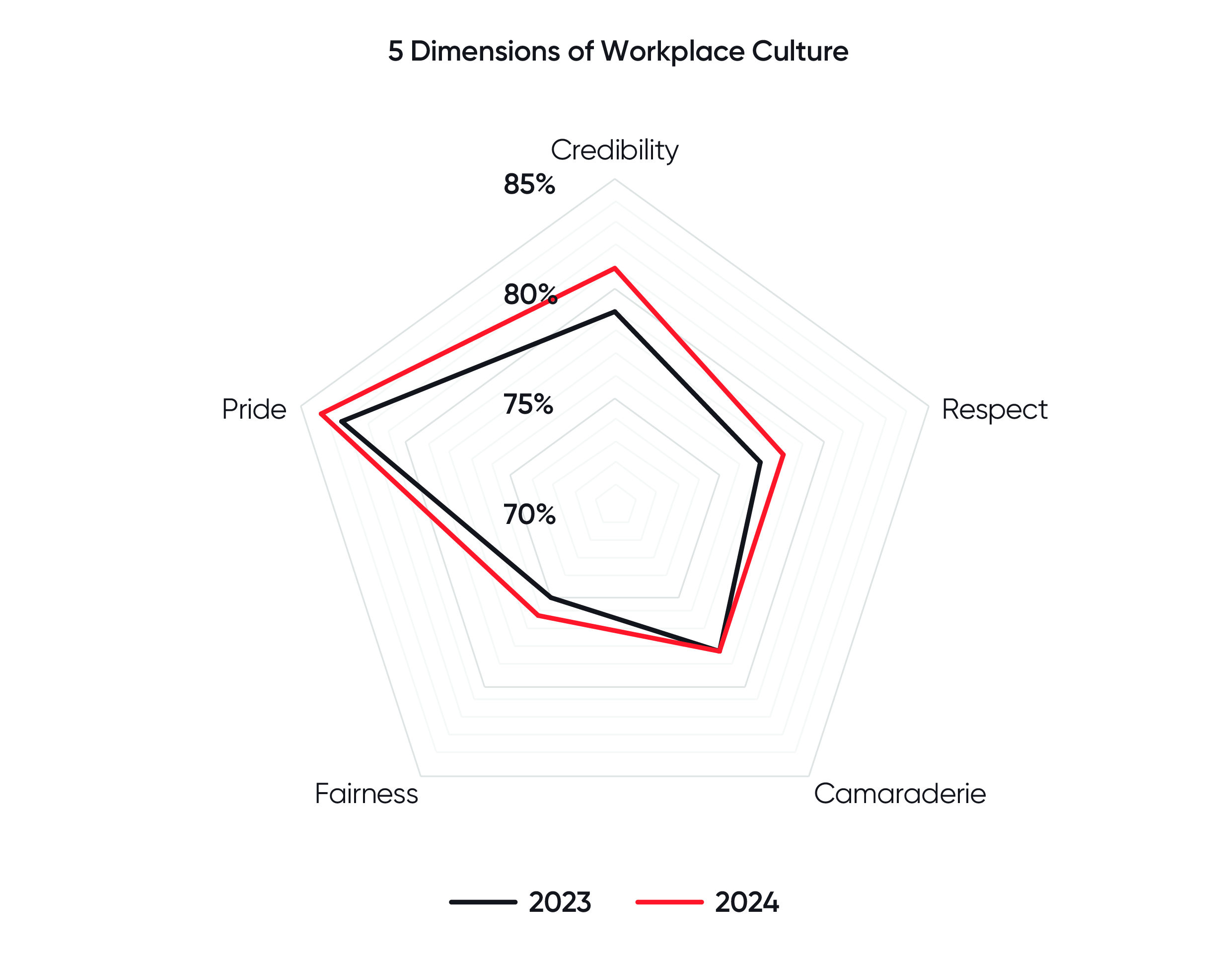
5 Dimensions of Indian Workplace Culture across Demographics and Industries

Camaraderie 

Camaraderie measures the sense of enjoyment in the workplace by assessing the level of intimacy and connection employees experience with their colleagues. When employees share a strong sense of camaraderie, they are more likely to feel engaged, supported, and motivated. 

The importance of camaraderie lies in its ability to create a positive work atmosphere where employees feel valued and understood. It helps in reducing stress, as individuals who enjoy strong interpersonal relationships at work are better equipped to handle challenges and conflicts. Moreover, a workplace with high camaraderie often experiences lower turnover rates, as employees are more likely to stay with a company where they have formed meaningful bonds.

Credibility

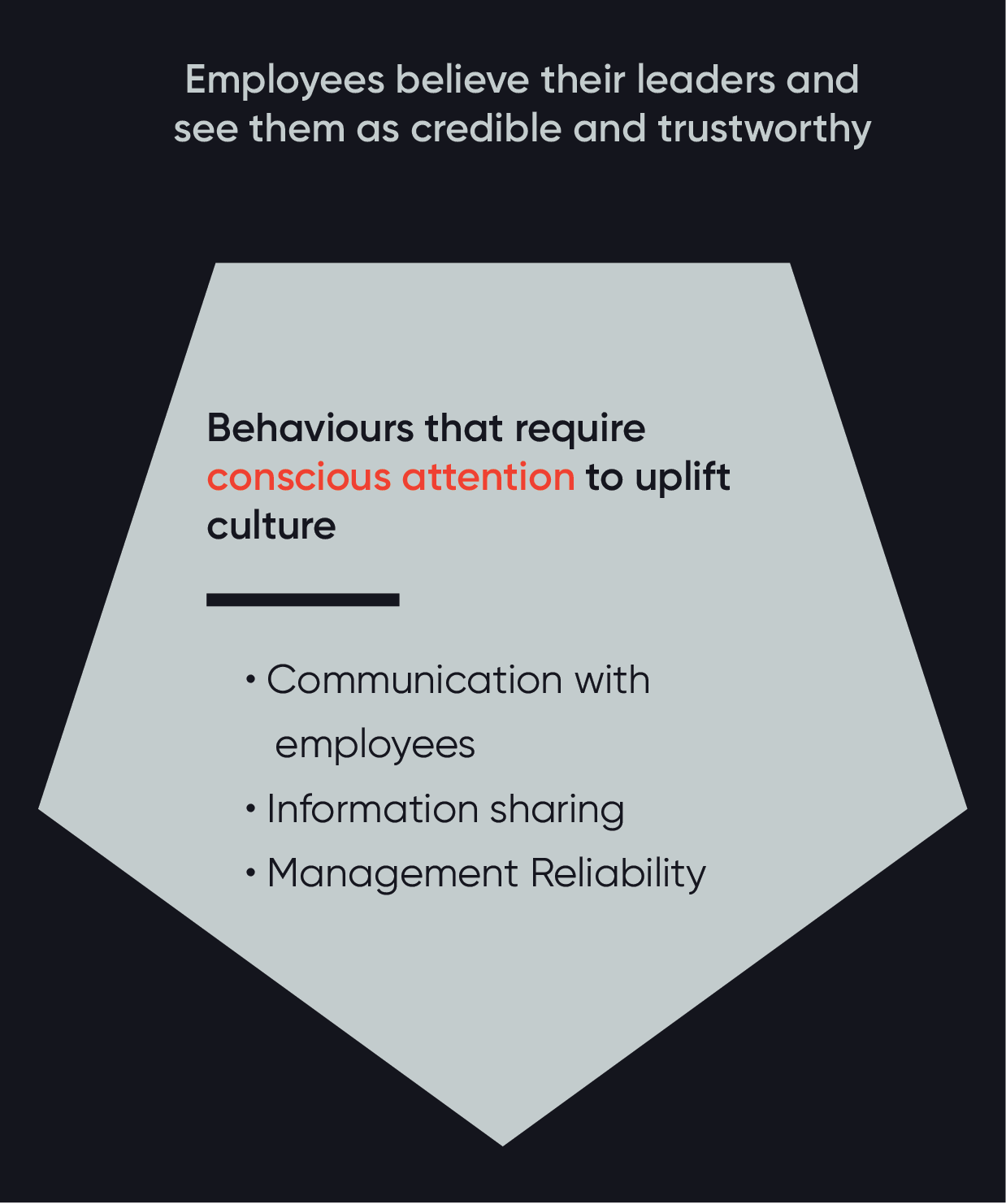
Credibility measures the extent to which employees perceive management as trustworthy, reliable, and competent. When employees view their leaders as credible, they are more likely to have confidence in their decisions, directions, and communications. 

Employees rely on credible leadership to provide guidance, support, and a sense of stability within the organization. When management is perceived as credible, employees feel more engaged, motivated, and invested in their work. They are more willing to collaborate, take initiative, and contribute their best efforts towards achieving organizational objectives.

Credibility is especially crucial during times of change or uncertainty, as employees look to leadership for reassurance and direction. Leaders who demonstrate integrity, honesty, and authenticity in their actions are better able to navigate challenges and inspire confidence among their teams.

Respect 

Respect measures the extent to which employees feel valued, appreciated, and treated fairly by those in leadership positions. When employees feel respected by management, they are more likely to be engaged, motivated, and committed to their work.

Respect is demonstrated through various actions, including active listening, acknowledging contributions, providing opportunities for growth and development, and treating all employees with dignity and fairness. It involves creating an inclusive environment where differences are celebrated, and everyone’s voice is heard and respected.

The presence of respect in the workplace has numerous benefits. It leads to higher levels of employee satisfaction, increased morale, and improved overall well-being. Employees who feel respected are more likely to collaborate effectively, communicate openly, and contribute their unique skills and perspectives to achieve organizational goals.

Moreover, a culture of respect contributes to lower turnover rates as employees are more likely to remain loyal to an organization where they feel valued and respected. It also enhances employer branding, making the organization more attractive to prospective employees and customers alike.

Pride 

Pride measures the extent to which employees take pride in their work, their team or work group, and the overall company. When employees feel a sense of pride, they are more likely to be motivated, productive, and loyal to their organization.

At an individual level, pride in one’s work reflects a deep sense of accomplishment, fulfillment, and personal investment in the tasks and projects they undertake. It encompasses feelings of satisfaction derived from overcoming challenges, achieving goals, and delivering high-quality results.

Similarly, pride in one’s team or work group reflects a sense of camaraderie, collaboration, and mutual respect among colleagues. Pride in the company reflects a strong sense of belonging, loyalty, and commitment to its mission, values, and reputation. Employees who feel proud of their organization are its best ambassadors, advocating for its products, services, and culture both internally and externally.

Fairness 

Fairness measures the extent to which employees perceive management’s practices as just, equitable, and unbiased. When employees believe that they are treated fairly, they are more likely to feel motivated, engaged, and committed to their work.

One crucial aspect of fairness is impartiality, where decisions are made based on merit and objective criteria rather than personal biases or favoritism. Employees expect fair treatment in various aspects of their employment, including recruitment, promotion, performance evaluation, and compensation.

Fair pay is a significant concern for employees, as they want to receive compensation commensurate with their contributions and market value. Gain-sharing programs, where employees are rewarded based on collective performance and productivity, can further enhance perceptions of fairness and promote a sense of shared ownership and accountability.

Addressing perceptions of fairness requires a proactive approach from management, including regular assessments of policies and practices to identify and address areas of potential bias or inequality. By prioritizing fairness, organizations can build a culture of trust and fairness where employees feel valued, respected, and motivated to contribute their best efforts towards achieving organizational goals.

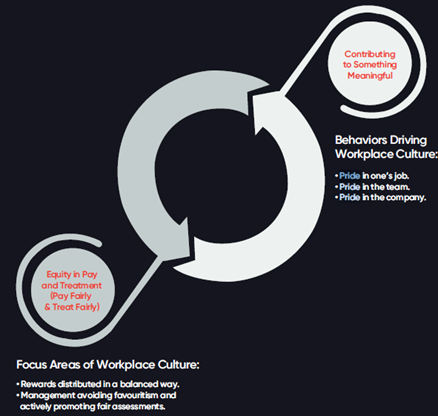
Behaviors Driving Workplace Culture - Pride in one's job, Pride in the team and Pride in the company. Focus Areas of Workplace Culture - Rewards distributed in a balanced way, Management avoiding favouritism and Actively promoting fair assessments.

Pride and Fairness Define Workplace Culture Fulcrum of India 2023

Organizations must recognize the importance of cultivating a positive workplace culture that prioritizes the well-being and success of its employees. By embracing these key dimensions of workplace culture, organizations can differentiate themselves, attract and retain top talent, and achieve sustainable growth and success in the dynamic Indian market. Visit us here to learn more. 

Within this vibrant financial landscape of BFSI, notable advancements are observed across various fronts. The BFSI sector, alongside manufacturing, emerges as a frontrunner with a robust 25% hiring intent, signalling a strategic emphasis on both industrial expansion and talent acquisition within the financial domain. Significant developments, including the fortification of banks, the proliferation of fintech ventures, and a surge in investments and insurance activities, further fuel this fervent pursuit of growth. Such advancements not only signify the sector’s upward momentum but also underscore its pivotal role in driving India’s economic evolution towards greater prosperity and inclusivity.

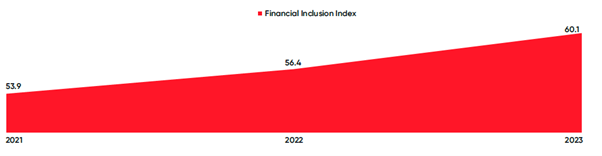
The Financial Inclusion (FI) Index for March 2023 stands at 60.1 vis-a-vis 56.4 in March 2022 and 53.9 in 2021, with growth witnessed across all sub-indices.

The trajectory of financial inclusion emerges as a testament to progress. Recent data paints a vivid picture of growth, with the Financial Inclusion (FI) Index soaring from 56.4 in March 2022 to an impressive 60.1 in March 2023. This upward trend reverberates across all sub-indices, reflecting a concerted effort towards broader accessibility, deeper engagement, and enhanced quality within the financial ecosystem. Crafted in collaboration with governmental bodies and sectoral regulators, the FI-Index articulates its narrative through three fundamental parameters: Access (35%), Usage (45%), and Quality (20%). These metrics not only underscore the sector’s unwavering commitment to fostering inclusive financial practices but also lay the groundwork for a more empowered and resilient future.

Perception of Workplace

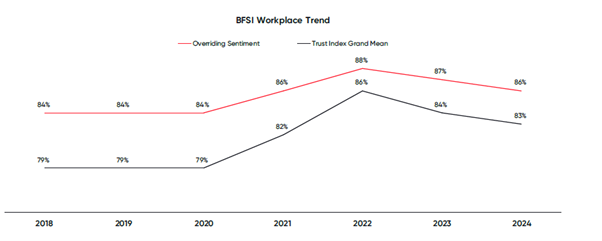
Despite an overarching sentiment of positivity, organizations experienced a marginal 1% dip in the overriding sentiment, with 86% of employees affirming their workplace’s greatness in 2024. Concurrently, the industry’s Trust Index Grand Mean has consistently declined since 2022, signalling a nuanced narrative within the sector. Particularly noteworthy is the perceptible decline in workplace perception, marked by diminished credibility, fairness, and pride among BFSI employees in 2024. The erosion of trust is reflected in waning belief in the integrity of management, perceptions of justice in the workplace, and a fading sense of pride in one’s job, team, and corporate identity.

The overall sentiment was consistently at 84% from 2018 to 2020, and it increased to 86% in 2021 and 88% in 2022. However, it decreased to 87% in 2023 and further to 86% in 2024. The Trust Index Grand Mean showed a similar trend, with a constant rating of 79% from 2018 to 2020, followed by an increase to 82% in 2021 and 86% in 2022. Then, it decreased to 84% in 2023 and 83% in 2024.

Compared to other industries, the BFSI sector experienced a slip in key areas of fairness, pride, and overall sentiment from the preceding year. There exists a discernible opportunity to enhance employees’ perceptions of service excellence, improved facilities, the commemoration of special occasions, and the addressing of biases related to gender and sexual orientation.

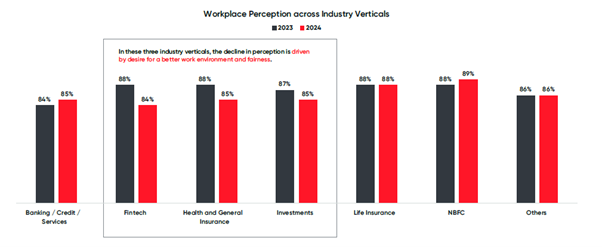
The decline in perception is particularly notable across three verticals, registering a dip ranging between 2% to 4%. Within the BFSI sector, the most significant drop in perception is observed in the Fintech, Health & General Insurance, and Investment verticals. Furthermore, this decline is most pronounced, reaching approximately 10%, among Millennial and Gen-Z managers in the early stages of their tenure. These insights underscore the imperative for proactive measures to bolster workplace culture, foster inclusivity, and nurture a conducive environment for all employees across the BFSI spectrum.

For BFSI employees, belief in the integrity of management, justice at work, and pride in personal job, team, and corporate image has declined.

Workplace Perception across Gender

1 out of every 4 women employees in the BFSI sector feel they lack opportunities to get special recognition. 

1 out of every 4 women employees in the BFSI sector feel they lack opportunities to get special recognition.

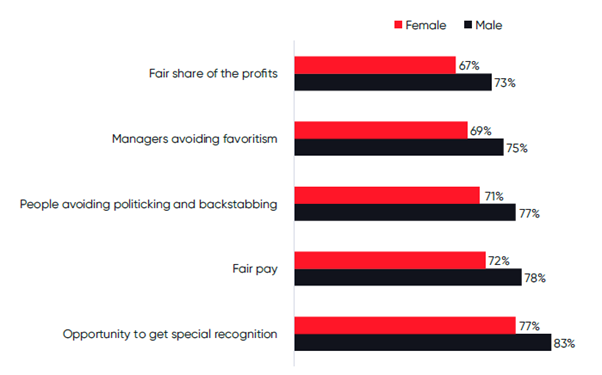
The biggest difference in workplace experience between male and female employees lie in the opportunities they get for special recognition, receiving fair pay and a fair share of profits, and experience with workplace favoritism and politicking.

Equity Perception Across Gender

4 out of 5 employees in the BFSI industry feel positive about equity in the workplace, however female employees are 5% less satisfied with workplace equity compared to their male colleagues.

Workplace Perception across Generations

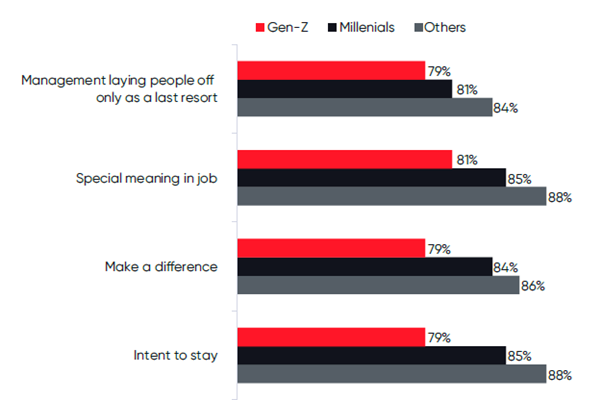
Almost 21% of Gen Z and 15% of Millennials in the BFSI sector do not intend to stay long in the organization. The biggest difference in workplace experience between Gen Z and Millennials of BFSI lies in their intent to stay for a long time, feeling that they make a difference at work, believing that their job has a special meaning, and management laying of people as a last resort.

Almost 21% of Gen Z and 15% of Millennials in the BFSI sector do not intent to stay for a long time in the organisation.

Equity Perception Across Generation

Even though almost 80% of Gen-Z and Millennial employees in the BFSI sector are satisfied with equity in the workplace, Gen-Z employees have a 6% lower perception of fair pay compared to their older peers like Gen-X and Boomers.

Highest And Lowest Perceptions Of BFSI Industry In 2024

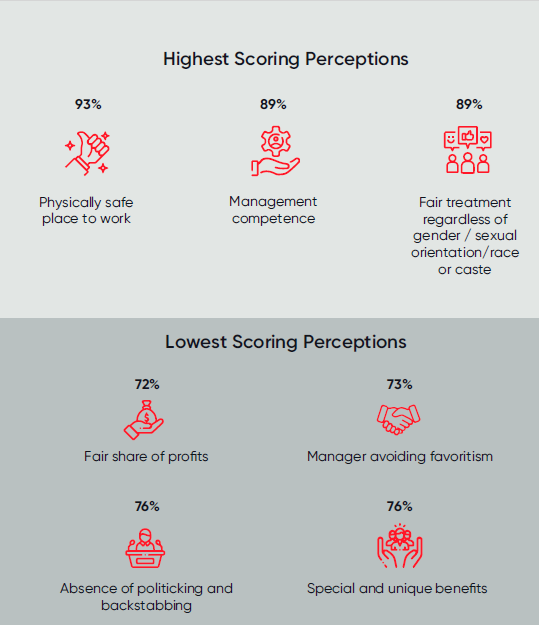
Most employees within the BFSI industry find their workplace physically safe, find their management competent, and do not perceive gender/age/race or caste/sexual orientation-based discrimination. However, they are most dissatisfied with their fair share of profits, managers’ favoritism, and instances of politics and favoritism in the workplace.

Highest Scoring Perceptions showing physically safe place to work at 93%. Management competence at 89% and fair treatment regardless of gender/sexual orientation/race or caste at 89%. Lowest Scoring Perceptions showing fair share of profits at 72%, manager avoiding favoritism at 73%, absence of politicking and backstabbing at 76% and special and unique benefits at 76%.

Amidst the evolving dynamics of the BFSI sector, the imperative to prioritize care at the workplace emerges as a beacon of necessity. As organizations navigate through shifting paradigms and strive for sustained growth, fostering a culture of compassion and empathy becomes paramount. Recognizing the pivotal role of a caring work environment as a cornerstone of workplace culture and employee satisfaction, it becomes incumbent upon BFSI entities to redouble their efforts in this regard. By nurturing an environment where employees feel valued, supported, and empowered, organizations not only cultivate loyalty and commitment but also fuel innovation and productivity. As we look towards the future, let us reaffirm our commitment to prioritizing care at the workplace, thereby fostering a culture that thrives on compassion, inclusivity, and collective well-being. Visit us here for more information.

The Indian retail industry is undergoing rapid change. According to the BCG-RAI 2024 report Post-COVID, Indian retail saw a strong recovery, set to reach $2Tn in the next decade. Consumer confidence is high, fueled by a growing middle class with a taste for premium goods. The future holds a tech revolution, with AI, computer vision, and 5G transforming how we shop.

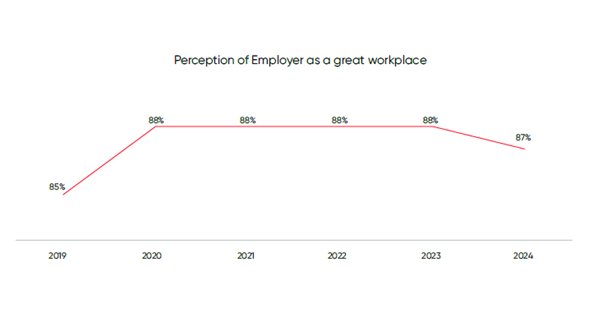
However, when it comes to the workplace culture of the industry, the story is slightly different.  According to our recent research report on India’s Best Workplaces™ in Retail, there seems to be concerns about equity in the workplace, particularly for female employees. While 87% of employees believe their organization is a great place to work, there is a 4% drop in this perception among female employees.

The graph is showing the trend of Perception for Employer as a great workplace. In 2019 it was 85%. From 2020 to 2023 it was 88% and it dipped to 87% in 2024.

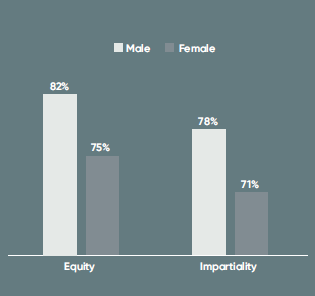
Even though female employees do not overtly perceive gender bias at their workplaces, their perception in key areas of Equity and Impartiality lags by almost 7% compared to their male colleagues.

The graph depicts Males having 82% Equity and Females with 75%. For Impartiality the same trend for Male with 78% and Female with 71%.

To address these issues, leaders must prioritize building gender equity. Achieving gender equity in the workplace is essential, and requires leaders to take concrete steps:

  • They must address the persistent pay gap between men and women.
  • Valuing potential over traditional qualifications can help identify talented individuals who may be overlooked. Creating a welcoming environment during onboarding sets a positive tone from the start.
  • Ensuring women have access to senior leadership increases their visibility and opportunities.
  • Empowering women to share their stories fosters a more inclusive and understanding work culture.

By actively addressing these challenges, the retail sector can cultivate a thriving workforce, ultimately contributing to its long-term success and sustainability. Let us have a closer look at a few of India’s Best Workplaces in Retail and their best practices. 

What India’s Best Workplaces are doing differently  

Flipkart’s Breaking Barriers, Building Futures

Flipkart is dedicated to empowering women through various tailored programs and interventions designed to support them at various stages, including those who have taken breaks from their careers.

Enhancing Representation

Flipkart prioritizes increasing the representation of women across business groups through initiatives such as:

  • Vidyarthini : A campus initiative to attract more women MBA students to India’s supply chain.
  • GirlsWannaCode (GWC): Empowering women in technology through specialized learning and skilling programs for women engineering students.
  • Neev: Internship and hiring programs targeting women-only colleges, particularly focusing on supply chain roles.
  • Flip Forward: Offering return ship opportunities for women on career breaks, providing a pathway for them to restart their careers.

Developing Women Leaders

To cultivate a pipeline of women leaders, Flipkart offers programs such as:

  • Catalyze: A comprehensive 6-month development journey utilizing the GROW model to support women in transitioning into leadership roles.
  • Prerna: A platform for senior women leaders to come together, share experiences, and learn from each other.
  • Ignite & Soar: A holistic diversity development program tailored for women in Tech, fostering strong leadership talent in junior and middle management positions.

Sustaining Support

Flipkart fosters an equitable work environment by leveraging Employee Resource Groups, including:

  • Mom on Board Employee Resource Group
  • Women in Tech Business Resource Group
  • Ekayam: A dedicated network of employees committed to driving Diversity, Equity, and Inclusion initiatives within the supply chain.
  • Flipkart Pride Collective

Through these initiatives, Flipkart endeavors to create a workplace culture that champions gender diversity, supports women’s career progression, and fosters an inclusive environment for all employees.

Flipkart’s Commitment to Safety, Equality, and Inclusivity 

Flipkart is dedicated to ensuring the safety and security of all employees, especially women in the supply chain. Their commitment to this cause is further strengthened by bold and audacious program that aims to address women’s attrition rates in the workforce.

Image showing Retention Efforts Especially for Women and Ensuring Safety of Women.

Shopper’s Stop Motivating for Innovation

While constantly evolving, Shoppers Stop focuses on building trust among employees by providing a safe and secure environment where employees can grow, innovate and are recognized for their efforts.

Building Trust through Reward - Happiness Cheque Book, Innovate - ReSSet Program and Grow - L.E.A.P & L.E.A.D Programs.

Lifestyle’s Landmark Happiness Movement 2.0

With the primary goal of enhancing the overall well-being and engagement of employees, Lifestyle International structures its initiatives around four pillars, Care, Connect, Inspire, and Innovate, each representing a key aspect of the organization’s approach to creating a positive and thriving workplace.

These case studies underscore the importance of proactive measures in addressing workplace challenges and cultivating environments where all employees can thrive. By prioritizing inclusivity, equity, and innovation, these organizations not only set benchmarks for excellence but also contribute to the long-term success and sustainability of the retail industry.

Visit us here to learn more.

Camera red icon

LIVE WEBINAR WITH Q & A

certification-badge-2026-rhc4efc9ny04x7lz17jff7guyhsup5b0yvrou4vd72

The Certification Advantage: Why Partner with Great Place To Work®

How partnering with Great Place To Work can strengthen your people strategy, and drive business outcomes through data-driven insights and Certification.

prasad-kachraj

Prasad Kachraj

Managing Director, Great Place To Work, India

23rd September 2026  |  4.00 PM - 4.30 PM IST

Register Now