
Key Takeaways:
1. Gender equality in the workplace is an organizational necessity that improves innovation, productivity, and employee retention.
2. Barriers such as limited promotion opportunities, maternity-related career breaks, and rigid work structures continue to impact women’s career growth.
3. Organizations can bridge these gaps through flexible policies, structured leadership development, and strong leadership accountability.
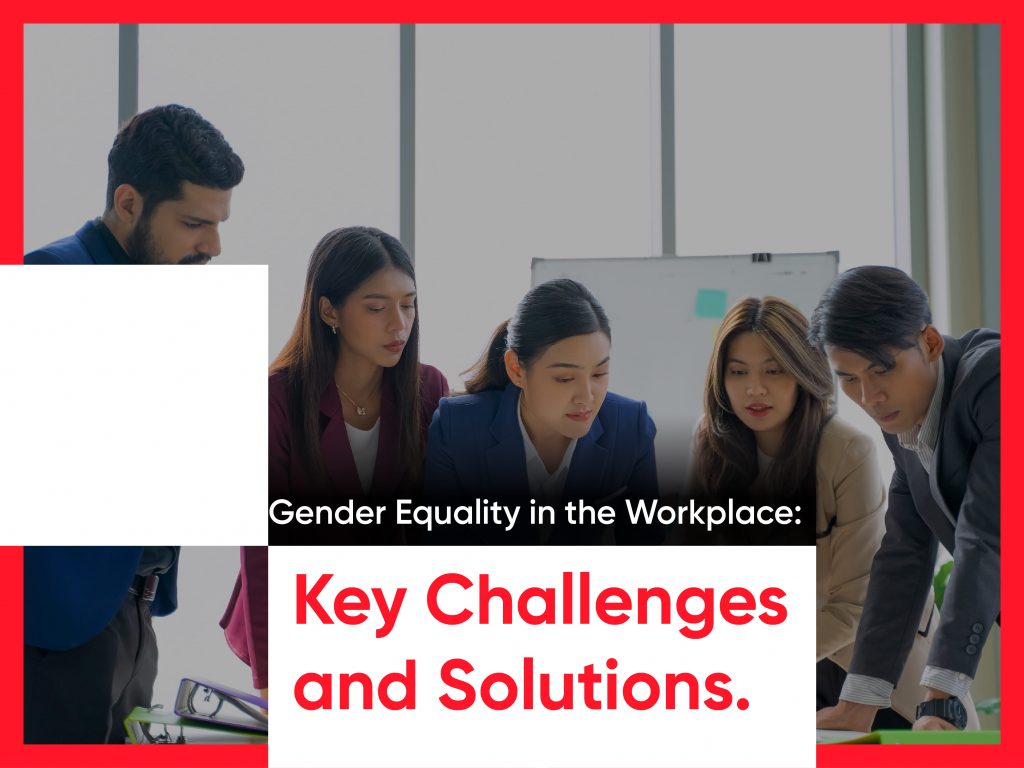
It is no longer just a social goal to have equal opportunities for men and women at work; it is now a business necessity. Organizations that support equal opportunity for all genders always do better than the ones who don’t, both in terms of innovation and profitability. But even after decades of advocacy and policy changes, millions of working women still don’t have true gender equality.
The 2025 report from Great Place To Work® India says that women still make up only 26% of the workforce. This number has not changed in three years. The “broken rung” phenomenon that keeps women from rising to leadership positions, as well as the loss of employees after maternity leave and the imbalance between work and life, are all systemic, cultural, and deeply rooted.
This blog talks about what gender equality in the workplace really means, why it’s important for businesses, and, most importantly, what leaders and HR teams can do to make a real, measurable difference.
What Does It Mean to Have Gender Equality at Work?
Gender equality refers to the practices of making sure that all employees, irrespective of their gender, have equal opportunity, leadership roles, training, pay, resources, and professional development. It’s not always about reimbursement or salary but also about equal rights, representation, equal voice and equal protection from bias and discrimination.
This is a major opportunity for organizations to incorporate DEIB (Diversity, Equity, Inclusion, and Belonging) in their culture and process. Great Place To Work India has introduced the RISE framework as a guiding principle for workplaces that are looking to grow and expand in 2026:
- Representation
- Inclusion
- Support
- Equity
So, gender equality isn’t just about having women in the room; it’s about making sure that women can lead, thrive, and be heard at every level of the organization.
Why Do Companies Need to Care About Gender Equality?
There is a strong and measurable business case for gender equality. The Great Place To Work India 2025 report says that companies that put DEIB first, such as gender equity, do much better than their competitors on important metrics:
- Productivity: 88% of employees in such workplaces are willing to go the extra mile, while only 79% of employees in the other workplaces are.
- Retention: 89% of employees plan to stay for a long time.
- Agility: 91% of employees can quickly adjust to change that speeds up innovation.
- Employee Advocacy: 91% of employees promote their company to their family and friends.
The report also says that 8 out of 10 employers think that focusing on DEIB has led to more innovation, and 9 out of 10 say it has helped the communities they serve. So, treating men and women equally is not only the right thing to do, but it is also good for business.
Current Scenario of Gender Equality in India’s Workforce
As most of the particulars are aware of the problem in the workplace and companies are trying to fix it, but as per the recent 2025 data there is still a big difference across all the sectors and levels.
The 26% Level
From three consecutive years (2023, 2024, and 2025), the percentage of women staying is just 26% in comparison of 21% in 2021. The reason for stagnant growth is not only the structural roadblock but also a temporary slowdown. The sector divide is even more troubling: while the Non-Profit and Education sectors have up to 47% and 41% women, the Transportation (12%), Biotechnology & Pharmaceuticals (13%) and Manufacturing & Production (14%) sectors are still very under-represented.
The Leadership Cliff
Women make up 28% of individual contributors, but their share drops sharply at every level of management: 19% at frontline management, 16% at mid-level management, 15% at executive and C-level, and a shocking 8% at the CEO level. This slow decline isn’t a coincidence; it shows a pattern of structural and cultural barriers that build up over the course of a career.
Industry-Level Gaps in Inclusion (HEG Representation)
The IT sector has the most representation among Historically Excluded Groups (HEGs), with 33%, followed by Professional Services (31%) and Banking, Financial Services, and Insurance (30%). Manufacturing and production are only at 23%, which shows that DEIB progress is still mostly happening in tech-forward fields.
Key Obstacles to Equal Treatment of Men and Women at Work
The first step to breaking down the barriers is to understand what they are. The research lists down three main types of problems:
1. The Broken Rung:
The “broken rung” is the point at which women are unfairly passed over for their first promotion to senior leadership. The broken rung happens much earlier and more quietly than the common metaphor of a “glass ceiling”.
Women in mid-level management have a hard time getting promoted because the paths to promotion are not clear, evaluations are biased against women, there aren’t many opportunities for growth, and the “boys’ club” culture keeps them out of informal networks and decision-making processes. In 2025, 21% of women said they hadn’t had any chances to develop their leadership skills, which is a big reason why their careers were stuck.
2. Leaving after Maternity
Taking maternity leave is one of the trickiest times in a woman’s career. Many companies don’t give returning mothers the support they need. They have to go back to work quickly, there aren’t many flexible options, they have to travel a lot, and they often don’t have a structured re-onboarding process. Women say they feel “like a ball” when they come back from leave because they are passed around without proper knowledge transfers or introductions to clients. This leads to more new mothers leaving their jobs, which means losing experienced workers.
3. Problems with Work-Life Balance
22% of women say they don’t have a good work-life balance in 2025, and 18% say they don’t have any flexibility at work. People most often say that rigid 9 to 6 schedules, micromanagement, long commutes, and unstructured hybrid models are problems. The data shows that women are almost three times more likely to have a good work-life balance if they have the freedom to take time off when they need to. This makes flexible work policies one of the most effective ways to help women balance their work and home lives.
Solutions to Promote Gender Equality in the Workplace
The path forward requires moving from policy to practice. Leading workplaces demonstrate that targeted, well-designed initiatives can create measurable change.
Fix the Broken Rung with Structured Programs
Leadership Shadowing: Women who take part in this program follow executives around during important meetings and strategy sessions, which gives them firsthand experience with making decisions and boosts their confidence in leadership roles.
Anytime Promotions: A colleague-driven promotion process lets women start conversations about moving up in their careers at any time, not just during annual cycles. This is based on how ready they are, not how long they’ve been there.
Organizations should also set clear diversity goals for leadership positions, make sure that promotion policies are clear, and give managers the tools they need to give regular, helpful feedback on career development.
Support Working Mothers at Every Stage
- Extended work from home for New Mothers: New mothers and adoptive parents of babies under six months should be allowed to work from home, making it easier for them to get back to work.
- Buddy program: Expectant and returning mothers are matched with experienced parent buddies who help them with their health, emotional needs, and parenting skills from pregnancy to reintegration.
- Supporting new mothers: There should be professional counselling for pregnant women and new mothers, as well as designated rest and feeding rooms and support.
Make work rules that are fair and flexible
Companies like PwC in India offer their employees the choice of five different types of flexible work arrangements. Also, new mothers can travel to the office with their babies and have some other special facilities for child care as well. Brooke Hospitals for Animals (India) has a Gender Equity Leave policy that lets employees take up to 10 days off each year for menstrual pain, as well as for menopause symptoms and fertility treatments. All of this is done in private.
Moreover, one of the best e-commerce brands has a Choice-Based Work Plan that helps people reach their goals while also helping the institution reach its goals. This encourages people to be intentional about how they manage their work and develop professionally.
Close the Gap in Pay and Benefits
This is also one of the important practices to create a better workplace environment. Every year, Fractal Analytics Limited does an Annual Gender Pay Parity Audit to make sure that pay is fair for everyone, regardless of their role or identity. On the other hand, the company R1 RCM Global gives managers Inclusive Communication Guides that have tools for reducing bias and example scripts for difficult conversations about pay and performance. These things are especially important for LGBTQIA+ employees, who already have the lowest representation in the workforce at just 0.02% and face some of the biggest pay and benefits gaps.
How Leaders Can Promote Gender Equality?
The Great Place To Work® India report makes it clear that long-lasting DEIB change depends on leaders being committed. Even the best policies won’t work if there isn’t visible, accountable advocacy at the top. This is how leaders can really make a difference:
1. Make DEIB a part of your core values
Only 45% of the CHROs feel that DEIB can be officially added to the core values of their organization. Leaders should work together to make a DEIB vision statement that is part of performance reviews and career advancement plans, not something separate. It can be processed not only in a large-sized organisation but also can be more useful in small & mid-size companies.
2. Make sure that leaders come from a variety of backgrounds
Two out of three CHROs say that fewer than a quarter of their leadership teams include people from groups that have been historically left out. Leaders need to start formal sponsorship programs for diverse talent with a lot of potential, and require that all interview panels and candidate lists have diverse candidates.
3. Make people responsible for DEIB results
Only 43% of CHROs think that accountability tools will help DEIB practices. To fix this, companies should link some of their leaders’ bonuses to a clear DEIB scorecard and give all levels of management ongoing bias training to encourage inclusive leadership behaviors.
4. Keep a close eye on diversity metrics
Only half of CHROs keep track of retention data for all types of employees. Setting up a real-time DEIB metrics dashboard, making exit interviews the same for everyone to get separate data, and putting out annual public-facing DEIB reports are all important steps toward real progress.
Final Thoughts
Achieving gender equality in the workplace is a long-term process that needs a lot of work on many levels, from changing HR policies to restructuring the culture to holding leaders accountable.
The India’s Best Workplaces in Diversity, Equity, Inclusion & Belonging Report 2025 shows how far we’ve come and how far we still have to go. Women make up 26% of India’s corporate workforce, and this number hasn’t changed in three years. Only 8% of CEOs are women. 0.02% of the workforce is made up of LGBTQIA+ people. These numbers don’t just need to be known about; they need to be acted on.
But there is another side also where orgnaizations that made to India’s Best Companies To Work For (Top 100) are showing that intentional, empathetic, and data-driven practices can close the gaps, one promotion, one flexible policy, and one pay audit can fix a lot of things.
So, organizations that go beyond making promises and actually do something about it will not only make their workplaces more fair, but they will also make their businesses stronger, more creative, and more adaptable. Now is the time to act.
Frequently Asked Questions
Why is gender equality important for businesses?
Gender equality helps businesses make their workplaces more welcoming and productive by encouraging new ideas, getting employees more involved, and making the workplace more diverse.
What is the difference between gender equality and gender equity?
Gender equality means giving everyone the same chances, while gender equity means making sure that everyone has the right support and resources to get fair results.
What are examples of gender equality initiatives?
Some examples include flexible work policies, equal pay audits, leadership development programs for women, maternity return-to-work support, and inclusive hiring practices.
What are the 4 main pillars of gender equality?
The four main pillars are representation, inclusion, support, and equity. They make sure that everyone, regardless of gender, has the same chances, voice, resources, and opportunities.